
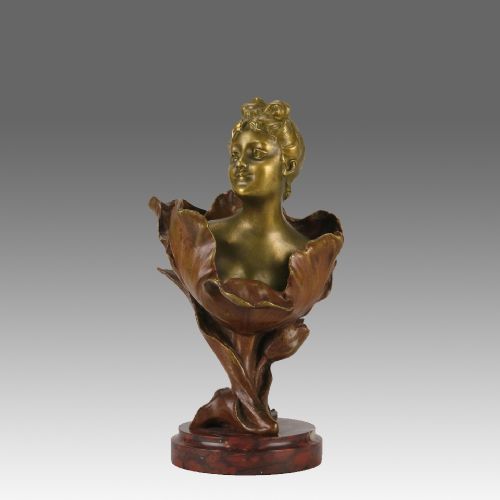


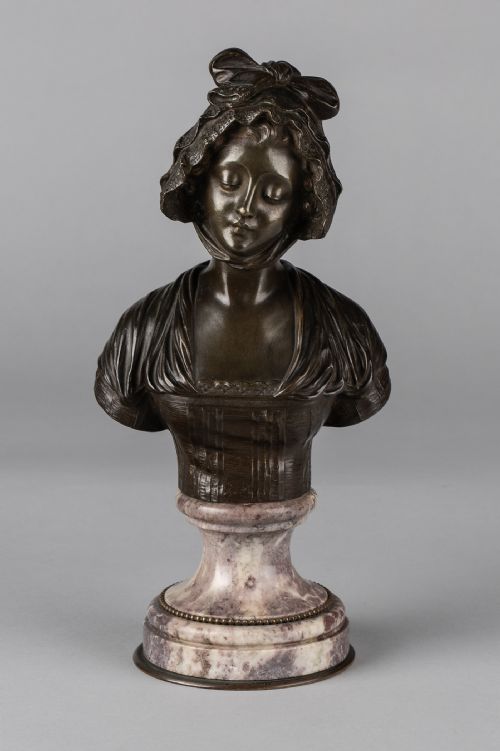

Brown Marble Bust
These brown marble bust pieces bring sculpted presence into a room, offering the weighty dignity of carved stone and cast metal.
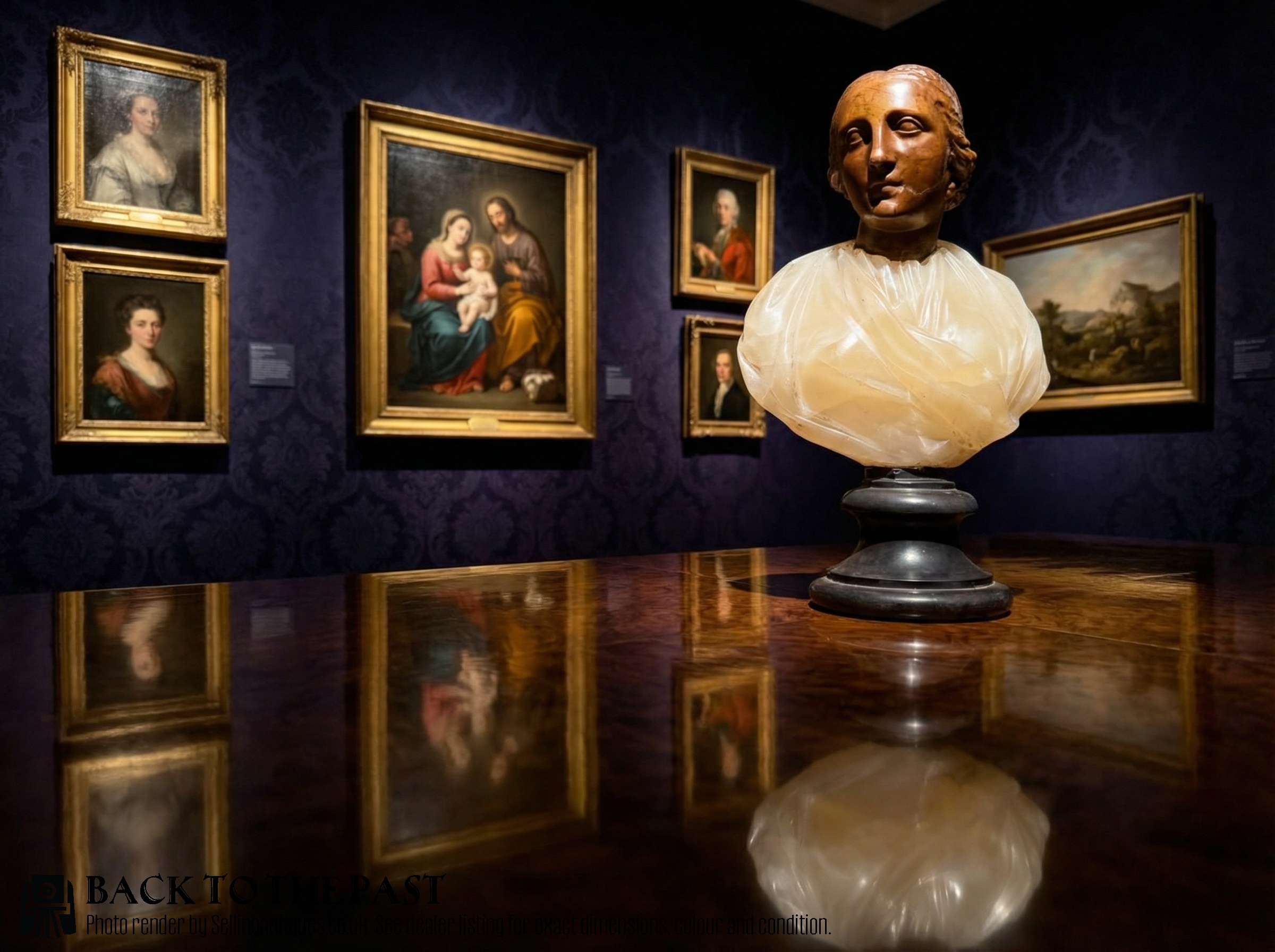
Brown Marble Bust
A brown marble bust captures a likeness or a named subject, most frequently taking the form of a portrait of a woman or a gentleman. These sculptures span the eighteenth, nineteenth, and early twentieth centuries, reflecting changing tastes from Georgian austerity through Neoclassical poise to Art Nouveau fluidity.
The versions most commonly met here combine rich stone plinths with detailed metalwork or feature carved specimen marble and alabaster throughout. Sculptures range from intimate studies to important signed works by notable European modellers.
Makers set these portraits upon contrasting bases of ebonised wood or gilt bronze, establishing a formal presence. Collectors encounter both pure carved stone and mixed media compositions where bronze patination meets veined marble.
How they were made
Foundries cast bronze and gilt bronze elements using the lost-wax method, capturing intricate details before chiselling and patinating the metal surface. Ebonised wood often formed the foundation for mixed media pieces, providing a stable dark contrast to the warm tones of the stone.
Several sculptures arrive bearing the exact names of nineteenth century literary heroines, ensuring the lady on your sideboard has a proper story.
What varies in quality
The distinction between standard works and exceptional examples lies in the liveliness of the carving and the crispness of the foundry cast. A superior portrait reveals subtle tension in the facial muscles and delicate handling of hair, whereas lesser pieces appear stiff and formulaic.
The selection of the marble itself dictates visual depth, with rich veining and uniform crystal structure elevating the piece. Furthermore, the integration between the metal bust and the marble or stone plinth demonstrates the maker's mastery.
Henri Godet·Alajos Strobl·Emmanuel Villanis·Eutrope Bouret·Eugene Laurent·Georges Van Der Straeten
The Brown Marble Bust Glossary
- Specimen marble
- A decorative technique using various coloured marbles assembled to create a pictorial or naturalistic study. This method requires immense precision in cutting and fitting each tiny piece of stone.
- Patination
- The surface coloration and finish developed naturally or applied chemically to bronze sculpture. It gives the metal depth and protects the underlying material.
- Ebonised wood
- Timber treated to resemble ebony, typically through staining and polishing. It is frequently utilised for pedestals and bases to offer a dark, neutral frame.
- Alabaster
- A fine-grained, translucent stone often used for sculptural works. Its softness permits delicate carving and allows light to penetrate the surface.
Brown Marble Bust: Frequently Asked Questions
How do I clean a brown marble bust?
Dust the sculpture gently with a soft dry brush to prevent dirt settling into crevices. Avoid using household detergents or excess water, which can damage unsealed stone and alter metal patination.
For stubborn marks, consult a professional conservator rather than applying chemical solvents. Natural oils from handling can stain porous marble over time.
Where should I display these sculptures?
Position the piece on a sturdy console table or dedicated column where its weight is fully supported. Ensure the display area avoids direct sunlight and sudden temperature shifts, which can stress mixed media structures.
Lighting from the side accentuates the carved contours and the varied veining of the stone. Give the bust sufficient surrounding space so the profile remains clearly visible.
How do I identify Art Nouveau examples?
Look for flowing hair, organic motifs, and titles drawn from mythology or romantic literature. These pieces often feature sinuous lines that break away from rigid classical symmetry.
The lettering on the base or signature plaque frequently employs characteristic decorative typography associated with the turn of the twentieth century.
What is mixed media in sculpture?
This refers to pieces combining cast bronze with carved marble or alabaster elements. The juxtaposition of cold metal against warm stone creates visual contrast.
Such combinations require careful jointing to secure heavy materials together permanently. Makers utilised this approach to highlight the subject's garments whilst rendering the face in stone.