

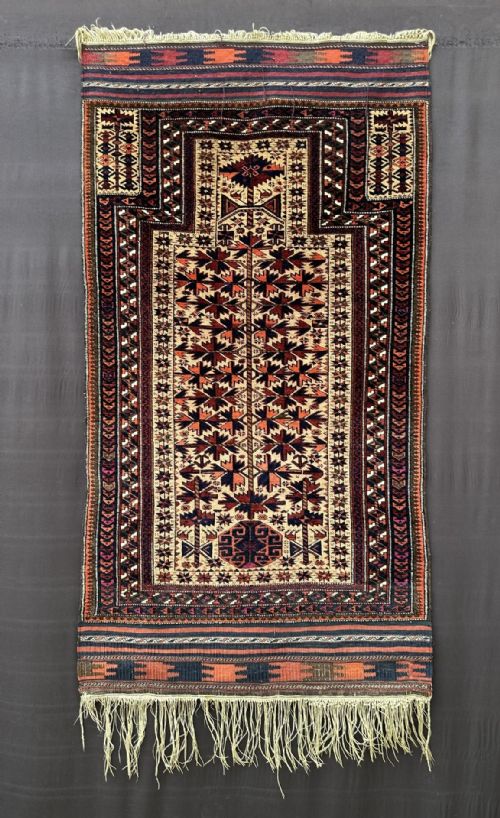


Afghan Prayer Mat
When choosing an afghan prayer mat, you acquire a tribal textile woven with traditional motifs and natural materials.
Afghan Prayer Mat
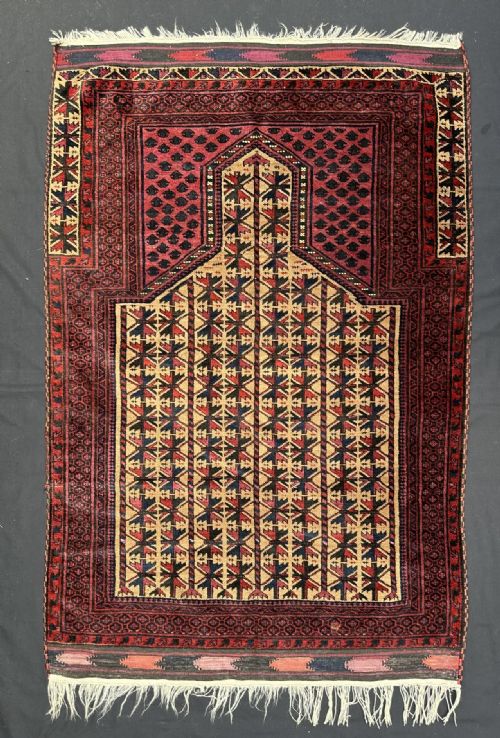
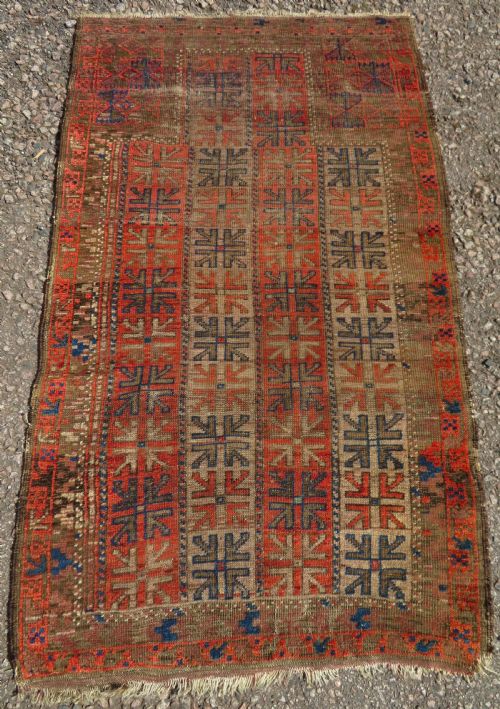
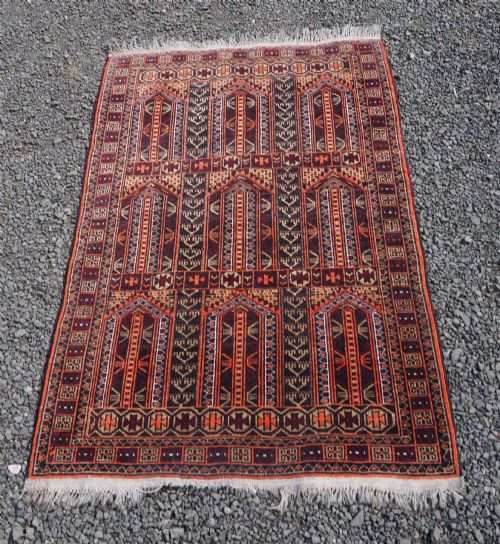
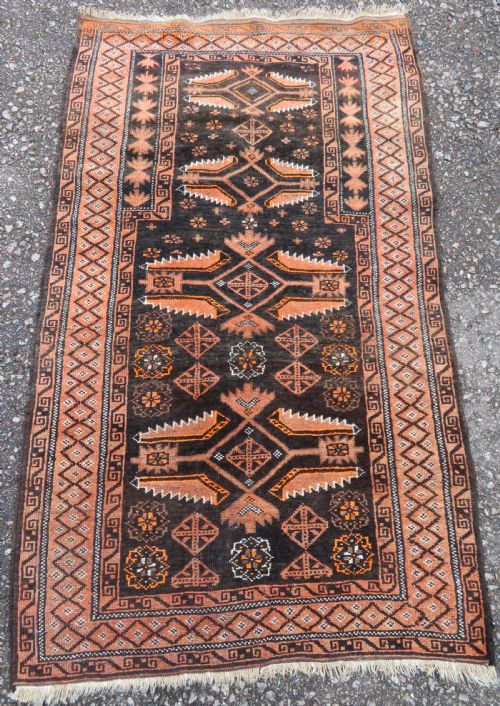
An afghan prayer mat represents the weaving traditions of nomadic and village groups from the nineteenth and early twentieth centuries. These pieces typically display structured prayer niches, known as mihrabs, designed to direct the placement of the hands and head during daily devotions. Buyers encounter formats ranging from single arches to multiple mihrabs and mosque designs created by tribal weavers.
The regional variety encompasses Baluch, Timuri, Taimani, and Kizil Ayak groups working across the borderlands and villages of Afghanistan and neighbouring regions. Village weavers structured these rugs for portable use, incorporating long kilim ends and distinct tribal symbols such as rams horns and stars. Each piece reflects the specific aesthetic of its maker rather than standardised urban workshop production.
Factors of Quality
The quality of an afghan prayer mat depends upon the density of the knotting and the handling of the wool. Finer examples display crisp geometry within the mihrab arches and uniform pile height across the field.
Material selection further distinguishes the work, particularly the quality of the wool and the depth achieved with natural dyes. The complexity of the tribal design, such as multiple mihrab layouts or double lanterns, also marks out the more accomplished pieces.
The documented regional styles include Baluch, Timuri, Turkmen, and Taimani tribal variations featuring single and multiple prayer niches.
The Afghan Prayer Mat Glossary
- Mihrab
- The arched niche in a prayer rug that symbolises the direction of prayer towards Mecca. It forms the central architectural motif of the textile.
- Seh Mihrab
- A design layout featuring three arched prayer niches grouped across the field. This format appears frequently in nineteenth-century village weaving.
- Kilim
- A flatwoven textile structure without a pile. These sections often extend from the main knotted field of the rug.
- Baluch
- A tribal designation for nomadic and village weavers originating from regions spanning Afghanistan and Persia. Their output includes distinctive prayer formats.
- Natural Dyes
- Colourants derived from plant, insect, and mineral sources used before the widespread adoption of synthetic dyes. They yield stable, harmonious hues that age gracefully.
Afghan Prayer Mat: Frequently Asked Questions
How can I identify a Kizil Ayak prayer rug?
Kizil Ayak prayer rugs originate from Turkmen tribal groups and often display specific architectural motifs such as mosque designs or double lanterns. Their structure relies on sturdy wool pile.
These pieces frequently incorporate rich red or brown tones combined with disciplined geometric borders that reflect their distinct cultural heritage.
Were these rugs used for daily prayer?
Nomadic and village weavers produced these textiles to serve as portable prayer mats for daily devotions. Their manageable dimensions allowed for easy rolling and transport.
The inclusion of specific mihrab designs directed the user during prayer while the flatwoven kilim ends provided durability along the margins.
What materials are found in antique Afghan rugs?
Antique Afghan rugs are constructed primarily from hand-spun wool for the pile, often paired with wool or cotton foundations. Some examples also integrate camel hair and goat hair.
Natural dyes provided the colour palette for these materials, resulting in stable hues across the blue, brown, and red spectrums.
How do I care for an antique prayer rug?
Antique prayer rugs require gentle maintenance, including regular vacuuming without a rotating brush to protect the wool pile. Professional cleaning is recommended for heavier soil.
Placing the textile away from direct sunlight helps preserve the natural dyes used in the nineteenth and early twentieth-century weaving.