


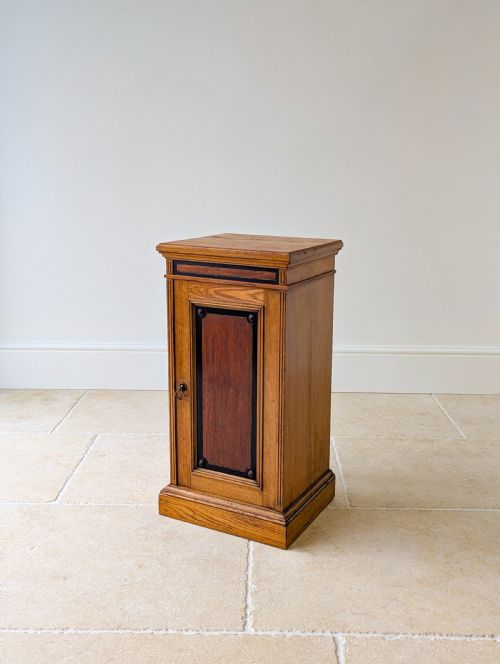


Aesthetic Movement Cupboard
An aesthetic movement cupboard brings refined geometry and exotic detail to a room, offering both practical storage and distinctive nineteenth-century design.
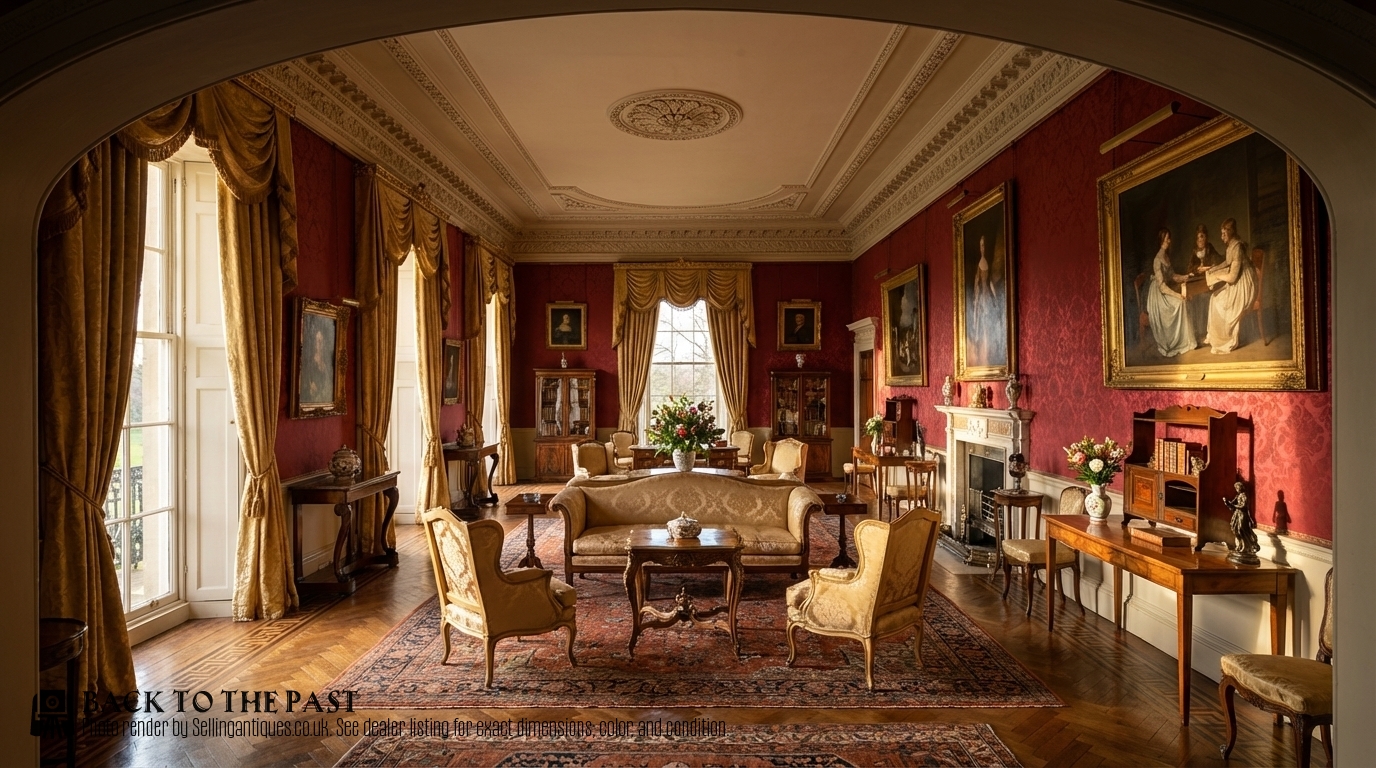
Aesthetic Movement Cupboard
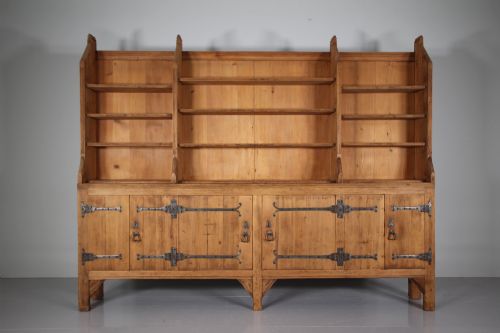
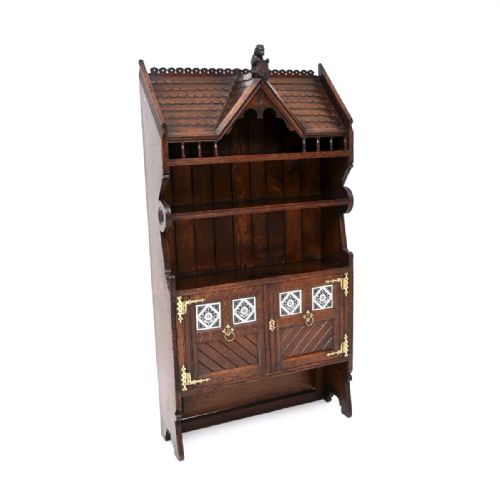
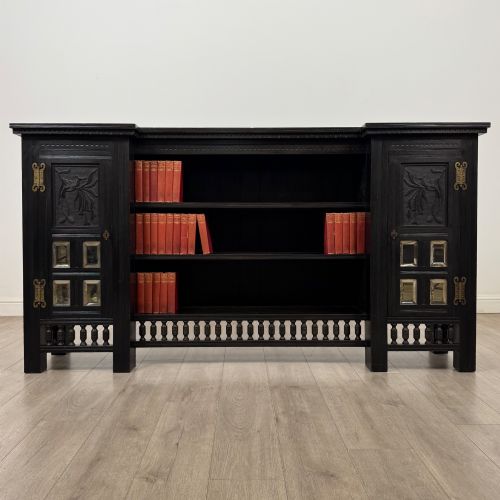
An aesthetic movement cupboard encompasses a diverse range of domestic storage forms, from compact bedside pot cupboards and hanging wall cabinets to larger display bookcases and music cabinets. These pieces date predominantly from the nineteenth century, spanning the eighteen-sixties to nineteen-hundred, with strong representation from eighteen-eighty and eighteen-ninety.
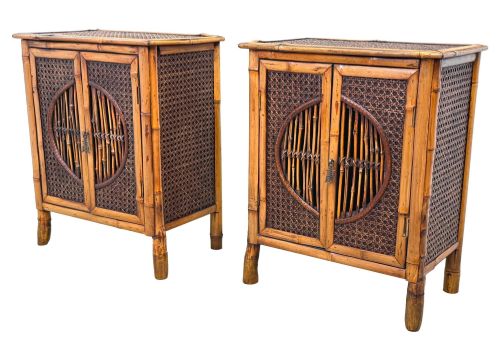
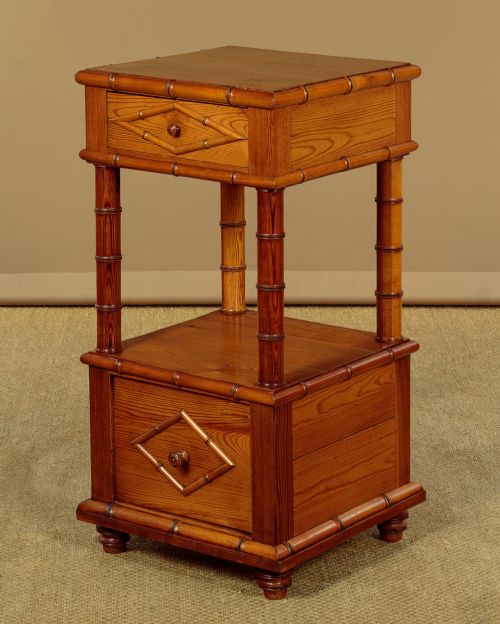
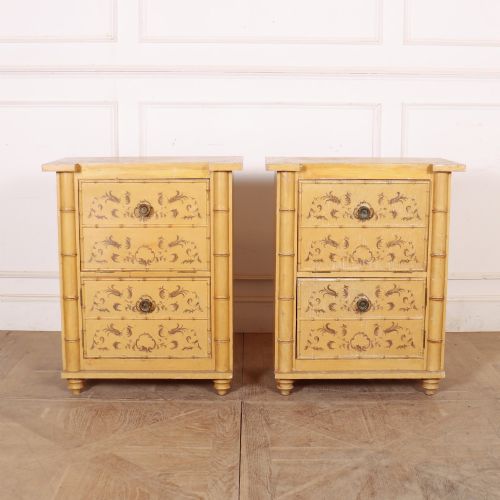
Bedside cabinets and pot cupboards in ash, oak, pine, and walnut appear frequently, alongside more unusual forms constructed from bamboo and faux bamboo. Collectors also encounter specialised pieces such as corner cabinets, reception hall cabinets, and miniature table-top designs.
The style intersects with Victorian taste, Anglo-Japanese design, and Anglo-Moorish influences, reflecting a period of eclectic and artistic domestic furnishing.
Materials and Construction
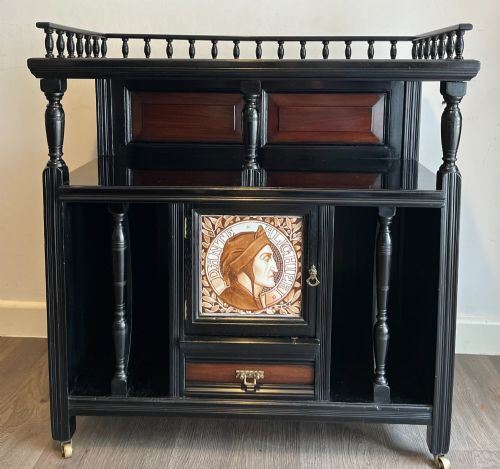
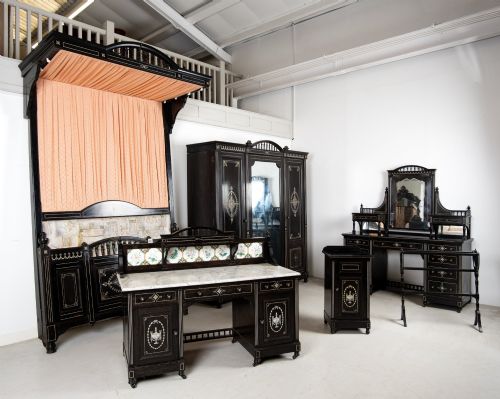
Cabinetmakers utilised a wide variety of timbers, pairing traditional woods such as walnut, oak, ash, and pine with exotic or imported materials like bamboo. Ebonised wood frequently appears to mimic Japanese lacquer work, providing a dark contrast for inlaid decoration and brass hardware.
Construction techniques combine sturdy nineteenth-century carcass work with surface ornamentation, including glazed doors, ceramic panels, and intricate wood inlay. Faux bamboo elements demonstrate the era's fascination with Japanese motifs, moulded and painted to imitate natural cane.
Aesthetic Movement Cupboard Retail Price Guide 2026
Typical asking prices for aesthetic movement cupboard among the pieces listed under this phrase on Sellingantiques today, from the lower quarter to the upper quarter. They describe what is for sale here now, not the wider market.
Object forms span bedside tables, pot cupboards, music cabinets, corner units, and extensive bedroom suites.
Assessing Quality and Execution
Quality in these pieces rests upon the integrity of the timber selection and the precision of the decorative elements, such as ebonising, inlay, and brass mountings. Finer cabinets display careful attention to structural joinery, particularly in complex forms like bamboo or multi-drawer music cabinets.
Attribution to notable designers and makers elevates a piece, as seen in works associated with firms like Liberty and Co., Gillows, or makers such as Henry Ogden and Son, John Moyr Smith, and Bruce Talbert. The presence of well-executed Japonisme or Anglo-Japanese detailing similarly distinguishes superior examples.
Henry Ogden and Son·John Moyr Smith·Gabriel Viardot·Bruce Talbert·Gillows·Jas Shoolbred and Co·Liberty and Co
The Aesthetic Movement Cupboard Glossary
- Ebonised wood
- Timber treated with a dark stain or finish to simulate expensive ebony. This technique was popular in nineteenth-century furniture to create high-contrast surfaces.
- Anglo-Japanese style
- A design approach blending traditional British furniture forms with Japanese artistic motifs and construction methods. It is a defining characteristic of many aesthetic movement pieces.
- Pot cupboard
- A small bedside cabinet originally designed to house a chamber pot. They frequently feature a single door and a small internal shelf.
- Faux bamboo
- Turned and painted wood designed to imitate natural bamboo. Cabinetmakers used this technique to achieve an exotic aesthetic using domestic timbers.
Aesthetic Movement Cupboard: Frequently Asked Questions
What is an aesthetic movement cupboard?
An aesthetic movement cupboard is a nineteenth-century storage piece influenced by the pursuit of beauty in design, often incorporating Japanese motifs, ebonised finishes, or bamboo.
These cabinets range from small bedside pot cupboards to larger bookcase and music cabinet forms.
How do I identify an aesthetic movement piece?
Look for characteristic nineteenth-century markers such as ebonised wood, brass hardware, glazed panels, and stylistic influences from Japanese art.
Many pieces also feature specific woods like ash, walnut, oak, and bamboo, sometimes bearing maker marks or attribution to known firms.
Where were these cupboards used?
These cabinets served various domestic functions depending on their form, utilised in bedrooms as bedside tables or pot cupboards, and in reception rooms as display or music cabinets.
Smaller wall-hanging and miniature versions offered storage and display in tighter spaces.
How do I care for a nineteenth-century wooden cabinet?
Maintain wood and ebonised surfaces by keeping them away from direct sunlight and sudden temperature shifts. Dust gently with a dry cloth and avoid harsh chemical polishes that can damage historic finishes.
Ensure bamboo and inlaid sections are handled with care to preserve their structural integrity.