

Aesthetic Movement Carving
These aesthetic movement carving pieces combine late Victorian design with distinctive ornamentation, offering strong character and rich period detail for domestic interiors.
Aesthetic Movement Carving
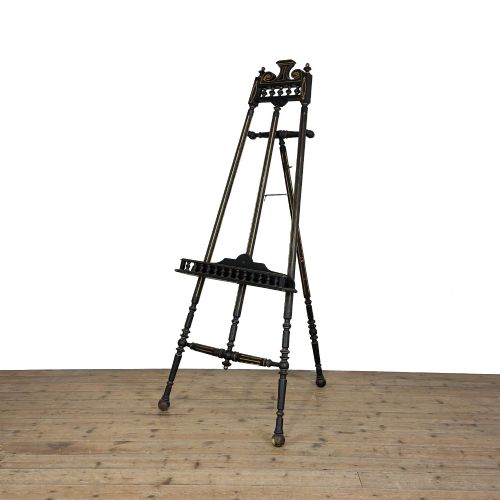
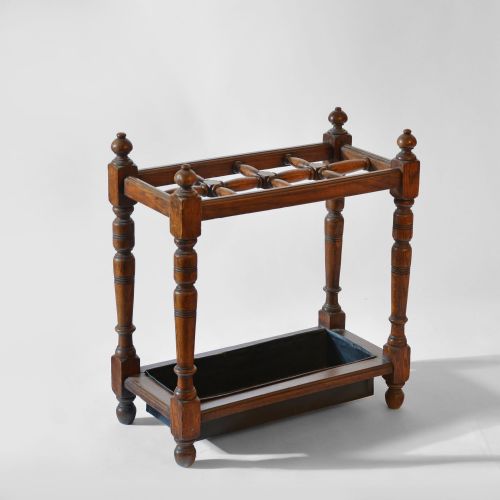
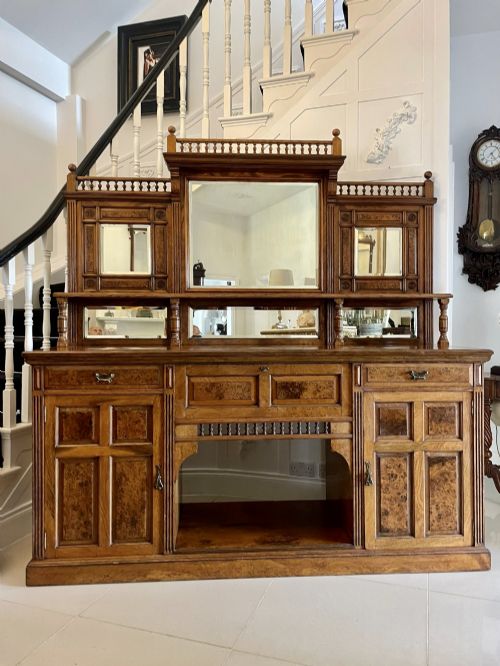
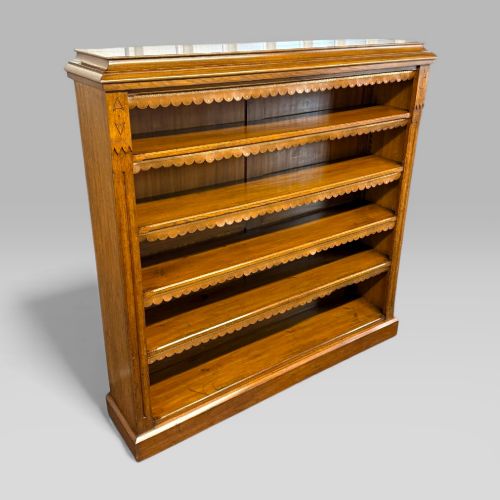
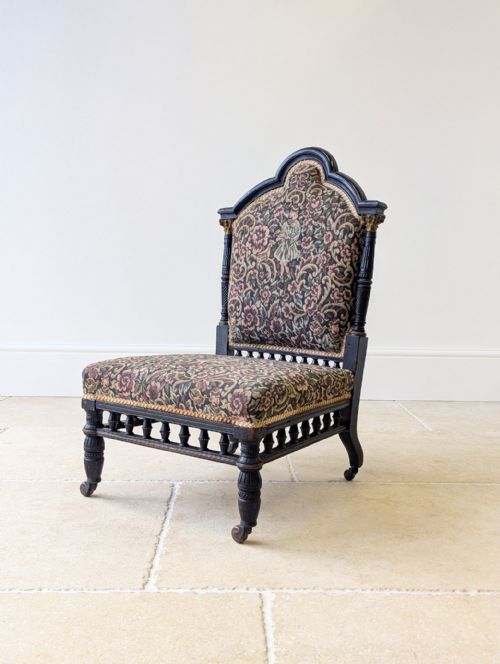
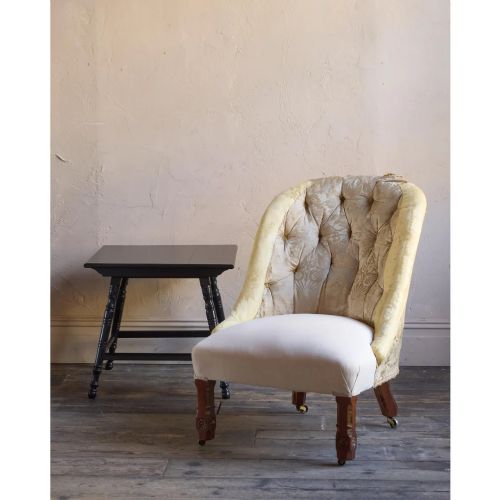
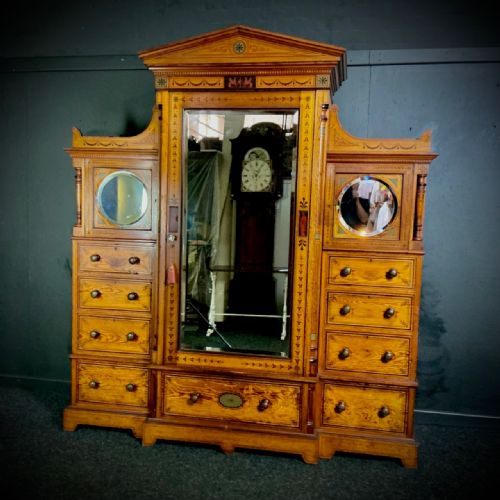
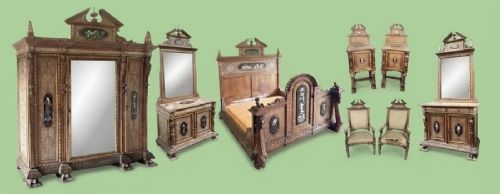
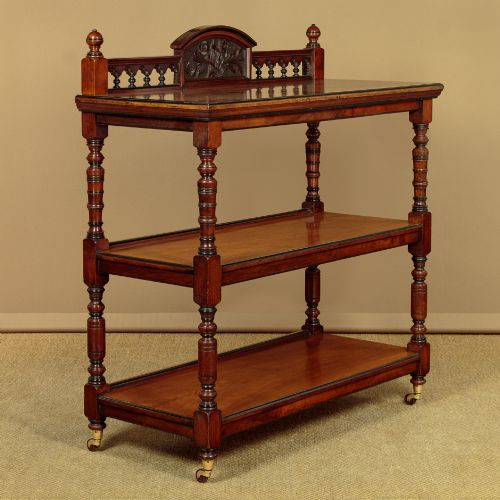
Aesthetic movement carving encompasses a diverse selection of furniture and decorative objects originating primarily from the late nineteenth century and the Victorian period. These pieces span everyday utility and formal presentation, including occasional tables, hall chairs, cabinets, sideboards, and bedroom suites.
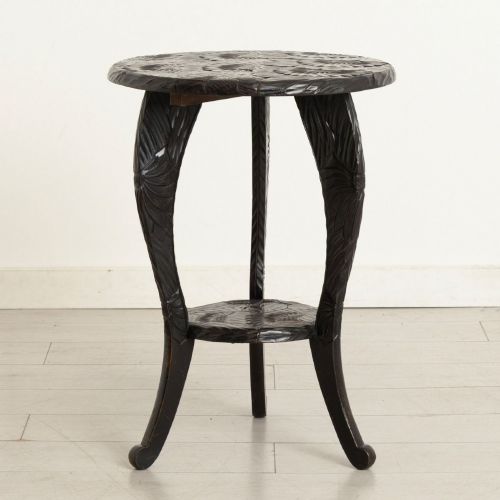
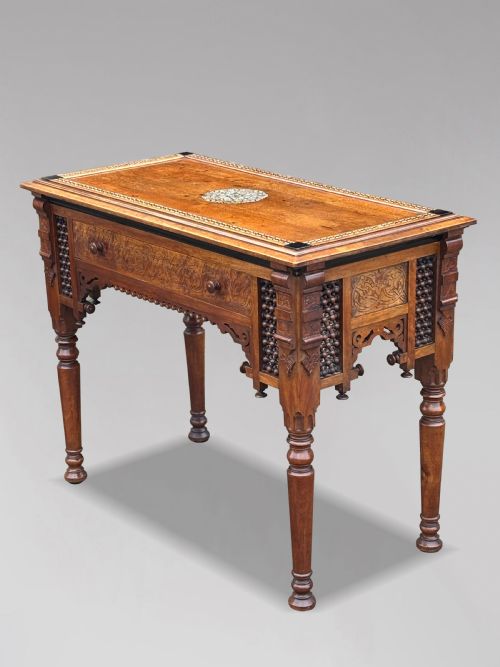
The objects on this page reflect the stylistic shifts of the era, drawing influences from Japanese art, Gothic Revival, Moorish design, and Arts and Crafts principles. Walnut, oak, mahogany, and ebonised wood form the structural foundation of these items, frequently paired with inlaid details and carved elements.
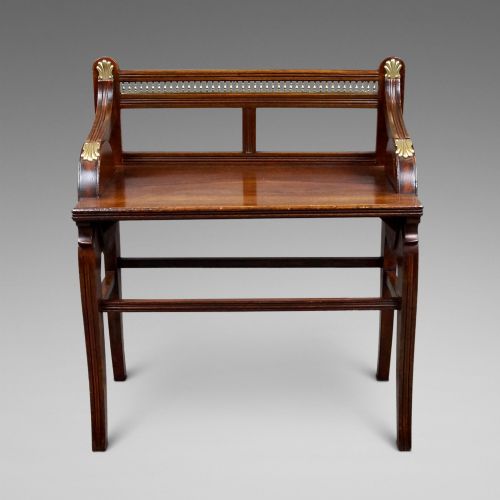
Armchairs, benches, desks, and side tables represent the primary forms encountered within this selection. Originating from workshops and makers active during the 1870s, 1880s, and 1890s, these items demonstrate the distinct decorative vocabulary associated with the period.
Materials and Technique
Makers utilised a range of hard woods such as oak, walnut, mahogany, and rosewood, alongside ebonised finishes and birdseye maple. Structural integrity depended on traditional joinery techniques combined with surface carving and applied ornamentation.
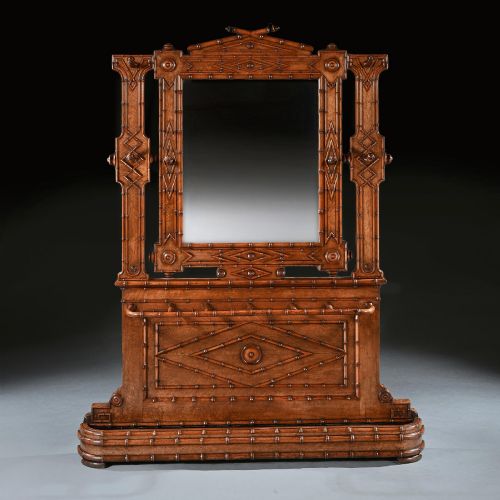
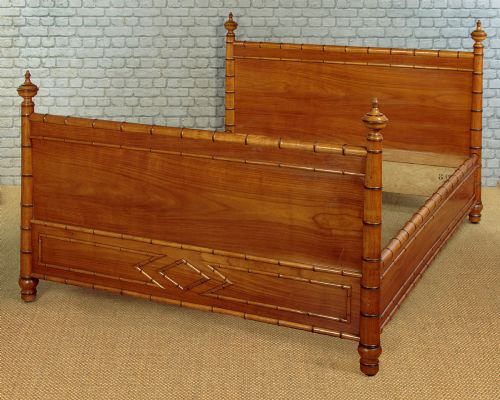
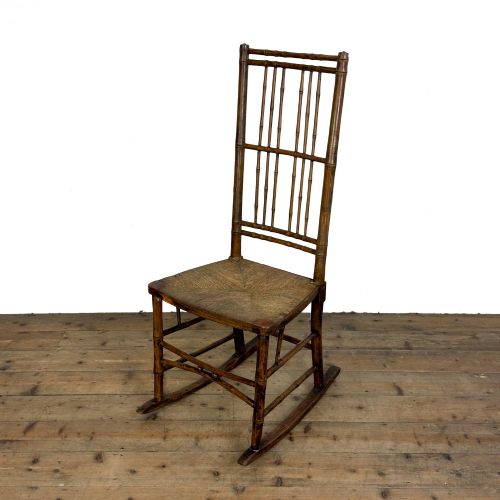
Surface treatment frequently involved ebonising timber to mimic Japanese lacquer, alongside faux bamboo turning and intricate woodwork. Inlay work, brass hardware, and specialised fabric upholstery completed the construction of cabinets, seating, and tables.
Some cabinetmakers cleverly turned ordinary hardwood into convincing bamboo stalks to satisfy the Victorian craze for all things Japanese.
Evaluating Execution
The standard of design execution and the depth of carved detail distinguish individual pieces within this range. Items produced by prominent design houses or bearing specific attribution demonstrate superior handling of proportion and material selection.
The sophistication of integrated elements, such as Mashrabiya panels, precise joint work, and the crispness of surface carving, separates standard production items from exhibition quality examples.
Liberty & Co·Bruce Talbert·Henry Ogden & Son·John Moyr Smith
The Aesthetic Movement Carving Glossary
- Aesthetic Movement
- A late nineteenth-century design style emphasising decorative arts for art's sake over moral or narrative purpose. It drew heavily from Japanese motifs and simplified forms.
- Ebonised Wood
- Timber treated with a dark stain or finish to simulate expensive ebony. This technique was popular for achieving high-contrast surfaces in Victorian furniture.
- Mashrabiya
- An architectural element consisting of carved wooden lattice panels used for screening or windows. It appeared frequently in Moorish revival furniture of this period.
- Faux Bamboo
- Wood turned and painted to resemble natural bamboo stalks. This technique reflects the nineteenth-century European fascination with Japanese and East Asian material culture.
Aesthetic Movement Carving: Frequently Asked Questions
What is aesthetic movement carving?
Aesthetic movement carving refers to the decorative woodwork found on furniture produced during the late nineteenth century. It incorporates stylized floral motifs, asymmetrical compositions, and influences from Japanese and Moorish design.
These carved elements appear on surfaces ranging from hall chairs and cabinets to occasional tables and desks. The style prioritises visual harmony and artistic expression over strict historical revivalism.
How do I identify a piece?
Identification relies on observing specific design vocabulary, such as ebonised finishes, faux bamboo turning, and flat or incised surface carving. Many pieces display influences from the Anglo-Japanese taste or Moorish Revival styles popular during the Victorian era.
Material choices like oak, walnut, and mahogany, combined with distinct structural proportions, help separate these items from earlier or later furniture styles.
Where were these pieces used?
Original placement varied from formal reception rooms and libraries to entrance halls and bedrooms. Items like hall stands, umbrella stands, and benches served practical daily functions in domestic entryways.
Larger furniture such as sideboards, cabinets, and writing desks were designed for principal living spaces and studies, often acting as decorative centrepieces within the home.
How should I care for carved wood?
Maintenance requires keeping wooden surfaces away from direct sunlight and extreme temperature fluctuations to prevent timber movement. Regular dusting with a soft, dry cloth preserves the carved details and original finishes.
Harsh chemical cleaners should be avoided in favour of traditional wax polishes suited to antique timber surfaces.