
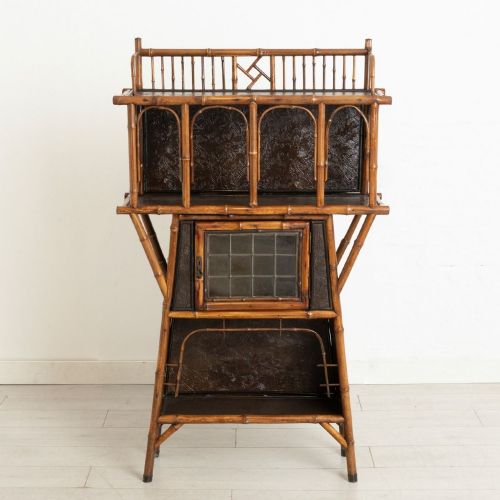


Aesthetic Movement Bookcase
An aesthetic movement bookcase brings the thoughtful design and rich cabinet-work of the late nineteenth century straight into a modern room.

What these pieces are
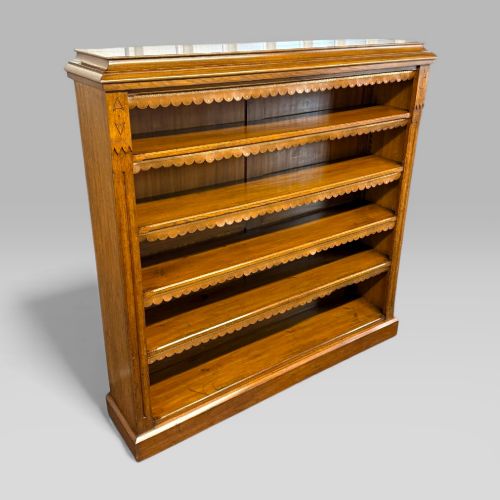
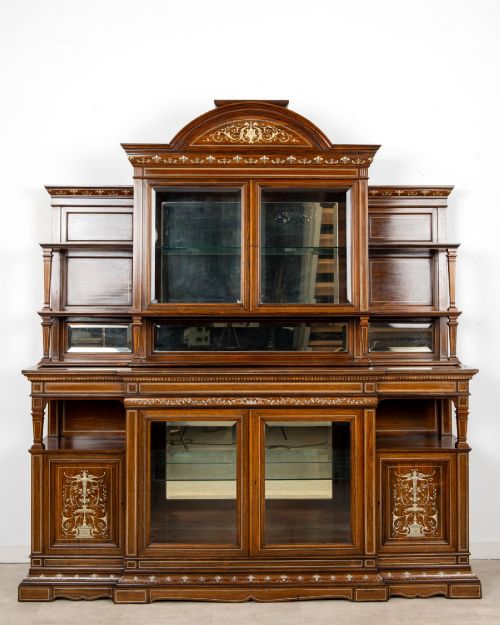
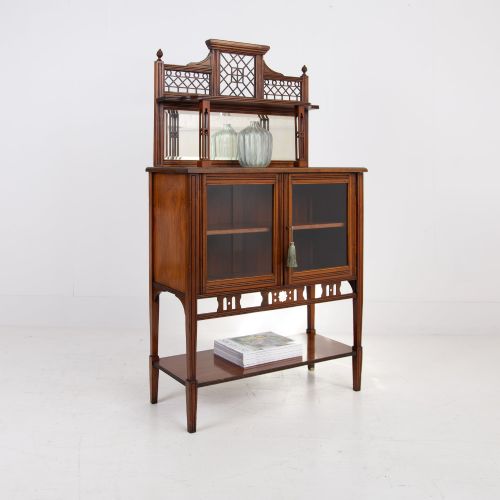
An aesthetic movement bookcase combines utility with the artistic reform principles of the late nineteenth century, offering structured shelving for a room. These items arrive in forms such as open bookcases, breakfront library bookcases, display cabinets, and secretaire bookcases.
The pieces seen here date from the nineteenth century, including specific items from around eighteen eighty. Buyers most frequently encounter ebonised wood versions alongside golden oak, satinwood, burr walnut, and painted finishes.
Most examples function primarily to house collections of books whilst displaying decorative objects behind glass panels or on open shelves. Their proportions range from long horizontal formats to large upright library editions designed for period interiors.
How they were made
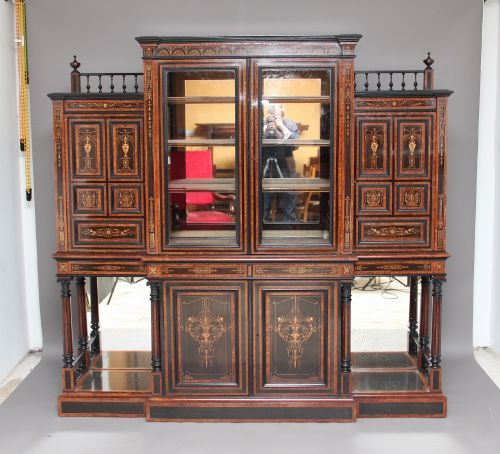
Cabinet-makers of the period utilised solid timbers and applied veneers, shaping golden oak, satinwood, burr walnut, and amboyna into robust architectural frames. Ebonising wood involved staining or painting timber black to mimic costly ebony, creating a dark, uniform surface that contrasted sharply with inlaid details.
Decoration relied heavily on marquetry inlay, where contrasting woods were fitted together to form geometric or floral motifs across the surface. Brass fixtures such as hinges, handles, and gallery rails were integrated alongside clear glass panels for display sections.
Retail Price Guide 2026
Typical UK retail prices for aesthetic movement bookcase, calculated from the Sellingantiques database of over a million retail prices indexed since 2003. This retail price guide relies exclusively on Sellingantiques data; no external sources or auction records are used, so the figures do not describe the wider market.
Materials recorded across past and present inventory include brass hardware, glass panels, and intricate marquetry inlay.
What varies in quality
Quality rests upon the selection of timber and the precision of the cabinet-making, distinguishing simple utility furniture from ambitious artistic commissions. The complexity of the timber preparation, such as the depth of the ebonising and the fineness of the marquetry inlay, dictates the tier of the piece.
The architectural presence of the bookcase, seen in balanced breakfront proportions and carefully integrated brass hardware, separates standard workshop output from exceptional examples of the period.
The Aesthetic Movement Bookcase Glossary
- Ebonised wood
- Timber treated to resemble ebony through dark staining or painting. This finish was widely favoured in late nineteenth century design to create stark visual contrast.
- Marquetry
- The art of applying small pieces of veneer to a structure to form decorative patterns. Craftsmen utilised various natural woods to create intricate surface designs.
- Breakfront
- A cabinet design where the central section projects forward from the flanking wings. This architectural arrangement adds depth and shadow to large library pieces.
- Satinwood
- A durable hardwood featuring a lustrous, golden-yellow sheen. It provided a bright surface that contrasted effectively against darker woods.
Frequently Asked Questions
What defines an aesthetic movement bookcase?
These bookcases reflect late nineteenth century design principles that prioritised artistic craftsmanship over heavy industrial revival styles. They often feature ebonised finishes, marquetry inlay, and architectural forms.
Cabinet-makers built these pieces using varied materials including oak, satinwood, and burr walnut. Their primary aim was to create functional furniture that also served as a decorative focal point.
How do I care for ebonised wood?
Ebonised surfaces require gentle dusting with a soft, dry cloth to prevent micro-scratching on the dark finish. Avoid placing the wood in direct sunlight or near heat sources to protect the stain.
Treat the timber occasionally with appropriate furniture wax if the surface appears dry. Maintaining a stable room environment preserves both the wood and any delicate marquetry inlay.
Where were these bookcases used?
Original settings included Victorian libraries, studies, and formal drawing rooms where owners stored bound volumes and displayed ornaments. Large breakfront and library editions suited spacious rooms with high ceilings.
Smaller open bookcases and display cabinets functioned effectively in parlour spaces. Today, they serve similar storage and display roles in domestic interiors.
How do open and closed versions differ?
Open bookcases provide immediate access to volumes without physical barriers, making them practical for active reading collections. They emphasise the vertical lines of the timber framework.
Closed versions with glass doors or cabinets protect delicate bindings and decorative objects from dust. These often incorporate additional storage spaces such as secretaire drawers.