
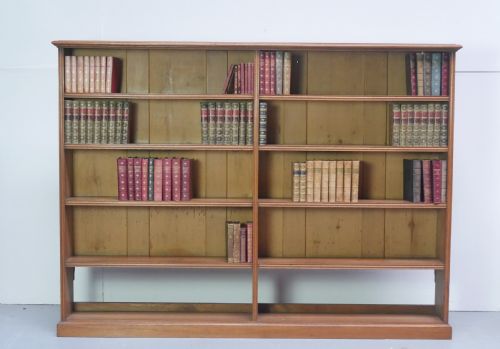


Large Oak Bookshelf
A large oak bookshelf brings architectural weight and ample shelving to a room, offering robust construction and enduring utility for serious collections.
Large Oak Bookshelf
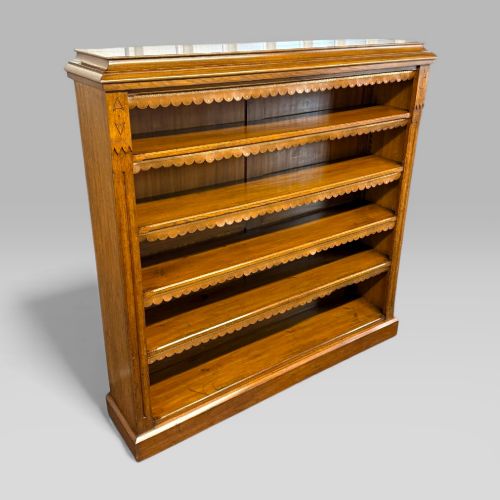
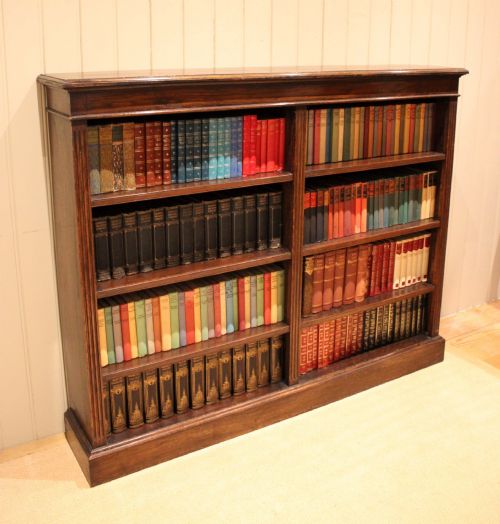
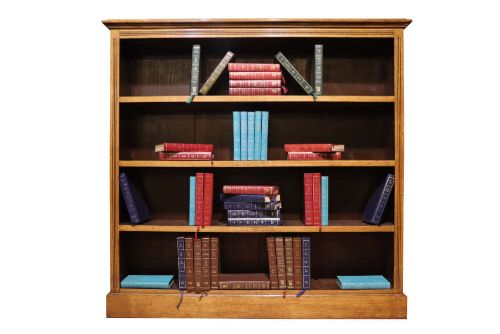
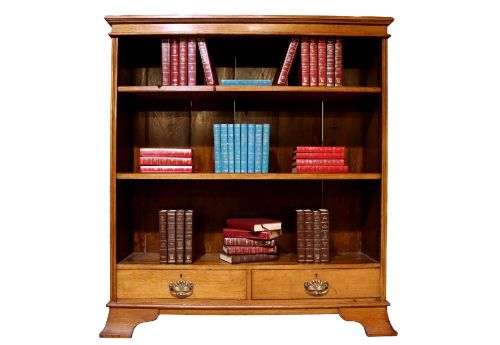
A large oak bookshelf provides substantial open storage for libraries and studies, appearing primarily in nineteenth-century and early twentieth-century forms. Buyers seeking a large oak bookshelf will encounter open library bookcases, wall shelves, and tall standing formats from the Victorian and Edwardian eras.
The pieces on this page span several distinct revivalist styles, including Gothic Revival, Renaissance Revival, and Aesthetic Movement designs. These variations reflect the Victorian and Edwardian preference for dense timber and decorative carving in domestic furniture.
How they were made
These bookcases rely heavily on solid oak timbers, occasionally accented with brass hardware or contrasted with mahogany elements. Carpenters shaped the heavy timber using traditional joinery to support substantial loads of books without sagging.
Many examples feature deliberate surface ornamentation, ranging from Flemish carved motifs to country house style detailing. These decorative elements require skilled hand-carving directly into the dense oak grain.
Listings feature pieces spanning the Victorian and Edwardian periods, constructed primarily in oak with occasional brass and mahogany elements.
What varies in quality
Quality in these pieces rests upon the depth of the carving and the selection of the timber, particularly where golden oak or figured grain is visible. Pieces displaying sophisticated stylistic influences such as the Aesthetic Movement or Renaissance Revival generally show greater ambition in their execution.
The structural ambition of the bookcase, from simple country house formats to elaborate architectural pediments, dictates its presence. Finer examples maintain crispness in their carved panels and integrity in their upright proportions.
The Large Oak Bookshelf Glossary
- Open bookcase
- A shelving unit without glazed or solid doors, designed for immediate access to books. This form dominates the selection.
- Golden oak
- A bright, warm finish and timber tone popular during the late nineteenth and early twentieth centuries. It highlights the natural grain of the wood.
- Gothic Revival
- A nineteenth-century style drawing on medieval architectural motifs such as pointed arches and quatrefoils. It imparts a severe, ecclesiastical character to furniture.
- Aesthetic Movement
- A late Victorian design philosophy prioritising artistic visual qualities over strict historical revival. Pieces in this style often display refined proportions and subtle detailing.
Large Oak Bookshelf: Frequently Asked Questions
How do I date a large oak bookshelf?
Dating relies on stylistic markers such as Victorian Gothic Revival details or Edwardian proportions, alongside construction methods visible in the timber. Secondary evidence like brass hardware can also point to specific decades around nineteen hundred.
Makers often incorporated period-specific carving styles, such as Flemish revival motifs or Aesthetic Movement lines, which help narrow down the manufacturing window.
Are these bookcases suitable for modern homes?
Their substantial footprint requires careful placement in contemporary rooms, but their open shelving offers practical storage for large book collections. Golden oak and dark nineteenth-century finishes anchor a room visually.
Ensure wall clearance and floor weight capacity are considered before installing tall standing or wall-hanging variants.
What is the difference between Victorian and Edwardian examples?
Victorian versions often embrace heavy revivalist styles like Gothic or Renaissance Revival with deep, elaborate carving. They project a sense of dark, solid authority.
Edwardian pieces tend toward slightly lighter proportions while retaining the robust oak construction typical of earlier decades.
How should I care for an oak bookcase?
Maintain a stable room humidity to prevent the heavy oak timber from splitting or warping over time. Dust regularly with a dry cloth and avoid harsh chemical polishes.
Keep the piece away from direct heat sources and strong sunlight to preserve the finish of the golden oak.