


Adjustable Vanity Stand
An adjustable vanity stand offers the practical height or angle needed for close grooming, combining clever mechanical adjustments with period cabinet-making.
Adjustable Vanity Stand
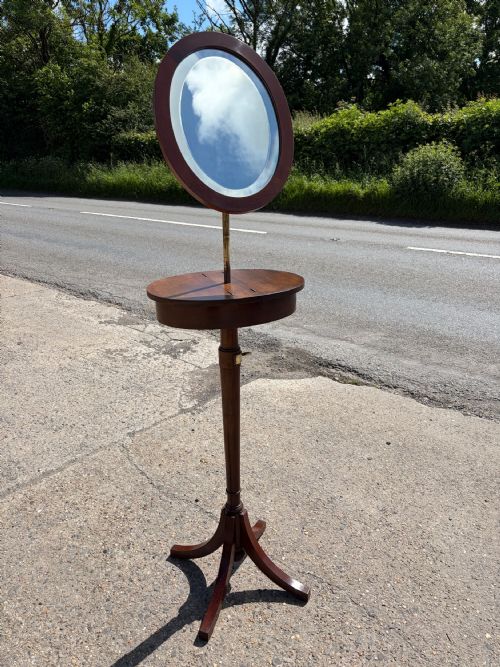
An adjustable vanity stand serves as a dual-purpose piece for grooming, bringing together a looking glass and a dedicated stand, pillar, or tripod base. When you search for an adjustable vanity stand, you encounter items designed to alter height or tilt for the user.
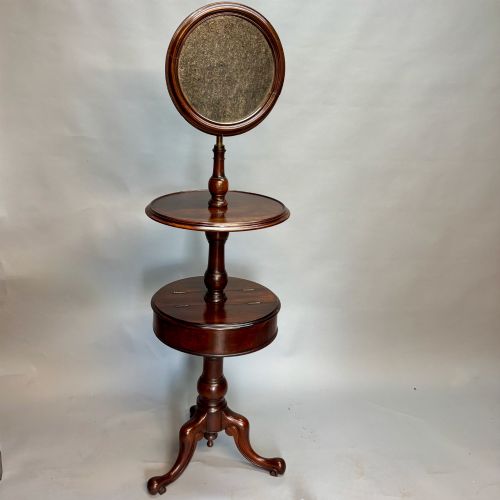
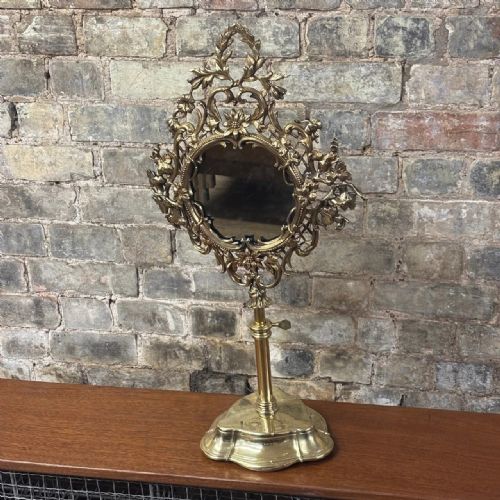
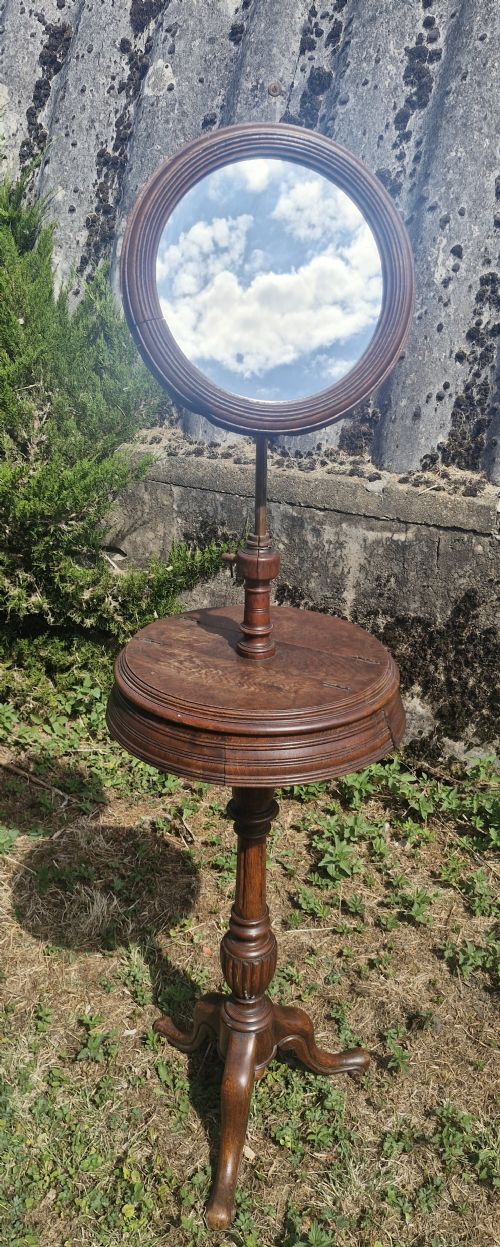
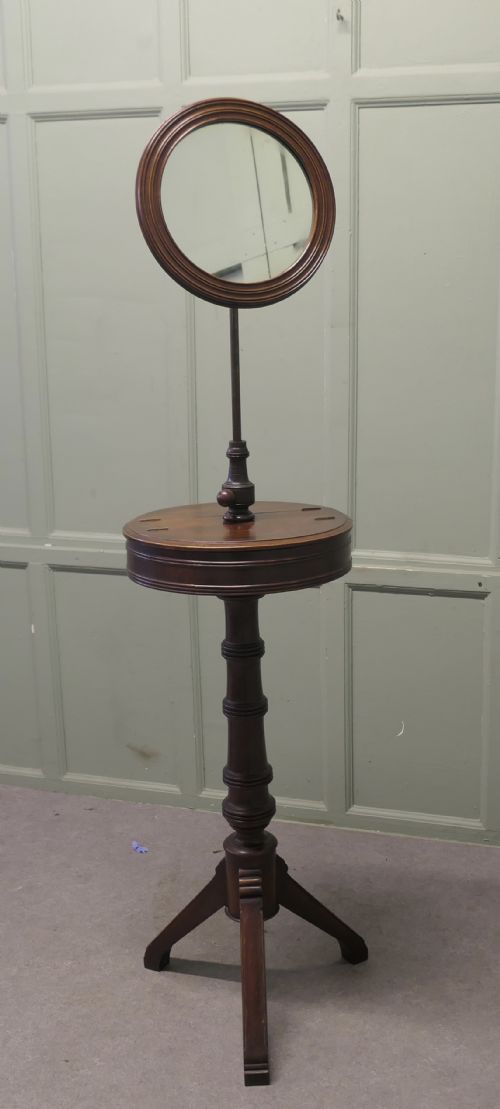
The pieces on this page span several distinct forms, including shaving stands, standing mirrors, shaving mirrors, and dressing table mirrors. Victorian examples appear frequently, alongside Edwardian, Arts and Crafts, Art Deco, and Regency pieces.
Makers utilised mahogany, walnut, oak, ash, and brass to construct these items, incorporating mirror glass and occasionally chrome. Many pieces rely on telescopic mechanisms or brass swivel joints to alter the angle of the glass.
How they were made
Cabinet-makers relied heavily on timbers like mahogany, walnut, and oak, often shaping them into tripod bases, pedestals, or support frames. Wood inlay added decorative detail to specific Edwardian and Victorian variants.
Metal components played a critical role in the functionality of the pieces, particularly brass for telescopic stems, swivel brackets, and adjustment screws. Bronze and chrome appear in later or alternative aesthetic styles such as French Empire and Art Deco.
Mirror glass was fitted securely into wooden or brass frames, suspended on pivots to allow tilting. Mechanics like sliding brass rods permitted the glass to rise and fall smoothly.
Some gentleman's stands include tiny concealed cupboards originally built to house shaving mugs and soap.
What varies in quality
The sophistication of the mechanical adjustment mechanism dictates much of the standard, from smooth telescopic action to sturdy brass screws that hold the glass firmly at any angle. Simpler fixed frames sit at the basic end, while complex extending tripods represent a higher grade of manufacture.
Timber selection and cabinet-making detail set pieces apart, ranging from plain utility carcases to richly grained solid mahogany or walnut with careful joinery. Stamped maker details, such as those found on Arts and Crafts pieces, indicate workshop provenance.
The preservation of the original mirror glass and metal plating influences desirability, as replacements alter the integrity of the object. High-grade items retain their original brass fittings and silvered glass without extensive clouding.
J. Shoolbred
The Adjustable Vanity Stand Glossary
- Telescopic
- A mechanism allowing a vertical rod to slide inside another to adjust height. This permits the mirror to be raised or lowered.
- Tripod base
- A three-legged support structure commonly found on 19th-century stands. It provides stability for extended vertical mirrors.
- Shaving stand
- A specialised piece of furniture designed for grooming routines, often incorporating a mirror and small drawers or cupboards. Examples frequently date from the Victorian period.
- Swing mirror
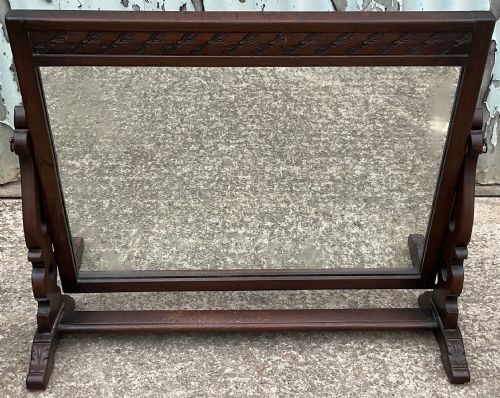
- A looking glass hung on horizontal pivots within a frame, allowing it to tilt back and forth. This enables the user to adjust the viewing angle.
- Wood inlay
- The technique of inserting pieces of contrasting timber into a recessed surface to form decorative patterns. This appears on Edwardian examples.
Adjustable Vanity Stand: Frequently Asked Questions
What is an adjustable vanity stand?
An adjustable vanity stand is a piece of furniture designed for grooming, featuring a looking glass mounted on a stand, pillar, or tripod base with movable parts.
These items allow the user to alter the height or tilt the glass to suit their needs during shaving or daily grooming.
How were these stands used?
They were utilised in bedrooms, dressing rooms, and bathrooms for personal grooming tasks like shaving and applying makeup.
The adjustable height and tilting mirror plate meant users could position the glass for optimal light and angle.
How do I date a piece?
Dating relies on identifying stylistic markers, timber choices, and construction methods associated with specific periods like the Victorian, Edwardian, or Art Deco eras.
Details such as brass telescopic mechanisms, tripod bases, and wood inlay help narrow down the decade of manufacture.
Where should I place one?
These stands fit well on top of dressing tables or as standalone floor-standing pieces in a bedroom or bathroom setting.
Their compact footprints make them practical for smaller spaces requiring functional period furniture.