



Adjustable Library Armchair
An adjustable library armchair offers mechanical ingenuity paired with deep seating comfort, perfect for long hours spent reading or working.
Adjustable Library Armchair
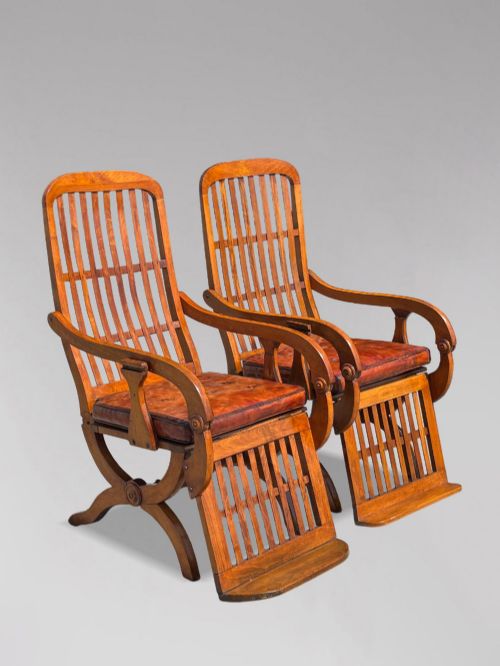
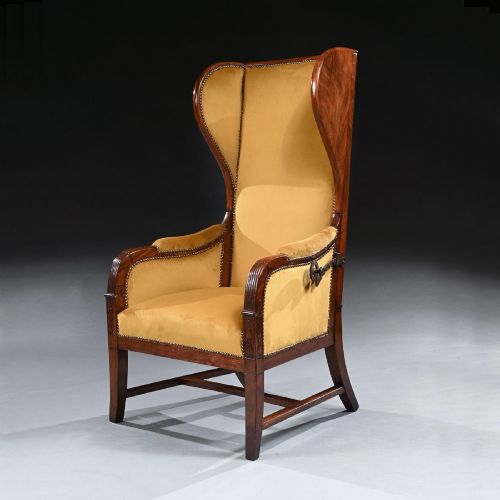
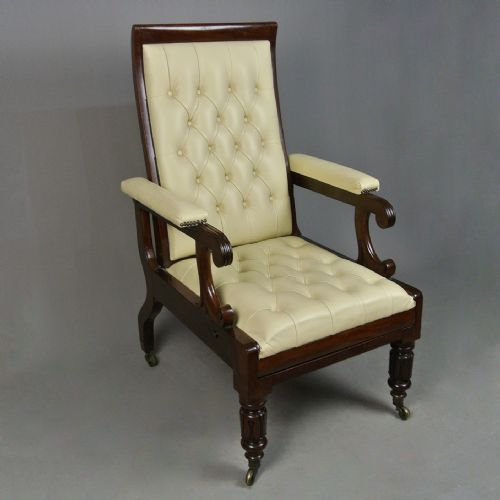
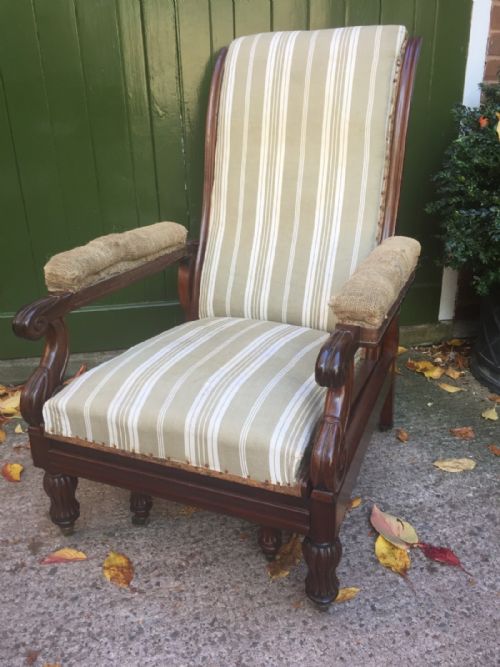
An adjustable library armchair is a seating form designed for reading and study, featuring mechanical provisions to alter the rake of the back or the height of the seat. The examples seen here span the nineteenth and twentieth centuries, encompassing periods from Regency and William IV through to Edwardian and Art Deco. Buyers will frequently encounter mahogany and oak constructions fitted with leather, fabric, or hessian upholstery.
The primary forms on this page include reclining armchairs, swivel desk chairs, and campaign styles equipped with castors for mobility. Makers of the nineteenth century frequently utilised patented reclining mechanisms to allow the sitter to move seamlessly from an upright posture to a tilted rest. These chairs combine utilitarian function with the formal cabinetry expected in period libraries and studies.
Construction and materials
The primary timbers recorded in these pieces are mahogany and oak, chosen for their structural strength and capacity to bear the stress of moving mechanical parts. Cabinetmakers employed solid timber and dense veneers to frame the high backs and wing profiles necessary for a supportive library seat. Brass hardware, including hinges, castors, and patent adjustment ratchets, forms an integral part of the construction.
Upholstery materials range from deep brown leather to patterned fabric, hessian, and tan leather, secured over supportive internal webbing and stuffing. Metal components such as iron and brass operate the swivel mechanisms on desk chairs and the reclining ratchets on library loungers. Each piece integrates joinery with metalwork to ensure the adjustable elements function smoothly under regular use.
Victorian readers clearly took their comfort seriously, often requiring heavy brass machinery just to find the ideal angle for a nap.
Assessing quality in adjustable seating
The distinction between standard pieces and superior examples lies in the sophistication of the mechanical design and the integrity of the timber framing. Chairs bearing documented patents, such as those associated with Daws or Foot and Sons, demonstrate a higher tier of ingenuity in their reclining mechanisms. The weight and finish of the brass hardware also indicate the original grade of the commission.
Cabinetwork precision separates fine library seating from utilitarian office chairs, visible in the carving of the arm supports and the turning of the legs. The selection of dense mahogany or quarter-sawn oak, combined with the survival of original castors and leather upholstery, dictates the standing of an individual piece. Superior examples maintain both their mechanical efficacy and the crispness of their stylistic details across periods.
Robert Daws·Foot and Sons
The Adjustable Library Armchair Glossary
- Campaign chair
- A portable folding or dismantling chair originally designed for military officers on campaign. These pieces often feature brass mounts and collapsible frames for ease of transport.
- Reclining mechanism
- The internal or external hardware that allows the backrest of a chair to tilt backward to various angles. In period library chairs, this is frequently operated via ratchets, brass rods, or weighted pivots.
- Wing back
- An armchair style featuring protective side panels attached to the armrests and rising to frame the head. This design protected sitters from draughts in large period rooms.
- Swivel desk chair
- A revolving seat mounted on a central spindle, allowing the user to turn through a full circle. These often incorporate adjustable height screws and caster bases for office use.
- Castor
- A small wheel mounted on a swivel fork attached to the base of furniture legs. They allow heavy library and desk chairs to be repositioned across floor coverings with minimal effort.
Adjustable Library Armchair: Frequently Asked Questions
How do adjustable mechanisms work on these chairs?
Period reclining chairs typically use a system of side ratchets, sliding brass rods, or weighted pivots concealed within the arms or back frame. These allow the sitter to lock the backrest at various angles of inclination.
Desk variants often employ a central wooden or metal screw thread beneath the seat, enabling the user to wind the chair up or down to the desired height.
Where were these chairs originally placed?
Such seating was designed primarily for domestic libraries, studies, private offices, and gentleman's retreats where reading and writing occupied much of the day. Their robust timber frames and adjustable comfort suited prolonged periods of sedentary work.
By the Edwardian era, similar swivel and reclining forms migrated into commercial offices and home studies as administrative tasks expanded.
Are these chairs suitable for daily use?
Most period library and desk chairs are built from solid hardwoods like mahogany and oak, making them structurally robust for contemporary seating requirements. Mechanical components, when properly maintained, continue to function as intended by the original cabinetmakers.
Buyers should ensure that internal webbing, leather, or fabric upholstery has been soundly restored if the chair is intended for heavy daily service.
How do I distinguish a Regency model from a Victorian one?
Regency and William IV pieces typically exhibit cleaner classical lines, bold mahogany grains, and restrained brass mounts reflective of early nineteenth-century neoclassical tastes. They frequently incorporate specific patent reclining designs.
Victorian and later Edwardian examples often introduce heavier proportions, buttoned leather upholstery, swivel mechanisms, and broader oak frames suited to more eclectic study interiors.