


Antique Metamorphic Chair
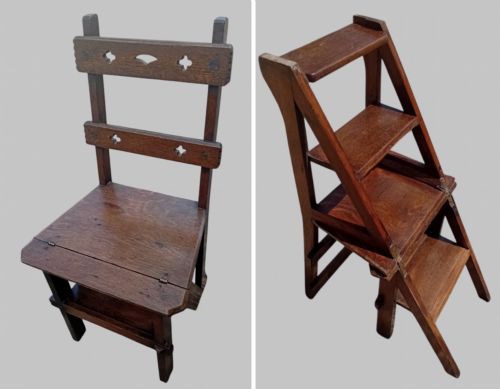
An antique metamorphic chair transforms from a seat into library steps or a table, offering dual utility in a single clever frame.
Antique Metamorphic Chair
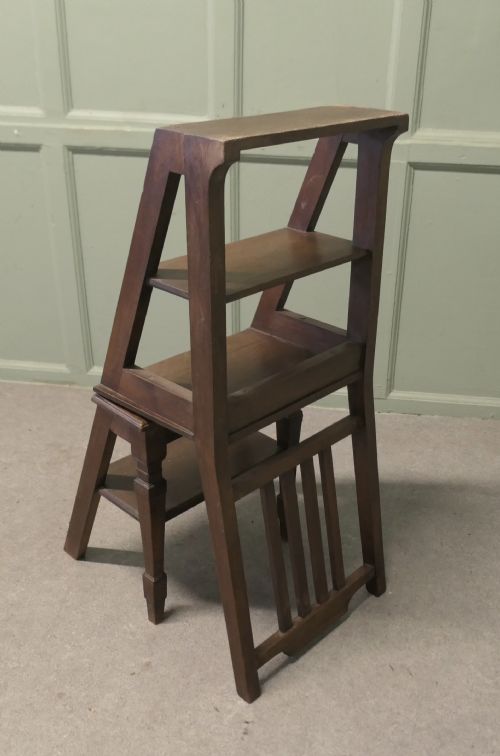
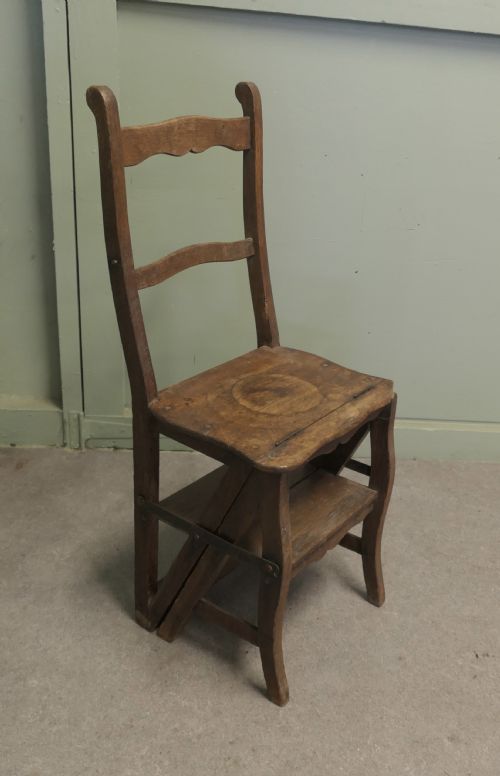
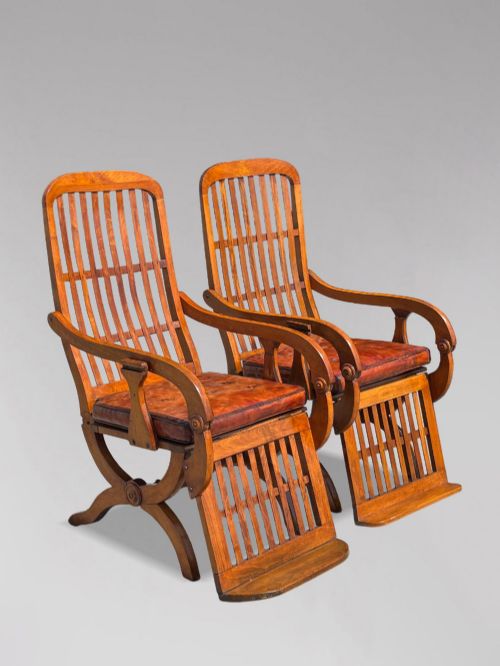
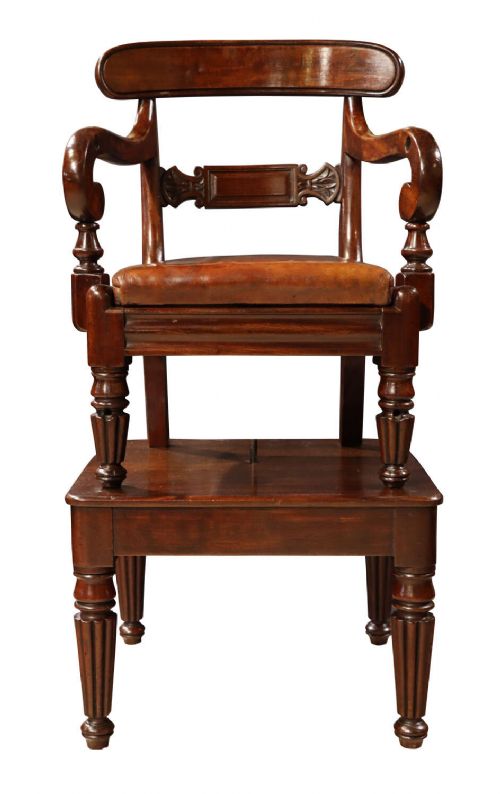
An antique metamorphic chair transforms from a standard seat into a set of library steps, a child's high chair, or a monks bench, serving more than one domestic purpose. When you search for an antique metamorphic chair, you meet pieces engineered to alter their physical configuration through hidden hinges, pivots, and folding frames.
The most common form on this page is the library chair that converts into steps, alongside child's high chairs and occasional monks benches. These dual-purpose designs reflect practical space-saving ingenuity from the Georgian, Regency, and Victorian periods.
Makers from the 19th Century onward applied this mechanical ingenuity to mahogany, oak, and walnut frames, ranging from formal library furnishings to rustic French country seating. Each piece relies on sturdy joints to support the transition between seating and climbing or resting.
Materials and Construction
Makers built these pieces primarily in mahogany, oak, and walnut, selecting dense timbers capable of enduring the repeated stress of folding and unfolding. Brass hinges, pivots, and locking brackets provide the mechanical joints necessary for the transformation without compromising structural stability.
Secondary materials such as leather, cane, fabric, and iron appear in upholstery, seating surfaces, and internal support mechanisms. The integration of wood and metal requires precise joinery so that moving parts operate smoothly across decades of use.
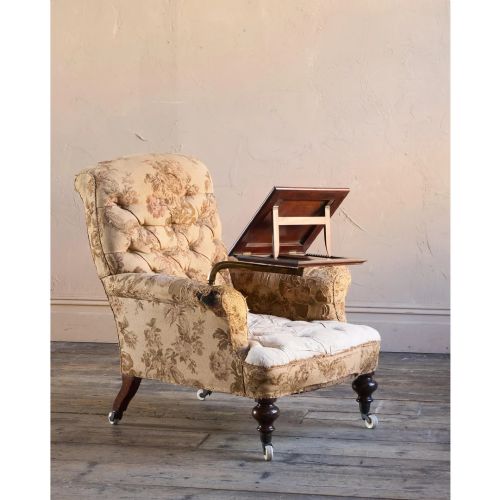
Some Victorian library chairs double as sturdy steps for reaching top-shelf novels before transforming back into a comfortable reading seat.
Distinguishing Quality
Quality rests in the precision of the mechanical action and the smoothness with which the frame converts from one form to another. Superior examples conceal their hinges and folding mechanisms within the timber design, avoiding bulky exterior hardware.
The choice of primary timber and the execution of secondary elements, such as leather upholstery or brass fixtures, separate standard utility pieces from fine cabinetwork. Cabinetmakers who achieved seamless transitions while maintaining standard seating proportions produced the most successful examples.
J Foot & Son·Morgan and Sanders·Richard Hicks Bridgens
The Antique Metamorphic Chair Glossary
- Metamorphic
- Furniture designed to transform from one functional form into another, such as a chair turning into library steps.
- Library Steps
- A set of portable stairs used to reach high bookshelves, often integrated directly into the frame of an armchair in these pieces.
- Monks Bench
- A multifunctional seating form that converts into a small table by tilting the backrest forward.
- Prie Dieu
- A devotional prayer chair featuring a kneeling shelf and an upper desk rail, occasionally found in metamorphic formats.
Antique Metamorphic Chair: Frequently Asked Questions
How do metamorphic library chairs work?
The upper back and seat sections pivot or unfold on hidden brass hinges to reveal a sturdy flight of wooden steps concealed within the underframe.
Securing latches lock the components firmly in place whether the object functions as a chair or as a set of library steps.
What periods do these chairs come from?
The selections span from the Georgian and Regency eras through the Victorian, William IV, and Edwardian periods.
Later examples extend into the Arts and Crafts movement and the early twentieth century, showing continuous demand for dual-purpose seating.
Are metamorphic chairs safe to climb?
Original brass locking mechanisms and sturdy hardwood frames are designed to support weight when fully locked into the step configuration.
Careful inspection of the pivot points ensures the joints remain stable before anyone climbs the converted steps.
What woods were used for these chairs?
Cabinetmakers relied on durable dense timbers including mahogany, oak, and walnut to handle the stress of mechanical movement.
Secondary woods and finishes like leather, cane, and iron appear in the upholstery and internal linkages.