
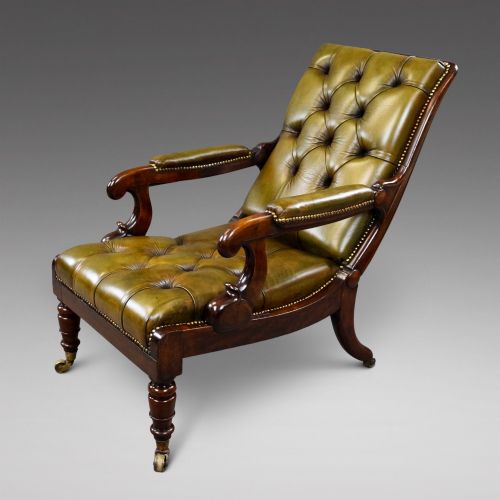


William IV Reclining Chair
A William IV reclining chair is a substantial library seat designed for comfort, and you will find mahogany and rosewood examples upholstered in leather.
William IV Reclining Chair
When you search for a william iv reclining chair, you are looking at nineteenth century seating designed for the library or study. These pieces combine heavy timber frames with mechanical adjustments for reading and resting.
Mahogany and rosewood form the main timber structures across the evidence. The forms include button leather armchairs, reading chairs, and X frame library seats attributed to known makers.
The pieces date predominantly from the nineteenth century, including the Regency and late Regency periods. Most examples retain their original function as adjustable armchairs.
How they were made
The timber frames rely on solid mahogany and rosewood, shaped into heavy armchairs and library seats. Brass fittings often support the reclining mechanisms and castors.
What varies in quality
Quality shows in the choice of timber and the complexity of the mechanism. Rosewood frames and marked pieces by makers such as Minter, Daws, or Gillows sit at the higher end.
The finish of the leather upholstery and the retention of original patent mechanisms distinguish standard library chairs from finer examples.
Gillows·Minter·Robert Daws
The William IV Reclining Chair Glossary
- William IV
- A British design period spanning the reign from 1830 to 1837, characterised by robust proportions and revival styles. It follows the Regency period.
- Regency
- A period of British design lasting from the early nineteenth century into the 1830s. It precedes the William IV style.
- Horsehair
- A traditional upholstery stuffing material used inside nineteenth century chairs for firmness and durability. It sits beneath the leather or fabric cover.
- X frame
- A structural chair design using intersecting cross members for the legs and supports. This form appears in late Regency library seating.
William IV Reclining Chair: Frequently Asked Questions
How do I recline these chairs?
These chairs use mechanical linkages concealed within the timber frame to alter the angle of the back. You adjust them by releasing a catch or shifting the weight.
Most mechanisms operate through hand levers or rack and pinion systems designed for the library or study.
Are they comfortable for daily use?
The deep padding and adjustable backs provide substantial support for reading or resting. The sprung seats and horsehair stuffing offer a firm sit.
They function well as study chairs in modern rooms, provided the mechanism remains in working order.
How can I tell a genuine period piece?
Examine the timber construction, brass fittings, and secondary woods used in the frame. Nineteenth century examples show specific joinery methods and patination on the mahogany or rosewood.
Maker stamps or patent plaques on the mechanism offer the clearest indication of origin.
What is the difference between mahogany and rosewood versions?
Mahogany chairs tend to display deeper brown tones and robust proportions. Rosewood examples feature darker, more figured grain patterns.
Rosewood pieces often indicate a higher tier of production within the nineteenth century range.