




Vintage Leather Recliner
These vintage leather recliner examples span the nineteenth century to the early twentieth century, offering heavy timber frames and deep buttoning for proper rest.
Vintage Leather Recliner
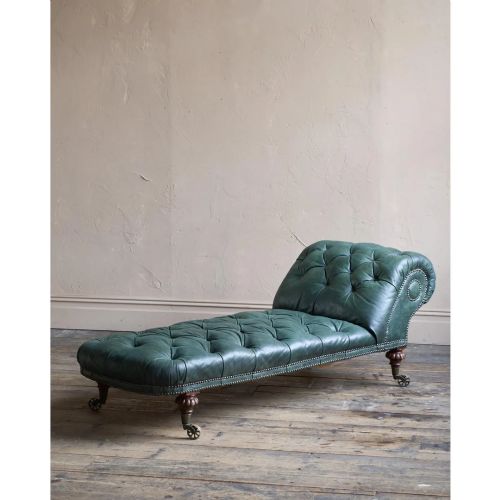
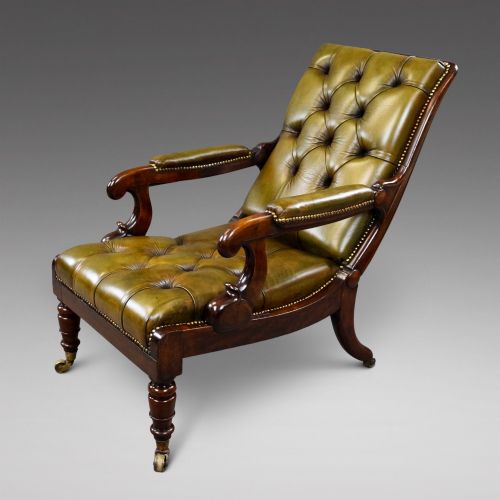
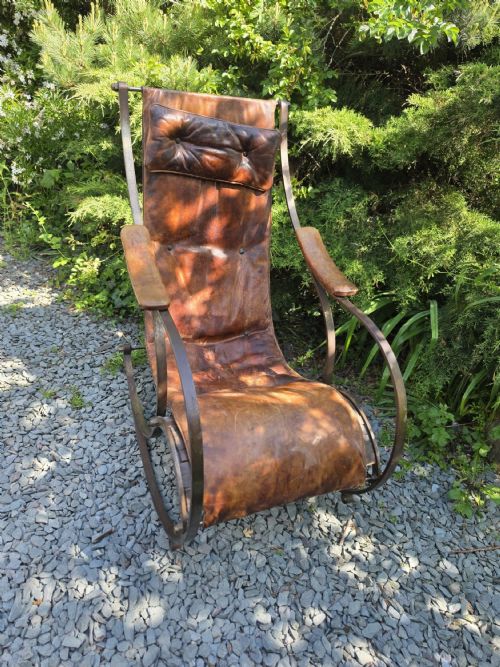
When you search for a vintage leather recliner, you are looking at nineteenth-century and early twentieth-century seating designed for adjustable comfort. The pieces on this page span several decades, featuring forms like library armchairs, rocking chairs, and chaise longues.
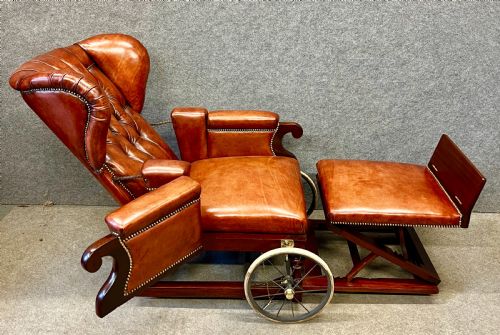
You are most likely to meet Victorian and Regency designs upholstered in leather and supported by robust timber frames. These include mechanical reclining chairs, metamorphic designs, and invalid chairs built for sustained relaxation.
Origins vary across British, colonial, and French workshops, showing diverse regional interpretations of mechanical comfort. Makers utilised patent mechanisms to allow the backrest and seat to shift smoothly.
How they were made
Craftsmen built the frames using dense hardwoods like mahogany, oak, and rosewood, often incorporating cane panels and iron bracing for structural support. These timbers provided the necessary strength to house complex mechanical pivoting systems.
Upholsters worked with genuine leather, securing the hides with metal studs and filling the interiors with traditional stuffing to achieve deep buttoned upholstery. Brass components and swivel casters completed the construction of these adjustable chairs.
Listings feature periods from the nineteenth century up to nineteen-ten, utilising mahogany, oak, cane, iron, and brass.
What varies in quality
The sophistication of the mechanical adjustment mechanism dictates the upper tier of these chairs, separating simple tilt designs from fully articulating patent systems. Smooth operation of the reclining action reflects superior period engineering.
The choice of cabinet timber and the precision of the frame joinery also mark the distinction between standard production and workshop pieces. Rich grain patterns in the mahogany or oak elevate the overall execution.
R W Wingfield·Heals of London·Robert Daws·John Ward·Foot and Sons
The Vintage Leather Recliner Glossary
- Bergère
- An enclosed upholstered armchair with wooden frames, often featuring cane work on the sides and back. This form appears frequently in Regency library seating.
- Metamorphic
- Describing furniture designed to transform into different forms, such as an armchair converting into a chaise lounge. These pieces rely on hidden hinges and pivots.
- Chaise Longue
- An upholstered couch shaped like a chair with a long seat for reclining. Versions span Victorian colonial styles and nineteenth-century French designs.
- Button Leather
- Upholstery featuring deep tufting secured by rows of buttons, creating distinct diamond patterns across the leather surface. This technique provides firm support to the padding.
- Patent
- A legally protected mechanical invention applied to chairs to enable adjustable reclining angles. Makers registered these designs to mark their proprietary innovations.
Vintage Leather Recliner: Frequently Asked Questions
How do these recliners adjust?
Period mechanical recliners use ratchets, brass handles, or weighted pivoting frames concealed within the timber arms and backrests. Users pull levers or shift the back angle manually to lock the chair into various reclining positions.
These systems rely on robust iron and brass hardware to hold the weight of the occupant securely in place without slipping.
Where were these chairs used?
Original owners placed these adjustable chairs in private libraries, studies, and drawing rooms where reading and prolonged sitting took place. Convalescing rooms also utilised specialised invalid and wheel chair variants for resting patients.
Colonial plantation spaces favoured the chaise longue and reclining armchair formats to maintain comfort in warmer climates.
How do I identify a Victorian reclining chair?
Victorian examples typically feature dark hardwoods, heavy buttoned leather, and visible mechanical adjustments dating from the mid-to-late nineteenth century. Look for robust frames, metal studs, and patent plates indicating the manufacturing period.
Earlier Regency and William IV pieces tend to show lighter mahogany tones and distinct classical turnings on the legs.
Can I use a vintage recliner daily?
These pieces function well for regular daily seating provided the internal frame and leather remain stable and well-conditioned. The solid timber construction and thick padding handle routine use comfortably.
Care should be taken with the vintage mechanical ratchets to ensure smooth operation during adjustment.