



Victorian Leather Lounge Chair
A victorian leather lounge chair brings substantial comfort and rich patination to a room, drawing on decades of skilled nineteenth-century cabinet-making.
Victorian Leather Lounge Chair
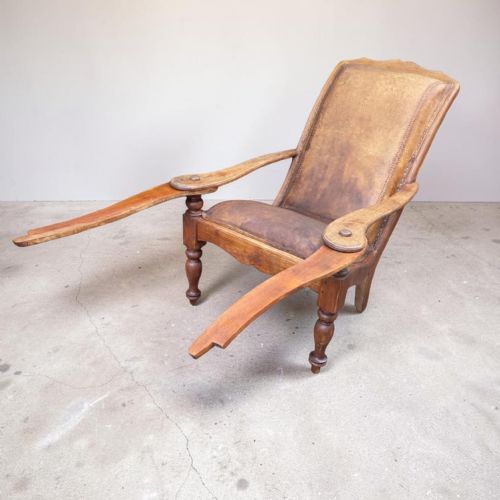
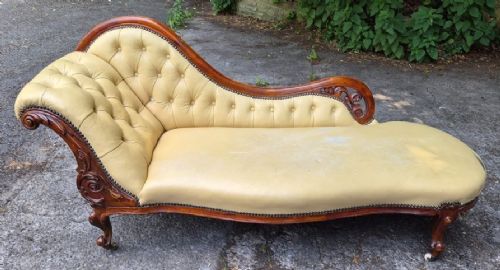
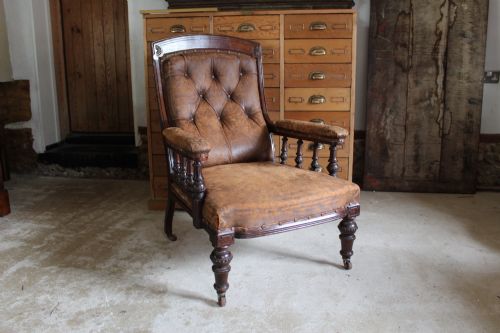
When searching for a victorian leather lounge chair, you encounter a varied selection of nineteenth-century seating designed for comfort and library use. The offerings range from sturdy library and club armchairs to reclining campaign chairs, chaise longues, and substantial Chesterfield suites.
Most examples date across the Victorian era, utilising dense hardwoods and supple leather upholstery. Forms vary from wingback and barrel-back designs to colonial planter's chairs and low nursing chairs.
Makers and workshops of the period employed diverse stylistic influences, including Chippendale revival, Jacobean revival, and French interpretations alongside traditional English country house aesthetics.
How they were made
Carpenters constructed the robust internal frames using hardwoods such as mahogany, walnut, oak, rosewood, and general timber. These wooden skeletons often featured detailed hand-carved elements, cabriole legs, or claw and ball feet.
Upholsterers fitted the frames with durable leather, frequently incorporating brass details and buttoning. Mechanical elements in adjustable campaign or metamorphic chairs relied on robust metal fittings integrated smoothly into the wooden framework.
The furniture styles range from Regency and Chippendale revival to Anglo-Indian colonial and French nineteenth-century designs.
What varies in quality
The degree of hand-carving on the mahogany or walnut frames dictates much of the visual distinction between standard seating and high-end library or colonial pieces. Elaborate lion carvings and solid claw and ball feet elevate the presence of the furniture.
The depth and treatment of the leather upholstery, from hand-dyed finishes to traditional buttoning, determine the tactile appeal. Original mechanical adaptability in reclining and metamorphic models also separates utilitarian seating from master-built examples.
Howard & Son's
The Victorian Leather Lounge Chair Glossary
- Chesterfield
- A style of upholstered seating characterised by deep buttoning and rolled arms of equal height. This form appears across various Victorian library armchairs and suites.
- Campaign chair
- Portable folding or adjustable seating designed for travel during the nineteenth century. These pieces often incorporate mechanical adjustments and durable leather.
- Chaise longue
- An elongated upholstered chair designed for reclining, featuring a backrest and partial arm. Victorian versions frequently utilise carved mahogany or rosewood frames.
- Cabriole leg
- A furniture leg that curves out and then in, resembling an animal's curving leg. This form frequently terminates in carved feet on Victorian armchairs.
- Planter's chair
- A colonial seating form featuring extended arms designed for resting legs. These large chairs utilise hardwood frames and leather upholstery.
Victorian Leather Lounge Chair: Frequently Asked Questions
How do I identify a Victorian leather chair?
Look for dense hardwood frames constructed from mahogany, walnut, or oak, combined with traditional hand-finished leather upholstery. Period details such as brass accents, hand-carved cabriole legs, or deep buttoning confirm the nineteenth-century origin.
Check for construction methods typical of the era, including hand-stitched leather and solid timber framing beneath the upholstery.
What is a metamorphic armchair?
A metamorphic armchair is an adjustable nineteenth-century seat designed to alter its configuration for reading, resting, or reclining. These pieces utilise hidden mechanical hinges and levers built directly into the wooden frame.
Such designs allowed Victorian users to transition smoothly from an upright library posture to a fully reclined position.
Where were library chairs used?
Library chairs were placed in the studies, libraries, and drawing rooms of large English country houses and town residences. Their robust construction and supportive leather backs suited long hours of reading and writing.
Pairs of these armchairs typically flanked fireplaces or large mahogany partner desks.
How do I care for antique leather?
Maintain antique leather by keeping the material away from direct sunlight and excessive heat sources which cause drying and cracking. Regular light dusting and occasional treatment with appropriate conservation balms preserve the natural suppleness.
Avoid modern chemical cleaning agents that might strip the historic hand-dyed finish or damage the underlying hide.