
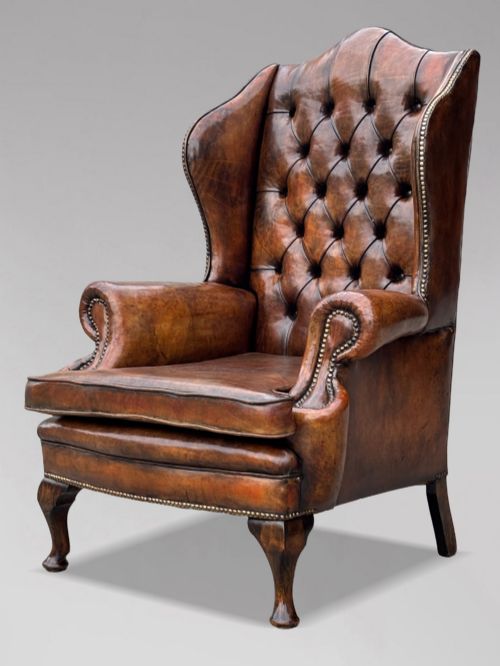
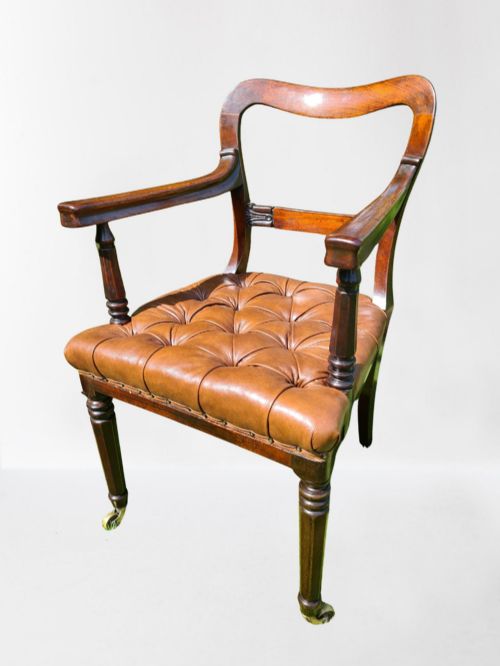
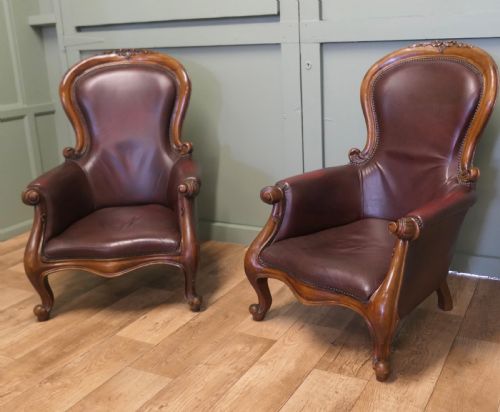
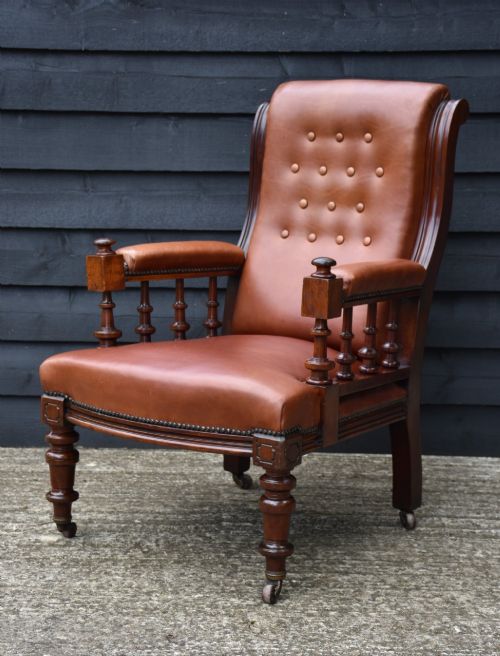
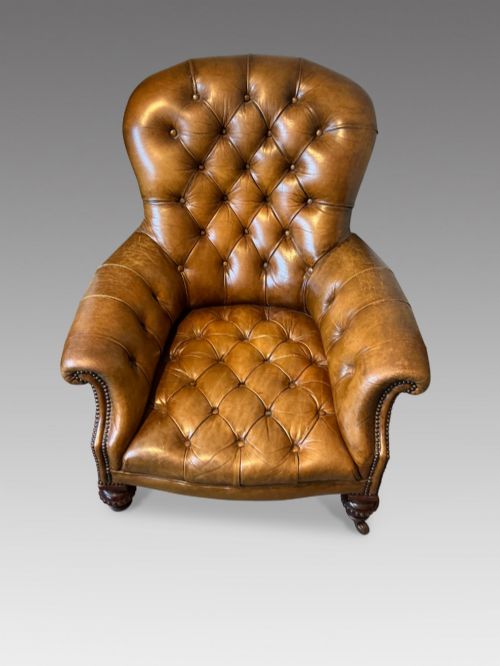
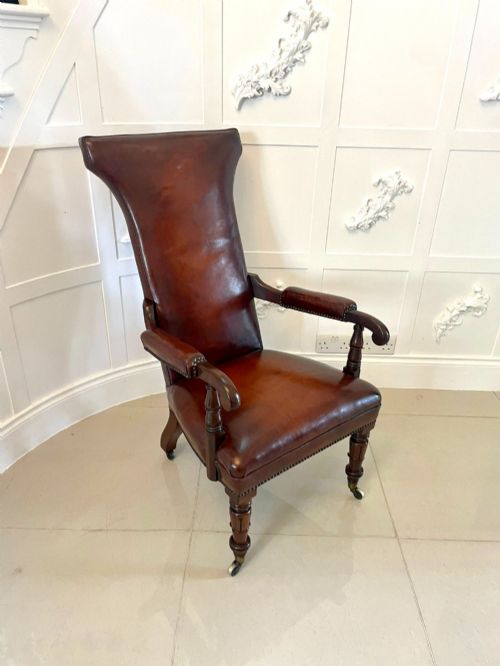
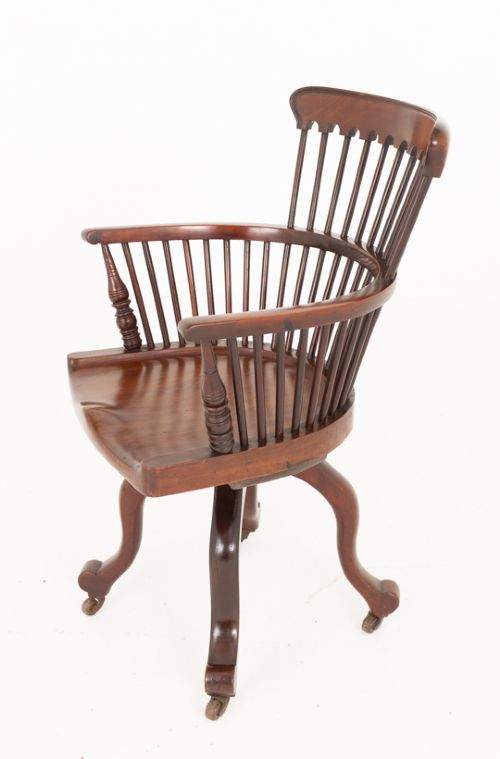
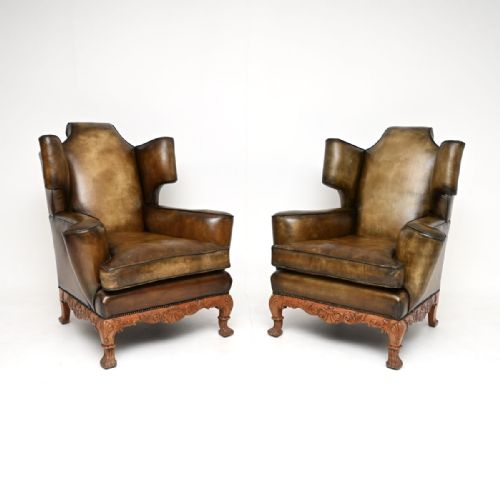
Brown Mahogany Library Chair
A brown mahogany library chair offers sturdy comfort and timber warmth, making it a reliable seat for heavy volumes and long hours at the desk.
How they were made
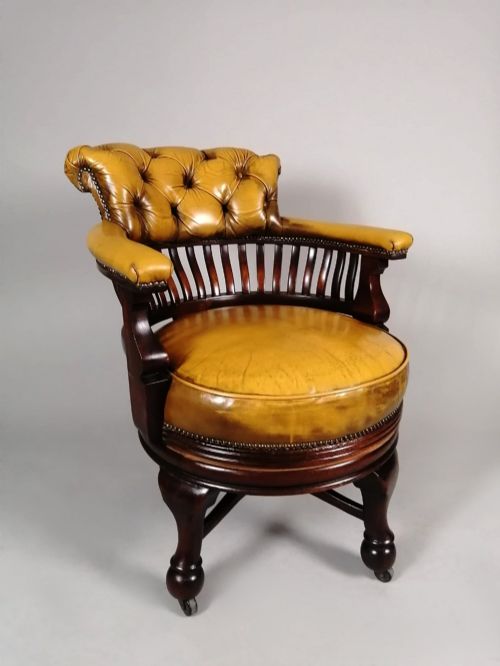
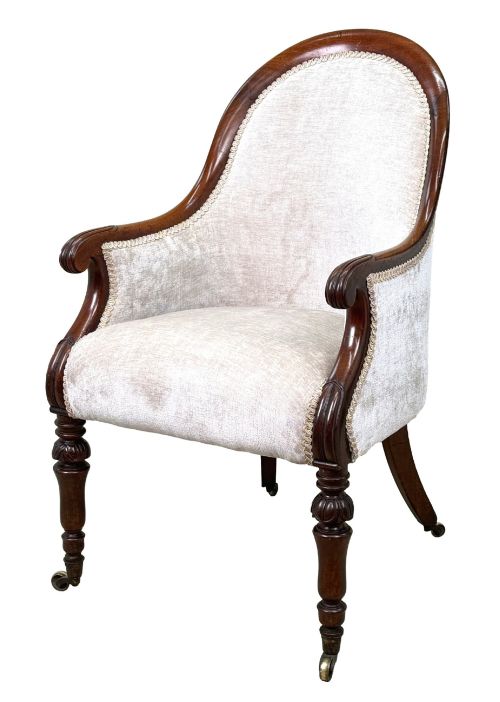
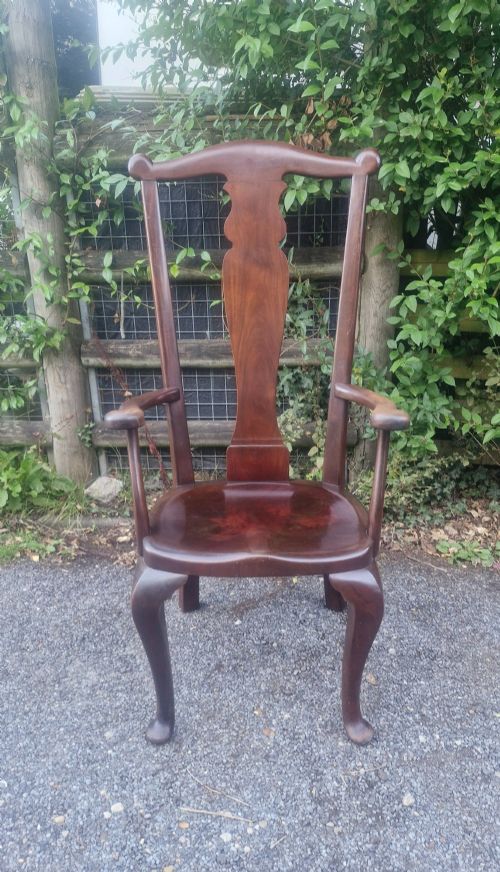
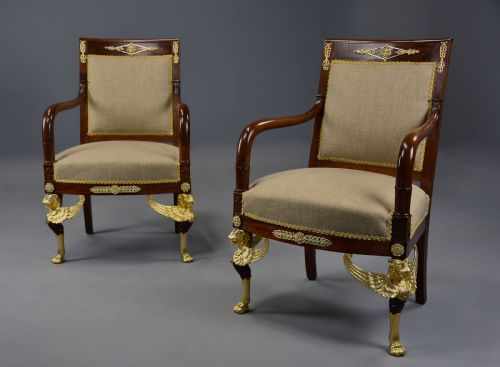
Makers built the primary frames from solid mahogany, frequently incorporating turned or reeded legs, carved arm supports, and brass inlays. Joinery relied on traditional pinned mortise and tenon construction to withstand the daily weight and movement of a working seat.
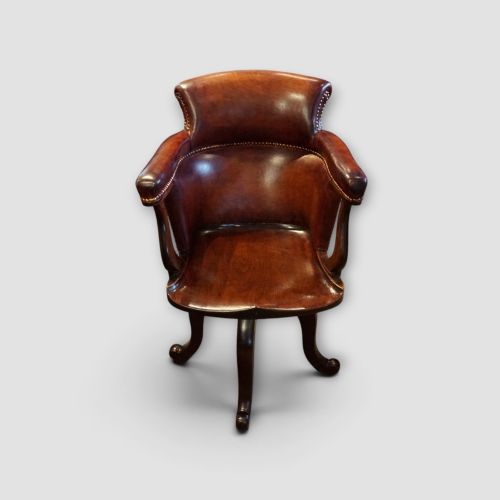
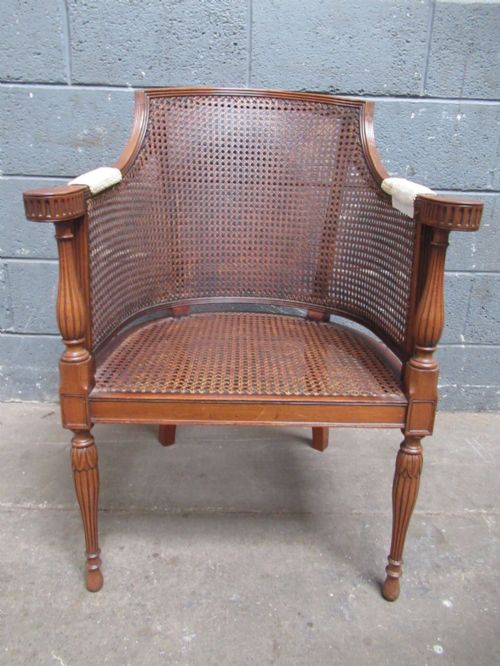
Upholstery materials combined horsehair stuffing held by hessian webbing beneath top covers of hand-dyed leather, velvet, or woven fabric. Caned panels appeared on lighter bergère designs, woven closely around timber frame apertures.
What varies in quality
Quality rests upon the crispness of timber carving, the depth of the mahogany grain, and the integrity of the underlying frame construction. Superior examples display carefully chosen timber figures, precise joinery, and restrained decorative carving rather than heavy, untidy embellishment.
The degree of original craftsmanship also shows in the upholstery specification, where hand-stitched leather hide and traditional horsehair stuffing outlast modern foam replacements. Proportion and balance dictate whether a chair sits comfortably while retaining its formal architectural lines.
Listings feature mahogany, brass, leather, cane, fabric, hessian, and velvet across Georgian, Regency, Victorian, and Edwardian periods.
Gillows
The Brown Mahogany Library Chair Glossary
- Bergère
- An enclosed armchair with stuffed upholstery and cane panels set into the wooden frame. They originated in France and became popular in English Regency and Edwardian drawing rooms.
- Gainsborough armchair
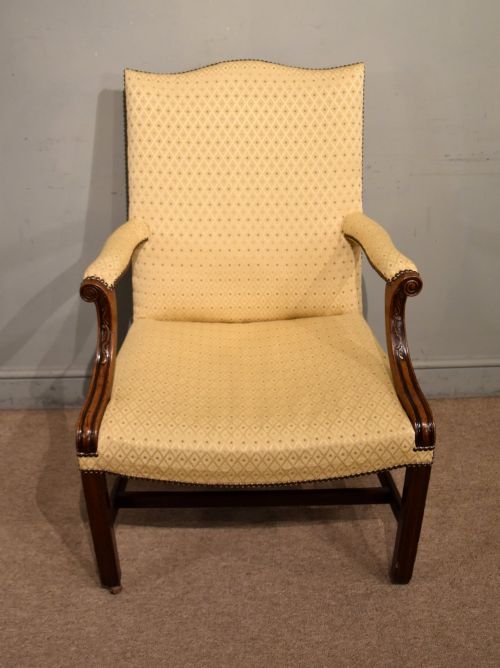
- A wide-seated, open-armed Georgian chair designed for writing tables and libraries. They typically feature padded armrests and straight mahogany legs.
- Reeded
- A decorative moulding formed of parallel convex rounds cut into the timber legs or frame. It provides texture and visual relief on nineteenth century mahogany furniture.
- Tub chair
- An upholstered seating form where the back and arms curve continuously in a rounded shell. This shape offered warmth and draught protection in nineteenth century libraries.
- Spindle back
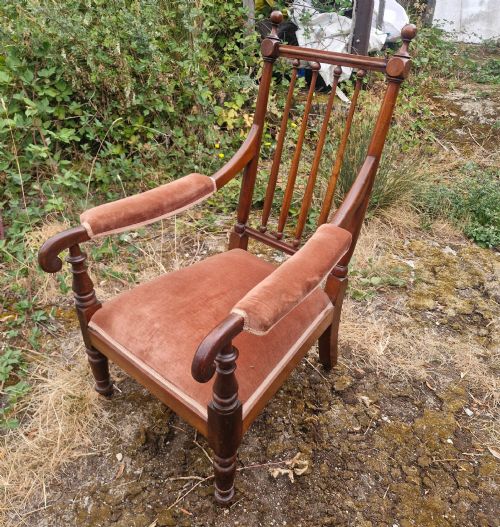
- A chair back constructed from slender, turned vertical wooden rods. These lighter frames are common on nineteenth century desk and reading chairs.
Brown Mahogany Library Chair: Frequently Asked Questions
How do I spot a genuine nineteenth century library chair?
Examine the timber underneath the seat for signs of age, hand-cut screws, and traditional joinery methods. Nineteenth century frames often show minor tool marks and dense, heavy mahogany rather than modern lighter substitutes.
Check the secondary woods used for internal frame bracing, which should match the period of the main construction. Original leather upholstery, if present, develops a distinct craquelure and patina that modern chemical treatments cannot truly replicate.
Were these chairs used only in libraries?
While designed for scholarly spaces and reading rooms, these chairs also served in parlours, private offices, and drawing rooms. Their robust timber frames and comfortable upholstered seats made them versatile pieces for various domestic rooms.
Writing desks and study tables frequently paired with these armchairs to provide proper back support during long periods of reading and correspondence.
What is the difference between a desk chair and a library chair?
Desk chairs often feature swivel mechanisms, height adjustments, or compact revolving bases designed for active office work. Library chairs tend to focus on stationary comfort, featuring deep seats, upholstered arms, and wider proportions for relaxed reading.
Many nineteenth century examples blur these lines by combining heavy mahogany library frames with desk-friendly proportions and revolving mechanisms.
How should I care for the leather upholstery?
Maintain antique leather by keeping it away from direct sunlight and heat sources that dry out the hide. Apply a suitable microcrystalline wax or specialist leather conditioner sparingly to nourish the surface without clogging original pores.
Avoid using modern household cleaners or heavy saddle soaps, which can strip away the historical hand-dyed finish and soften the aged leather excessively.