





Adjustable Book Stand Table
An adjustable book stand table holds volumes at a working angle, serving readers who need mobility and precise positioning.
Adjustable Book Stand Table
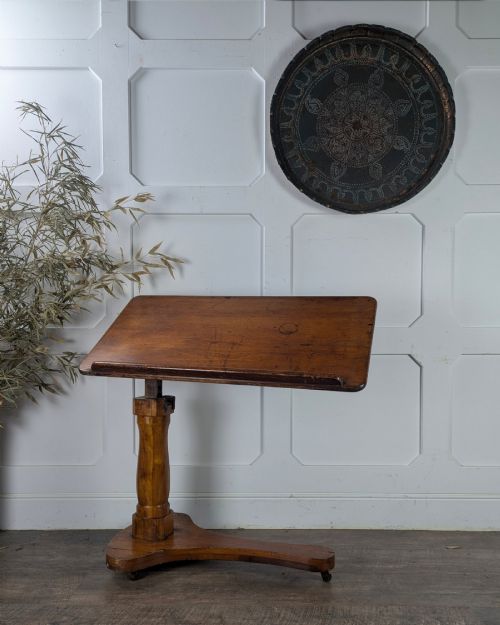
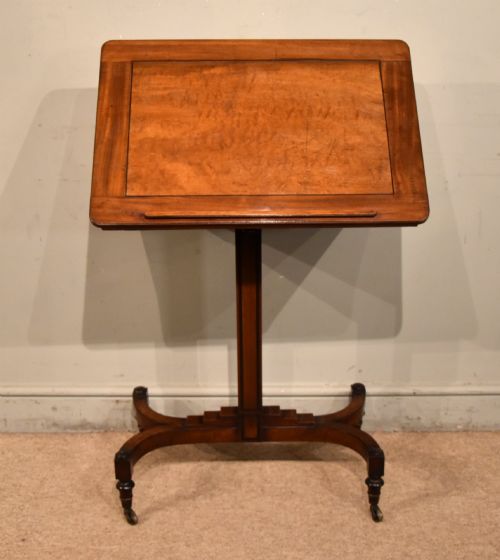
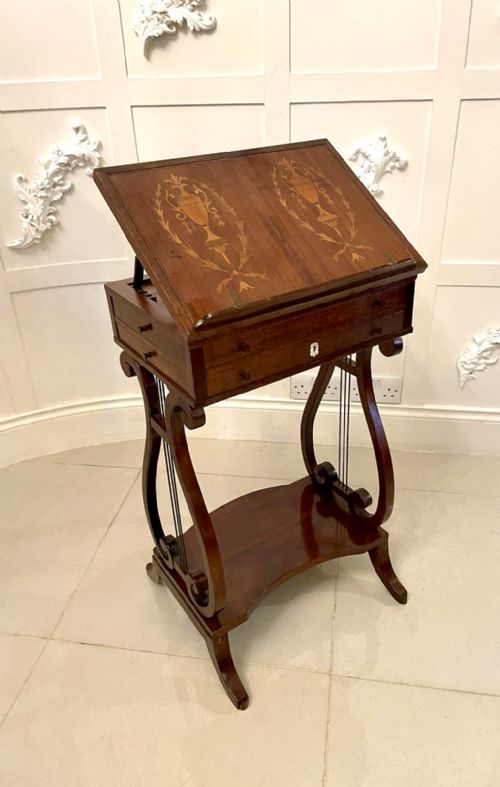
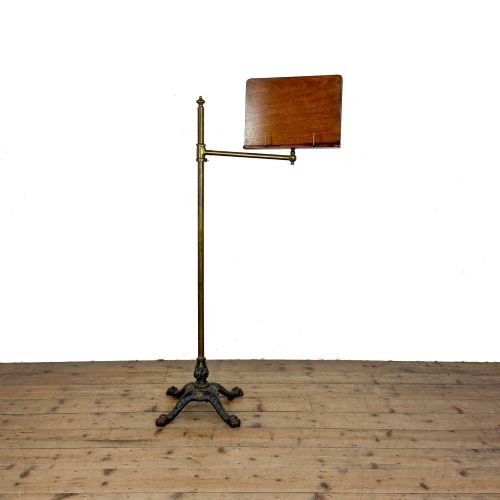
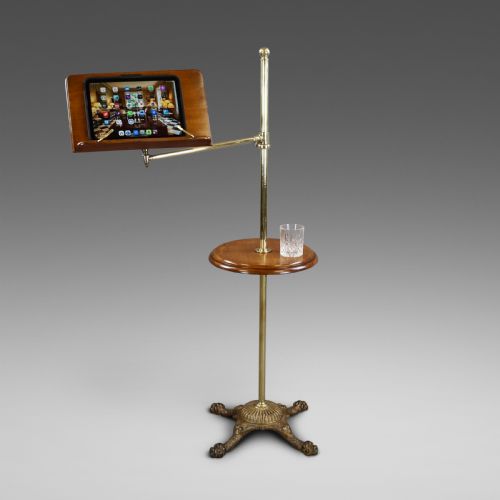
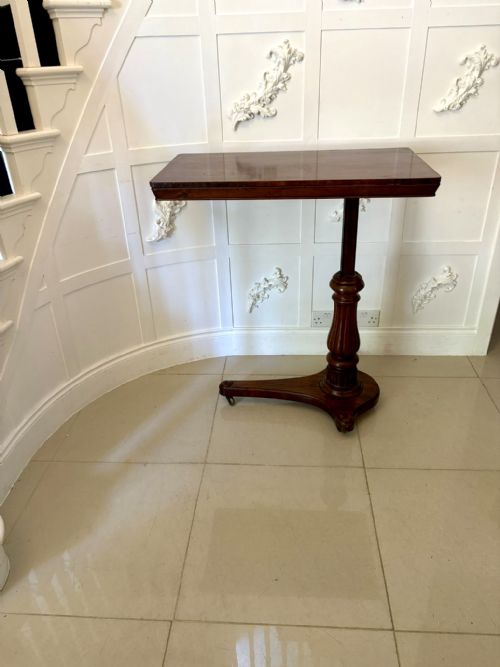
An adjustable book stand table combines a surface for reading with a mechanism to alter the angle or height of the book rest. These pieces appear across the nineteenth century and into the early twentieth century, spanning periods from George II and Regency through to Victorian and Edwardian eras.
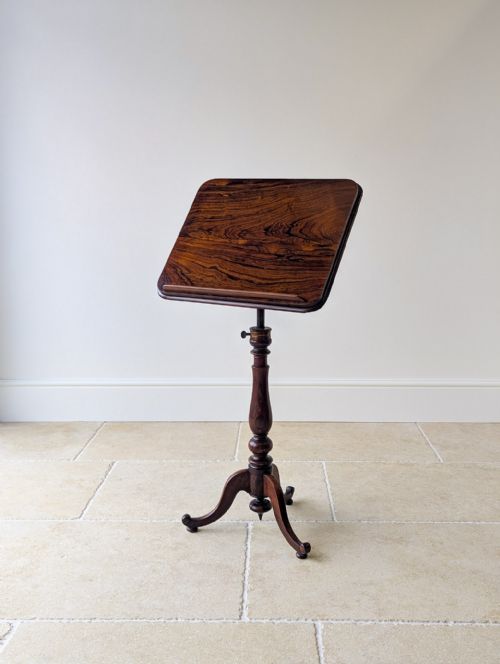
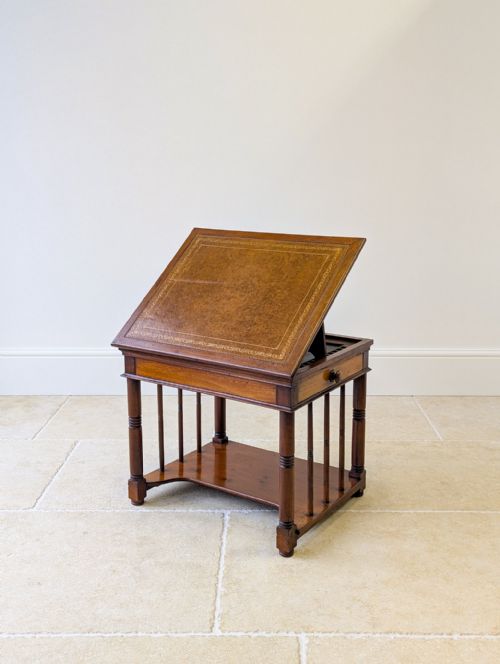
The primary forms on this page include freestanding reading tables, library chairside stands, music stands, and campaign table tops. Woods such as mahogany and rosewood dominate alongside oak, pine, brass, and cast iron structures.
Makers adapted these stands for diverse settings, from formal libraries and drawing rooms to bed use and campaign travel. Many examples double as occasional tables or sewing tables when the reading slope lies flat.
Materials and Technique
Cabinetmakers built the main frames predominantly in dense timbers like mahogany, rosewood, and oak, often incorporating brass ratchets, hinges, and pillar supports to manage the adjustable movement.
Cast iron and chrome appear in later Victorian and early twentieth-century examples, particularly on bed tables and mobility aids designed for heavy domestic use.
Mechanism construction dictates how the slope pivots, utilising wooden ratchets, brass struts, or iron screw shafts to lock the book ledge securely at the required angle.
One piece includes marine-themed details on a mahogany top with an adjustable book rest.
Standards of Manufacture
Quality rests on the integrity of the adjustment mechanism and the precision of its metalwork. Robust brass ratchets or well-fitted iron screws distinguish superior engineering from simpler domestic carpentry.
Timber selection and secondary framing determine durability. Finely figured mahogany or rosewood veneers applied to solid carcases indicate higher workshop standards than utilitarian pine or basic oak builds.
Proportion and stability matter when the stand extends to maximum height or holds heavy folios. Better pieces maintain balance without rocking on their pillar bases or tripod legs.
Carters Of London·Gillows·Swann And Millican
The Adjustable Book Stand Table Glossary
- Ratchet
- A notched metal bar that engages with a catch to hold a reading slope at incremental angles. This component is essential for altering the slant of the book rest.
- Campaign
- Describing portable furniture made for travel or military use, often featuring folding frames or detachable parts. Such pieces prioritize compactness alongside everyday utility.
- Duet stand
- A music or book stand wide enough to accommodate two readers at once, or two open volumes side by side. These often feature double brass candle sconces or expanded reading ledges.
- Occasional table
- A small, movable table intended for specific, intermittent tasks rather than permanent placement. They appear frequently in nineteenth-century sitting rooms.
- Lectern
- A stand with a slanted top designed to hold a book for reading while standing or sitting closely. They occur in both domestic library and institutional contexts.
Adjustable Book Stand Table: Frequently Asked Questions
How do you adjust the reading height?
Most tables use a central brass screw column or a ratcheted iron rod beneath the top. Turning the screw or lifting the ratcheted arm raises the surface.
Securing the thumb screw or dropping the catch into the desired notch locks the mechanism in place before loading a book.
Were these used in bed?
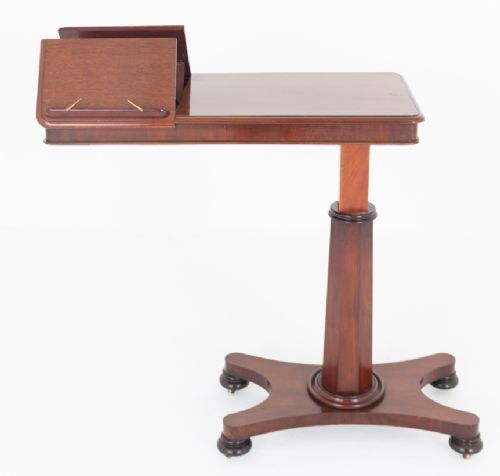
Late Victorian and Edwardian examples specifically served as bed tables or mobility aids for invalids. Iron frames allowed the base to slide beneath a bed frame.
The overbed top positioned books or meals directly across the user without resting weight on the mattress.
Can these function as normal tables?
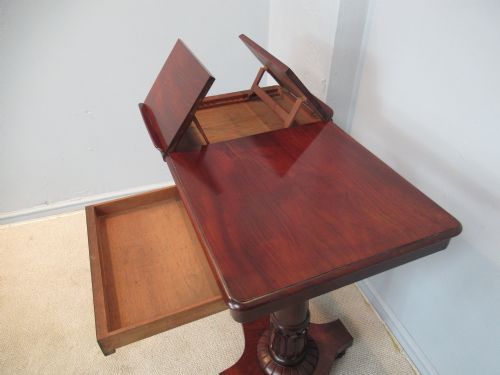
Many designs incorporate a hinged ratcheted section alongside a static surface, allowing part of the top to tilt while the rest remains flat.
When the reading slope drops entirely horizontal, the piece acts as a standard occasional or side table for daily room use.
How do I distinguish Regency from Victorian stands?
Regency pieces lean towards neoclassical restraint, featuring sabre legs, brass reeding, and dark figured mahogany without heavy ornamentation.
Victorian variants often introduce bolder turned pedestals, rosewood veneers, cast iron components, and more complex mechanical ratchets.