



Mahogany Adjustable Lectern
These mahogany adjustable lectern pieces offer robust timber and clever mechanical rises for books and scores, serving studies and music rooms alike.
Mahogany Adjustable Lectern
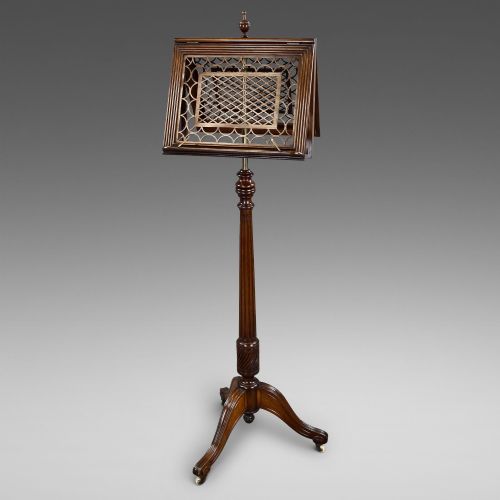
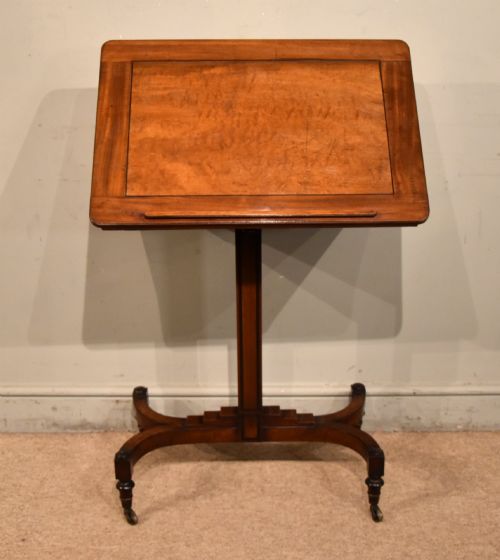
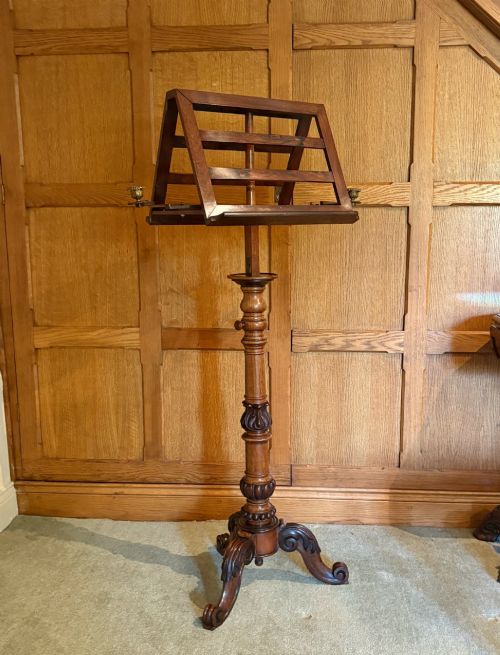
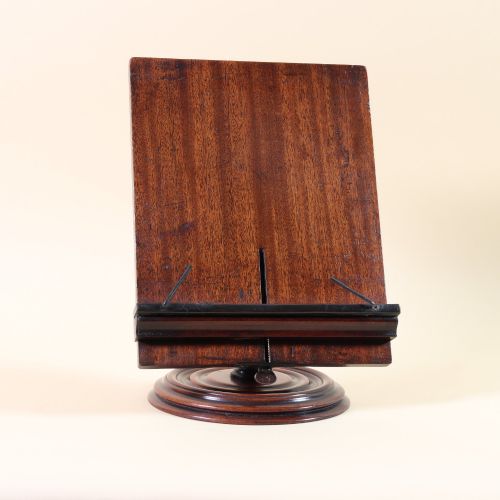
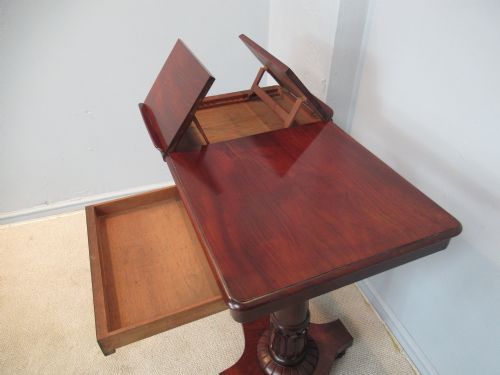
A mahogany adjustable lectern combines solid timber construction with pivoting book rests, reading surfaces, and duet music stands. These items appear across the Regency, Victorian, and Edwardian eras, incorporating George III, George IV, and William IV stylistic traits.
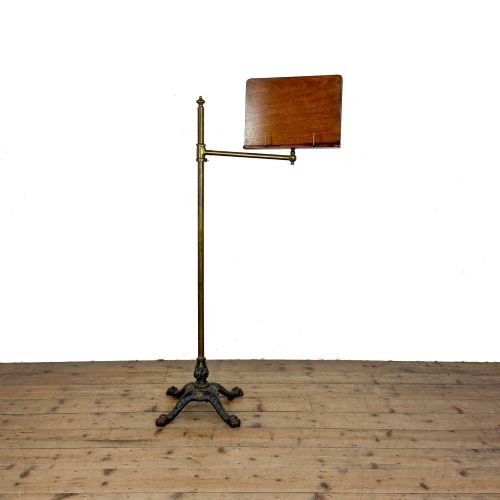
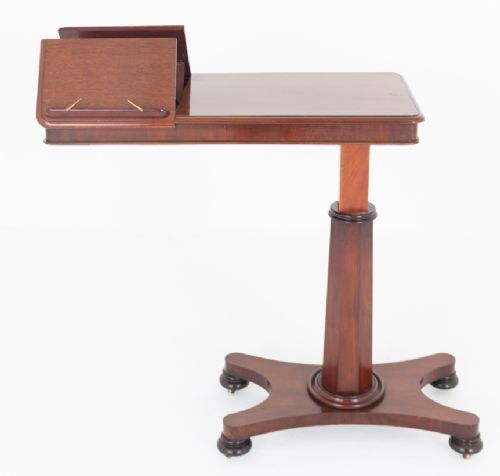
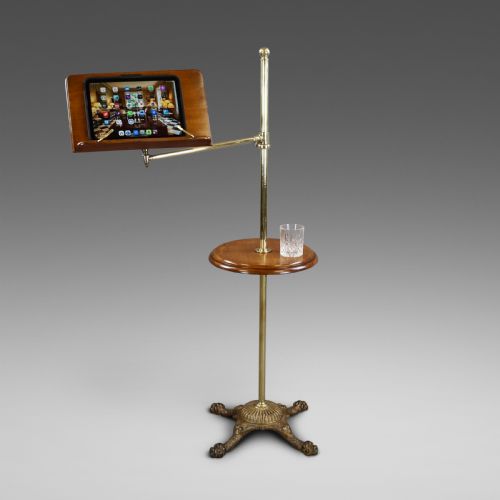
The most common formats on this page are floor-standing reading tables, desktop book rests, and metamorphic occasional pieces. Makers often integrated brass ratchets, cast iron mechanisms, and folding supports to alter the height and angle for the user.
Originating as practical library or parlour furnishings, these pieces span campaign furniture designs, lyre-shaped supports, and double-sided reading tables. Examples range from simple desk-top book stands to elaborate pedestals with satinwood and boxwood inlay.
Materials and construction methods
Makers built these pieces primarily from solid and veneered mahogany, frequently combining boxwood, satinwood, and rosewood for decorative inlay work. Structural elements often rely on brass mechanisms, hinges, and ratchets to permit height and angle adjustments.
Heavy cast iron components appear in specialised mechanical bases, such as patented bed reading tables, providing stability for the rising columns. Secondary framing utilises robust timbers to support heavy folios and bound volumes without sagging.
Some Victorian readers featured candle arms so scholars could study late into the evening without burning their eyebrows.
Distinctions in craftsmanship
Quality rests upon the precision of the mechanical adjustment ratchets, the fluidity of the rising columns, and the stability of the heavy bases. Superior examples feature integrated brass fittings that operate smoothly without binding or requiring excessive force.
Timber selection and secondary detailing mark the graduation from utilitarian items to high-status commissions. Finely figured mahogany surfaces paired with crisp boxwood or satinwood inlay denote superior workshop output.
GILLOWS·John Carter·Harrods
The Mahogany Adjustable Lectern Glossary
- Duet stand
- A music stand or reading lectern wide enough to hold two open scores side by side. These often feature fretted wooden music desks.
- Campaign table
- Portable furniture designed for travel, featuring folding legs or collapsible stands. These pieces utilise robust mahogany and brass corners for durability.
- Metamorphic
- Furniture that transforms from one form into another, such as an occasional table converting into a raised reading desk. These designs rely on concealed hinges and sliding supports.
- Lyre-shaped
- A decorative support formed in the outline of an ancient Greek lyre. This motif appears frequently on the vertical columns of music stands.
- Ratchet
- A mechanical device with teeth that engages with a pawl to lock a reading rest at various preset angles. This allows the user to alter the viewing angle securely.
Mahogany Adjustable Lectern: Frequently Asked Questions
How do I adjust the reading height?
Most pieces utilise a sliding column secured by a thumbscrew or a mechanical ratchet system hidden beneath the book rest. Operators lift or lower the upper shaft to the desired level before locking the mechanism in place.
Heavier mechanical versions, including patent reading tables, rely on internal spring or screw mechanisms operated by a winding handle. Users must support the weight of the reading surface while releasing the lock to prevent sudden drops.
Were these made for books or sheet music?
These pieces served multiple domestic purposes, functioning equally well as music stands for instrumentalists and reading stands for library study. Many designs incorporate adjustable brass page holders to keep bound volumes or loose sheets open at a chosen page.
Duet stands and double-sided tables indicate usage by multiple readers or musicians simultaneously. The inclusion of hinged ledges prevents heavy folios from sliding off when the surface tilts at steep angles.
How do I date a mahogany adjustable lectern?
Dating relies on observing the prevailing furniture styles, such as Regency reeded legs, Victorian heavy pedestals, or Edwardian inlay patterns. The evolution of brass hardware and iron adjustment mechanisms also provides chronological markers for the piece.
Pinned construction, secondary timber choices, and maker marks stamped into the brasswork help confirm the production era. Surviving patent stamps on mechanical parts narrow the date of manufacture to the specific inventor's active period.
Can I use a reading table as a normal desk?
Desktop book rests sit on existing tables to elevate reading material, whereas reading tables feature their own dedicated support pedestals and adjustable tops. Floor-standing variants often provide a smaller surface area intended for holding a single open volume rather than general writing tasks.
The tilting mechanism on many lecterns makes extended handwriting difficult unless locked completely flat. However, adjustable reading tables function well as secondary laptop desks or book supports in studies.