



Adam Style Hall Table
An adam style hall table brings classical symmetry and refined neoclassical ornament to an entrance, drawing on eighteenth-century proportion for formal rooms.
Adam Style Hall Table
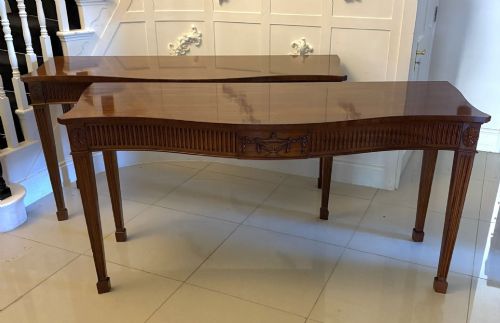
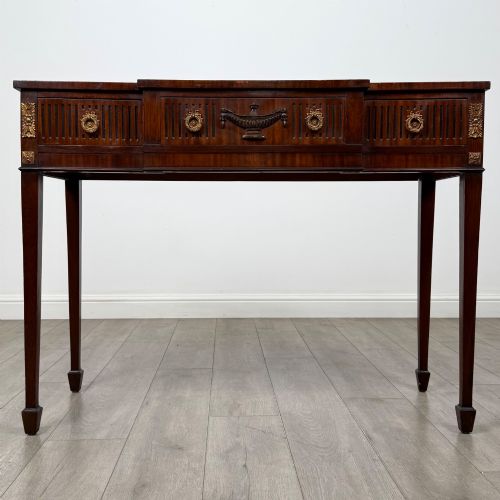
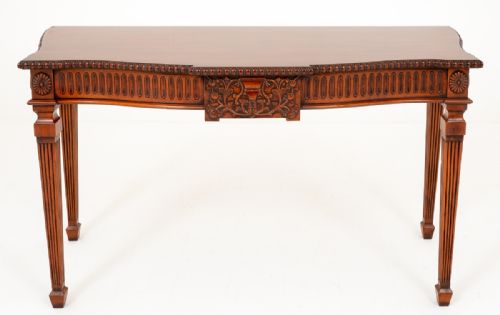
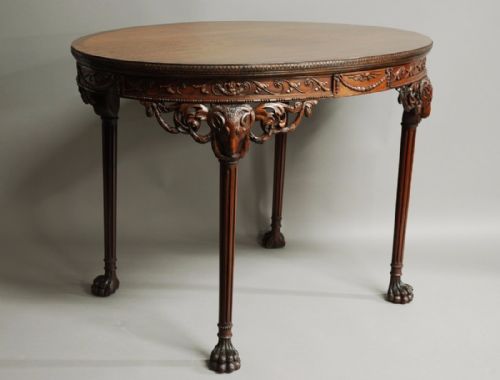
When you search for an adam style hall table, you encounter console tables, centre tables, serving tables, and side tables shaped by neoclassical and Adam revival design. These pieces adapt eighteenth-century architectural motifs for domestic entryways and reception rooms.
The selections available here span the nineteenth century, the Edwardian era, and the early twentieth century, alongside occasional eighteenth-century George III examples. Mahogany predominates alongside painted wood, giltwood, and marble-topped variants.
Forms include demi-lune shapes, serpentine fronts, and elliptical pier tables. Many pieces incorporate carved ornamentation reflective of Robert Adam's influence on British furniture.
Materials and Technique
Cabinetmakers utilised solid mahogany and timber framing, often applying carved detail directly to the wood or utilising gesso for gilt finishes. Mahogany provides the structural stability required for slender legs and intricate edge moulding.
Painted wood and Chinoiserie decoration appear across several pieces, applying hand-painted pigments over prepared timber bases. Marble tops are fitted to giltwood and console frames to create durable, classical display surfaces.
Robert Adam designed everything from door handles to entire estate ceilings, ensuring his tables matched the plasterwork overhead.
Distinctions in Quality
Quality rests in the crispness of the neoclassical carving, where hand-chiseled fluting, paterae, and husks display sharp definition rather than soft edges. Finer pieces demonstrate superior timber selection, with carefully matched mahogany grain running coherently across the top and aprons.
Construction methods also separate standard production from superior cabinet work, particularly in the joinery of demi-lune frames and the precise seating of marble slabs. Original painted surfaces and untouched giltwood retain a greater depth of character than later interventions.
The Adam Style Hall Table Glossary
- Demi-lune
- A half-moon shape used for console and hall tables designed to sit flush against a wall. This form allows the table to occupy minimal floor space in narrow hallways.
- Neoclassical
- A style reviving classical Roman and Greek architectural motifs, prominent in British design during the late eighteenth century and later revivals. It relies on symmetry, straight lines, and classical ornamentation.
- Giltwood
- Timber that has been covered with a thin layer of gold leaf or gold paint. This technique creates a bright, reflective surface favoured in formal reception spaces.
- Console table
- A table supported by wall brackets or console legs, traditionally placed against a wall in a hall or parlour. They often feature decorative carving on the front apron.
- Pier table
- A table designed to stand against the wall between two windows, frequently placed beneath a pier glass mirror. These tables share similarities with traditional hall and console formats.
Adam Style Hall Table: Frequently Asked Questions
Where should I place an adam style hall table?
These tables suit narrow entranceways, hallways, and reception rooms where their shallow depth, particularly on demi-lune and console formats, preserves floor space while offering a display surface.
They pair effectively with mirrors or art hung above, following traditional interior arrangements designed to create a formal impression upon entry.
How do I distinguish eighteenth-century pieces from later revivals?
Examination of timber shrinkage, secondary woods used in internal framing, and hand-cut joinery helps differentiate period pieces from nineteenth- and twentieth-century revivals.
Revival pieces often utilise machine-sawn elements and standardised hardware while accurately replicating the neoclassical proportions of the original designs.
What is the difference between a console and a centre table?
A console table is designed to stand flat against a wall, frequently anchored or supported at the front with decorative legs, whereas a centre table is finished on all sides to stand freely in the middle of a room.
Both forms appear within Adam revival furniture, sharing matching neoclassical carving vocabulary despite their different intended placements.
How do I care for a marble-topped hall table?
Marble surfaces require regular dusting with a soft cloth and immediate cleaning of liquid spills to prevent staining, avoiding acidic cleaners that can etch the polish.
The wooden base benefits from occasional application of appropriate furniture wax to nourish the mahogany or gilt finish without building up residue.