

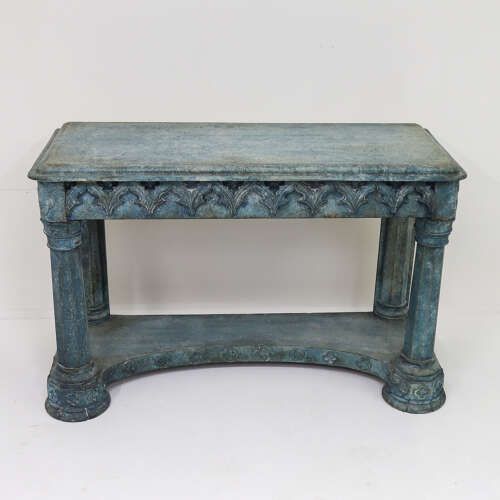


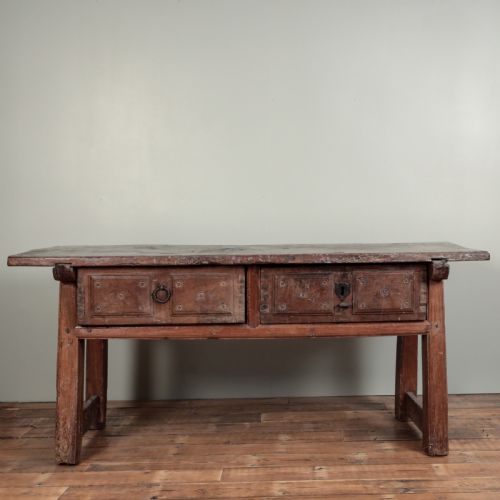


Carved Timber Console
A carved timber console grounds a hallway or principal room with architectural presence, offering a surface designed to anchor a mirror or display objects.
Carved Timber Console
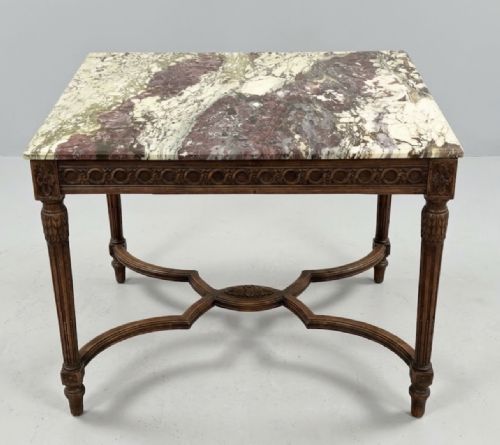
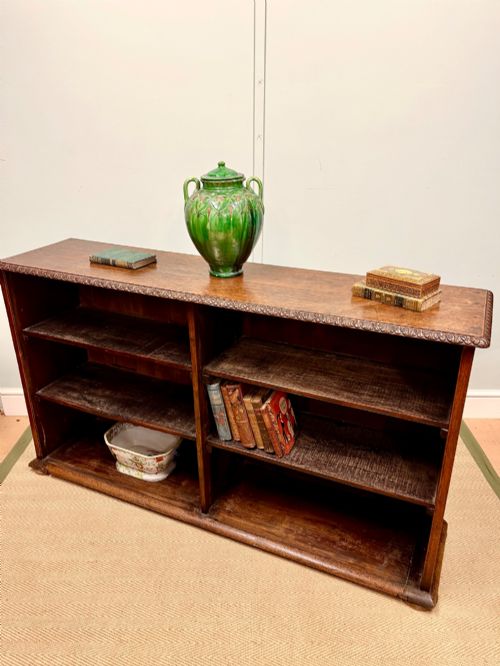
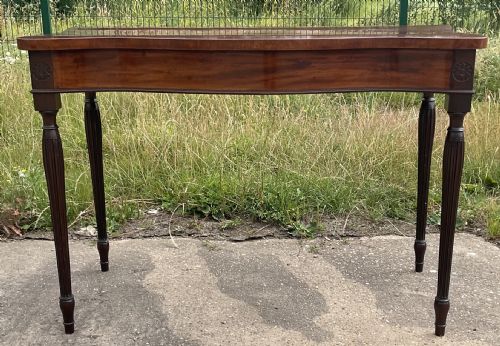
A carved timber console spans formal 18th-century baroque and Georgian designs through to 19th-century Victorian, Edwardian, and regional interpretations. You will most frequently encounter mahogany, walnut, and pine examples fashioned into serpentine front tables, altar tables, and pier tables.
These pieces function primarily as wall-abutting side tables or architectural supports rather than freestanding dining furniture. The selection ranges from English country house prep tables and French painted commodes to Anglo-Indian padouk and Chinese lacquered hardwood sideboards.
The category also encompasses related forms such as games tables, centre tables, and wall brackets sharing the same carved wooden DNA. Each piece reflects the specific decorative vocabulary of its period, from Gothic revival taste to Adams design demi-lune proportions.
Materials and construction methods
Makers utilised a diverse palette of hardwoods and softwoods including mahogany, elm, walnut, fruitwood, pitch pine, and teak. Surfaces frequently received applied gesso, decorative paint layers, or traditional lacquer finishes to enhance the carved detail.
Construction relies on traditional joinery applied to timber carcasses, supporting substantial marble tops or solid wooden surfaces. Carving was executed by hand directly into the structural timber or applied via separate decorative mounts.
The database includes regional forms spanning English country houses, French salons, Chinese workshops, and Anglo-Indian colonial cabinet makers.
Distinguishing quality in carved timber
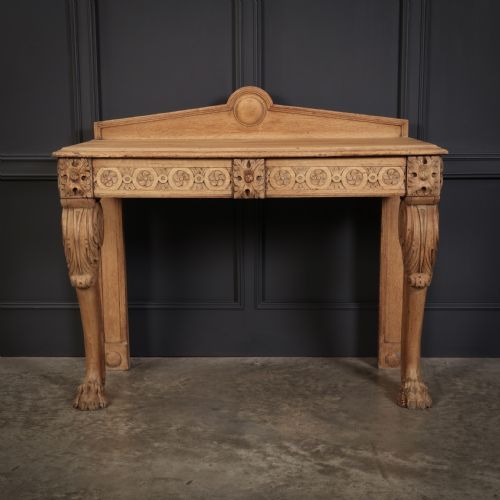
The distinction between ordinary and exceptional pieces lies in the crispness and depth of the hand carving. Superior examples display fluent, purposeful tool work where foliage, scrolls, or architectural motifs retain sharp relief.
Timber selection and finishing determine overall visual weight, with well-figured grain and original surface patination elevating a piece significantly. Proportion and the integrity of the design relative to a specific historical style dictate the standing of the table.
The Carved Timber Console Glossary
- Console
- A table designed to stand against a wall, traditionally supported by wall brackets or console legs rather than four freestanding posts.
- Serpentine
- A curved outline featuring a convex centre flanked by concave sides, frequently seen on Georgian and later table fronts.
- Altar table
- A traditional Chinese form characterised by elevated ends on the surface top, adapted widely as a narrow console.
- Demi-lune
- A half-moon shape used for console tables designed to sit flush against a flat wall surface.
- Lowboy
- A small English table with drawers, standing on relatively tall legs and often serving as a side or dressing table.
Carved Timber Console: Frequently Asked Questions
Where should I place a console table?
A carved timber console works best in entrance halls, living rooms, or along long corridors where floor space is relatively narrow. Because these tables traditionally abut walls, they provide a strong focal point beneath a mirror or artwork without obstructing movement.
Ensure the depth of the table matches the scale of the room so the piece sits comfortably within the architectural flow of the space.
How do I identify the period of a console?
Dating relies on examining the timber species, joinery techniques, and the specific decorative style carved into the wood. For instance, pieces exhibiting heavy baroque scrollwork or classical architectural motifs often point to 18th-century origins, while Victorian interpretations frequently showcase darker mahogany or rosewood.
Compare the carving style against documented regional furniture traditions, such as Anglo-Indian padouk work or Chinese altar forms, to narrow down the origin.
Can these tables support heavy objects?
Most antique consoles are structurally robust, particularly those fitted with heavy timber frames or stone tops like marble. However, their stability often depends on whether the piece is freestanding or designed to be secured directly to the wall for additional support.
Review the specific leg construction and under-framing to determine whether the table is intended to bear substantial weight, such as heavy bronze lamps or large ceramic vessels.
What is the difference between a pier table and a console?
A pier table is specifically designed to stand against the wall between two windows, frequently positioned beneath a matching pier glass mirror. While many pier tables function as consoles, a true console historically relies on wall brackets for part of its structural support.
Both forms share a shallow depth and a primary focus on decorative front presentation rather than all-around utility.