
20th Century Writing Table
When you search for a 20th century writing table, you enter a diverse landscape of domestic workspace furniture built across shifting early decades.
20th Century Writing Table
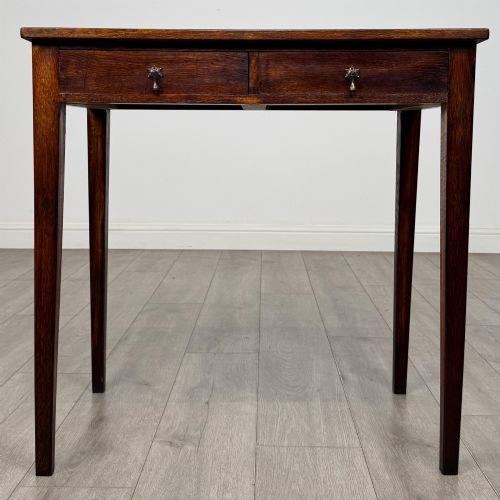
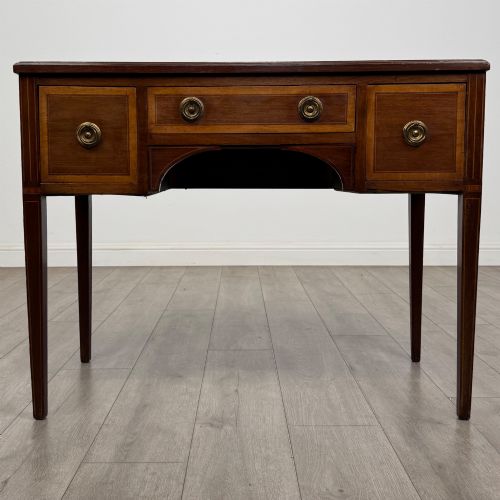
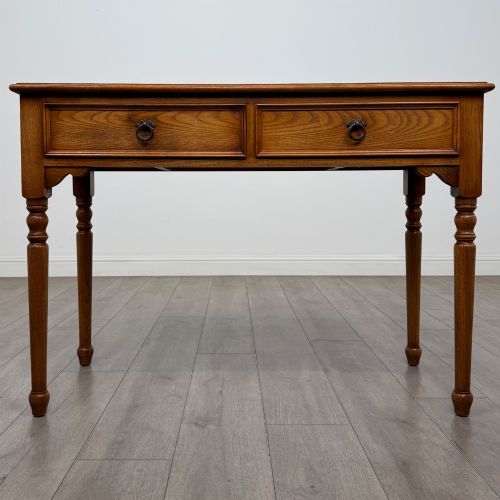
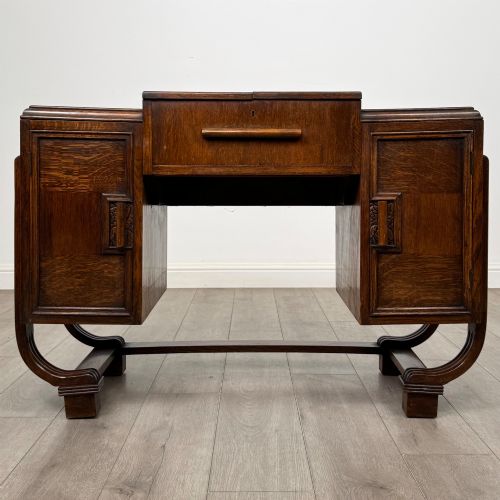
A 20th century writing table encompasses freestanding desks, library tables, and compact side pieces designed for correspondence and study. The Edwardian period and the decades spanning 1900 to 1930 contribute the majority of these forms to the selection.
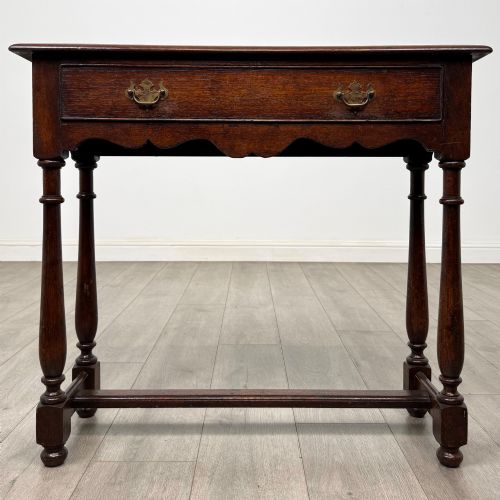
Makers of the era drew heavily on preceding design traditions, producing revival pieces in Queen Anne, Chippendale, and Jacobean styles alongside Arts and Crafts designs. Mahogany and oak dominate the surviving examples, supported by walnut and burr walnut variants.
How They Were Made
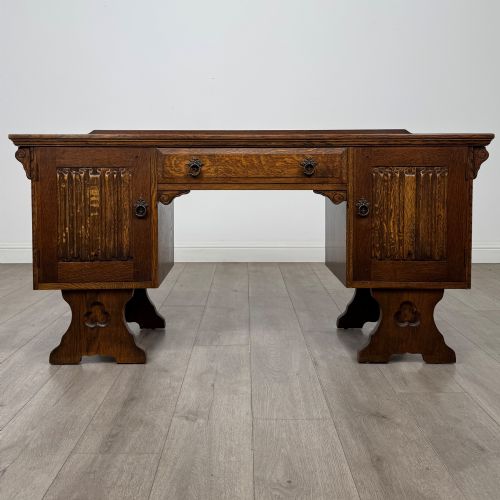
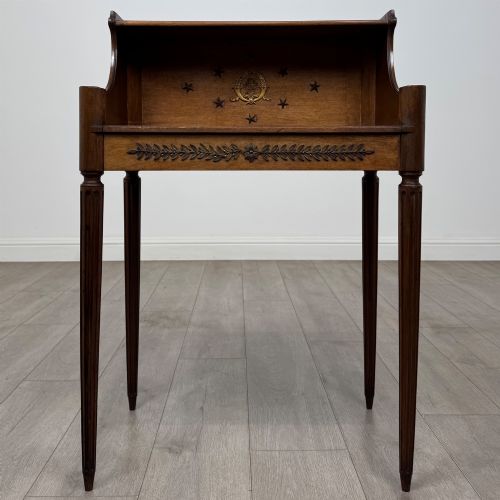
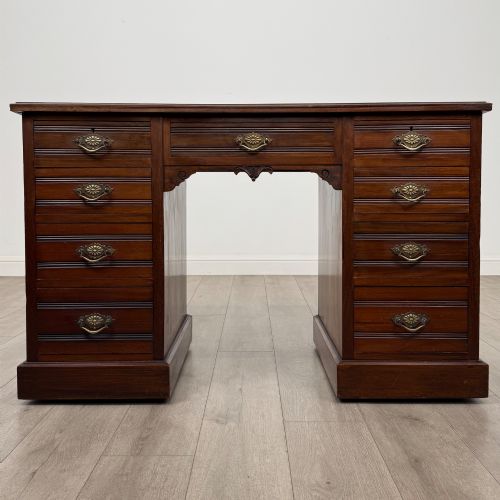
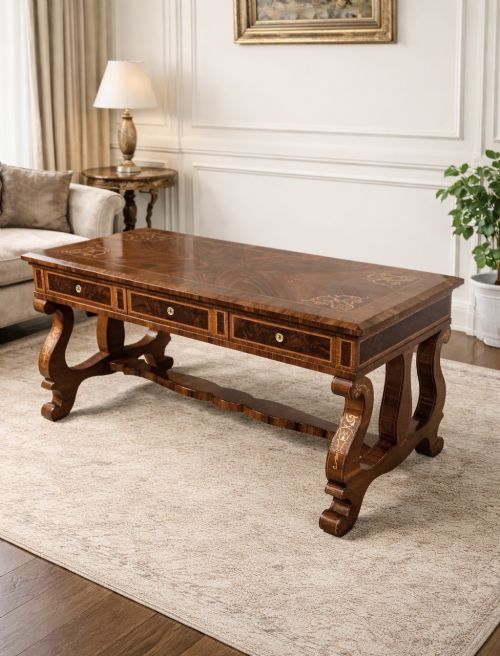
Cabinetmakers utilised solid timbers and selected veneers, applying mahogany, oak, and walnut over robust carcases. Details such as carved linenfold panels, brass mounts, and inlaid surfaces demonstrate traditional joinery combined with period aesthetic preferences.
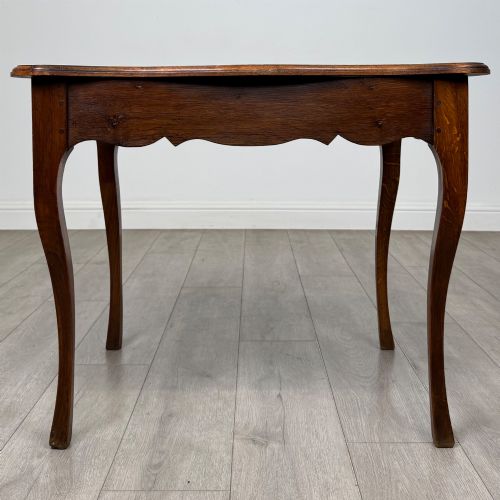
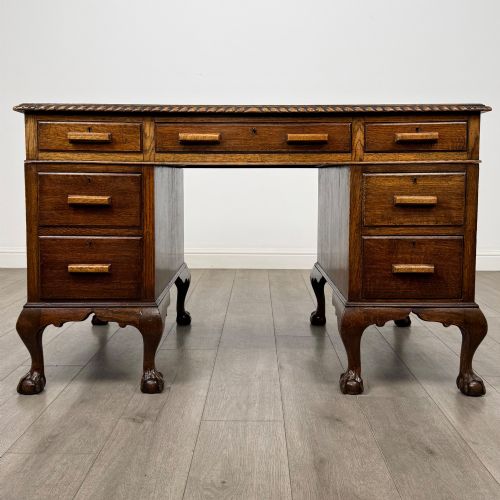
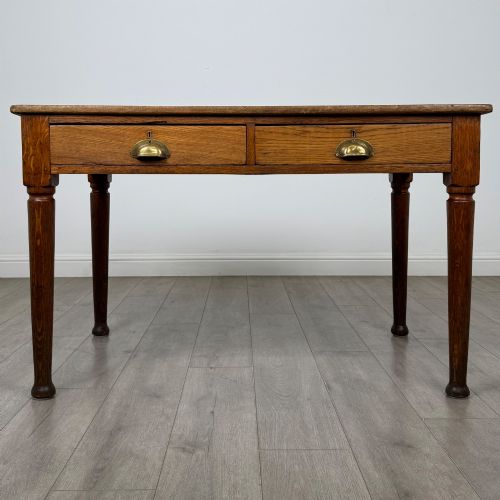
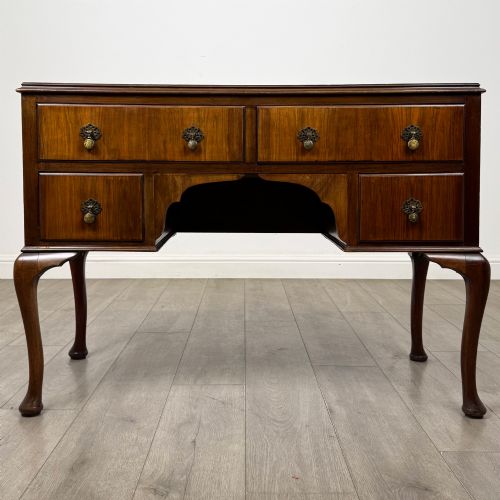
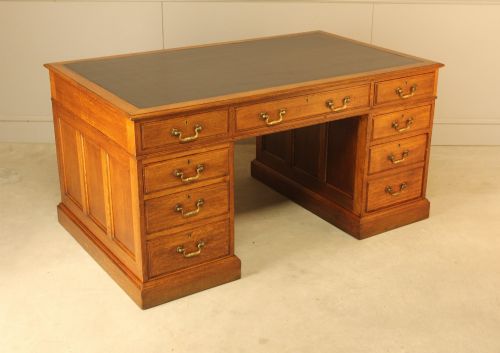
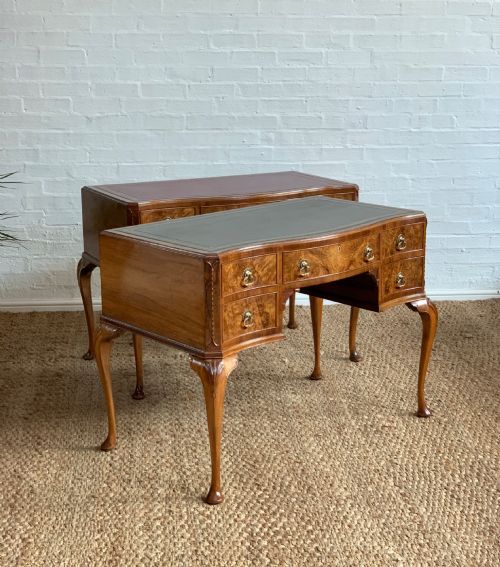
Writing surfaces frequently incorporated inset leather panels, providing a durable and refined texture for daily correspondence. Structural framing ranged from twin pedestals to slender legs on side tables and lowboys.
Listings span multiple materials including mahogany, oak, walnut, burr walnut, birch, and pine.
What Varies in Quality
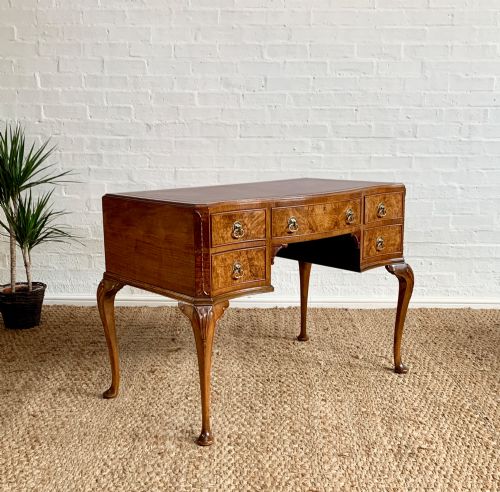
The choice of primary timber and secondary wood sets the baseline for construction, with figured burr walnut and curl mahogany indicating higher workshops. Timber selection dictates both the visual depth of the grain and the stability of the writing surface over decades of use.
Execution of decorative details separates standard commercial production from workshop pieces bearing maker signatures. Hand-carved mouldings, precise marquetry inlay, and the integration of quality brass hardware reflect greater time investment by the original maker.
Wylie & Lochhead Glasgow·J.C Vickery of London
The 20th Century Writing Table Glossary
- Pedestal desk
- A heavy freestanding desk supported by two banks of drawers or cupboards beneath the worktop.
- Lowboy
- A small occasional table featuring drawers beneath the surface, often associated with eighteenth-century forms revived in later decades.
- Burr walnut
- Timber taken from a tree growth or burl, prized by cabinetmakers for its swirling, highly figured grain patterns.
- Linenfold
- A style of carved wooden panelling resembling folded vertical linen fabric, common on oak furniture.
- Ormolu
- Gilded bronze mounts applied to furniture for decorative accent, typical of French-influenced pieces.
20th Century Writing Table: Frequently Asked Questions
Where were these tables typically placed?
These pieces occupied studies, libraries, and private drawing rooms within larger residences, serving as dedicated hubs for household administration and letter writing.
Their finished backs allowed them to stand away from walls in the centre of a room rather than being pushed into corners.
How do I care for the leather top?
The leather writing surface benefits from occasional cleaning with a damp cloth followed by a neutral wax polish to maintain suppleness.
Avoiding direct sunlight prevents the leather from drying out and cracking over time.
What distinguishes a library table from a writing desk?
Library tables generally feature open access from multiple sides and larger proportions suited for sorting documents or books.
Writing desks prioritise seated tasks with integrated drawer banks and specific compartments for stationery.
How can I tell the difference between Edwardian and later 1930s styles?
Edwardian examples often lean heavily on revival aesthetics with rich mahogany and traditional carved details.
Pieces from the 1930s occasionally introduce streamlined forms, simpler oak constructions, or early Art Deco influences.