
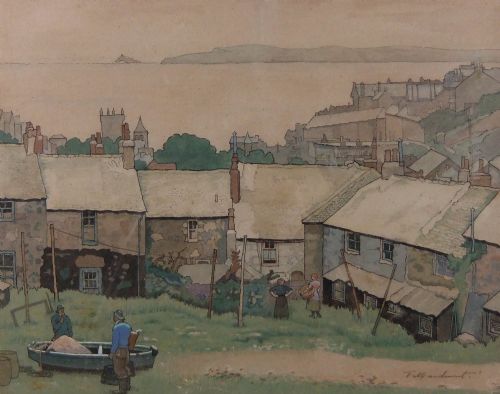


20th Century Maritime Watercolour
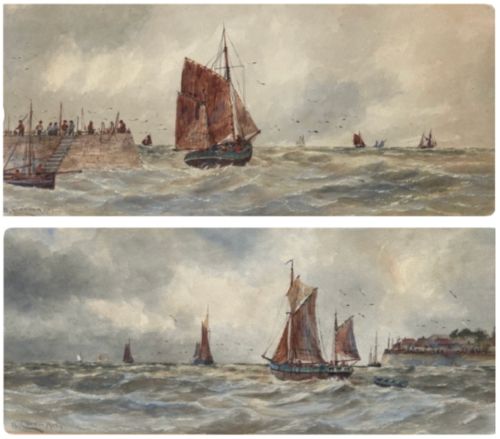
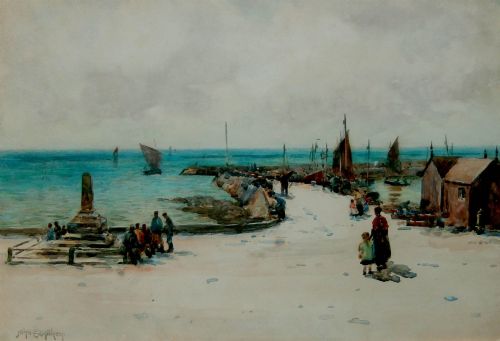
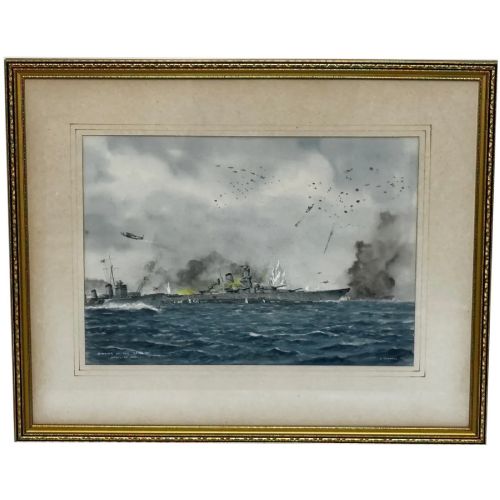
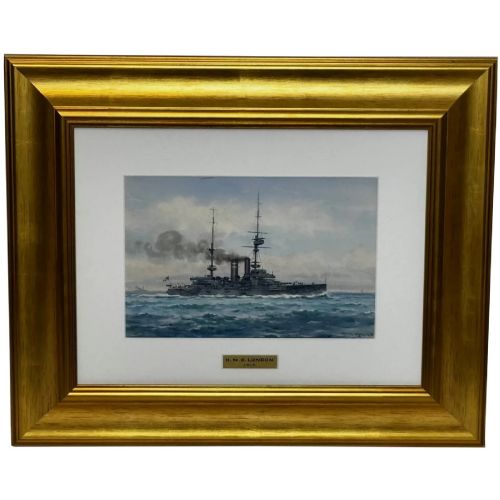
These 20th century maritime watercolour works capture coastal harbours, naval vessels and open seas on paper with enduring atmosphere.
20th Century Maritime Watercolour
When you search for a 20th century maritime watercolour, you encounter original paintings on paper depicting coastal views, fishing vessels, harbours and naval scenes created across the decades of the last century. The works on this page span from Edwardian interpretations and the 1910s up to mid-century depictions from the 1950s and 1960s.
The most common formats you meet here are framed original paintings, often signed by known artists associated with regional British art movements like the St Ives School. Subjects range from quiet Norfolk broads and Yorkshire fishing ports to dramatic naval engagements and Mediterranean coastlines.
Makers and painters represented include established artists working in watercolour pigment and ink on paper, housed within period wooden and ebonised frames behind glass.
Materials and technique
These works rely fundamentally on watercolour pigment and ink applied directly to paper supports, utilising the white of the paper to create light and luminosity within the maritime scenes. Artists often layered washes with finer ink details to define the rigging of sailing vessels, harbour architecture and choppy sea states.
Framing materials form an integral part of the survival of these pieces, employing wood, glass and ebonised mouldings to protect the delicate paper surfaces from atmospheric moisture and handling over the decades.
Sailors occasionally kept watercolours in damp sea chests, returning home with salt-sprayed paper and salty tales.
Judging quality and execution
The distinction between standard decorative watercolours and superior works lies in the confidence of the brushwork and the precision with which the artist captures light, movement and atmosphere on paper. Stronger examples demonstrate a sure command of tone, where water and pigment interact harmoniously to convey the weight of sea and sky without hesitation.
Condition of the paper support and the vibrancy of the pigments relative to their age also determine the standing of a piece. Works that retain their original framing and documentation of the specific coastal subject or vessel tend to hold greater historical resonance.
John E Aitken·Eric Tufnell·Frank Watson Wood·Thomas Maidment·Paul Delvaux·William Tuck·Leslie Rackham·Ernest F Hill·Don Wilson·Rowland Henry Hill·S J Lamorna Birch·Fred Lawson·Robert Leslie Howey·Edward Wesson
The 20th Century Maritime Watercolour Glossary
- Watercolour
- A paint consisting of a pigment suspended in a water-soluble vehicle, applied to paper to create translucent washes of colour. It forms the primary medium for all works listed under this phrase.
- Ebonised frame
- Wood that has been finished to resemble ebony, typically dark or black in appearance. These frames frequently enclose early twentieth-century marine paintings.
- St Ives School
- An association of artists living and working in Cornwall who drew inspiration from the coastal landscape and maritime life. Several watercolours on this page reflect this regional British artistic movement.
- Provenance
- The chronology of the ownership and exhibition history of a work of art. Documented attribution adds context to signed maritime scenes.
20th Century Maritime Watercolour: Frequently Asked Questions
How do I date a 20th century maritime watercolour?
Dating relies primarily on artist signatures, exhibition labels, stylistic markers, and occasionally direct inscriptions left on the reverse of the paper or frame. Many pieces from this period record specific years, such as naval depictions tied to known historical vessels or dated harbour views.
Examining the framing materials and paper characteristics also helps narrow down whether a piece originates from the Edwardian era or mid-century decades like the 1950s.
Where should I hang a maritime watercolour?
These works require placement away from direct, strong sunlight to prevent the watercolour pigments from fading over time. Normal indoor ambient light in a dry room is suitable for paper-based art protected by glass.
Pairing them with neutral wall colours allows the subtle blues, greys and earth tones of the marine scenes to stand out clearly.
Are these watercolours always original paintings?
The listings under this search comprise original hand-painted works on paper rather than mass-produced prints or reproductions. Each brushstroke and wash is unique to the artist's hand.
Checking the surface under magnification reveals the characteristic texture of pigment resting within the fibres of the paper support.
What subjects appear in these maritime scenes?
Subjects include coastal fishing boats, working harbour basins, lighthouses, and named naval vessels documenting specific historical craft. Scenes range from British coastal locations like Scarborough and St Ives to international ports and Mediterranean views.
Some works focus on calm estuaries and broads, while others depict dramatic seas under heavy skies.