



Framed Paper Maritime Art
Framed paper maritime art captures coastal life and naval history on paper through watercolors, gouache, and etchings preserved behind glass.
Framed Paper Maritime Art
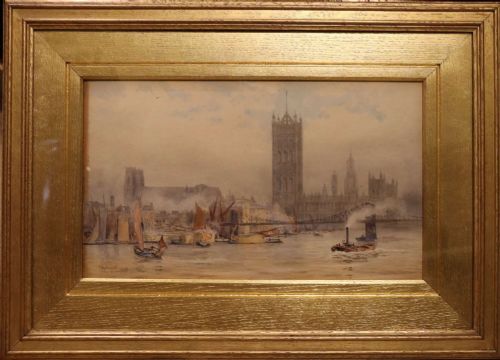
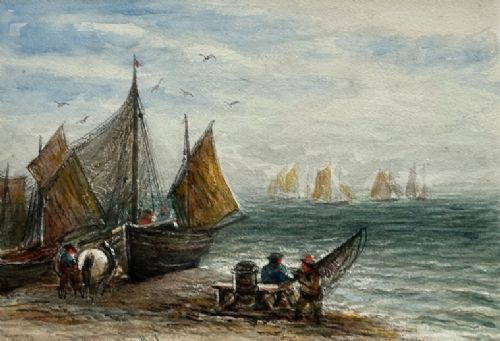
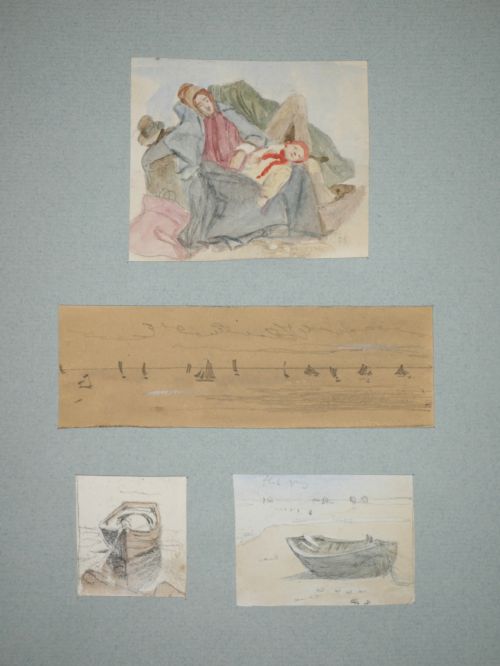
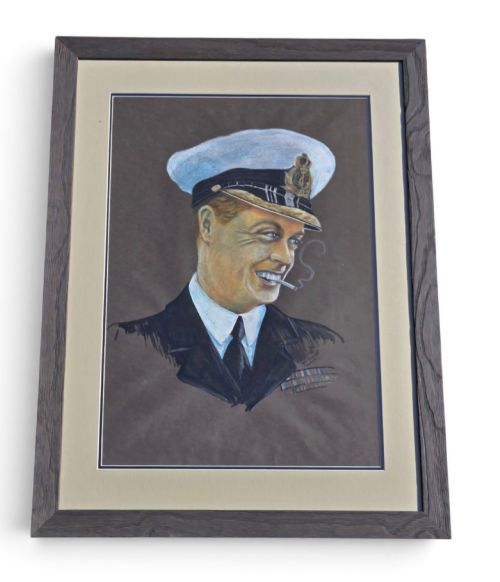
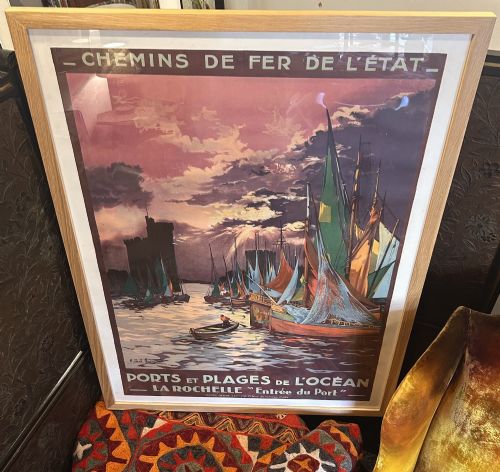
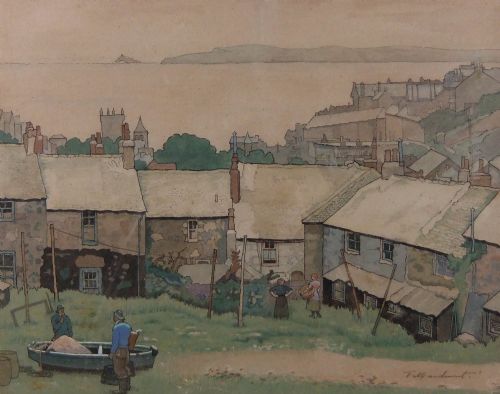
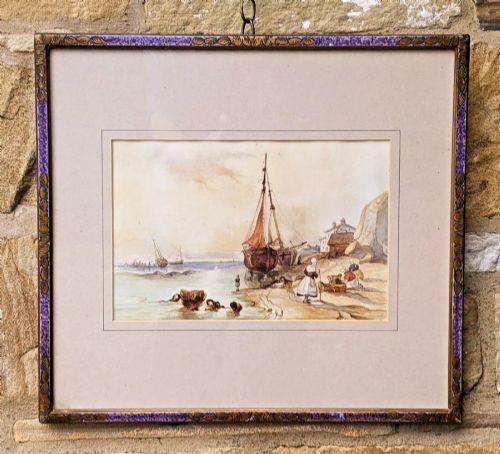
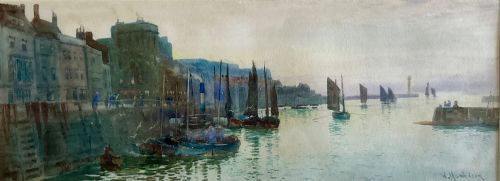
Framed paper maritime art comprises original watercolors, gouache paintings, prints, and drawings depicting coastal scenes, fishing boats, and naval vessels. The selection draws heavily from nineteenth-century and early twentieth-century British and European works, ranging from Victorian coastal views to Edwardian harbour sketches.
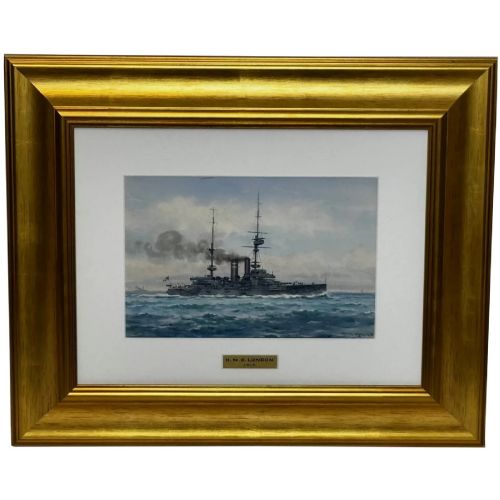
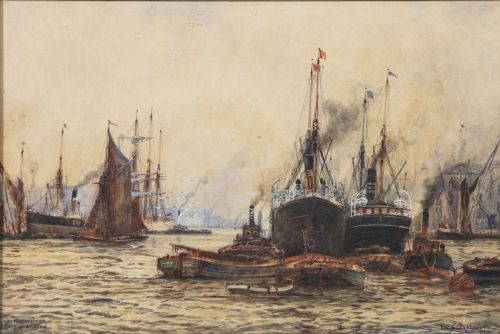
Buyers encounter depictions of specific vessels like HMS London alongside broader scenes of Whitby, the Thames, and foreign ports. These works appear within period wood frames paired with glass protection.
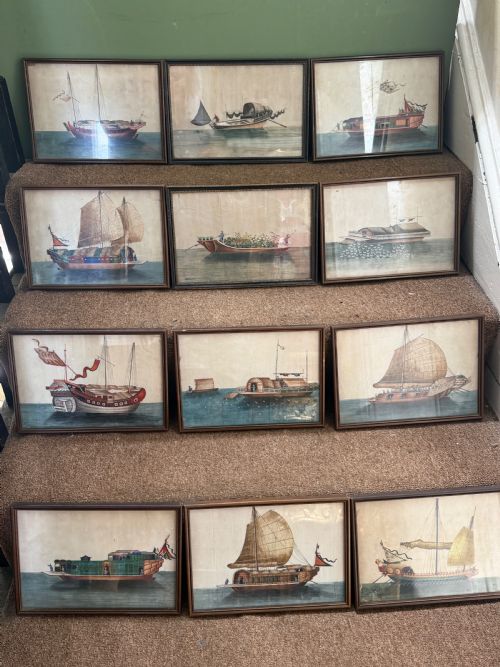
The objects span varied forms, including individual framed watercolors, decorative sets of Chinese export gouache paintings of junks, and vintage aquatints. Such pieces function primarily as wall art for studies, libraries, and coastal interiors.
Materials and technique
Artists utilised watercolour pigment and ink applied to paper sheets, occasionally employing gouache for heavier opacity on maritime subjects. These works rely on the absorbent qualities of paper to capture translucent washes of sea and sky.
Protective framing involves wooden surrounds fitted with glass and backing boards to shield fragile paper surfaces from atmospheric moisture and dust.
Several artists captured bustling Victorian harbours with such precision that local seagulls likely supervised the brushwork.
Quality variations
Skill in handling water-soluble pigments determines the visual success of a maritime watercolour, distinguishing confident washes from overworked areas. The precision of marine architecture, rigging, and coastal topography reflects the artist's firsthand familiarity with the sea.
The condition of the paper surface and pigment vibrancy dictate overall merit, alongside the compatibility and age of the surrounding wooden frame and glass enclosure.
H. Medlycott·James Orrock·Frank Watson Wood·Frank William Scarbrough·Thomas Maidment·William Matthison·Alfred George Morgan·Paul Delvaux·Thomas Bush Hardy·Samuel Owen
The Framed Paper Maritime Art Glossary
- Watercolour
- A painting method in which the paints are made of pigments suspended in a water-based solution. This technique allows for transparent washes that mimic the movement of water and light.
- Gouache
- An opaque water-based paint method that incorporates chalk or white pigment. It provides heavier coverage than standard watercolour, often used to highlight ships and foam.
- Aquatint
- A printmaking technique that produces tonal areas resembling watercolor washes. It achieves varied shades through acid etching on a copper plate.
- Gouache painting
- Artwork created using opaque pigments on paper. This medium retains bright, solid colours over long periods when kept behind protective glass.
- Naval vessel
- A ship commissioned for military service or defence. Such subjects demanded strict accuracy in rigging and armament from maritime painters.
Framed Paper Maritime Art: Frequently Asked Questions
How should I hang maritime watercolours?
Position paper artworks away from direct sunlight to prevent the fading of watercolour pigments and paper degradation.
Ensure rooms maintain stable humidity levels to protect both the fragile paper and the antique wooden frame.
Are these works original paintings?
The selection includes hand-painted original watercolours and gouache works alongside period prints and aquatints.
Individual listings specify whether an artwork is a unique painting or part of a print series.
What framing is typically included?
Most pieces arrive within wood frames equipped with glass protection and backing to safeguard the paper.
Period frames often match the approximate age of the artwork, though styles vary by region and decade.
How do I identify the period?
Dates rely on artist signatures, period inscriptions, style markers, and specific naval vessels recorded in the artwork.
Victorian and Edwardian pieces show distinct maritime attire and ship designs characteristic of those eras.