



Vintage Harbour Watercolour Painting
A vintage harbour watercolour painting captures the bustling maritime life of past fishing ports and coastal quays.
Vintage Harbour Watercolour Painting
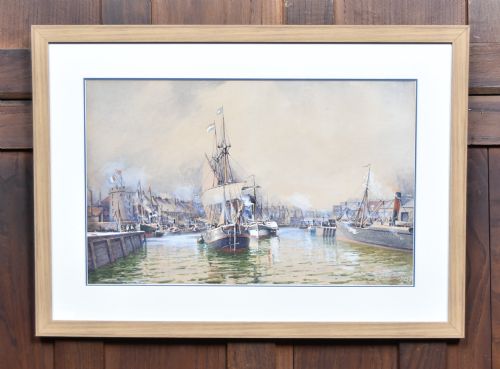
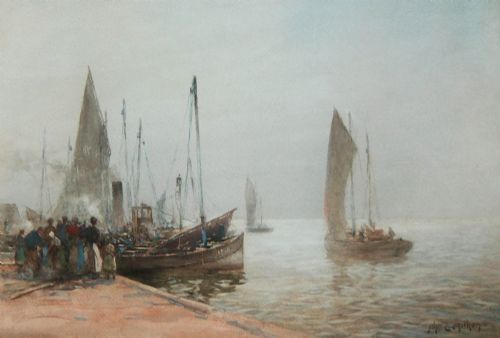
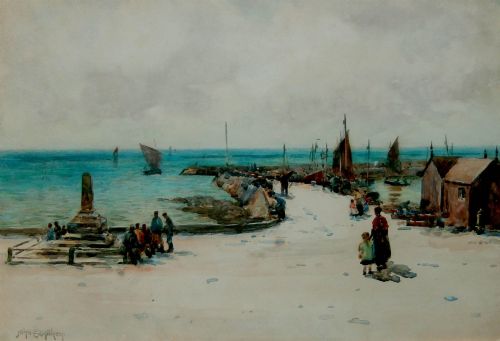
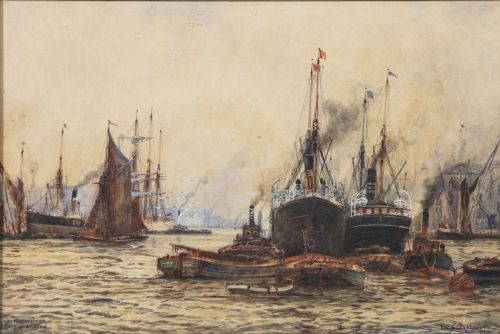
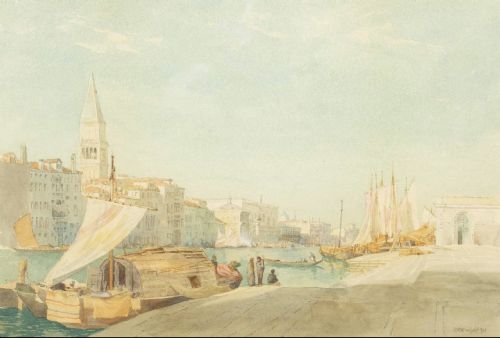
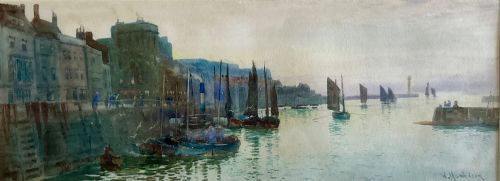
A vintage harbour watercolour painting depicts coastal scenes, busy quays, and maritime vessels using traditional pigments on paper. These works frequently document historical ports across Cornwall, Yorkshire, and London from the Victorian era through the mid-twentieth century.
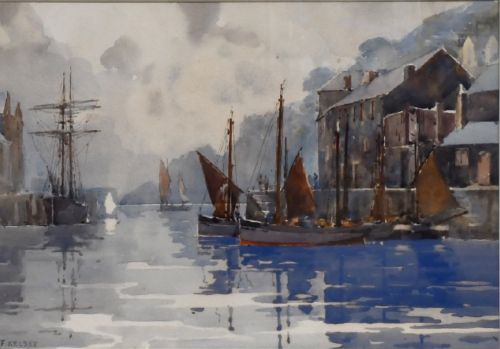
Collectors regularly encounter pieces executed in distinct regional styles, ranging from British Impressionism to early twentieth-century maritime watercolours. Common subjects include local fishing luggers, quayside dockyards, and sheltered anchorages captured by regional British artists.
Materials and Techniques
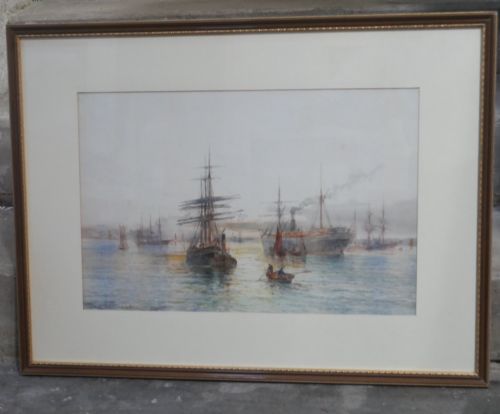
Artists applied watercolour pigment and ink onto paper, frequently mounted behind glass within wood frames. Certain works also incorporated hand-enamelled polychrome frames to complement the painted coastal scene.
Makers utilised fluid washes and fine brushwork to capture atmospheric effects of light upon water, evening departures, and morning port activity across British and European coastal locations.
Commander Eric Tufnell managed to paint HMS Newcastle in Sydney Harbour while presumably keeping one eye on the Melbourne Olympic Games.
Distinctions in Quality
Quality rests upon the strength of composition, the artist's ability to render atmospheric light and movement in water, and the historical clarity of the port depicted. Works by recognised regional painters from established groups command particular attention for their accomplished brushwork.
The preservation of the paper support, the retention of pigment vibrancy, and the originality of the framing contribute significantly to the standing of an individual piece within this tradition.
James E Aitken·Frank William Scarbrough·William Matthison·Alfred George Morgan·William Lee Hankey
The Vintage Harbour Watercolour Painting Glossary
- Watercolour pigment
- A colourant ground with a water-soluble binder, used traditionally on paper to create translucent washes and fine linear details in maritime scenes.
- Lugger
- A type of traditional fishing vessel featuring lug sails, frequently depicted in coastal watercolours from Devon and Cornwall.
- Quayside
- The stone or wooden platform alongside a body of water where ships load and unload, serving as a primary focal point for harbour paintings.
- British Impressionism
- An art movement focusing on light, everyday scenes, and loose brushwork, visible in many early twentieth-century coastal works.
Vintage Harbour Watercolour Painting: Frequently Asked Questions
What periods do these watercolours cover?
The works span from the nineteenth century through the 1950s, encompassing Victorian, Edwardian, and mid-twentieth-century British art.
Most pieces date from the early decades of the twentieth century, reflecting a strong period of coastal and maritime painting.
Where are the depicted harbours located?
The paintings frequently record scenes from British fishing ports such as Whitby, St Ives, Polperro, and Mousehole. European locations like Honfleur and Venice also appear among the maritime views.
These sites were popular destinations for artists recording traditional maritime trades and coastal architecture.
How are these paintings framed?
Most examples are presented behind glass in wood frames that protect the delicate paper surfaces from environmental damage.
Some pieces feature specialised decorative surrounds, including hand-enamelled polychrome frames typical of the period.
How should I care for a watercolour?
Watercolours require placement away from direct sunlight to prevent the fading of delicate pigments on paper. Maintaining stable indoor humidity protects both the paper support and the historical frame.
Professional framing with conservation-grade materials ensures long-term preservation of these works.