




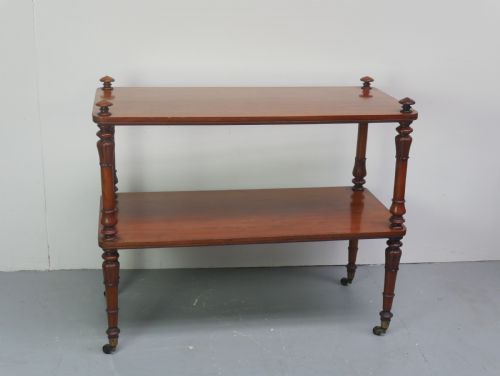
19th Century Whatnot
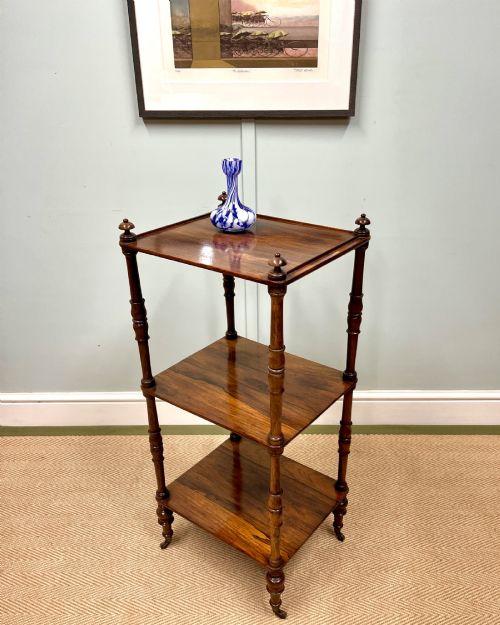
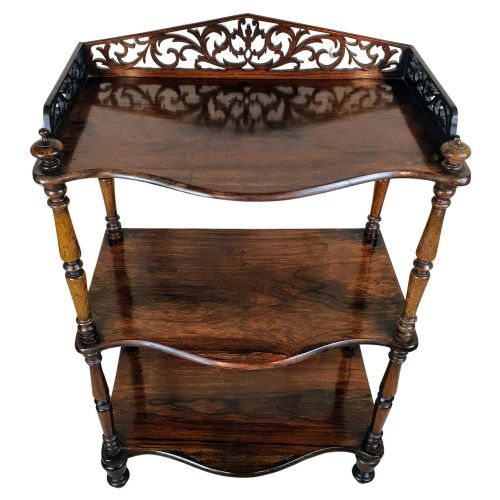
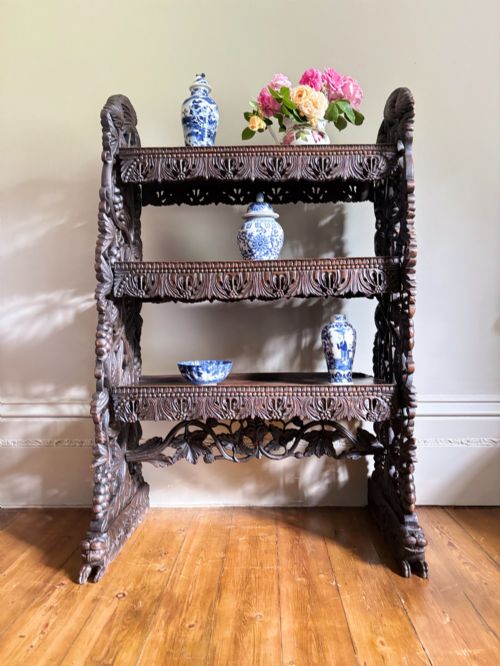
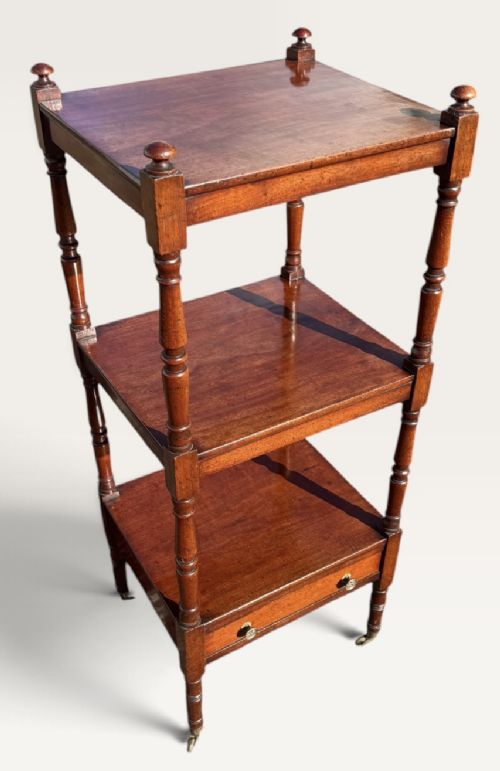
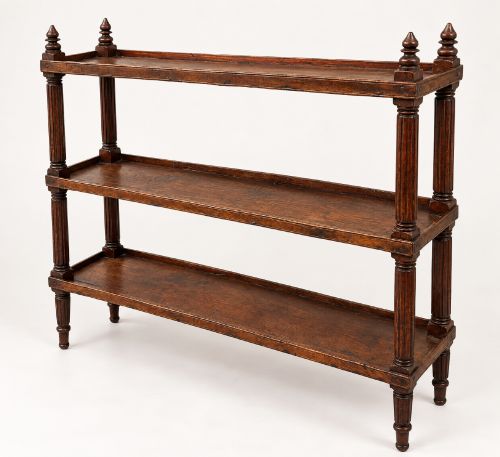
A 19th century whatnot offers tiered open shelving designed to display decorative objects or hold books in period interiors.
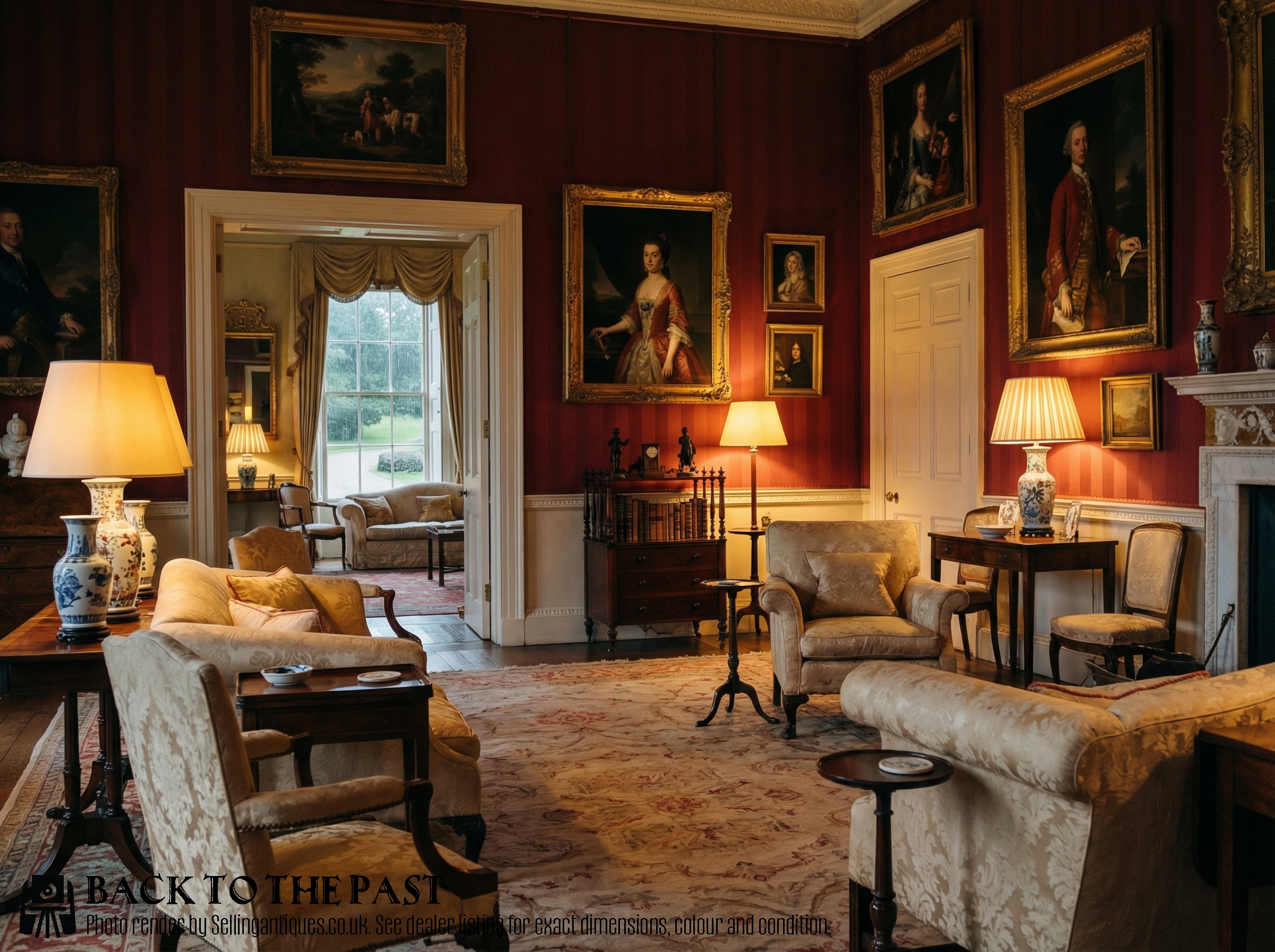
19th Century Whatnot
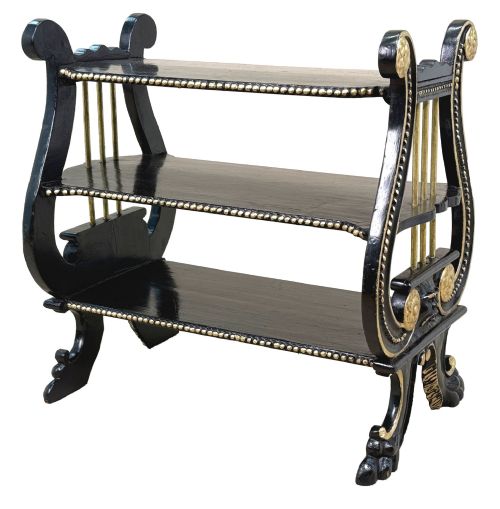
A 19th century whatnot is an open-tiered furniture piece designed for display, storage, and organisation in traditional interiors. These items span various periods including the Regency, George III, George IV, and Victorian eras, alongside styles such as Anglo-Indian and French Napoleon III.
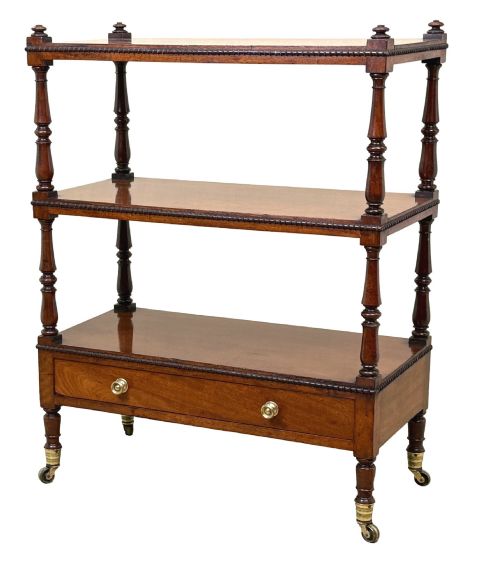
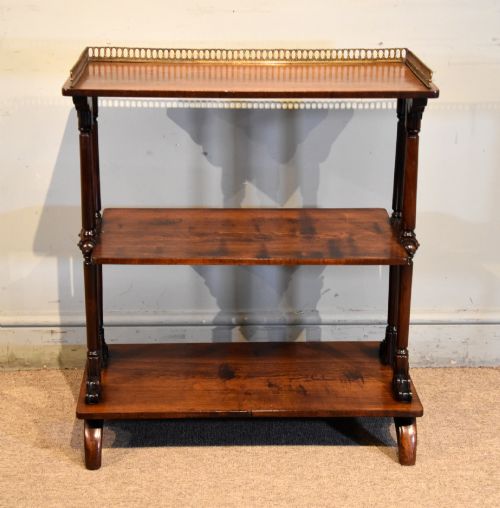
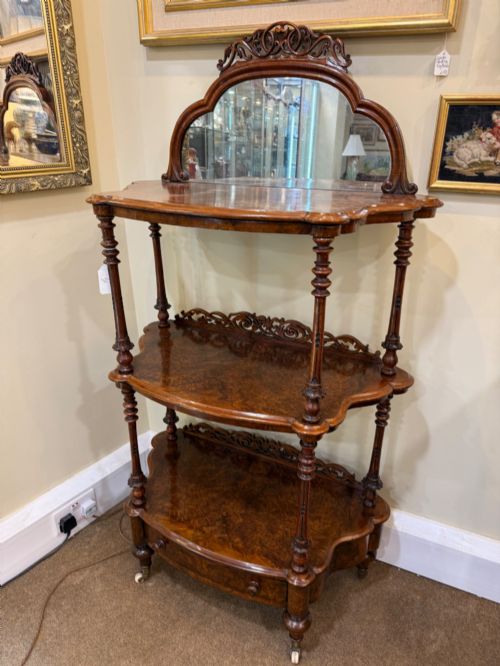
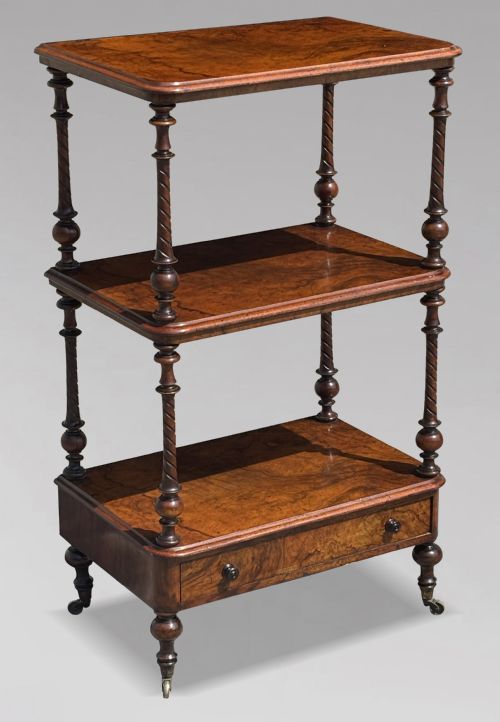
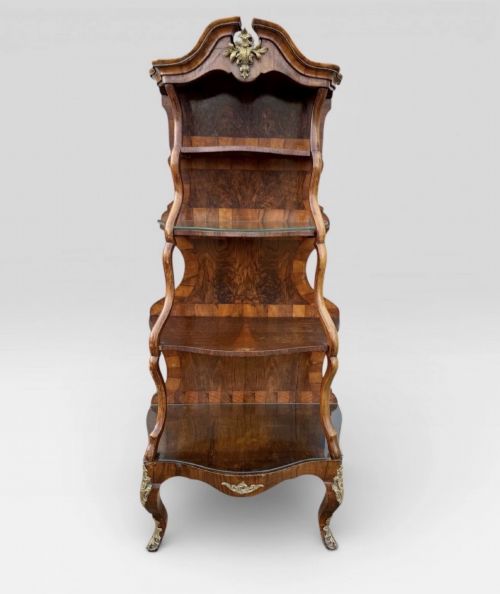
The form typically manifests as multi-tiered open shelves, corner units, or etageres, sometimes incorporating integrated drawers, side tables, or music stands. Mahogany and rosewood examples frequently date from the earlier decades, while burr walnut and ebonised pieces often emerge from the Victorian period.
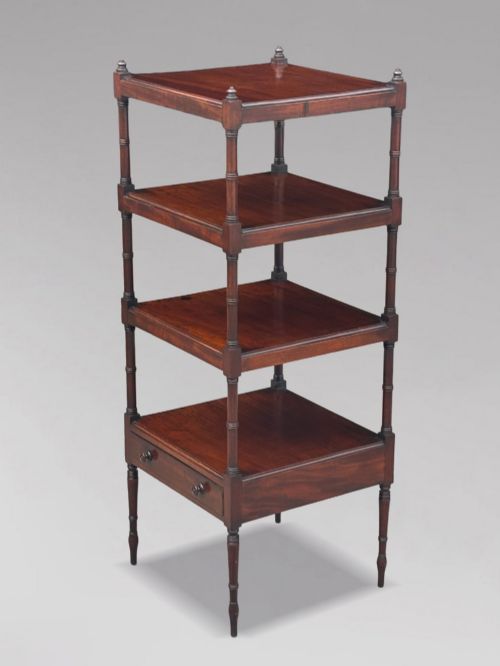
Buyers encounter numerous multi-tier formats, from compact three-tier stands to taller structures featuring four, five, or six shelves. These pieces function variously as bookcases, display stands, and dumb waiters depending on their specific configuration.
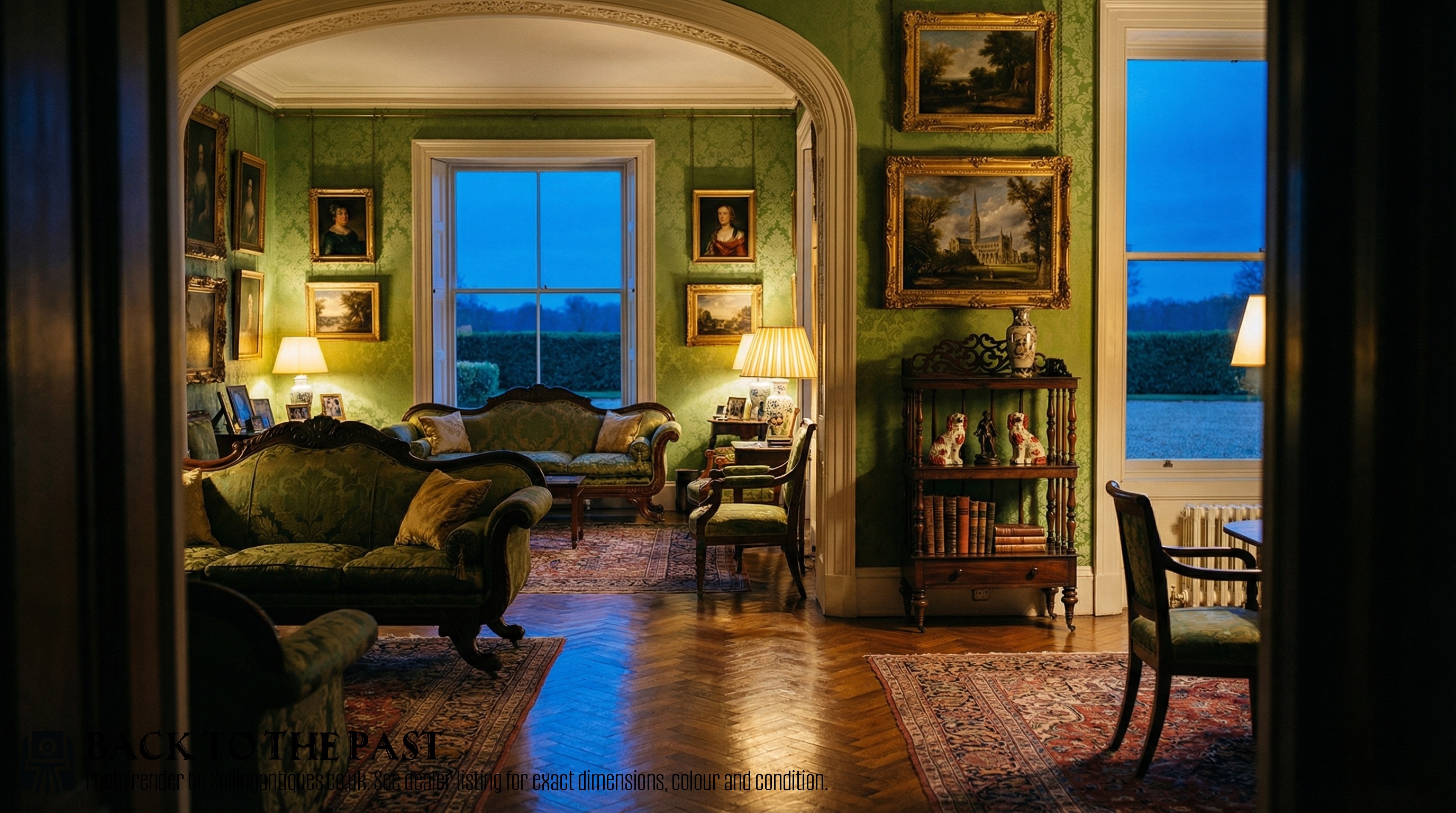
How they were made
Cabinet makers utilised dense timber stocks such as mahogany, rosewood, and walnut for the structural frames and shelves. Burr walnut and satin birch veneers were applied to create decorative grain patterns on prominent surfaces.
Supports often incorporated turned columns, bobbin turning, or slender uprights separating the individual tiers. Metal elements such as brass fitments and gilt metal mounts frequently reinforced corners, galleries, and joints.
Surface treatments ranged from polished French polish on hardwoods to japanning and ebonising on late period or continental examples. Inlaid details utilised contrasting woods or metal to adorn tabletops and shelf edges.
19th Century Whatnot Retail Price Guide 2026
Typical asking prices for 19th century whatnot among the pieces listed under this phrase on Sellingantiques today, from the lower quarter to the upper quarter. They describe what is for sale here now, not the wider market.
The inventory records diverse configurations, including corner units, multi-tier bookcases, and pieces combined with music stands or integrated drawers.
What varies in quality
The choice and figuring of the timber dictate much of the visual merit, with finely grained burr walnut or dense rosewood commanding greater presence than plain stock. The crispness of turned supports and the precision of inlaid work further separate standard workshop output from finer examples.
Structural complexity influences the character of the piece, distinguishing simple three-tier open shelves from elaborate combinations incorporating drawers, work tops, or music stands. Integration of materials, such as combining ceramic, glass, or marble with timber, shows varied manufacturing ambition.
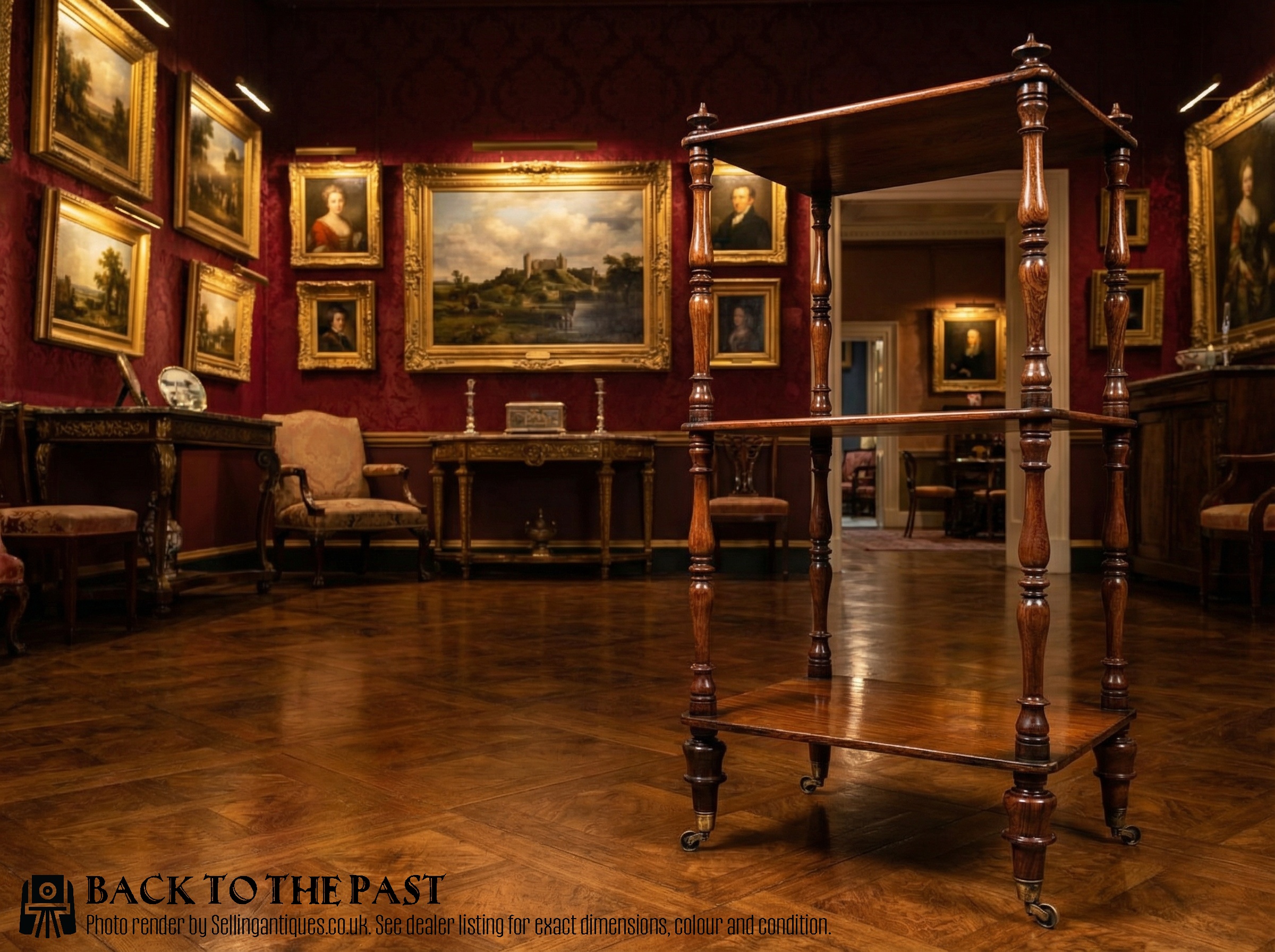
The 19th Century Whatnot Glossary
- Whatnot
- A piece of furniture consisting of a set of open shelves for displaying small objects or books. They became popular in British homes during the 19th century.
- Etagere
- A French style of furniture featuring multiple tiers for display, closely related to the English whatnot. These often incorporate finer decorative mounts and occasional table bases.
- Canterbury
- A low stand with partitioned sections for sheet music or books, frequently combined with a whatnot tier above. This form often dates to the Victorian and Regency periods.
- Japanning
- A European imitation of East Asian lacquerwork used to decorate furniture surfaces. It appears on late 19th century continental etageres.
- Bobbin turning
- A type of furniture turning where the wood is shaped into a series of rounded spheres resembling bobbins. This technique creates a distinctive textured support column.
19th Century Whatnot: Frequently Asked Questions
What is a 19th century whatnot used for?
These pieces served primarily as open display furniture for ceramics, ornaments, and books within formal reception rooms. Owners utilised the tiered shelving to keep daily reading materials accessible while decorating the parlour.
Specific variants also incorporated lower drawers, cellarettes, or compartments for sheet music to accommodate domestic hobbies. Their open structure allowed decorative items to be viewed from multiple angles in the room.
How do I tell a Regency whatnot from a Victorian one?
Regency examples generally employ straight-grained mahogany or rosewood with restrained classical lines, often dating from the early decades. They frequently feature slender turned uprights and minimal applied ornament.
Victorian pieces frequently display burr walnut veneers, ebonised surfaces, or more ornate inlaid decoration. The later 19th century versions also embrace diverse revival styles such as Gothic or Japonisme.
Are corner whatnots common?
Corner units appear frequently across both mahogany and walnut materials to utilise unallocated wall space efficiently. These triangular shelves fit neatly into room angles while providing identical display capacity.
Cabinet makers produced these in various tier counts, ranging from compact three-shelf formats to taller five or six-tier structures. They shared the same structural assembly methods as freestanding rectangular variants.
What timber was used for these shelves?
Mahogany served as the primary hardwood for pieces produced during the early 19th century and Regency periods. Rosewood also appeared regularly in high-end iterations from the same eras.
Victorian makers shifted towards walnut and burr walnut, alongside ebonised wood and satin birch. Elm and oak also featured occasionally in regional or utilitarian furniture.