


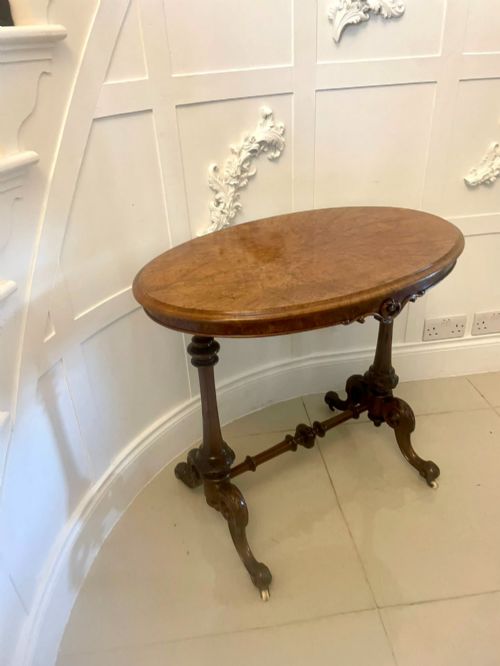
19th Century Walnut Side Table
A 19th century walnut side table brings rich grain and practical surface area to a room.
19th Century Walnut Side Table
A 19th century walnut side table encompasses a diverse group of occasional, wine, and lamp tables produced during the Victorian and Georgian periods. These versatile pieces served various domestic functions in drawing rooms, bedrooms, and parlours, moving easily where a small surface was required.
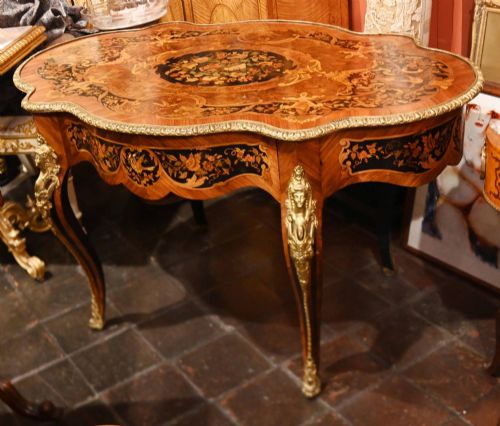
The selections available range from plain timber occasional stands to intricately inlaid examples influenced by French styles or the Aesthetic Movement. Smaller formats such as bedside cabinets and tray-top tables appear frequently alongside multi-tiered and tripod designs.
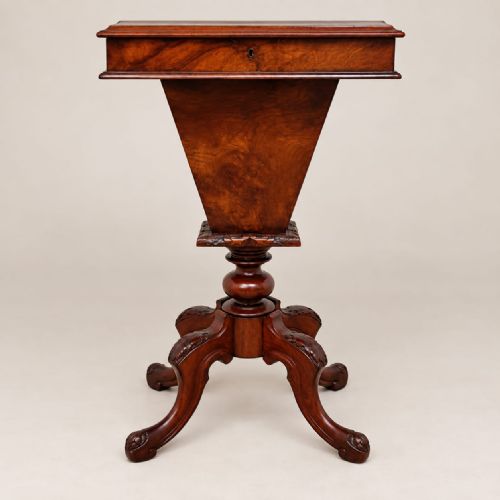
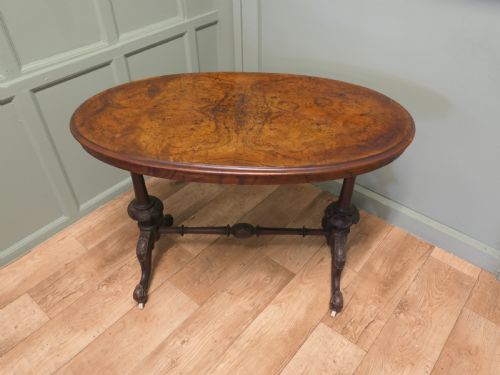
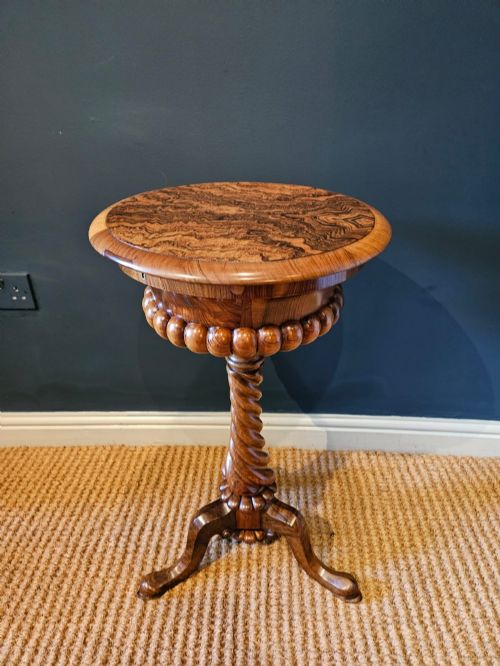
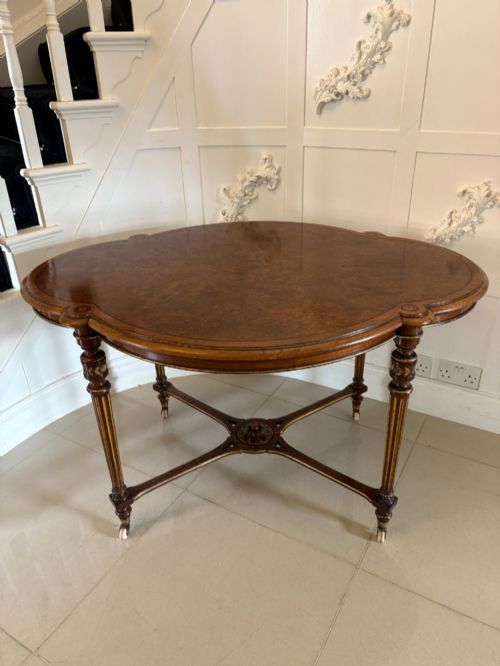
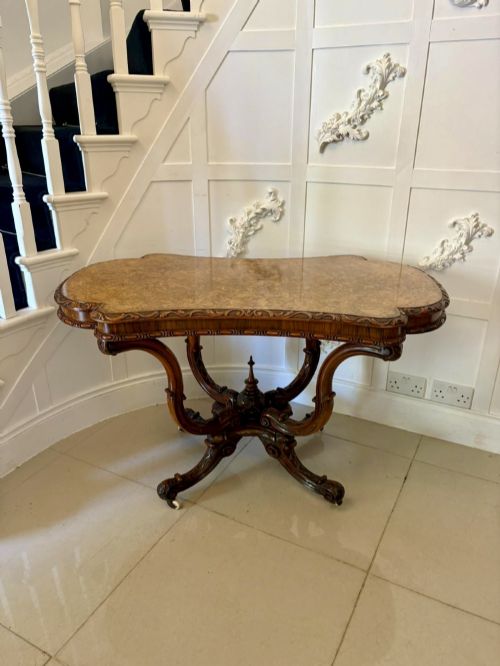
Makers often utilised figured timbers to catch the eye, producing forms that functioned as centre tables, games tables, or small writing desks. The overarching character relies on the dark, warm tones of walnut and burr walnut veneers.
How they were made
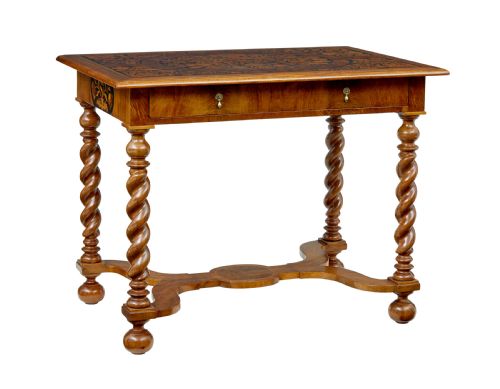
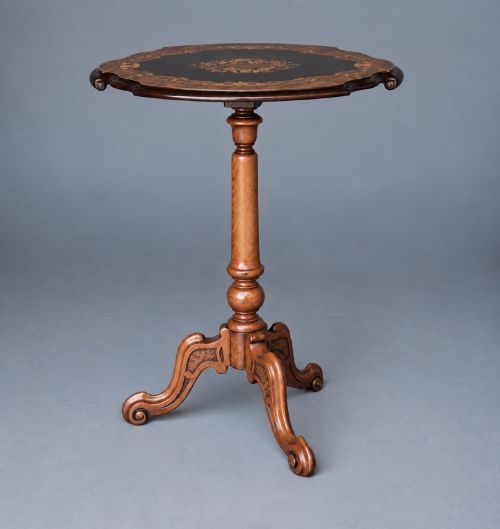
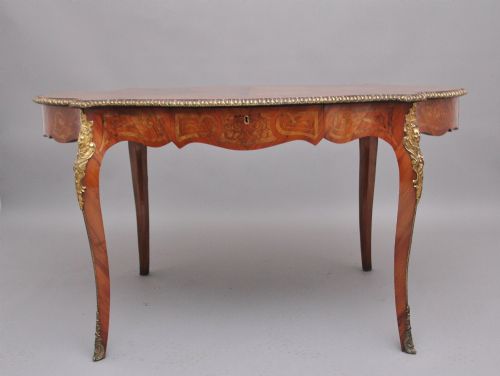
Cabinet makers applied figured walnut and burr walnut veneers over secondary woods to create decorative table tops, often enhancing the surface with marquetry or parquetry inlay using brass, mother-of-pearl, and lighter woods.
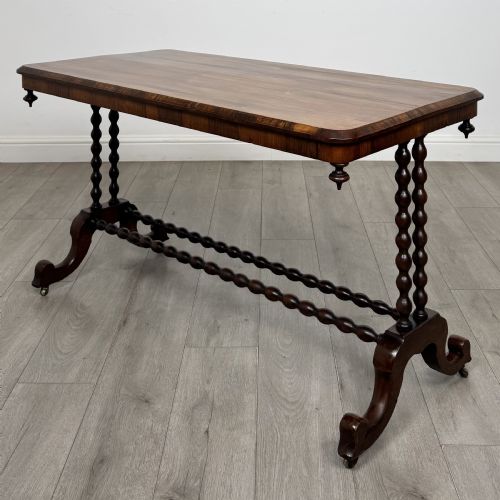
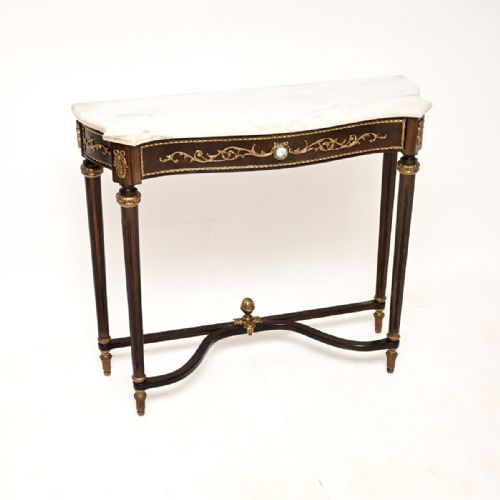
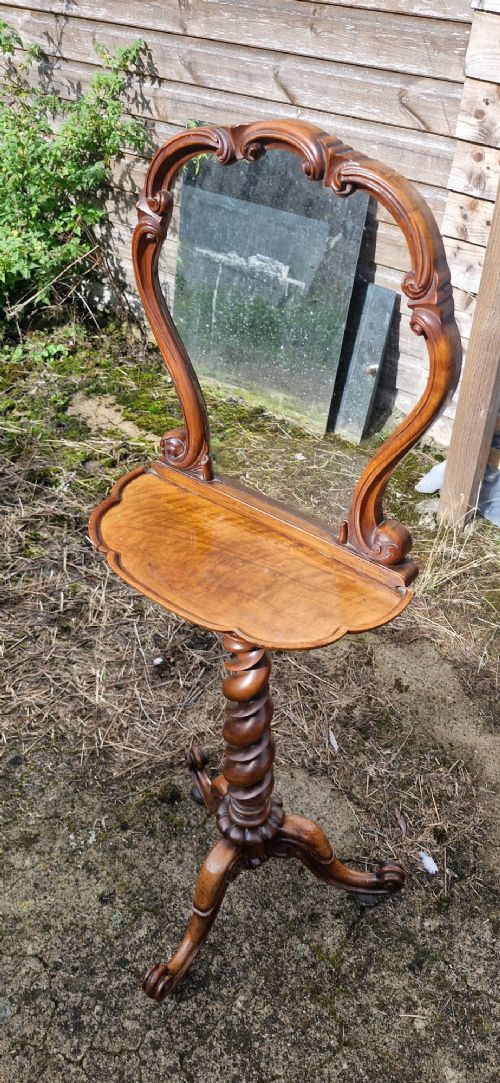
Structural integrity relied on solid walnut or mahogany for legs and frames, incorporating turned uprights, cabriole legs, or tripod bases. Selected pieces combined stone elements, integrating marble tops into French revival designs and side tables.
Some tables double as chess boards, proving that 19th-century ancestors enjoyed a quick tactical skirmish between sips of tea.
What varies in quality
The choice of veneer dictates visual impact, with tightly patterned burr walnut commanding greater attention than plain timber surfaces. Finely executed marquetry inlay and crisp carving on cabriole legs separate standard production from exceptional examples.
Structural refinement shows in the stability of pedestals, the neatness of dovetailing in drawers, and the integration of secondary materials such as ormolu mounts and ceramic fittings.
Edwards & Roberts·Holland And Sons·Shoolbred·E W Godwin
The 19th Century Walnut Side Table Glossary
- Burr walnut
- A highly figured veneer taken from the wart-like growths on walnut trees. It yields swirling, organic patterns prized by Victorian cabinet makers.
- Marquetry
- The art of applying pieces of veneer to a structure to form decorative patterns. Floral and geometric motifs frequently appear on table tops.
- Sutherland table
- A narrow drop-leaf table with hinged flaps supported by pivoting gate legs. It folds flat to save space when not in use.
- Parquetry
- A geometric mosaic of wood pieces used for surface decoration. It differs from marquetry by relying on angular, repeating shapes.
- Bureau plat
- A type of freestanding writing desk featuring a flat top and one or more drawers in the frieze. Originating in France, these tables often stand on cabriole legs.
19th Century Walnut Side Table: Frequently Asked Questions
Where were these tables used?
These tables served primarily in drawing rooms, sitting rooms, and bedrooms as convenient surfaces for lamps, books, or drinks.
Smaller variants functioned as bedside cabinets, games tables, or compact writing desks depending on their internal fittings.
What is a Sutherland table?
A Sutherland table is a narrow drop-leaf design with deep flaps supported by pivoting gate legs.
This clever mechanism allows the table to fold flat against a wall or expand for serving tea.
How do French styles differ?
French revival tables often incorporate cabriole legs, marquetry inlay, and marble inserts.
These details distinguish continental designs from simpler English utilitarian forms.