


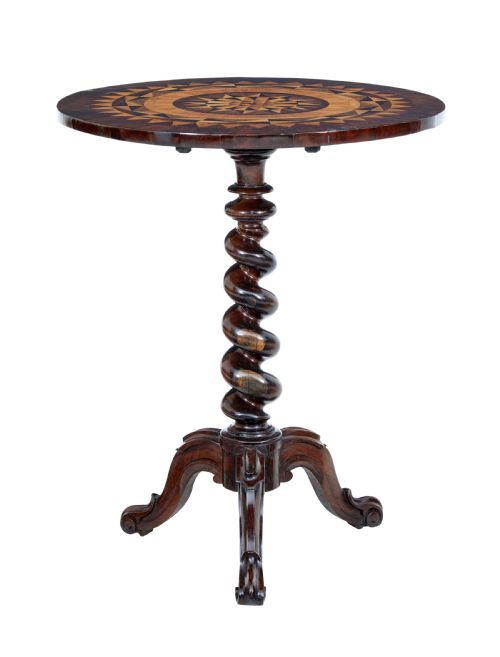


Spiral Column Wine Table
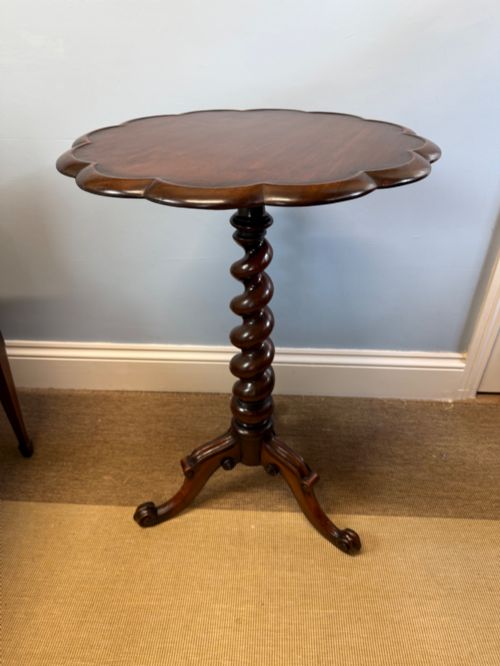
These spiral column wine table pieces offer compact surfaces supported by distinctive twisted stems, designed for holding glasses or lamps beside a chair.
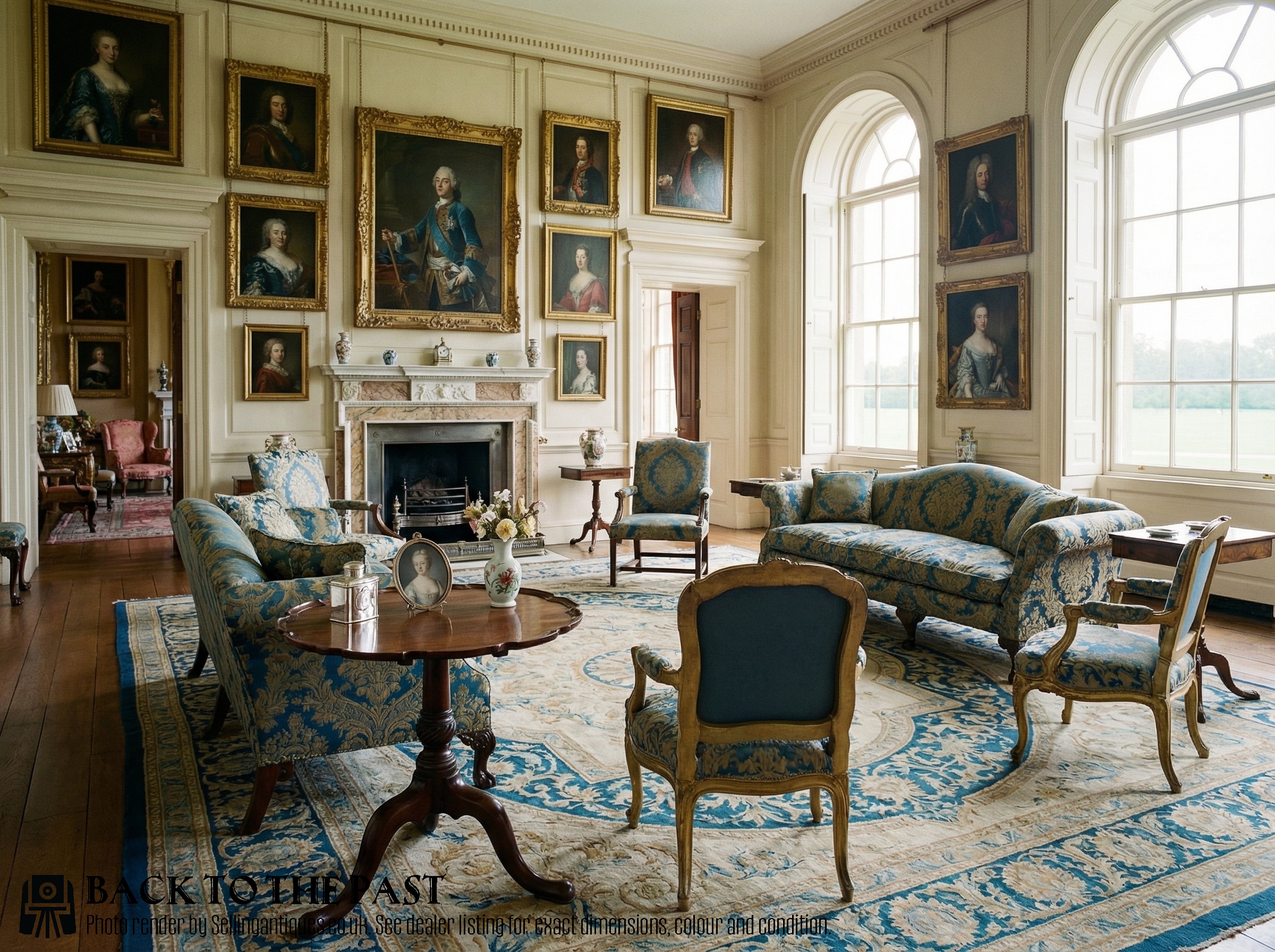
Spiral Column Wine Table
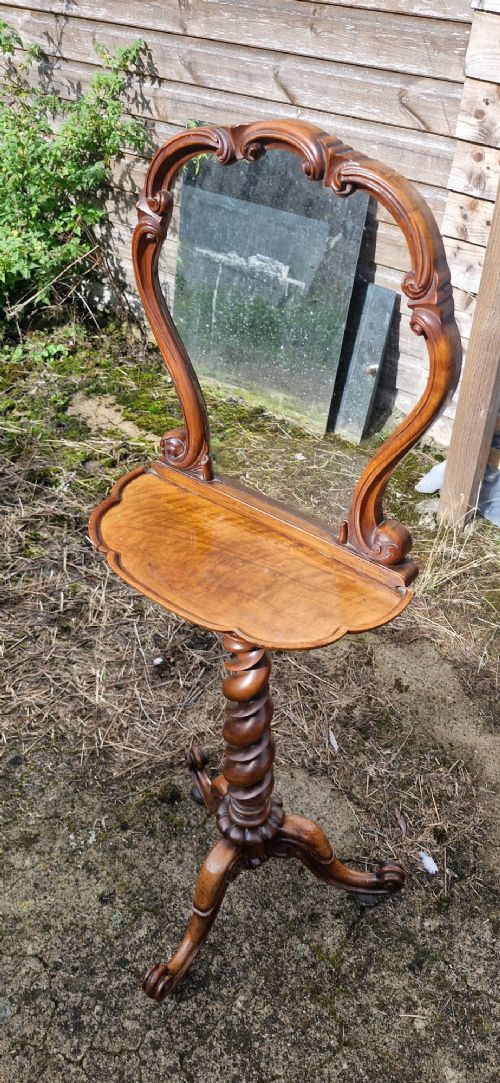
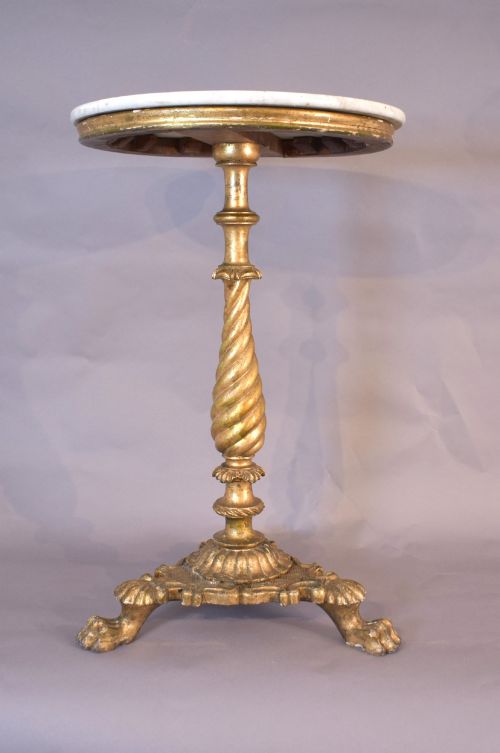
A spiral column wine table combines a small circular or scalloped top with a turned pillar, serving primarily as an occasional table or lamp stand. Buyers seeking a spiral column wine table will encounter various forms here, including tilt-top occasional tables, tripod lamp tables, and occasional teapoys designed for drinks or display.
The selections span the Georgian period, the nineteenth century, and later revivals, reflecting diverse regional tastes from English mahogany designs to Scandinavian burr elm and Venetian painted pieces. Most examples function as versatile small stands, often featuring three-legged tripod bases for stability on uneven floors.
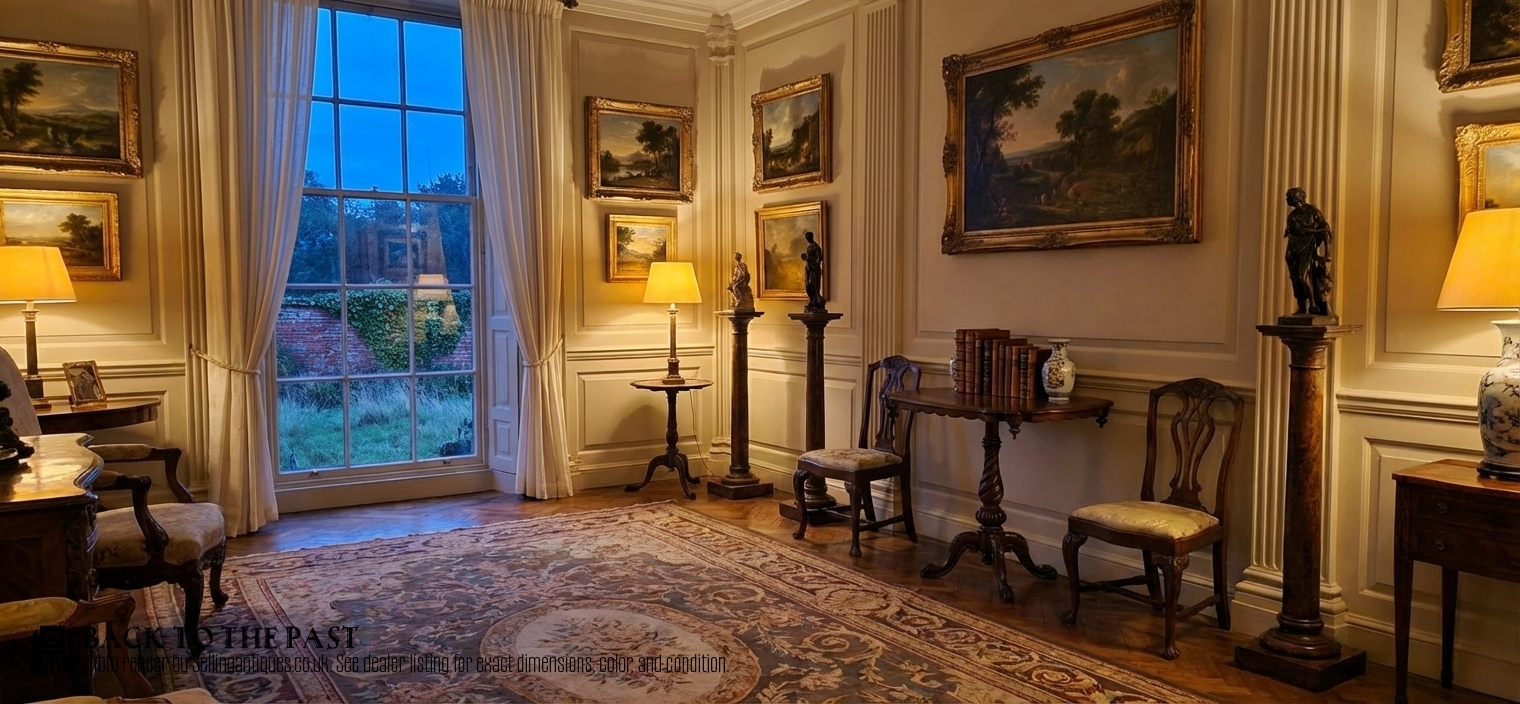
Materials and construction
Cabinetmakers constructed these tables predominantly using dense hardwoods like mahogany and walnut, frequently enhancing surfaces with burr veneers, boxwood stringing, or paint. The signature twisted columns were hand-turned on a lathe to create the characteristic spiral fluting or rope-twist effect.
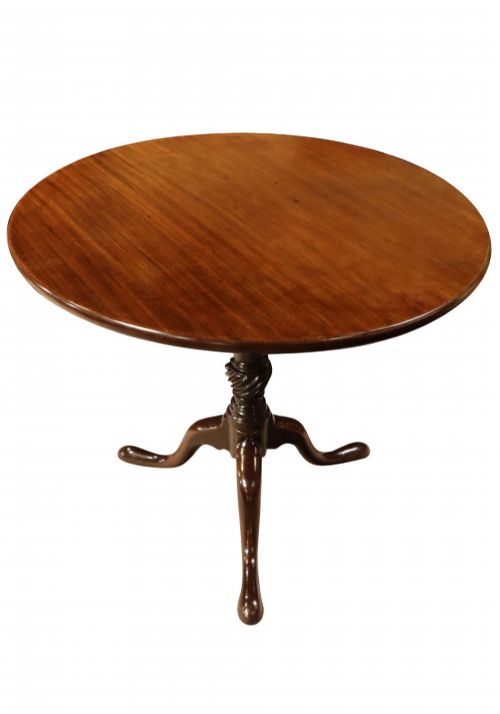
Support structures typically rely on tripod bases joined to the central pedestal, while certain examples incorporate tilt-top mechanisms using brass fittings or wood catches to allow the surface to fold away when not in use.
The selection includes occasional tables, tripod lamp stands, teapoys, and side tables with painted or inlaid surfaces.
Evaluating craftsmanship and proportion
Quality in a spiral column wine table rests on the crispness of the hand-turned twist on the column and the overall balance between the top, stem, and legs. Better pieces display carefully selected timber grain on the tabletop and seamless joinery where the pedestal meets the tripod base.
Subtleties in edge moulding, such as scalloped profiles or fine stringing inlay, distinguish finer workshop productions from simpler utilitarian stands. The integrity of the tilt mechanism and the retention of original surface finishes further influence the standing of an individual piece.
The Spiral Column Wine Table Glossary
- Tripod table
- A small freestanding table supported by a central pillar resting on three legs. This construction prevents wobbling on uneven domestic floorboards.
- Tilt-top
- A tabletop hinged to the top of the pedestal so it can pivot vertically. This allowed tables to be stored flat against a wall when not needed.
- Teapoy
- A small cabinet or table originally designed to hold tea canisters and sugar. Nineteenth-century examples often double as lamp or wine tables.
- Stringing
- Thin inlaid lines of contrasting wood used to outline the edges of table tops. This technique provides delicate decorative contrast without overwhelming the primary timber.
Spiral Column Wine Table: Frequently Asked Questions
What were spiral column wine tables used for?
These small stands originally held wine glasses, decanters, or small lamps beside seating areas in reception rooms.
Today, they function as versatile accent tables in living spaces or hallways for displaying decorative objects.
How do I identify a tilt-top table?
Look underneath the circular top for a wooden catch or a brass mechanism attached to the top of the central pillar.
When released, the surface pivots ninety degrees so the table occupies minimal floor space.
What woods were used for these tables?
Cabinetmakers primarily utilised dense hardwoods such as mahogany and walnut, often selecting figured veneers for the tops.
Alternative regional examples feature burr elm, painted finishes, or contrasting boxwood inlay.
How do I tell different periods apart?
Georgian and eighteenth-century examples tend to exhibit restrained proportions and precise carving on the tripod legs and pillar.
Victorian and later nineteenth-century pieces frequently introduce bolder turnings, burr walnut veneers, or inlaid decoration.