

19th Century Walnut Console
When you search for a 19th century walnut console, you enter a world of richly figured timber and versatile design built for grand drawing rooms and compact hallways alike.
19th Century Walnut Console
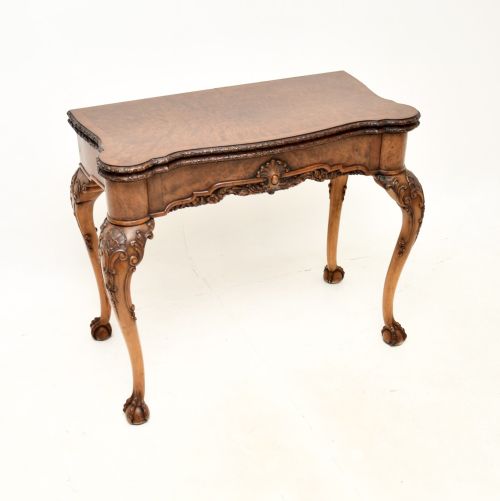
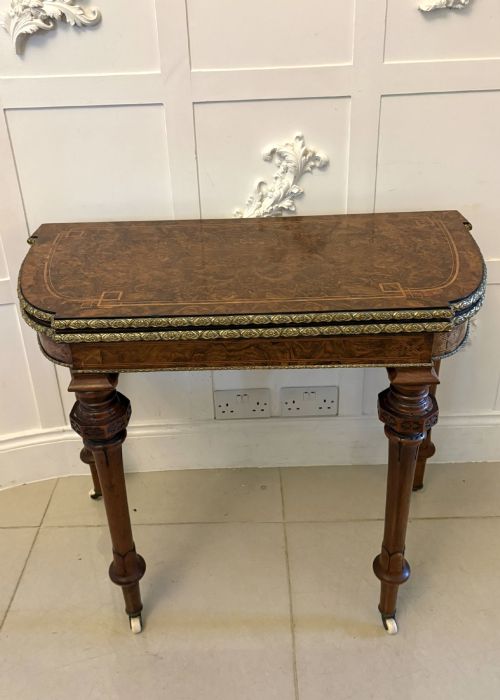
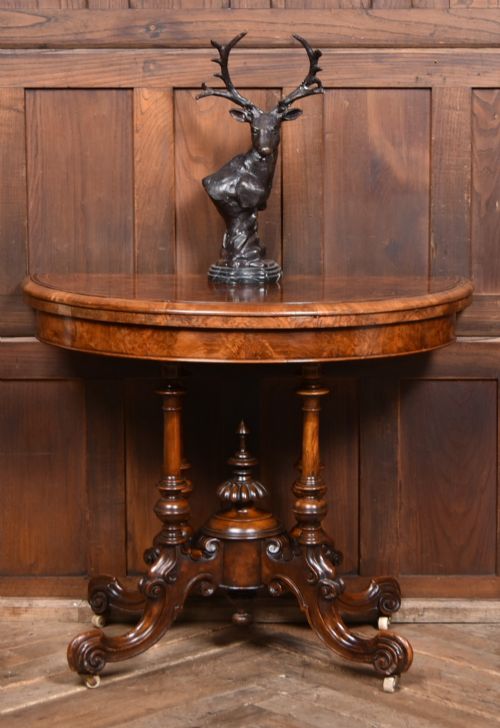
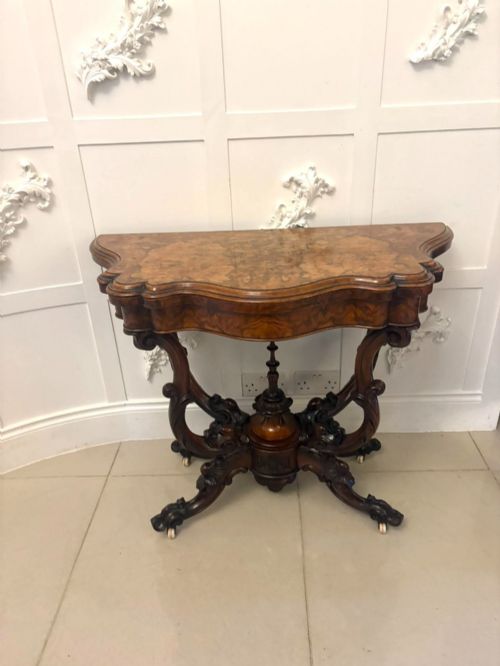
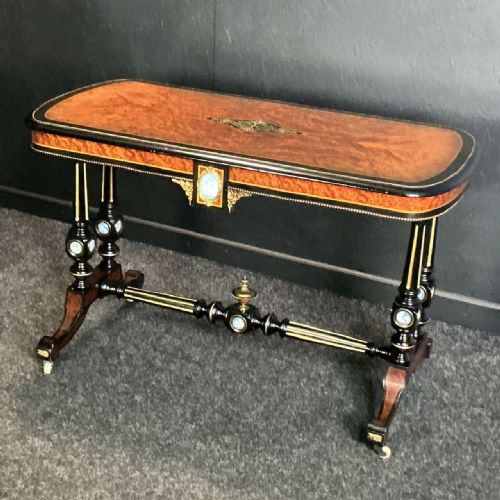
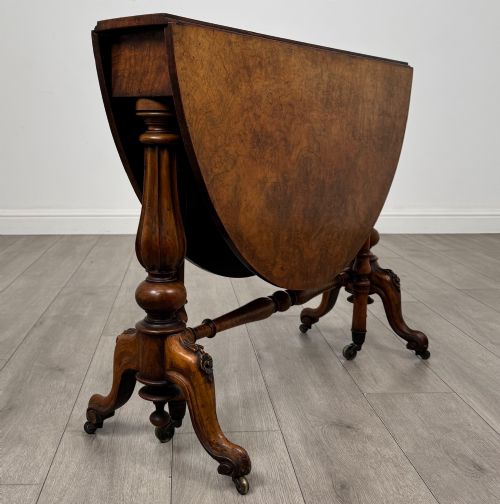
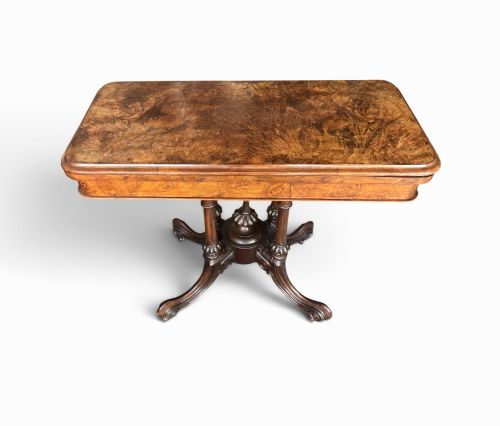
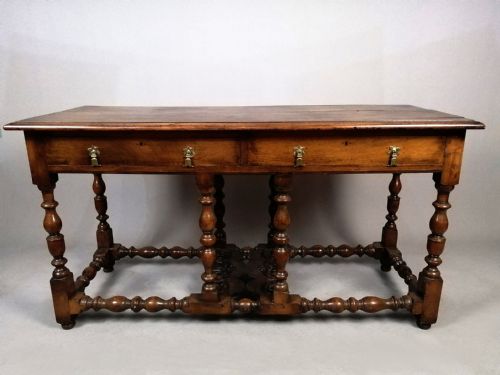
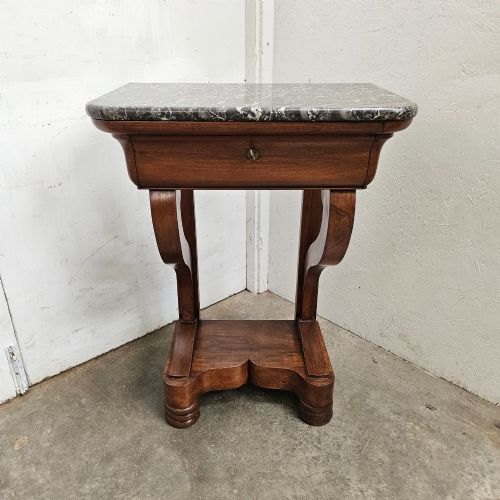
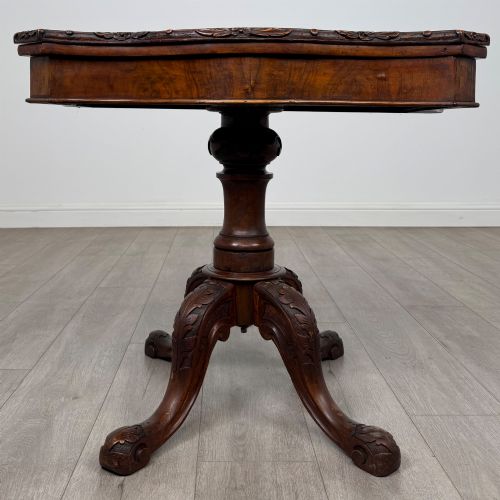
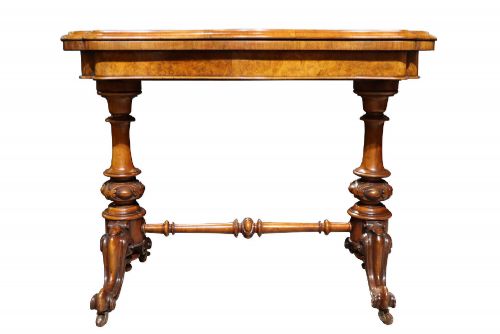
A 19th century walnut console typically manifests as a wall-mounted or freestanding table designed for display and utility, spanning periods from William IV and Victorian eras through to continental revivals. The listings here show a heavy concentration of Victorian burr walnut examples alongside French Louis Philippe and Italian console tables.
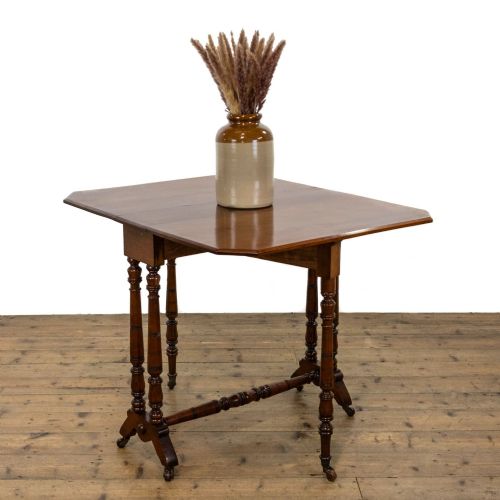
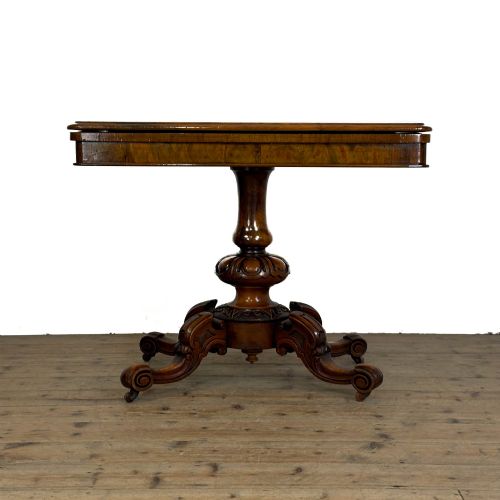
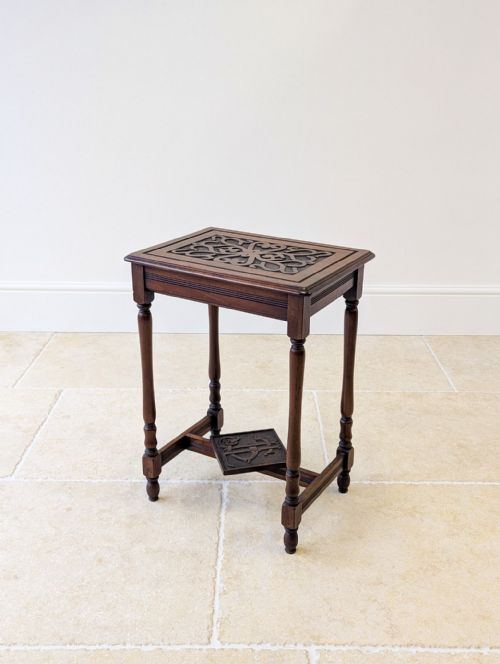
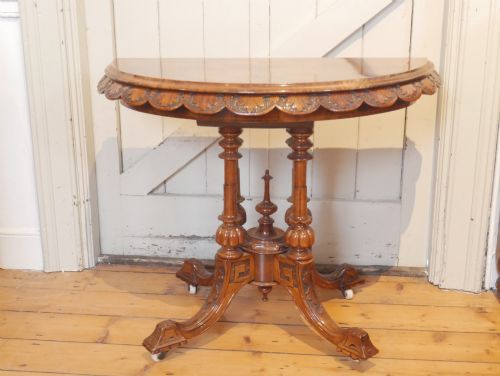
Beyond strict wall consoles, the search captures related forms such as fold-over card tables, occasional tables, and occasional serving pieces that share the same stylistic language. English makers favoured clever mechanical folding tops, while continental pieces frequently paired figured timbers with heavy marble surfaces.
Origins vary widely across the inventory, ranging from English provincial workshops to London cabinet makers, French Parisian studios, and Italian regional centres. This geographic spread introduces distinct regional carvings and decorative accents to the foundational walnut timber.
Judging Quality
Quality rests primarily on the selection and matching of the veneer, where symmetrical burr patterns demonstrate superior timber selection by the cabinet maker. Richness of natural figuring and depth of the hand-applied polish elevate certain examples above plainer, utilitarian stock.
Execution of carving and the integration of metal mounts dictate the tier of craftsmanship, with crisp hand-chiselled details outperforming repetitive or cast-only ornamentation. Stability of the joints and the preservation of original turning or marble surfaces further separate standard production items from master-workshop outputs.
Listings feature walnut, burr walnut, marble, and ormolu across English, French, and Italian regional styles.
Edwards & Roberts·Gillows
The 19th Century Walnut Console Glossary
- Burr walnut
- A highly prized veneer sliced from the deformed growths or burls of walnut trees. It yields a swirling, highly decorative grain pattern used extensively on top surfaces.
- Ormolu
- Gilded bronze ornamentation applied to furniture. It provides metallic contrast against dark walnut timber, particularly on French revival pieces.
- Console table
- A table designed to stand against a wall, traditionally fixed with brackets or supported by distinctive front legs. Many nineteenth-century versions function as serving or pier tables.
- Marquetry
- The art of applying small pieces of veneer to a structure to form decorative patterns. Floral and geometric motifs frequently appear on table tops.
- Fold-over top
- A hinged tabletop design that opens to reveal a baize-lined surface for card games. It swings outward to rest upon a pivoting leg or gateleg frame.
19th Century Walnut Console: Frequently Asked Questions
How do I use a console table today?
These tables adapt easily to modern interiors as hallway drop-zones, bedroom dressing surfaces, or slim living room display ledges. Their shallow depth allows them to sit comfortably in narrow spaces without blocking walkways.
Fold-over variants offer the dual benefit of a compact console profile that expands into a larger surface for dining or games when entertaining guests.
Are marble tops original to these tables?
Marble tops are entirely period-correct for continental pieces, particularly French and Italian console tables designed throughout the nineteenth century. They provided a durable, cool surface for serving or displaying decorative objects.
English variants more commonly feature polished timber or inlaid veneers, reflecting local preferences for warm wood tones over imported stone.
What is the difference between walnut and burr walnut?
Standard walnut timber displays a straight, predictable grain with rich brown tones and subtle figuring. It provides strong structural integrity for table frames, legs, and structural supports.
Burr walnut comes from the irregular knot growths of the tree, producing complex, swirling patterns that are sliced into thin veneers for table tops and drawer fronts.
How should I care for antique walnut furniture?
Keep walnut furniture away from direct sunlight and heat sources to prevent the wood from drying out and the veneer from lifting. Maintaining stable room humidity preserves both the timber and any delicate marquetry inlay.
Apply a traditional beeswax polish occasionally to nourish the finish and maintain the natural lustre of the figured grain without using modern silicone sprays.