

19th Century Urn Planter
These pieces of 19th century urn planter design bring classical proportion and enduring weight to domestic interiors and garden terraces alike.
19th Century Urn Planter
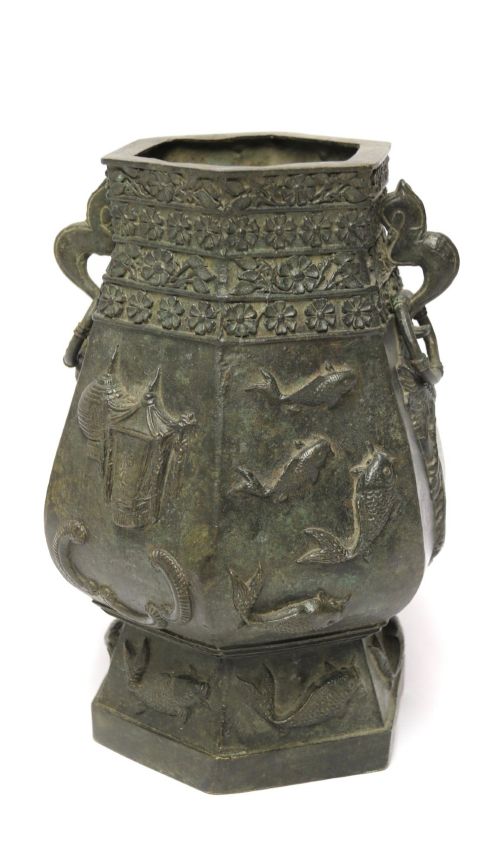
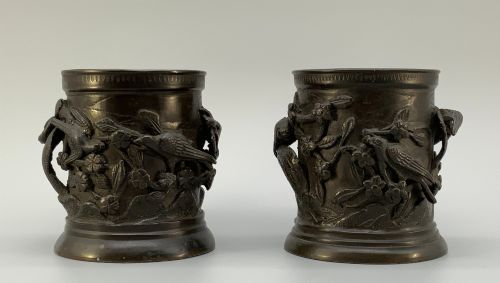
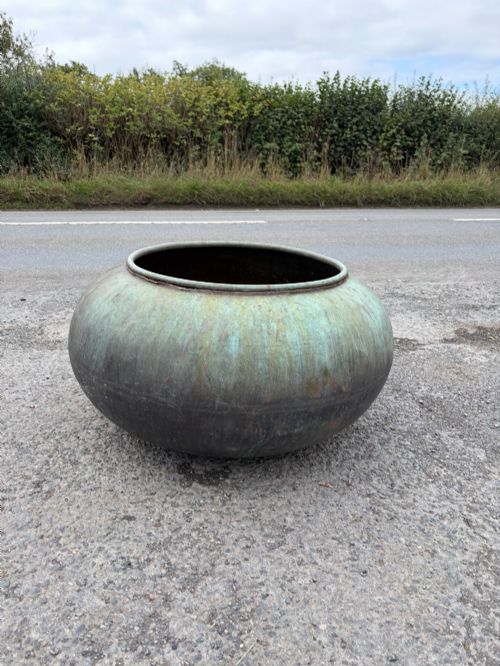
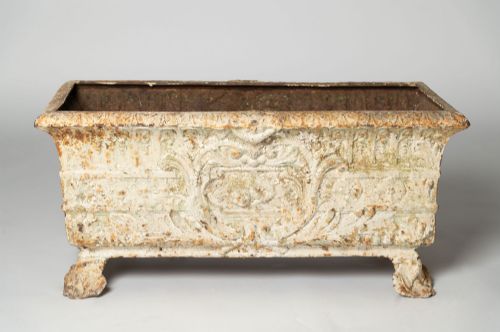
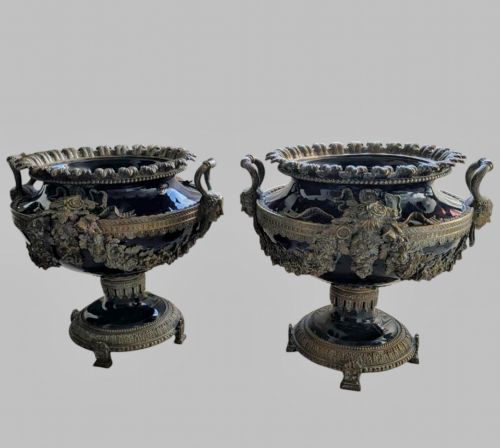
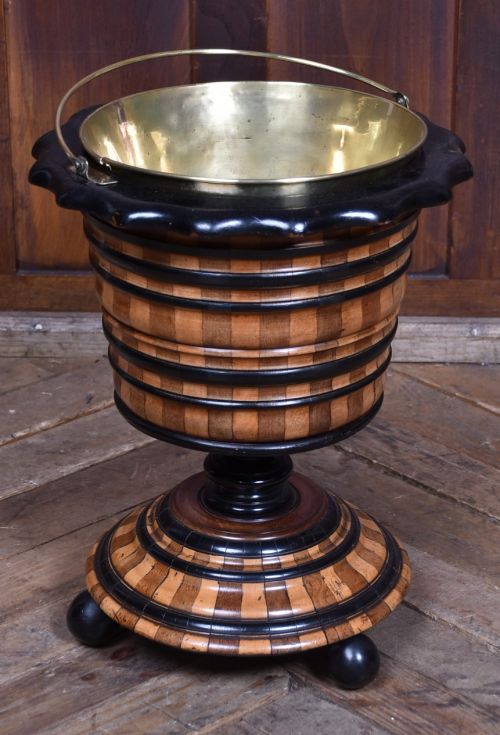
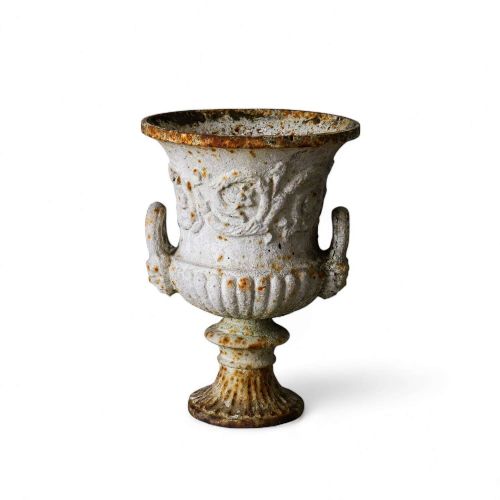
A 19th century urn planter encompasses heavy metal vessels, ceramic jars, and stone vessels designed to hold plants or stand as architectural ornaments. The forms range from classical campana shapes to deep French jardinières and grand tour bronze vases.
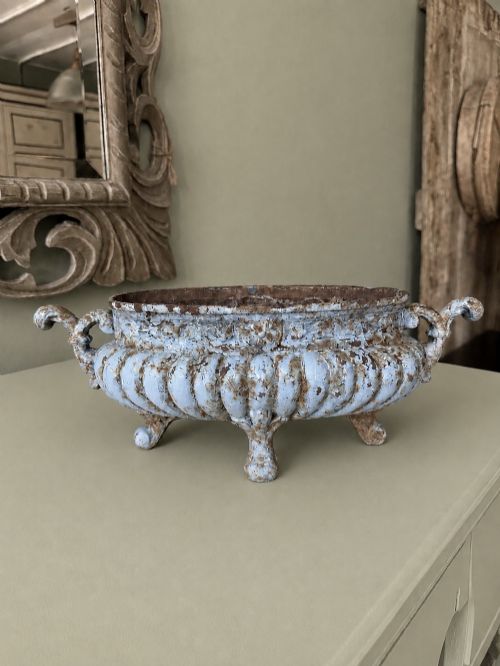
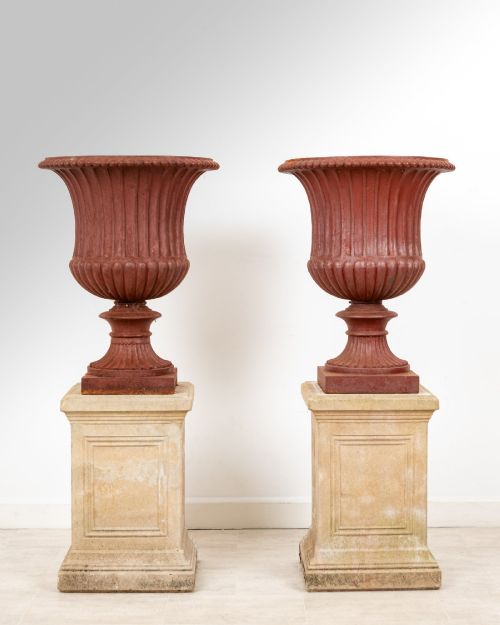
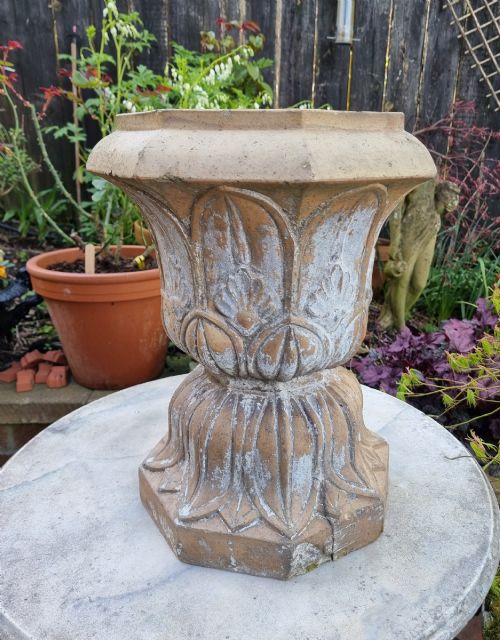
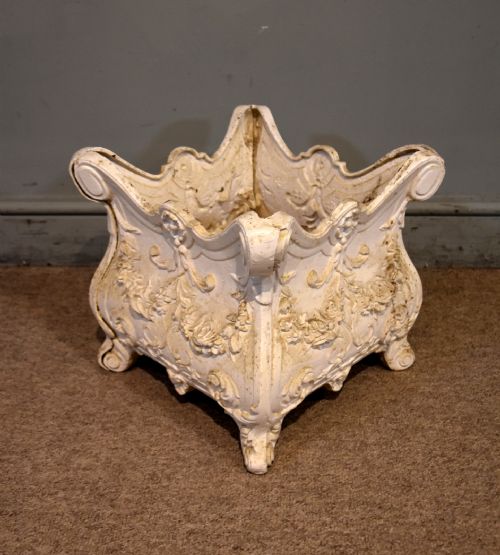
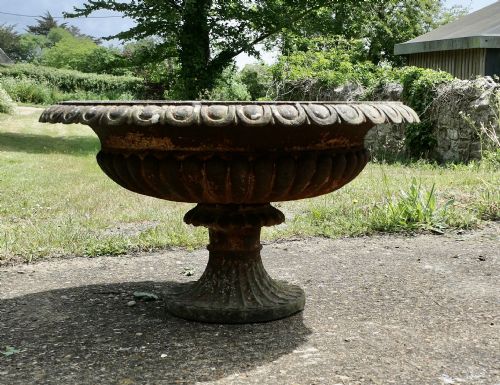
The versions met most frequently on this page are cast iron garden urns and glazed terracotta pots originating from nineteenth century France and Britain. Many retain traces of original painted finishes or exhibit weathered surfaces accumulated through decades outdoors.
How they were made
Foundries utilised sand-casting techniques for iron pieces, pouring molten metal into moulds to achieve crisp foliate details and heavy structural walls. Workshops also hammered and pressed sheet brass or copper into decorative planters.
Potters shaped clay on wheels or pressed it into moulds before firing, applying glazes such as rich greens or blues, while stonemasons carved or cast composite stone, marble, and terracotta for garden ornaments.
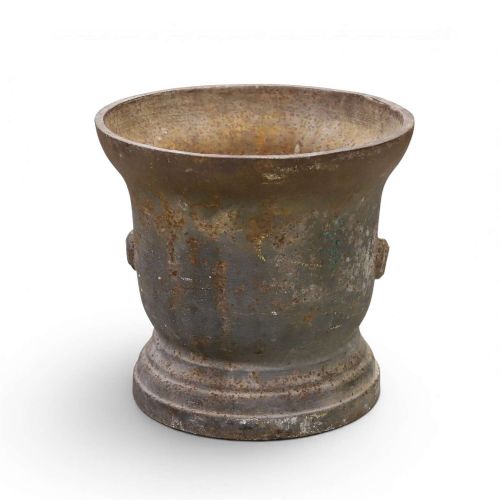
One nineteenth century apothecary mortar served a double life as a heavy kitchen planter in a French chateau.
What varies in quality
The clarity of the casting or carving separates standard utilitarian vessels from exceptional sculptural works, with finer examples displaying sharp relief mouldings and well-defined classical motifs. The weight and thickness of the metal or ceramic body indicate the standard of production.
The integrity of the material surface and the character of the natural patina dictate desirability. Pieces retaining original paint layers or uniform weathering hold greater aesthetic interest than those stripped or heavily repaired.
Andrew Handyside·Coalbrookdale·Barr Flight And Barr·Minton
The 19th Century Urn Planter Glossary
- Campana urn
- A bell-shaped garden vessel with an everted rim, commonly cast in iron or carved in stone during the nineteenth century. This classic shape derives from ancient Roman models.
- Jardiniere
- A decorative ceramic, metal, or wooden pot designed to hold growing plants indoors. They often rest on matching stands or feet.
- Grand Tour
- A term describing bronze or marble decorative objects, such as miniature Warwick vases, acquired by travellers in Europe during the nineteenth century. These pieces emulate classical antiquities.
- Faux bois
- An artistic technique imitating wood grain, frequently applied to nineteenth century stoneware and terracotta garden planters. It creates a naturalistic rustic appearance.
- Biot jar
- A large Provençal terracotta storage vessel from southern France, recognised by its traditional glaze drips and robust earthenware body.
19th Century Urn Planter: Frequently Asked Questions
How do I use a cast iron urn planter outdoors?
Cast iron garden vessels withstand outdoor weather conditions throughout the year. Ensure the drainage hole remains clear to prevent standing water from cracking the metal during freezing temperatures.
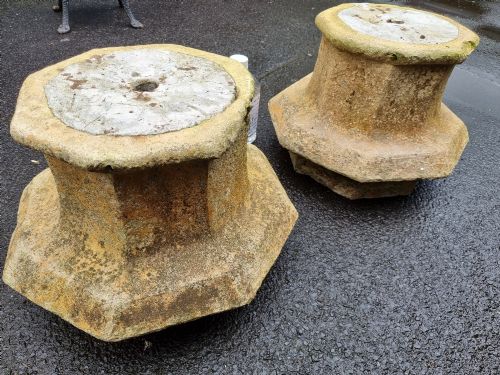
Position heavy stone pedestals beneath large urns to elevate them above damp soil. This protects the base from persistent moisture and enhances the architectural silhouette in a garden setting.
Can I plant directly into an antique ceramic jardiniere?
Porcelain and majolica planters often lack bottom drainage holes because they were originally intended for indoor table use with potted plants placed inside them. Using a separate plastic inner pot preserves the interior ceramic glaze.
Earthenware confit jars and terracotta pots accommodate direct planting more readily due to the porous nature of the fired clay. Line the base with grit to improve moisture management for root health.
How do I distinguish French cast iron from British foundry pieces?
French nineteenth-century vessels frequently display refined neoclassical styling, incorporating delicate handles and crisp chateau motifs. British foundry production often favoured robust utility and heavier wall thicknesses designed for municipal parks.
Maker marks cast into the base or inner rim provide definitive attribution. British works often bear registry lozenges or foundry names, whereas French pieces rely on stylistic execution.
What is the best way to clean a weathered bronze vase?
Preserving the existing patina maintains the historical character and visual depth of nineteenth-century bronze and brass objects. Avoid abrasive cleaning agents that strip away the aged surface oxidation.
Apply a light microcrystalline wax to clean metal surfaces to protect against atmospheric moisture. Buff gently with a soft cloth to achieve a subtle, stable sheen.