
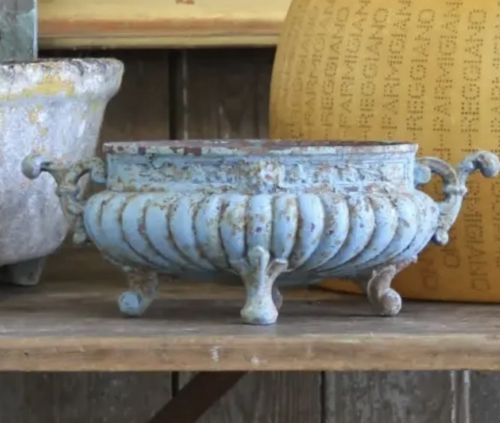
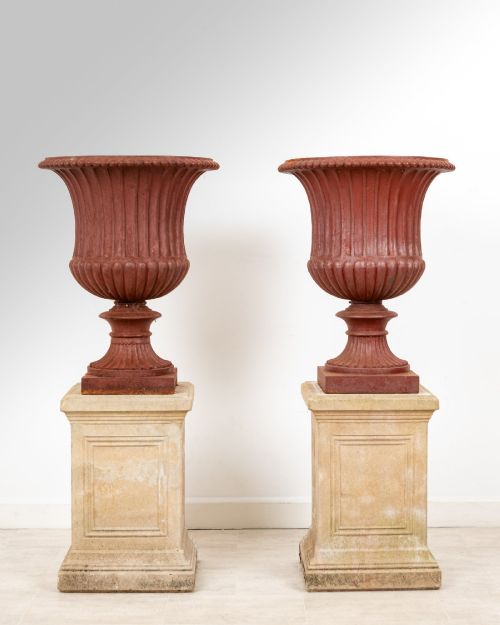
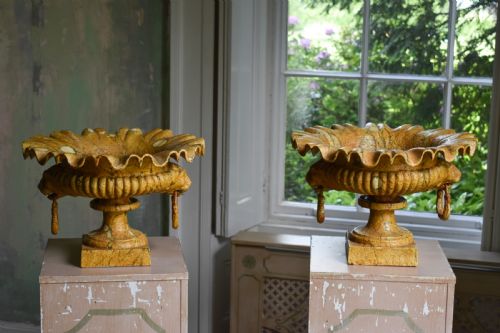
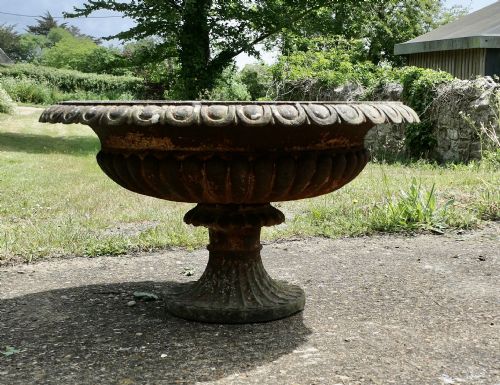


Fluted Cast Iron Planter
These heavy fluted cast iron planter pieces bring classical garden style to terraces and pathways, built to endure outdoors through every season.
Fluted Cast Iron Planter
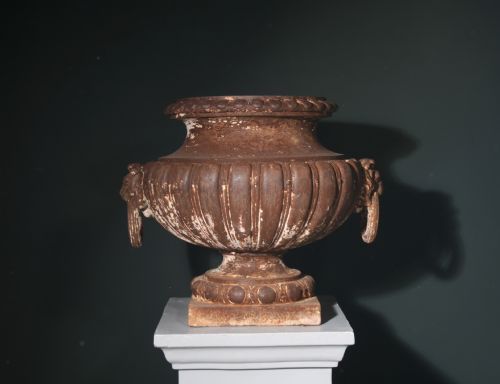
A fluted cast iron planter sits on terraces, lawns, and stone pedestals, bringing architectural structure to garden spaces. These vessels take the form of campana urns, jardinieres, and classical garden pots designed to hold heavy planting.
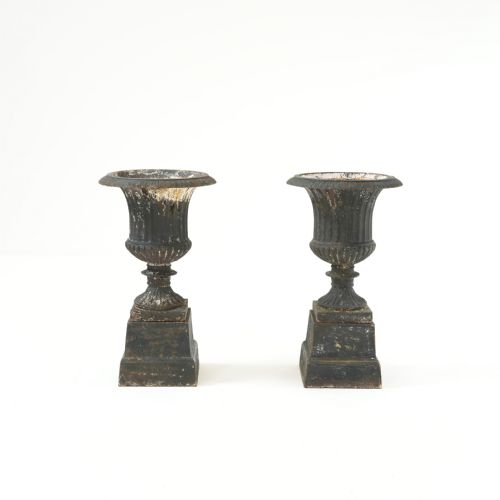
Buyers meet examples spanning the Georgian, Regency, and Victorian periods alongside French neoclassical designs. Many survive as matched pairs complete with matching plinths or stone stands.
The form relies on vertical fluting carved into the iron body, creating shadow and rhythm around the perimeter of the bowl. This architectural detailing connects nineteenth-century garden ornament with classical antiquity.
How they were made
Foundries produced these vessels by pouring molten metal into sand moulds to capture the crisp lines of the fluted decoration. Cast iron provided the strength needed for large garden vessels while allowing intricate surface ornament.
Many examples retain traces of early paint applied to protect the metal from weathering in damp outdoor environments. Stone pedestals and plinths frequently accompany the iron bowls to elevate them off the ground.
The documented periods span Georgian, Regency, and Victorian eras, alongside nineteenth-century French designs.
What varies in quality
The sharpness of the cast distinguishes finer workshop production from standard utilitarian foundry output. Crisp fluting and well-defined relief work show that the original mould was carved with care.
Proportion and scale dictate the visual weight of the piece when placed in a garden landscape. Matching pairs demonstrate superior provenance compared to single vessels assembled later.
Val d'Osne Foundry·Andrew Handyside
The Fluted Cast Iron Planter Glossary
- Campana urn
- A bell-shaped garden vessel with an everted rim and a fluted or smooth body rising from a pedestal base. This classic shape originates from ancient Roman marble prototypes.
- Jardiniere
- An ornamental pot or stand designed to hold growing plants or flowers. These vessels often feature decorative handles or classical motifs around the bowl.
- Plinth
- A heavy base block that elevates an urn or planter above ground level. Plinths add height and presence to garden displays.
- Neoclassical
- A style drawing on the architecture and ornament of classical Greece and Rome. This aesthetic governed the proportion and decorative details of nineteenth-century ironwork.
- Fluting
- Shallow vertical grooves carved into the surface of a column or urn. This technique creates a play of light and shadow across the iron.
Fluted Cast Iron Planter: Frequently Asked Questions
How do I clean a cast iron planter?
Remove loose dirt and debris with a soft brush before washing the surface with mild soapy water. Avoid harsh metal scrapers that might damage the protective paint layer.
Dry the metal thoroughly if applying a new coat of protective paint or oil. Regular maintenance prevents rust from taking hold in the fluted recesses.
Can I leave iron planters outside in winter?
Cast iron handles frost and cold weather well, but trapped damp soil can expand and crack the vessel. Ensure the drainage hole at the base remains clear before winter arrives.
Raising the planter slightly on feet or a plinth helps water drain away freely. Lining the interior with protective material also buffers the metal against freezing compost.
How do I tell Victorian urns apart from later copies?
Nineteenth-century pieces show thicker casting walls and deeper tool marks from the foundry floor. The weight and consistency of the iron reflect earlier industrial methods.
Examine the bolt fixings and the wear patterns around the base for signs of age. Later reproductions often lack the crisp detail found in period Victorian castings.
Do these planters need stone plinths?
Many campana urns and jardinieres were designed to sit directly upon matching iron or stone plinths. The plinth provides necessary height to showcase the planting and architectural details.
Placing the vessel on a solid stone base also protects the bottom of the iron from ground moisture. Ground contact accelerates rust formation if drainage is poor.