


Large Cast Iron Urn
These large cast iron urn pieces bring classical gravity to garden layouts and conservatory floors.
Large Cast Iron Urn
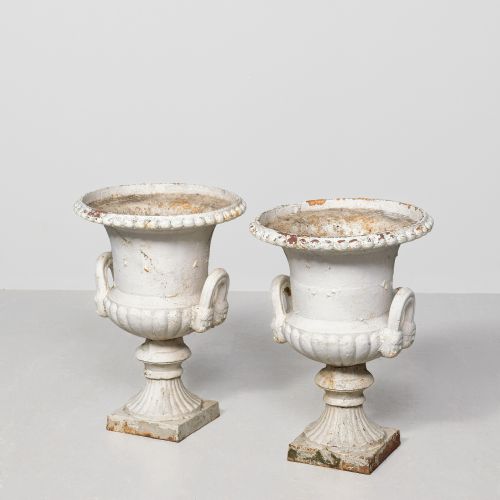
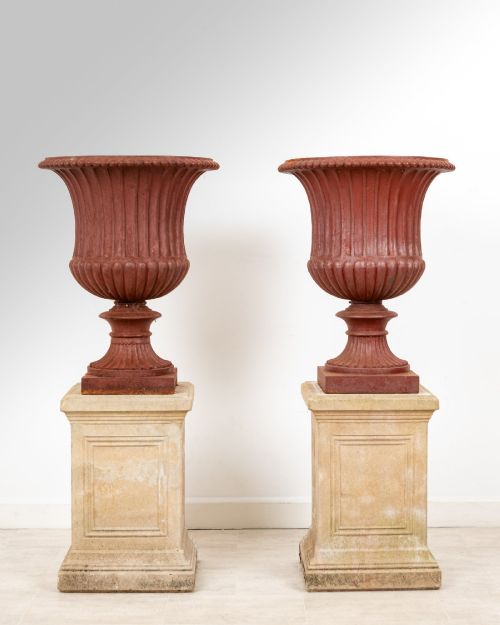
A large cast iron urn serves as a substantial focal point for grounds, terraces and formal gardens. When searching this phrase, buyers encounter heavy vessels designed to hold planting, often found in pairs alongside matching pedestals or plinths. The forms span classical silhouettes originating from historic models.
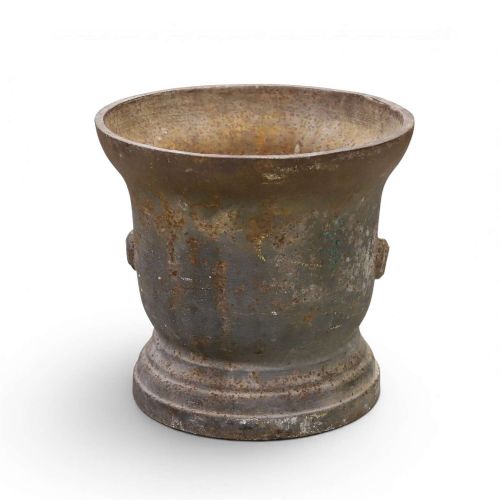
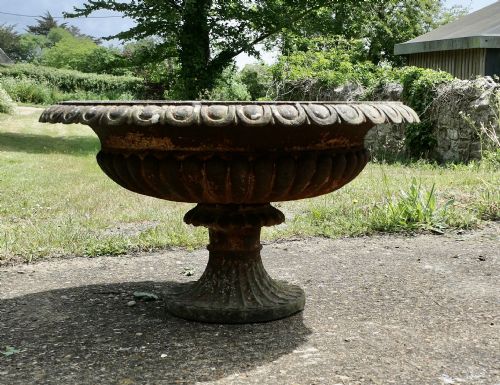
The inventory on this page relies heavily on nineteenth-century pieces bearing Victorian, neoclassical and French chateau influences. Garden urns and planters dominate the selection, though variations include tazza urns and kitchen apothecary mortars. Most examples reflect English and continental foundry work from the eighteen-seventies through to nineteen-ten.
How large cast iron urn pieces were made
Foundries poured molten metal into sand moulds to achieve the crisp architectural details and heavy walls characteristic of these vessels. Iron provided the structural strength needed for monumental outdoor ornaments that could withstand weathering over decades. Paint finishes, sometimes weathered or distressed, were applied to protect the metal and alter its visual weight.
Certain examples incorporate separate stone pedestals or plinths to elevate the ironwork above ground level. The combination of cast iron and stone created stable garden furniture capable of supporting wet soil and mature planting without shifting.
Listings feature nineteen-century production dates alongside Victorian, neoclassical, and French chateau styles.
What varies in quality in large cast iron urn pieces
Quality rests in the crispness of the casting and the depth of the classical ornament. Early nineteenth-century pieces typically exhibit sharper relief work and more carefully proportioned campana or tazza profiles than later mass-produced alternatives. The weight of the metal and the integrity of the base design also distinguish superior foundry output.
Provenance and maker attribution elevate certain pieces, particularly those bearing foundry marks or documented connections to known makers like Andrew Handyside or J. Jones. The presence of matching pairs and original stone pedestals adds architectural completeness to a listing.
Andrew Handyside·J Jones Bankside London
The Large Cast Iron Urn Glossary
- Campana
- A bell-shaped vessel with an everted rim and a footed base, frequently utilised for classical garden urns. This silhouette remains one of the most common forms encountered in nineteenth-century metalwork.
- Tazza
- A shallow bowl or cup mounted on a stem and foot, used for ornamental planting or decorative display. The form derives from classical antiquity and translates well into heavy iron castings.
- Medici urn
- A bell-shaped garden vessel featuring classical relief decoration around the body and a fluted lower bowl. Named after the historic marble original discovered in Italy, these pieces translate grand architectural motifs into metal.
- Mortar
- A heavy bowl-shaped vessel historically used for grinding materials in kitchens or apothecaries. Cast iron versions from French chateaux provide robust alternatives to traditional garden planters.
Large Cast Iron Urn: Frequently Asked Questions
How do I identify a Victorian urn?
Victorian pieces often display classical revival motifs such as egg-and-dart moulding, acanthus leaves, and heavy fluting derived from Greek and Roman precedents. They were produced in British foundries during the nineteenth century using durable sand-casting techniques.
Look for thick iron walls, heavy proportions, and surface patination that reveals decades of exposure to the elements. Many pieces from this era follow the campana shape with distinct stepped bases.
Can these urns stay outside all year?
Cast iron withstands frost and heavy rain, making these vessels suitable for permanent outdoor placement on terraces, lawns, and garden steps. The durable metal tolerates seasonal weather changes without structural failure.
Protective paint layers help prevent excessive oxidation, though many buyers prefer a weathered, distressed finish. Ensuring proper drainage prevents standing water from freezing inside the bowl.
How heavy are these large urns?
These vessels are exceptionally heavy due to the thick cast iron walls required for monumental garden ornaments. Moving them typically requires mechanical assistance or multiple people to avoid injury.
Once positioned on a paved terrace, stone plinth, or garden lawn, their substantial weight keeps them stable against strong winds without needing permanent fixings.
What is the difference between a campana and a tazza urn?
Campana urns feature a deep, bell-shaped bowl with a flared rim, offering substantial volume for deep-rooting plants and flowers. Their profile mimics ancient marble vases found in classical architecture.
Tazza urns present a shallower, wider basin mounted on a distinct pedestal stem, creating a more open presentation for trailing foliage. Both forms were popular in nineteenth-century gardens and conservatories.