
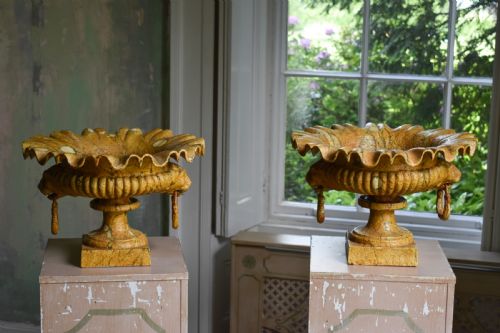

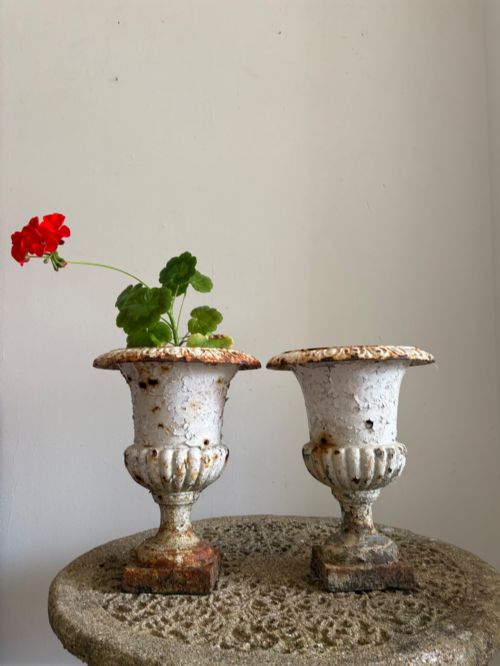
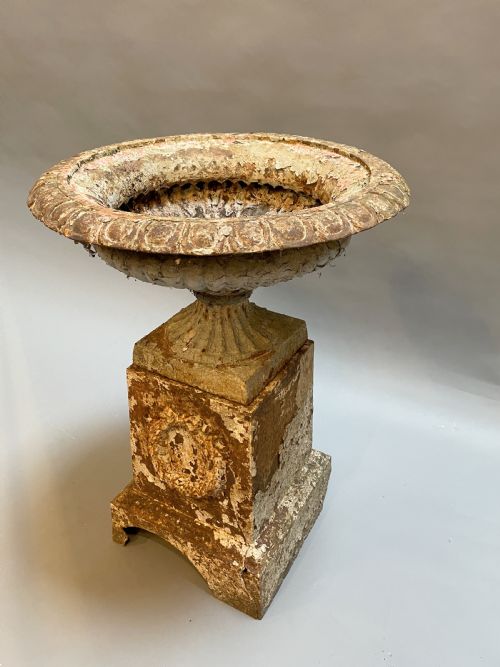
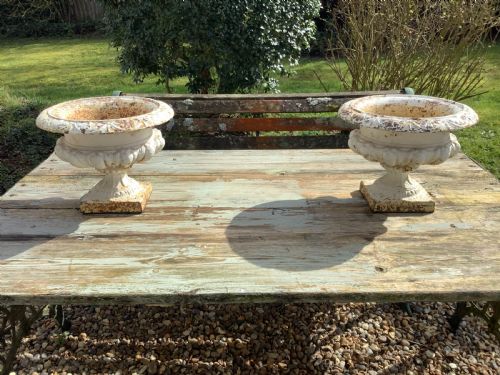


Painted Metal Garden Urn
These painted metal garden urn pieces bring classical form and enduring presence to outdoor spaces, offering substance that modern reproductions simply cannot match.
Painted Metal Garden Urn
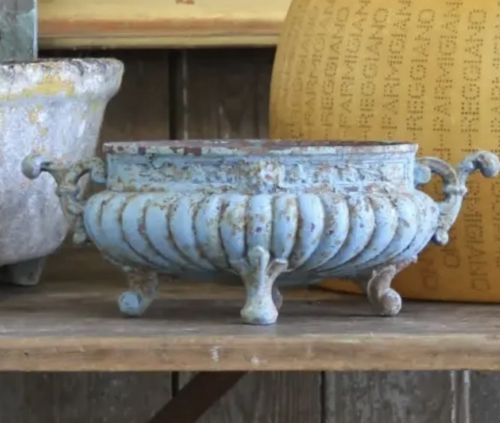
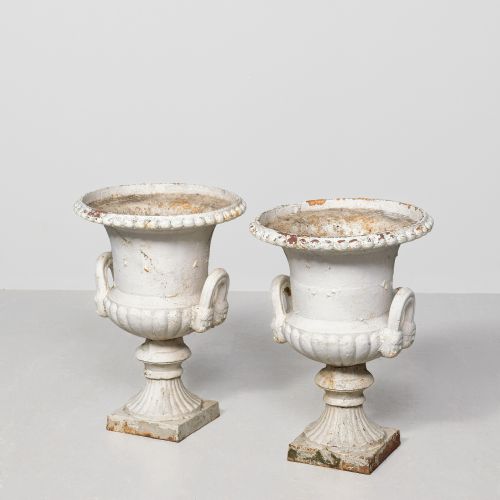
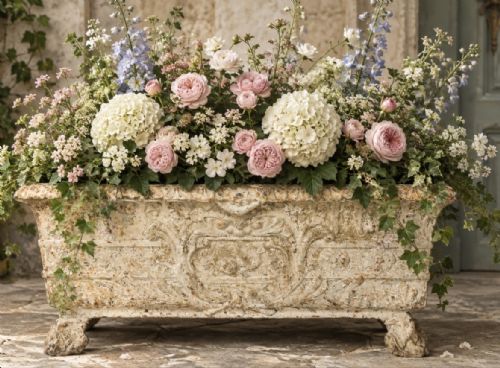
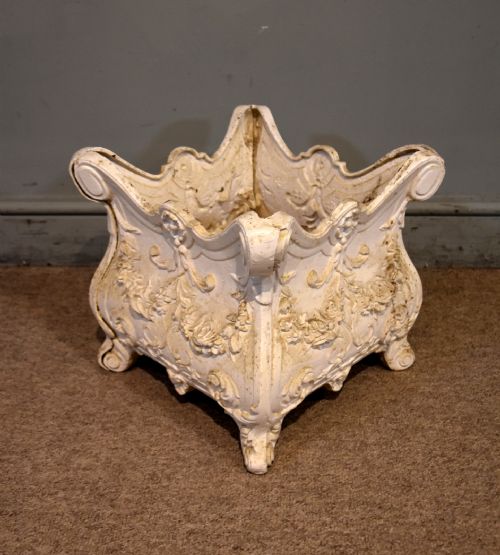
A painted metal garden urn is a substantial vessel designed to hold plants or stand alone as a structural ornament in a garden scheme. When you search for a painted metal garden urn, you encounter forms ranging from campagnas and classical vases to table-sized vessels and large planters on plinths.
The pieces appearing here span the nineteenth century into the early twentieth century, drawing on Victorian and neoclassical styles. French country and chateau influences also appear across these garden planters and jardinieres, reflecting continental taste of the period.
Most examples rely on cast iron as their primary structural body, often paired with sheet iron or wrought iron strapwork. These vessels frequently feature distressed original paint surfaces or weathered overcoats built up through decades outdoors.
Cast iron and painted finishes
Foundries produced these garden vessels by pouring molten metal into sand moulds to create thick, rigid walls capable of withstanding heavy soil loads and weathering. This cast iron construction gives the pieces their characteristic weight and durability.
Makers applied protective layers of paint over the iron surfaces, sometimes building up multiple coats over decades of use. Wrought iron elements and strapwork details were forged and joined by hand to complete structural supports and handles.
Victorian gardeners often painted heavy iron urns bright green to match the foliage, leaving layers of colour that flake away to reveal the metal beneath.
Distinguishing quality in period urns
Quality rests in the crispness of the casting detail, where ornament such as acanthus leaves and classical moulding remains sharp rather than softened by worn moulds. Heavy gauge metal and balanced proportions separate utilitarian vessels from finer decorative works.
The integrity of the painted surface matters greatly, particularly where original or early layered paint remains stable on the iron. Matching pairs with intact pedestals or plinths command stronger interest than single weathered survivors.
Coalbrookdale
The Painted Metal Garden Urn Glossary
- Campagna urn
- A bell-shaped garden vessel with a flared rim and footed base, popular in neoclassical design. This form derives from ancient marble excavations.
- Jardiniere
- An ornamental pot or stand designed to hold growing plants, often taking a more elaborate form than a standard flowerpot.
- Strapwork
- Decorative intersecting bands or flat strips of wrought iron used to reinforce and adorn garden planters.
- Plinth
- A heavy base or pedestal that elevates an urn, adding height and architectural presence to a garden display.
- Neoclassical
- A style drawing on classical antiquity, characterised by formal symmetry, acanthus foliage and restrained architectural dignity.
Painted Metal Garden Urn: Frequently Asked Questions
How heavy are these cast iron urns?
These pieces possess substantial weight due to their cast iron construction, often requiring two people to lift smaller examples and mechanical assistance for larger ones on plinths.
This heft ensures the vessels remain stable in exposed garden locations without tipping in high winds.
Can I leave them outside all winter?
Cast iron vessels tolerate outdoor placement well throughout the year, provided drainage holes remain clear and water does not freeze solid inside.
Elevating the base slightly on bricks or feet prevents moisture retention during prolonged wet weather.
How do I plant directly into an iron urn?
Line the interior with protective material or set a plastic pot inside to separate wet compost from direct contact with the painted iron walls.
Adding gravel to the bottom ensures proper drainage and protects the structural integrity of the metal.
Are pairs harder to find than single urns?
Matching pairs survive less frequently because gardens often suffered losses, splitting sets over generations of landscaping changes.
Finding a matched pair with consistent surface wear adds significantly to the decorative impact in a formal layout.