




Classical Iron Garden Urn
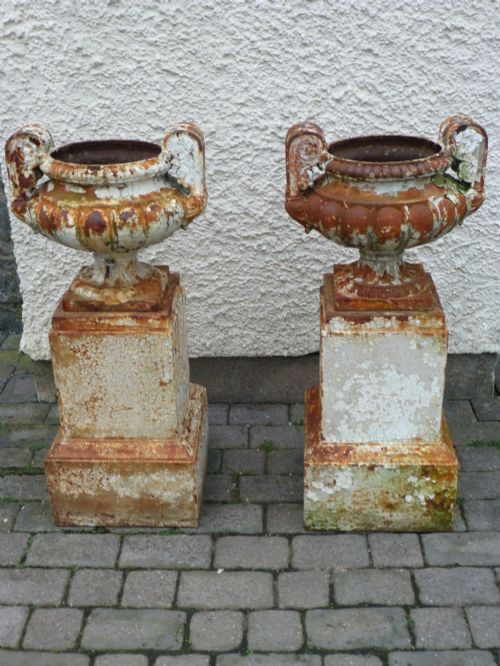
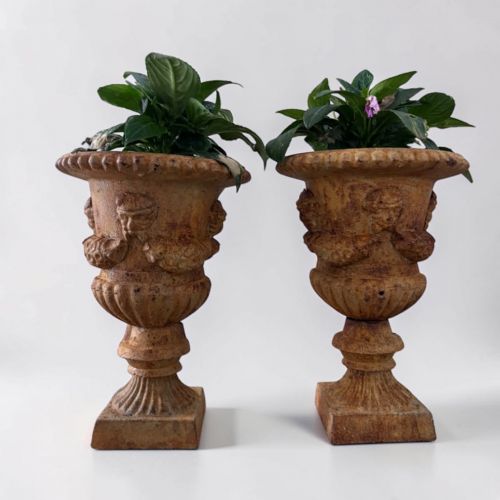
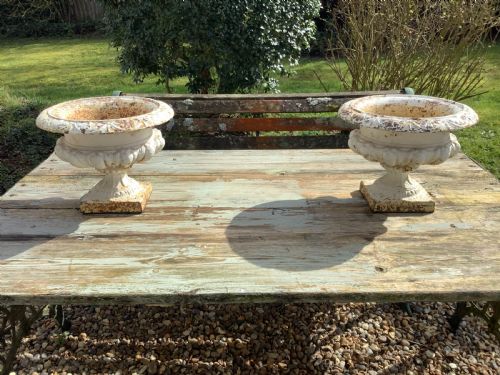
A classical iron garden urn brings architectural presence to a terrace, taking the form of a heavy cast vessel raised on a plinth or pedestal.
Classical Iron Garden Urn
A classical iron garden urn is a heavy vessel designed for planting or display, drawing on ancient forms to anchor a lawn or terrace.
The pieces found here span the nineteenth century into the twentieth, with Victorian and Regency examples dominating the selection.
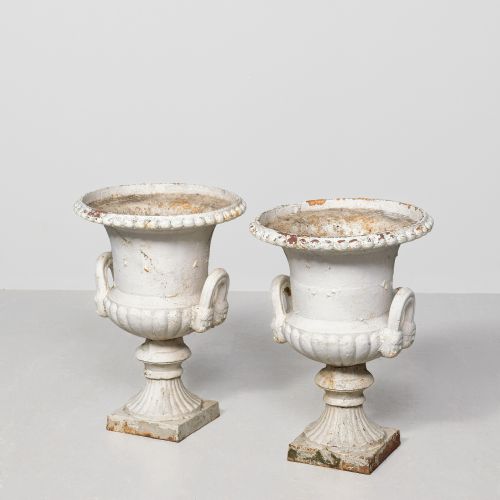
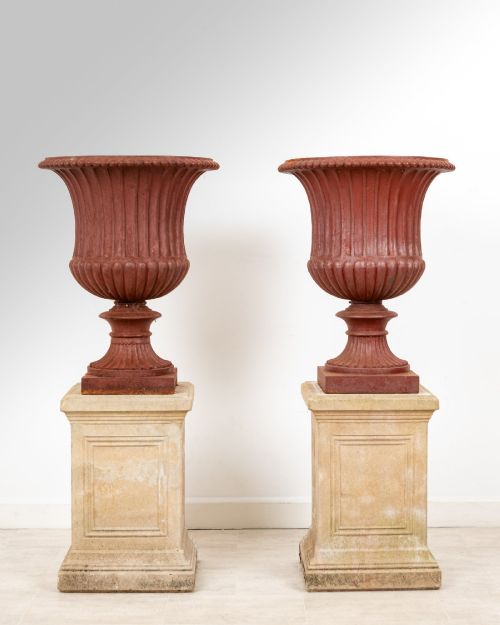
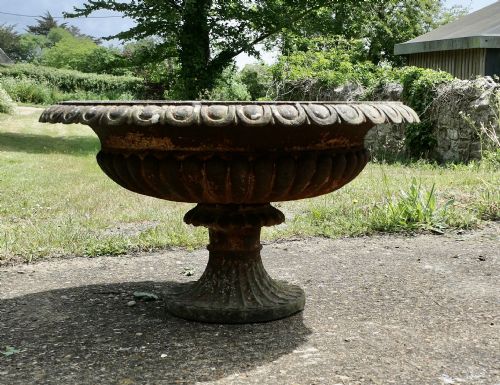
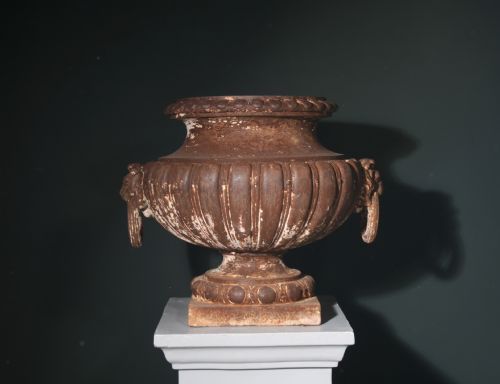
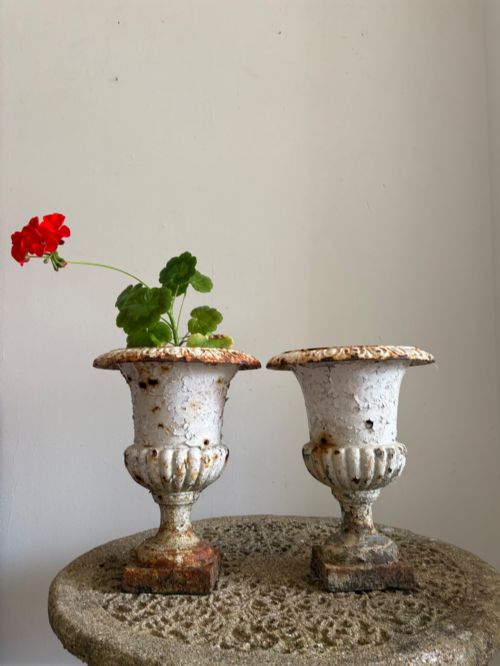
Most pieces take the shape of Campana or tazza urns, often mounted on matching stone or iron plinths and pedestals.
How they were made
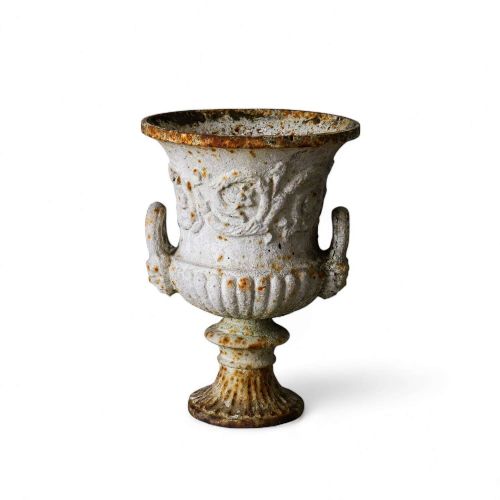
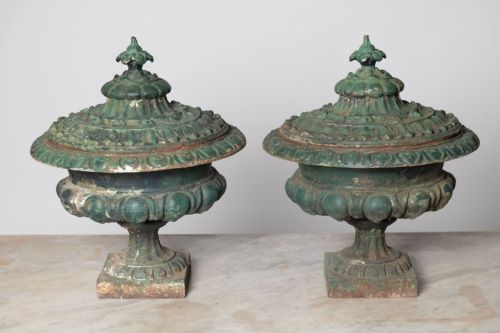
Foundries produced these vessels using cast iron, pouring molten metal into moulds to create crisp details like gadrooning and acanthus leaves.
Many examples retain traces of early or original paint, while others show the textured, weathered surfaces left by decades outdoors.
Several heavy iron vessels arrive complete with their original lids, keeping centuries of garden debris neatly locked out.
What varies in quality
Quality rests in the crispness of the casting and the presence of named foundry marks from prominent makers like Coalbrookdale or Val d'Osne.
Complete sets featuring their original lids, plinths, and matching pairs command greater attention than single weathered pots.
Falkirk Carron foundry·Coalbrookdale·Andrew Handyside·Val d'Osne Foundry
The Classical Iron Garden Urn Glossary
- Campana urn
- A bell-shaped garden vessel with an everted rim, named after the ancient pottery forms discovered in southern Italy.
- Tazza urn
- A shallow, bowl-like garden vessel elevated on a central stem and foot, often used for dramatic planting.
- Plinth
- A heavy base block that elevates an urn, adding height and architectural proportion to the display.
- Gadrooned
- Decorated with a series of rounded, parallel ridges or flutes carved into the body or rim of the vessel.
Classical Iron Garden Urn: Frequently Asked Questions
How do I secure an iron urn?
These heavy vessels generally rely on their own substantial weight to stay stable on lawns or terraces. Some larger examples sit securely upon matching stone or iron pedestals without needing permanent fixings.
For exposed garden positions, a strong foundation beneath the plinth prevents any shifting over time as soil and plants add extra load.
Can these urns stay outside all winter?
Cast iron stands up reliably to seasonal weather changes and remains outdoors throughout the year. The durable metal tolerates frost, though ensuring proper drainage inside the bowl prevents standing water from freezing and expanding.
Many pieces show decades or centuries of weathering that add character to the painted or oxidized metal surfaces.
What is a Campana shape?
The Campana shape resembles an inverted bell, featuring a wide opening with a flaring rim that tapers down to a narrow base. This classical silhouette derives from antique vessels and provides ample room for trailing garden plants.
Foundries during the nineteenth century produced this specific form extensively for grand gardens and domestic courtyards.