




Antique Iron Garden Vase
An antique iron garden vase brings architectural weight to a lawn or terrace, offering enduring form and timeless planting space.
Antique Iron Garden Vase
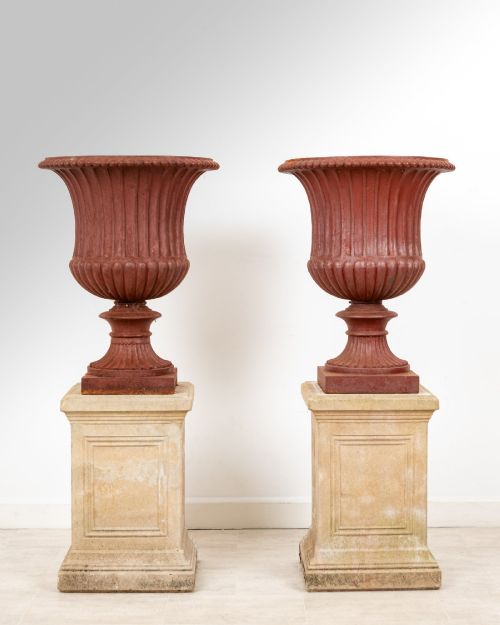
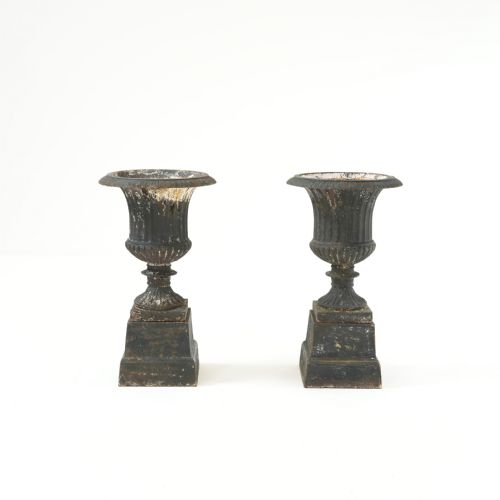
An antique iron garden vase takes the shape of classic campana urns and garden vessels designed to stand permanently out of doors. When you search for an antique iron garden vase, you encounter robust cast iron vessels created to hold plantings or punctuate formal garden layouts.
The pieces available span the nineteenth century, the Victorian era, and into the Edwardian period. Makers utilised sturdy casting methods to shape heavy metal into classical silhouettes that handle outdoor elements year after year.
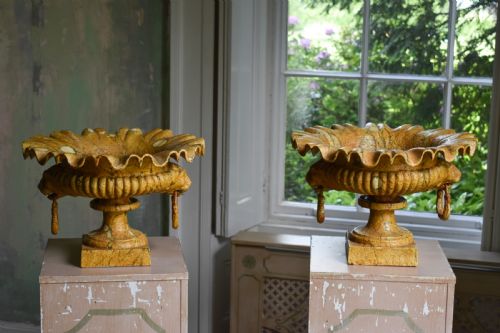
Forms include single urns and matched pairs, frequently mounted upon complementary stone pedestals or pedestals cast from the same iron. These garden vessels draw heavily on neoclassical and classical revival design vocabularies seen in acanthus leaf motifs and campana profiles.
How they were made
Foundries cast molten iron into multi-part sand moulds to achieve the crisp classical lines and sculptural details required for a garden vase. This technique allowed makers to produce thick, durable vessel walls capable of supporting heavy soil and large plantings.
Many surfaces received layers of protective paint over the raw metal to prevent oxidisation in damp conditions. Separate plinths or stone pedestals were frequently paired with the heavy cast iron bodies to elevate the composition.
What varies in quality
The integrity of the heavy cast iron and the presence of matching stone pedestals or original plinths define the finer specimens. Structural weight and balanced proportions separate standard utilitarian garden vessels from master foundry productions.
Coalbrookdale
The Antique Iron Garden Vase Glossary
- Campana urn
- A bell-shaped garden vessel with an everted rim and a tapering lower body, modelled after ancient Roman pottery and stone wine coolers. This classic silhouette remains the defining shape for large garden vases.
- Cast iron
- An iron-carbon alloy poured into moulds while molten to create heavy, rigid objects with high compressive strength. It forms the primary structural material for nineteenth-century garden ornaments.
- Neoclassical
- A style drawing inspiration from the classical art and architecture of ancient Greece and Rome. It dominates the ornamentation found on Victorian and nineteenth-century garden vessels.
- Plinth
- A heavy base or pedestal that elevates a garden vase above ground level. These supporting structures are often cast in iron or carved from stone to match the vessel above.
Antique Iron Garden Vase: Frequently Asked Questions
What is an antique iron garden vase?
An antique iron garden vase is a heavy cast iron vessel, typically styled as a campana urn, designed to display plants in a garden setting. These pieces date across the nineteenth and early twentieth centuries.
Foundries produced them in classical revival and neoclassical styles, frequently mounting them on stone pedestals or iron plinths to ornament lawns and terraces.
How were these garden vases used?
These vessels served as prominent focal points in formal gardens, often placed at the end of paths, flanking entrances, or elevated on stone plinths. Gardeners filled them with trailing plants and floral displays that contrasted with the dark metal.
Their substantial weight ensured they remained stable outdoors without needing permanent fixings to the ground beneath them.
How do I date an iron garden vase?
Dating relies upon stylistic markers such as neoclassical acanthus leaf ornamentation and the presence of nineteenth-century foundry characteristics. Pieces from the Victorian era often display heavier cast construction and classical revival motifs.
Edwardian examples continue these traditional campana forms into the early twentieth century, maintaining similar casting techniques and materials.
Can I leave iron garden vases outside?
Cast iron garden vessels are specifically designed for outdoor placement and withstand year-round weathering when properly maintained. Protective paint layers help shield the metal surface from dampness and active corrosion.
Their heavy construction prevents strong winds from tipping them over, making them permanent fixtures in the garden landscape.