






19th Century Suzani
A 19th century suzani is a vibrant embroidered textile from Central Asia that brings rich colour and historic pattern to an interior space.
19th Century Suzani
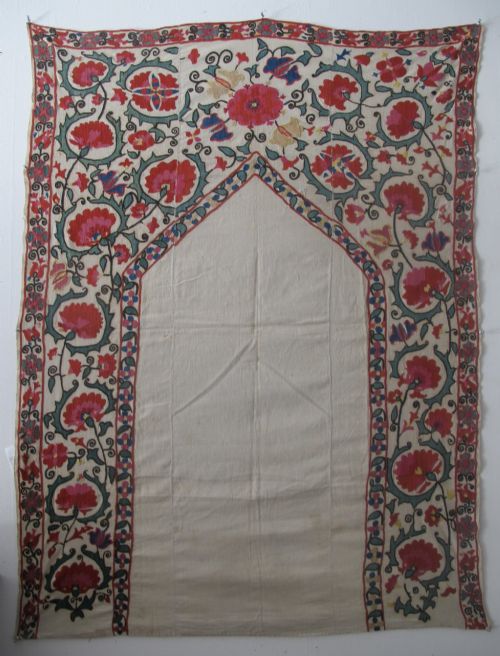
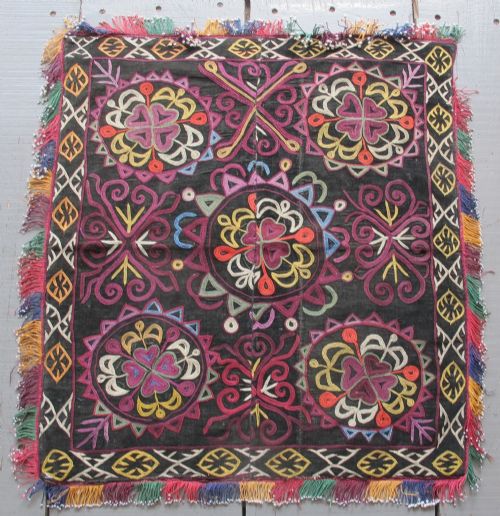
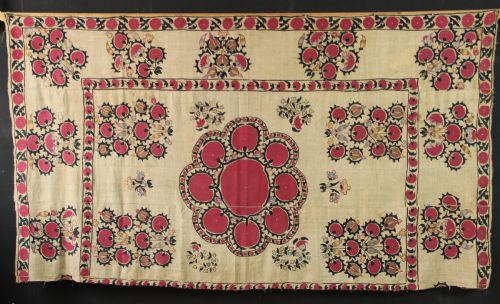
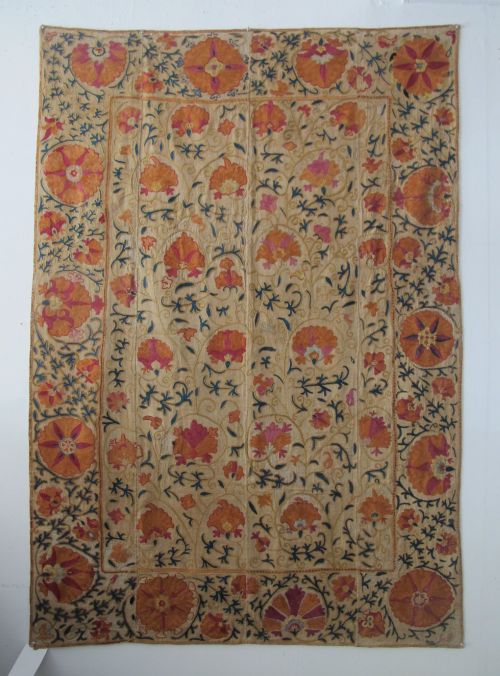
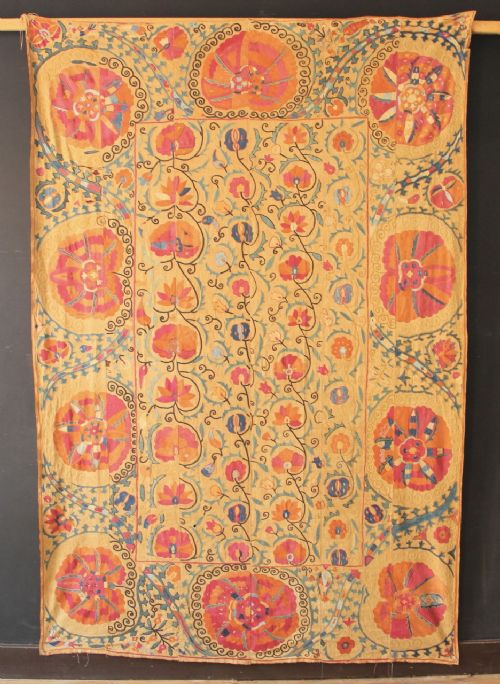
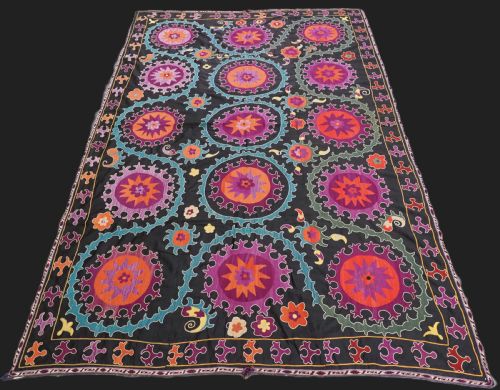
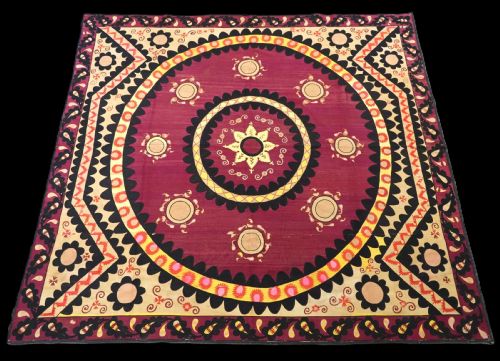
When searching for a 19th century suzani, a buyer encounters embroidered wall hangings, covers, and domestic textiles originating primarily from Uzbekistan and centres such as Bokhara, Tashkent, Samarkand, Nurata, and Ura Tube. These pieces take the form of large decorative wall hangings, smaller mirror covers, and nimble nim suzanis, each carrying traditional Central Asian folk art motifs.
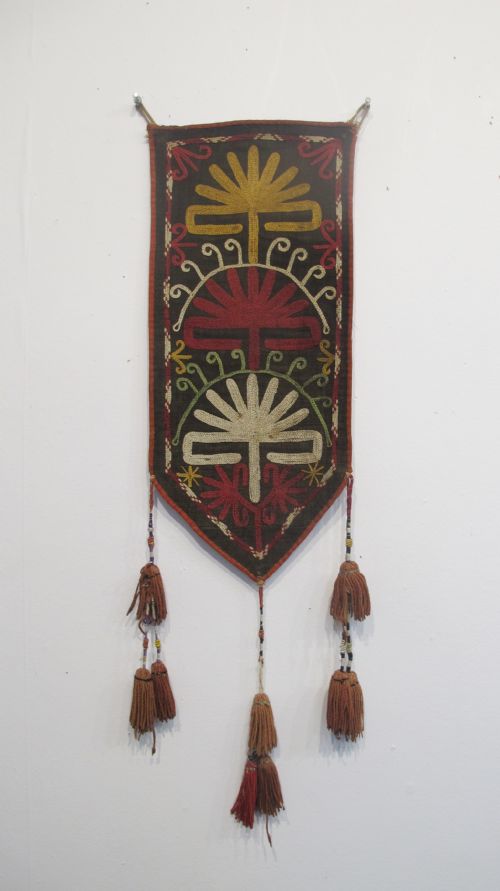
The most common examples on this page are silk embroidered suzanis on cotton grounds, displaying medallion variants, floral designs, architectural elements, and central stars. Tribal groups such as the Lakai contribute distinct smaller dowry embroideries and ilgich pieces to the selection.
Originating across the nineteenth century, these textiles reflect specific regional aesthetics from Samarkand to Bokhara, maintaining traditional stitching techniques passed down through generations of makers.
What Varies in Quality
Quality rests upon the density of the silk embroidery, the precision of the needlework, and the visual impact of the design layout. Fully embroidered palak suzanis or pieces carrying detailed architectural layouts require greater labour than simpler floral arrangements.
The vibrancy of the silk thread and the clarity of regional motifs, whether from Bokhara, Nurata, or Tashkent, separate standard domestic pieces from exceptional surviving examples.
19th Century Suzani Retail Price Guide 2026
Typical asking prices for 19th century suzani among the pieces listed under this phrase on Sellingantiques today, from the lower quarter to the upper quarter. They describe what is for sale here now, not the wider market.
Needles flew so fast across nineteenth-century workshops that even the mirrors needed embroidered silk jackets to stay properly dressed.
The 19th Century Suzani Glossary
- Suzani
- An embroidered Central Asian hanging or cover. The term derives from the Persian word for needle.
- Nim Suzani
- A smaller version of the standard textile. These measure about half the size of a full hanging.
- Palak
- A fully embroidered suzani type. The term describes complete coverage of the ground fabric in silk thread.
- Ilgich
- A tribal dowry embroidery piece. These originated with groups such as the Lakai for domestic display.
- Bokhara
- A historic Central Asian centre for textile production. Pieces originating here often display distinct regional patterns.
19th Century Suzani: Frequently Asked Questions
What is a 19th century suzani used for?
Historically, families used these embroidered textiles as wall hangings, dowry items, or decorative covers within Central Asian homes. Today, collectors mount them on walls as focal artworks or use them to introduce texture into traditional and modern interiors.
Smaller formats such as mirror covers or nim suzanis serve well in compact spaces, while larger pieces command attention across an entire room.
How do I care for a historic suzani?
Protect the silk embroidery and cotton ground by keeping the textile away from direct sunlight, which can fade natural dyes over time. Gentle surface cleaning by a textile specialist ensures the historic fibres remain stable.
When hanging the piece, distribute the weight evenly across the upper edge rather than pinning it at isolated points.
How are different regional suzanis told apart?
Regional attribution relies on specific design layouts, colour palettes, and embroidery density associated with cities like Bokhara, Samarkand, Tashkent, and Nurata. Tashkent palak pieces show dense overall stitching with central stars, while Bokhara examples often feature distinct medallion or architectural compositions.
Tribal pieces linked to the Lakai display more compact formats and unique folk art motifs.
What does nim suzani mean?
The prefix nim denotes a half or smaller version of the standard textile. These items provide the same silk embroidery and regional motifs in a reduced format.
They function well where full-scale wall hangings exceed available wall space.