




19th Century Stationery Cabinet
A 19th century stationery cabinet organises correspondence with fitted elegance, offering dedicated compartments for paper, pens, and ink.
19th Century Stationery Cabinet
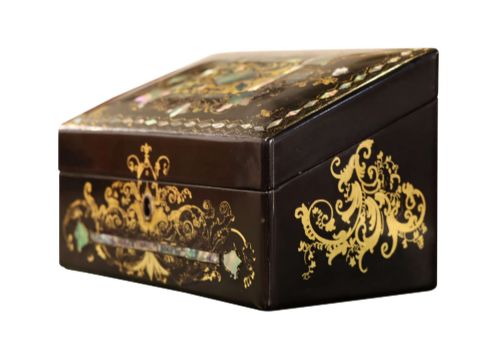
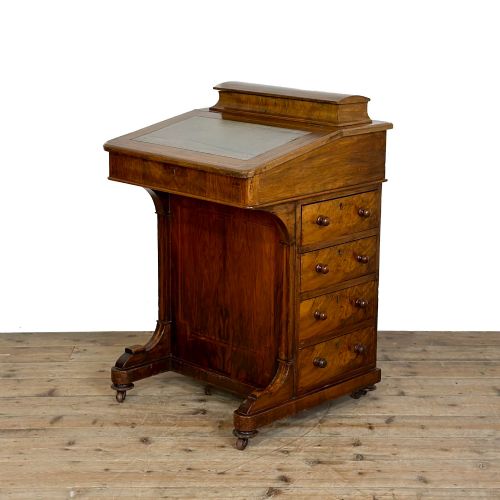
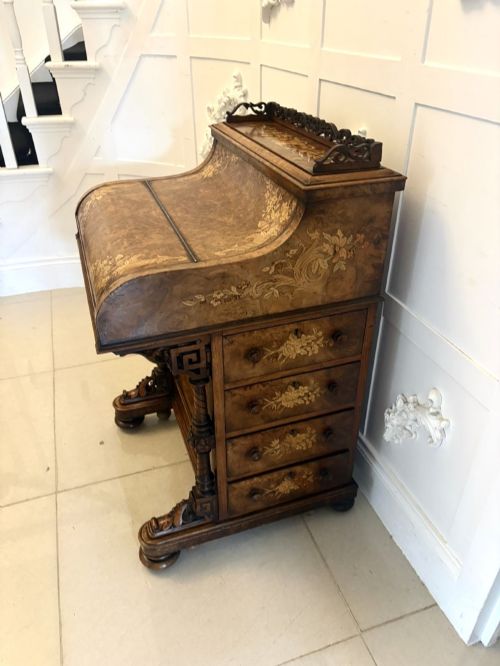
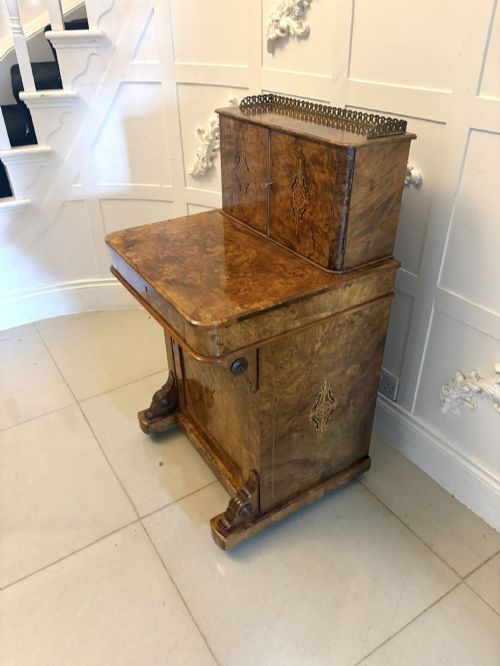
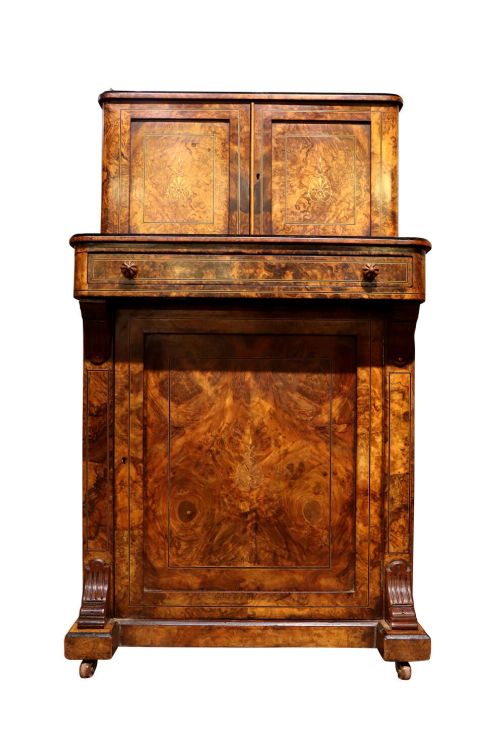
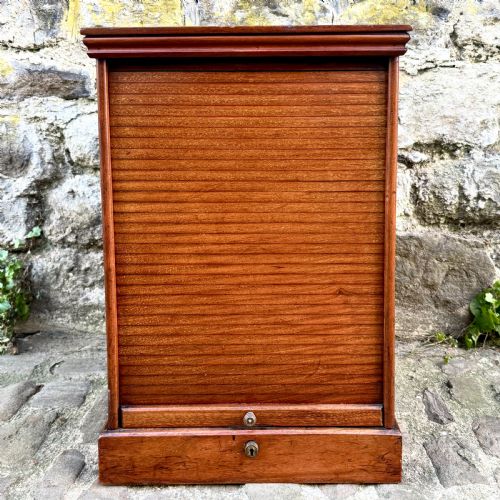
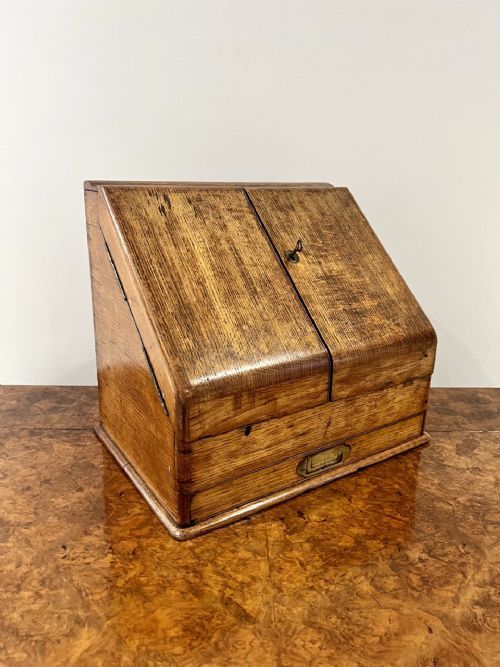
A 19th century stationery cabinet encompasses tabletop boxes, Davenport desks, and bureau forms designed to hold writing materials. These pieces typically date from the Victorian era and the broader nineteenth century, originating from workshops utilising domestic and exotic woods.
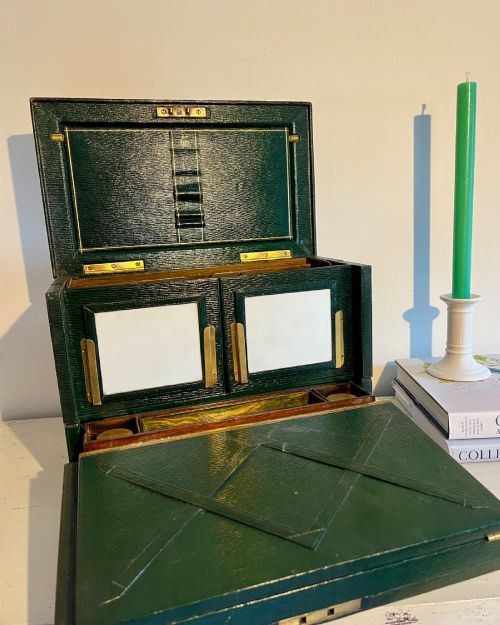
Buyers encounter tabletop correspondence boxes alongside larger Davenport desks and side cabinets featuring fitted interior partitions. The selection frequently includes burr walnut, mahogany, and oak examples produced across the nineteenth century.
The form bridges utilitarian desk accessories and refined furniture, reflecting the period's heavy reliance on handwritten correspondence. Interiors consistently provide specialised slots for envelopes, ledgers, and writing paper.
Materials and construction methods
Cabinetmakers constructed these pieces using solid timbers and decorative veneers such as burr walnut, mahogany, and rosewood over secondary woods. Brass hinges, locks, and inset handles provide functional reinforcement and decorative contrast against the timber surfaces.
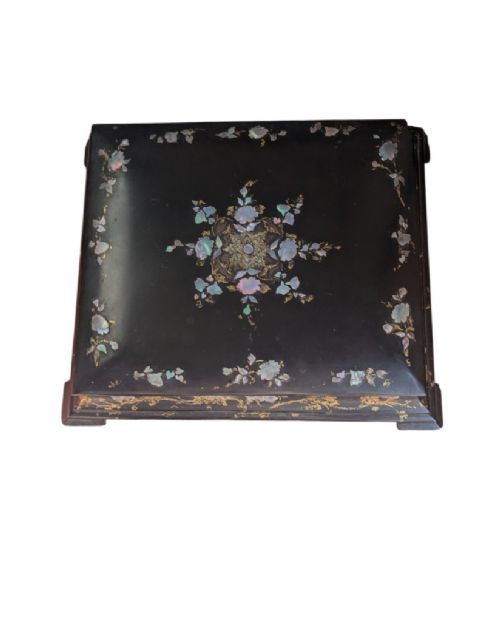
Specialised surface treatments include Japanese lacquer, papier-mâché, and tooled leather inserts on writing surfaces. Internal partitions demand precise joinery to create secure slots for envelopes and small drawers within confined spaces.
19th Century Stationery Cabinet Retail Price Guide 2026
Typical asking prices for 19th century stationery cabinet among the pieces listed under this phrase on Sellingantiques today, from the lower quarter to the upper quarter. They describe what is for sale here now, not the wider market.
Distinctions in craftsmanship
Quality rests upon the selection of timber figures, particularly the grain matching seen in burr walnut and mahogany veneers. Superior pieces incorporate intricate brass inlay, finely cut interior dividers, and original working locks with matching keys.
Construction depth separates standard production boxes from pieces carrying maker attribution, such as fitted interiors with secret drawers and spring-loaded mechanisms. The integrity of secondary woods and the precision of exterior brass mounts dictate the overall standard.
Gillow and Co·Houghton and Gunn
The 19th Century Stationery Cabinet Glossary
- Burr walnut
- A highly figured wood grain obtained from the excrescences of walnut trees, prized for decorative veneer work on Victorian furniture.
- Davenport desk
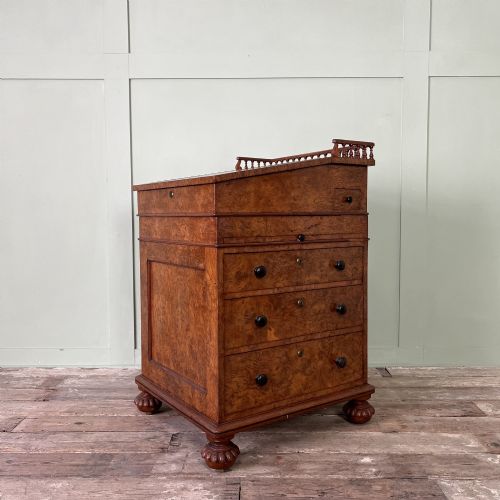
- A compact writing desk featuring a sloping top above a bank of side drawers, frequently fitted with stationery compartments.
- Papier-mâché
- A composite material made from paper pulp or layers of paper bound with glue, used for moulded boxes and finished with lacquer.
- Bonheur du jour
- A small ladies writing desk featuring a superstructure of small drawers and shelves above the main writing surface.
- Secretaire
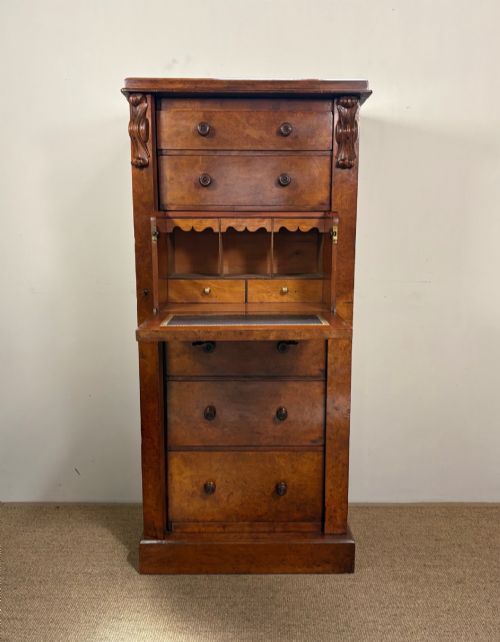
- A desk or cabinet containing a concealed writing drawer or a fold-down desk flap revealing pigeonholes and small drawers.
19th Century Stationery Cabinet: Frequently Asked Questions
How were stationery cabinets used?
These cabinets held writing paper, envelopes, and stamps on a Victorian desktop, keeping correspondence organised.
They provided a secure, lidded space for private letters and important documents before the widespread use of manufactured envelopes.
What is a Davenport desk?
A Davenport is a compact desk type combining a sloping writing surface with a pedestal of drawers.
Many examples incorporate built-in stationery compartments or pop-up mechanisms to house writing equipment efficiently.
Are interiors usually fitted?
Most pieces feature dedicated interior partitions designed specifically for vertical letter storage and small accessories.
Finer versions include secret drawers, pen trays, and dedicated slots for ink bottles within the fitted wooden framework.
Which woods are most common?
Mahogany and burr walnut appear frequently across the nineteenth-century inventory, alongside oak and rosewood.
More unusual materials include coromandel, olivewood, and Japanese lacquer applied to specialised writing boxes.