


19th Century Staffordshire Platter
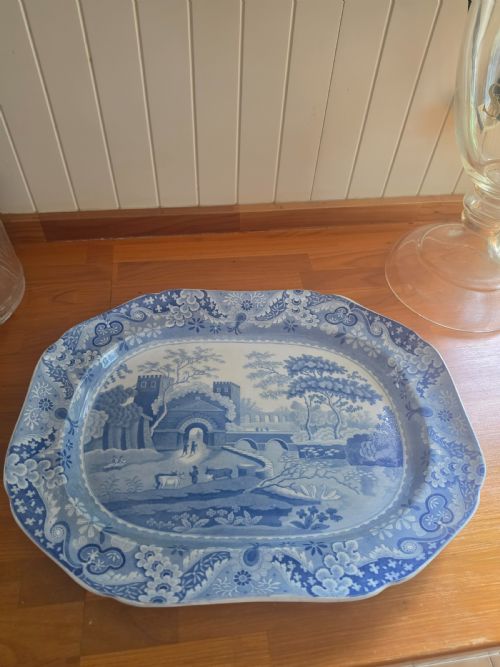
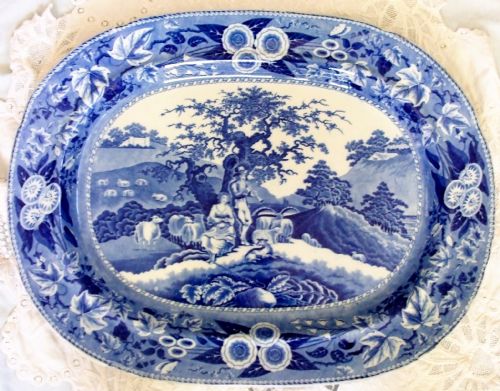
A 19th century staffordshire platter brings heavy earthen substance and vivid blue transfer-printed scenes directly to the dining table.
19th Century Staffordshire Platter
A 19th century staffordshire platter provides a wide surface designed for serving joints of meat and large courses at the table. These pieces emerge in various forms such as large meat plates, serving dishes with reservoirs, and platters paired with drainers.
Buyers will encounter items spanning the Georgian and Victorian eras, frequently decorated with blue and white transfer prints. The forms range from standard earthenware dishes to heavy ironstone and pearlware bodies.
Materials and Transfer Printing
Potters utilised earthenware, pearlware, ironstone, and stoneware as the primary ceramic bodies for these serving vessels. Cobalt pigment provided the deep blue colour for transfer-printed designs.
The transfer printing technique involved applying engraved copperplate prints onto paper and transferring the ink onto the ceramic before glazing and firing.
The listings show earthenware, ironstone, pearlware, and stoneware as the primary ceramic materials utilised across these nineteenth-century serving dishes.
Assessing Quality in Transferware
The clarity of the transfer print distinguishes finer examples from ordinary production, with crisp lines showing the detail of the copperplate engraving. Smudging or blurring in the cobalt pigment indicates hurried workshop execution.
Body thickness and weight also define the category, as heavy ironstone and pearlware varieties offer greater durability compared to standard earthenware pieces.
Spode·John Ridgway·Brameld and Co·John Rogers and Son·Mason's Ironstone
The 19th Century Staffordshire Platter Glossary
- Pearlware
- A refined earthenware body containing a small amount of cobalt in the glaze to create a bluish-white tint. It was developed in the late eighteenth century as an improvement upon creamware.
- Ironstone
- A dense, durable ceramic material patented in the nineteenth century. It combined earthenware clay with feldspar and slag to resist chipping.
- Transferware
- Pottery decorated by applying a printed paper design from an engraved copper plate onto the ceramic surface. This technique allowed intricate pictorial scenes to be replicated quickly.
- Meat drainer
- A pierced ceramic insert designed to fit inside a platter. It allowed juices to run beneath the meat during carving.
19th Century Staffordshire Platter: Frequently Asked Questions
What were 19th century staffordshire platters used for?
These large serving dishes held heavy joints of meat, poultry, and fish during formal family meals and large gatherings. Their wide surfaces accommodated generous portions for communal dining.
Many examples included integrated wells and separate drainers to catch juices during carving at the table. This practical design kept the dining room clean while presenting the food effectively.
How do I date a blue and white platter?
Dating relies upon stylistic clues within the transfer-printed patterns, the shape of the platter rim, and the specific ceramic body used. Lighter pearlware bodies often point to earlier decades, whilst heavier ironstone frequently suggests later production.
Maker marks stamped or printed on the underside also provide direct chronological markers. Pattern names recorded in historical archives help narrow the production window.
How do I display a large serving platter?
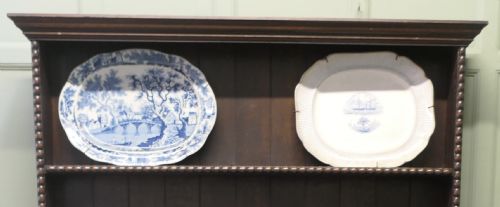
Platters can be mounted securely on walls using specialist plate hangers to showcase the pictorial transfer prints. Their robust forms also allow them to stand safely upright on dresser shelves.
Displaying them in bright rooms highlights the contrast of the cobalt pigment against the white glaze. Placing them flat on sideboards creates a traditional decorative arrangement.
What is the difference between earthenware and ironstone?
Standard earthenware provides a porous, lighter ceramic body that requires a complete glaze to hold liquids. It formed the basis for many early nineteenth-century domestic serving dishes.
Ironstone offers a much heavier, vitrified composition that resists chipping and heavy wear. This dense material became popular for large meat platters subjected to frequent daily use.