
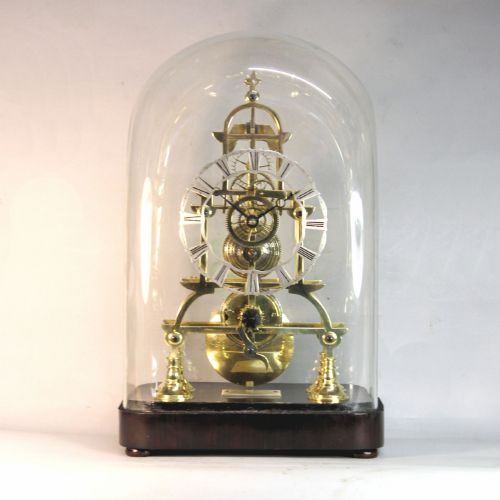


19th Century Skeleton Clock
A 19th century skeleton clock strips away the conventional cabinet to reveal the precise brass mechanics within.
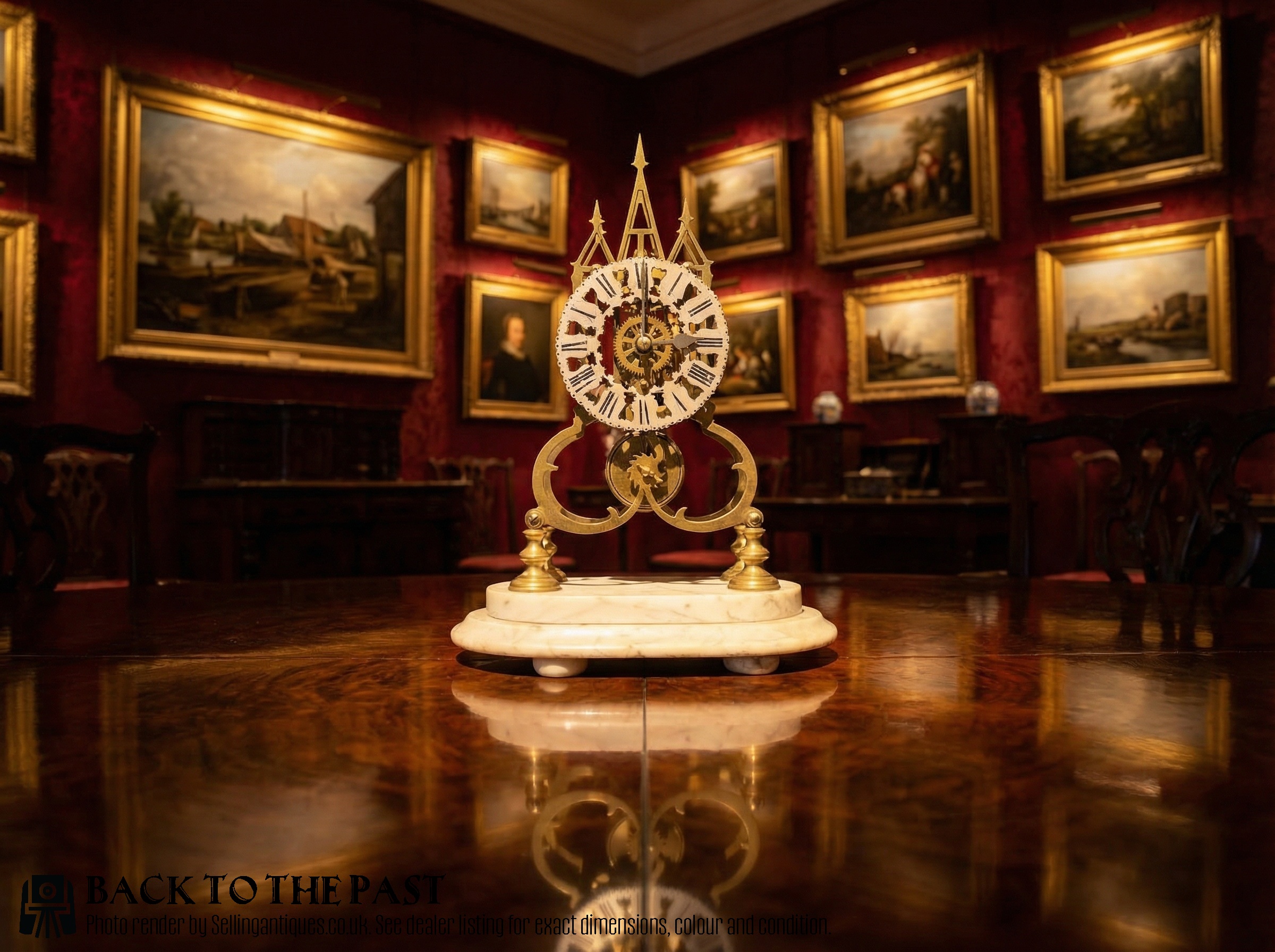
19th Century Skeleton Clock
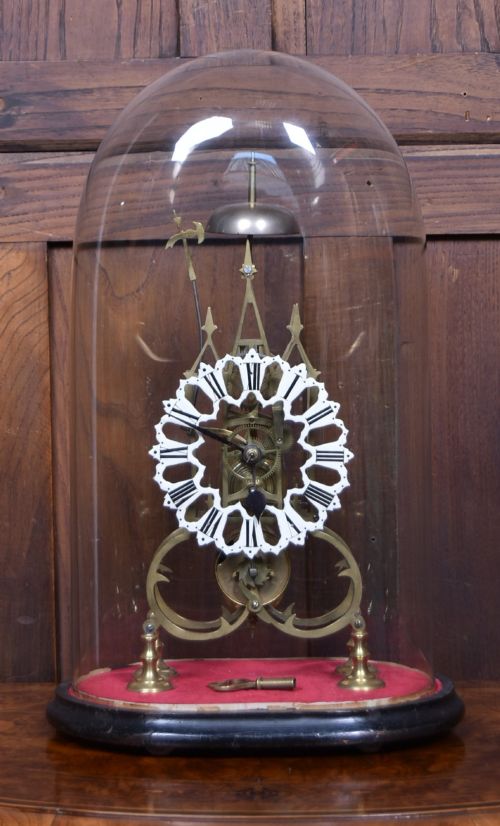
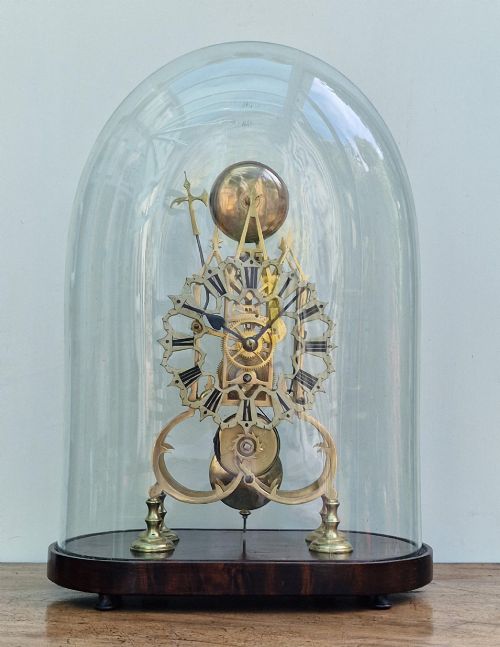
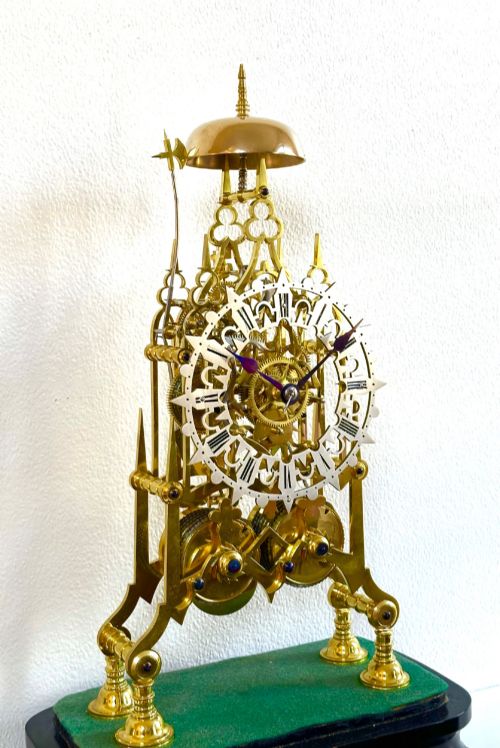
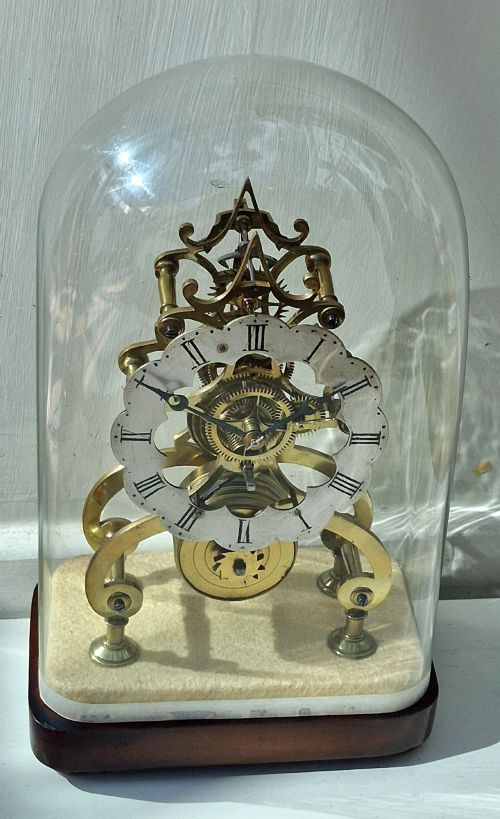
When you examine a 19th century skeleton clock, you encounter timepieces designed with open brass plates that expose the gear train and escapement to full view. The pieces listed here span the Victorian era, alongside French and English origins, often displayed beneath protective glass domes.
You will find distinct formats among these items, ranging from robust double fusee English models to miniature French timepieces and architectural cathedral designs. Many rest upon wooden or marble bases, with ebonised wood and mahogany appearing frequently in the inventory.
The aesthetic bridges domestic utility and industrial display, drawing on Gothic Revival motifs and classic French styling. These clocks served as library and mantel centrepieces, celebrating mechanical ingenuity through transparent architectural frameworks.
How they were made
Maker construction relies heavily on brass plates cut into skeletal frameworks, housing steel wheels, pinions, and delicate escapements like the coup perdu detent. Enamel dials, often featuring Roman numerals, provide legible timekeeping against the exposed metallic machinery.
Fusee movements regulate the power delivery from the mainspring using a cone-shaped pulley and cord or chain, ensuring even force as the spring unwinds. Protective glass domes sit atop wooden or marble plinths to shield the intricate brass components from dust and disturbance.
What varies in quality
Quality rests in the sophistication of the movement and the precision of the brass skeletonisation, distinguishing standard timepieces from complex double fusee or striking mechanisms. Finer examples exhibit meticulous hand-finishing on the wheel teeth, plates, and engraving.
The presence of original components, such as matching glass domes and winding keys, elevates the integrity of the piece. Makers who incorporated specialised escapements or complex striking trains created clocks that command greater regard among collectors.
Richard Winter of Chieveley·William Evans of Handsworth·Allen Colyer·Ferdinand Barbedienne
The 19th Century Skeleton Clock Glossary
- Fusee
- A conical pulley used with a cord or chain to equalize the decreasing power of the mainspring as it unwinds. This mechanism helps the clock maintain consistent timekeeping throughout its run.
- Escapement
- The mechanical linkage that controls the release of power from the gear train and gives periodic impulses to the pendulum or balance wheel. It produces the characteristic ticking sound of the clock.
- Double fusee
- A movement incorporating two separate fusee cones, typically driving both the timekeeping train and a striking or chiming train independently. This setup ensures steady power distribution across multiple functions.
- Coup perdu detent
- A specialised escapement mechanism designed for high precision in timekeeping. It allows the escape wheel to drop a tooth with minimal friction.
- Ebonised wood
- Timber treated with a dark finish to resemble ebony, frequently used for the bases of these clocks. It provides a high-contrast foundation that accentuates the polished brass movement above.
- Four glass clock
- A mantel clock housed in a brass-framed case with glass panels on all four sides and the top. This design allows unobstructed viewing of the movement from multiple angles.
19th Century Skeleton Clock: Frequently Asked Questions
What is a skeleton clock?
A skeleton clock is a timepiece engineered with open brass plates and minimal framing to display the internal gear train, wheels, and escapement. This design transforms the mechanical workings into a visible sculptural display.
Most examples from the nineteenth century sit beneath glass domes to protect the exposed brass components from dust while permitting an unobstructed view from all sides.
How do fusee movements work?
A fusee movement uses a conical pulley connected via a line to the mainspring barrel to regulate power delivery. As the mainspring unwinds and loses tension, the line moves to a wider section of the cone, maintaining steady force on the gears.
This mechanical adjustment ensures the clock maintains consistent timekeeping accuracy from the moment it is fully wound until the spring runs down.
Where were these clocks displayed?
These clocks were designed primarily as prominent mantel and library timepieces for nineteenth-century homes. Their open architecture and decorative brass frames made them conversation pieces for drawing rooms and studies.
Owners typically placed them on wooden or marble bases, often enclosed by glass domes to preserve the polished metal surfaces from tarnishing in coal-heated rooms.
How do English and French clocks differ?
English skeleton clocks of this period frequently feature fusee movements mounted on heavy brass plates, often built for long power reserves and robust timekeeping. They tend to have an industrial, architectural presence.
French skeleton clocks more commonly utilise smaller spring-driven movements, sometimes incorporating striking trains, alarms, or four-glass cases with refined decorative styling.