



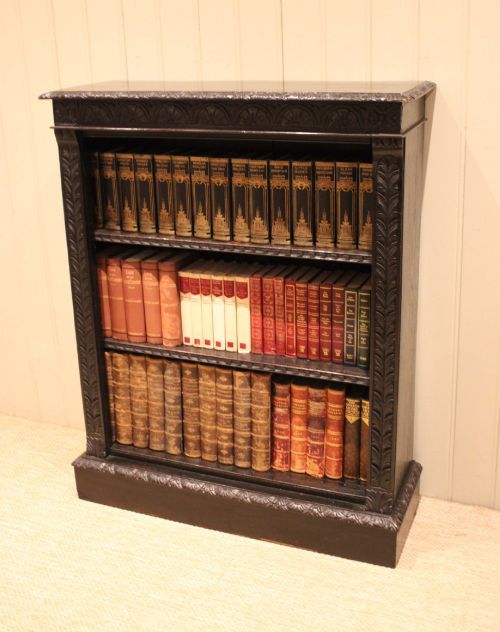
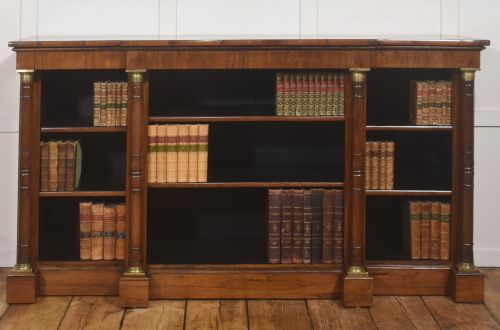
19th Century Shelving
These pieces of 19th century shelving bring traditional craft and timber into a room to hold books and display objects.
19th Century Shelving
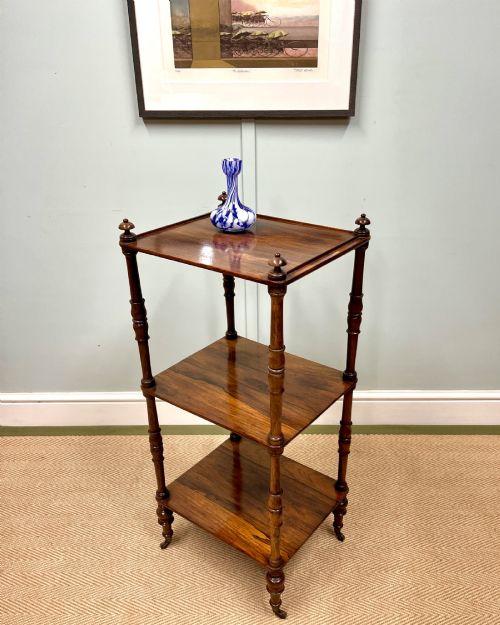
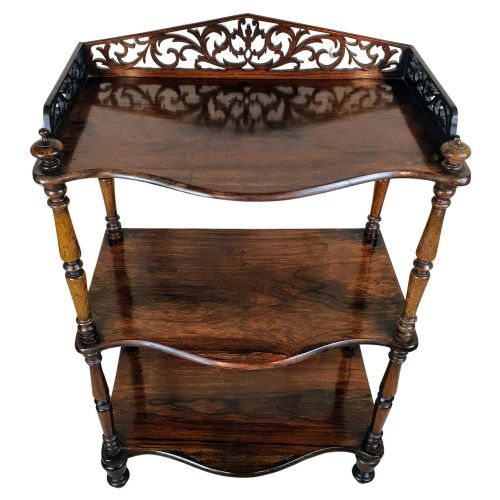
When you search for 19th century shelving, you encounter everything from grand library bookcases and breakfront cabinets to compact wall brackets and multi-tiered whatnots. The selection spans the Georgian, Regency, William IV and Victorian eras, alongside continental and French provincial designs.
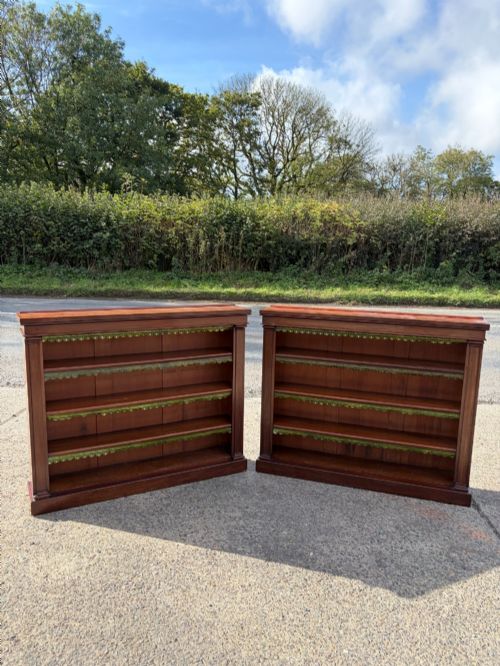
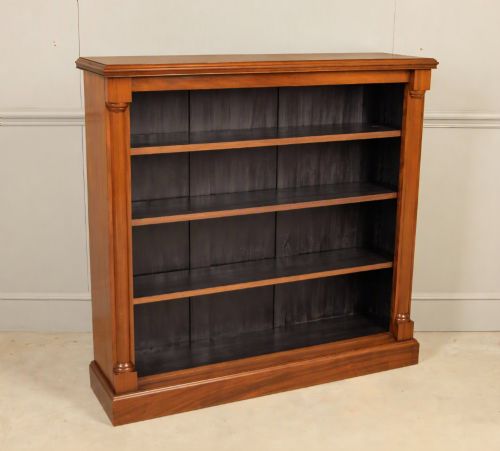
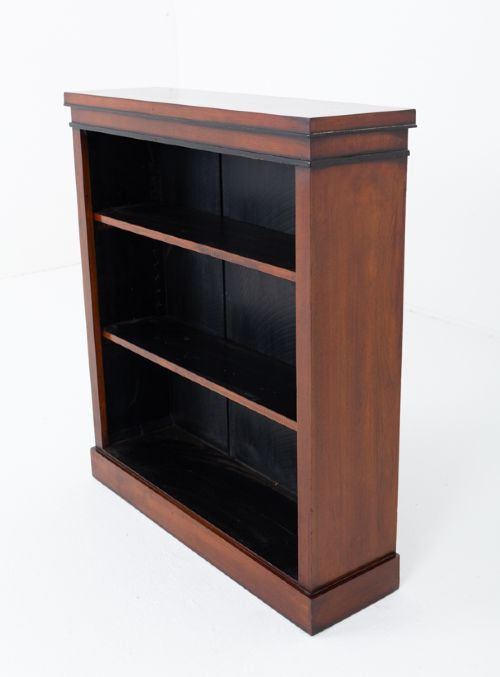
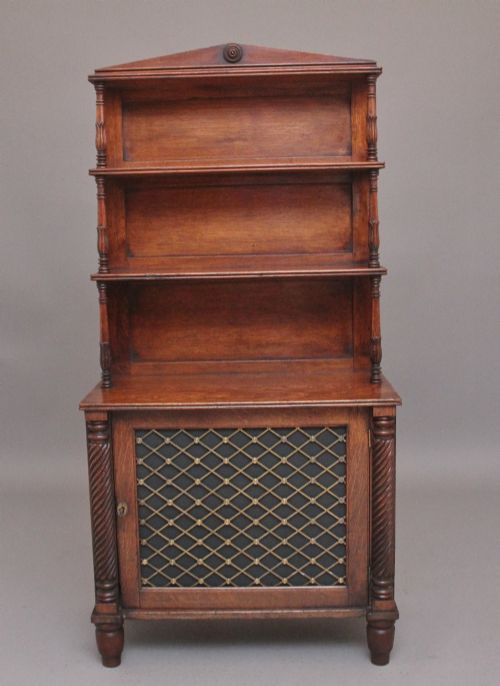
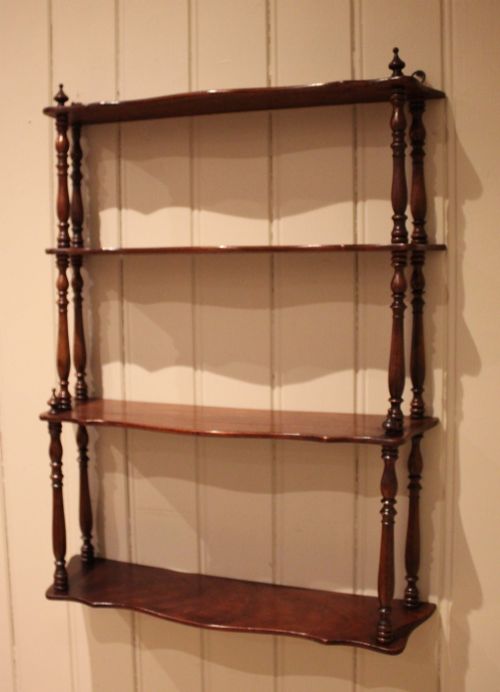
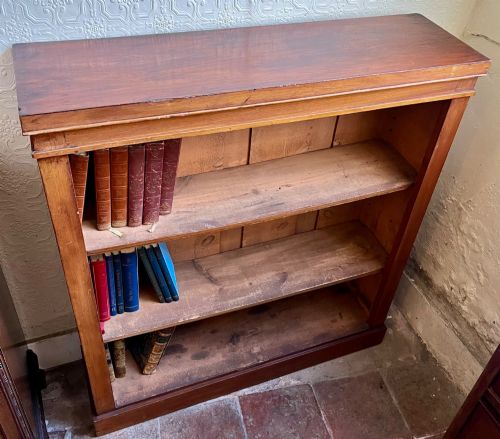
Open bookcases and hanging wall shelves dominate the items available, built to stand against a wall or suspend from picture rails. More specialised forms include corner cabinets, etageres, waterfall bookcases and industrial iron deed racks.
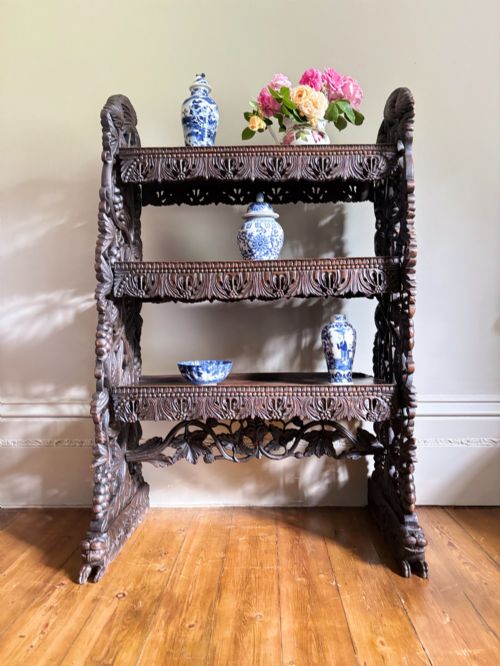
Makers utilised various regional styles, ranging from heavy carved oak to slender rosewood and mahogany tiers designed for displaying ceramics or holding volumes.
Materials and construction
Timbers form the core of these pieces, with mahogany, walnut, rosewood and pine appearing frequently across the inventory. Cabinetmakers employed solid woods alongside burl veneers, mounting brass fittings, ormolu mounts and gilt wood details onto the primary structures.
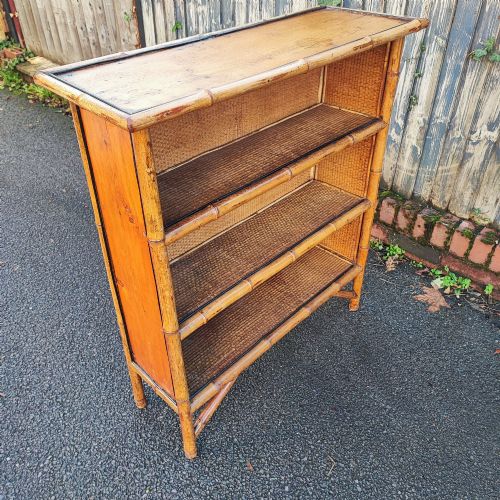
Joinery methods range from simple pine pegging and painted finishes to intricate hand-carved mahogany, bamboo assembly and turned legs. Many examples incorporate adjustable shelves supported by wooden ratchets or brass shelf pins.
19th Century Shelving Retail Price Guide 2026
Typical asking prices for 19th century shelving among the pieces listed under this phrase on Sellingantiques today, from the lower quarter to the upper quarter. They describe what is for sale here now, not the wider market.
Listings feature woods including mahogany, walnut, rosewood, pine, oak, burr walnut and bamboo.
Craftsmanship and distinction
The distinction between standard utility furniture and superior examples lies in the selection of timbers, such as burr walnut or figured rosewood, paired with refined proportions. Fine library bookcases often display breakfront forms, complex carved mouldings, and integrated ormolu mounts.
Simpler utilitarian pieces like pine kitchen racks or iron deed boxes derive their character from original paint surfaces and honest wear over decades of use.
Johnstone And Jeanes·Gillows
The 19th Century Shelving Glossary
- Waterfall bookcase
- A set of open shelves that progressively deepens from top to bottom, often featuring curved side boards.
- Étagère
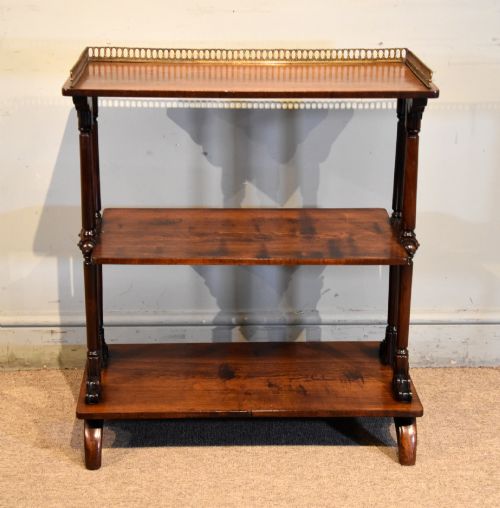
- A piece of furniture consisting of a set of open shelves for displaying small objects or ornaments.
- Whatnot
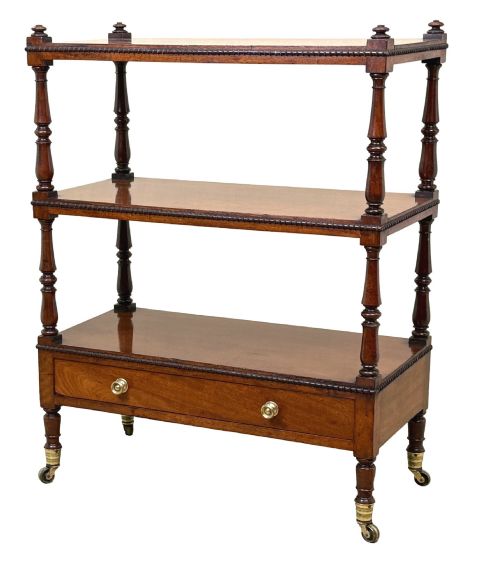
- A multi-tiered freestanding shelving unit used in the 19th century for books and ornaments.
- Breakfront
- A cabinet or bookcase where the central section projects forward from the side sections.
- Ormolu
- Gilded bronze mounted onto furniture as decorative enrichment.
19th Century Shelving: Frequently Asked Questions
How do I secure wall shelves safely?
Hanging wall shelves require sturdy fixings screwed directly into masonry or wall studs to bear the weight of heavy books.
Heavier items should be distributed evenly across the tiers to prevent strain on the historical brackets and hanging plates.
Are the shelves adjustable?
Many library bookcases and larger cabinets feature adjustable shelves supported by traditional wooden racks or metal pins.
Smaller pieces such as wall shelves and etageres typically feature fixed tiers built directly into the side panels.
How do I care for antique wood?
Protect timber surfaces by keeping them away from direct heat sources and strong sunlight that can dry out old veneers.
Apply natural beeswax occasionally to nourish the polished mahogany, walnut or rosewood without building up heavy chemical residues.
What is the difference between an etagere and a whatnot?
An etagere is typically a lighter, French-influenced display piece often featuring turned legs and delicate framing.
A whatnot is generally an English multi-tiered freestanding unit designed for general storage and display in reception rooms.