





Regency Walnut Bookcase
A regency walnut bookcase brings rich timber and refined proportion to any room, offering both display and storage for a serious library.
Regency Walnut Bookcase
When you search for a regency walnut bookcase, you are looking at substantial timber furniture designed to house volumes while anchoring a room with formal presence. The pieces available range across the Regency period itself through to William IV, Victorian, and later revival iterations.
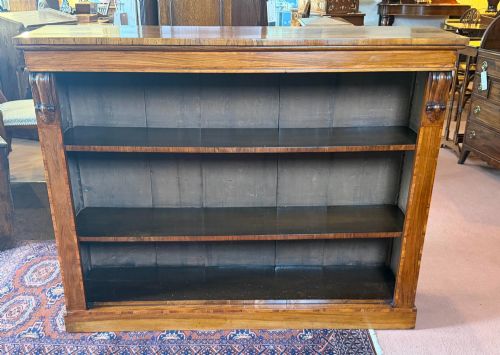
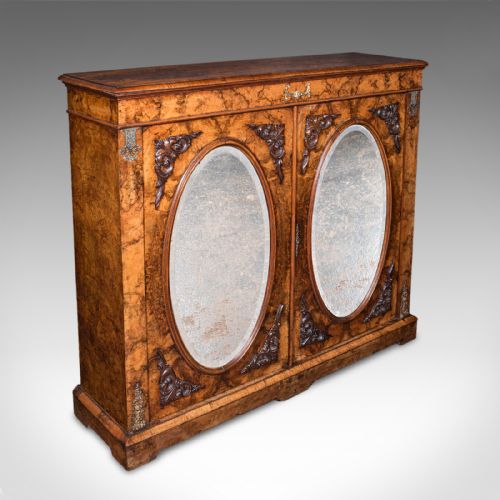
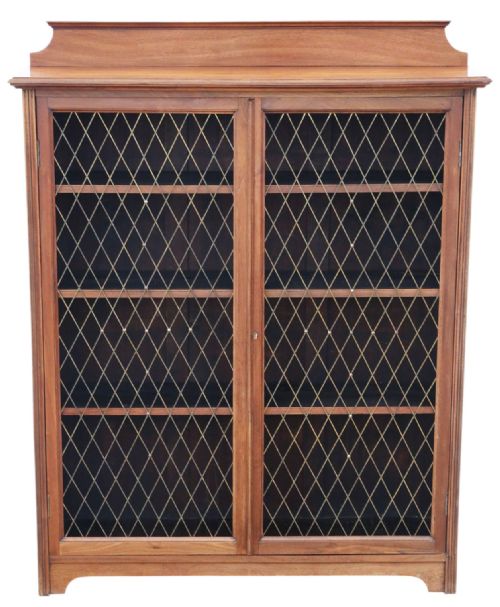
The selection on this page centres primarily on glazed cabinets, open bookcases, and pier cabinets featuring walnut timber. These forms often incorporate glass doors, brass details, and adjustable shelves designed for practical display.
Originating mostly from English workshops, these items span periods from the early nineteenth century up to nineteen hundred, encompassing both formal library furniture and smaller display cabinets.
Materials and construction
Makers utilised solid walnut and burr walnut veneer over hardwood timbers, selecting pieces with striking grain patterns for prominent display surfaces. This timber choice provided both durability and a deep, warm colour that defined high-status furniture.
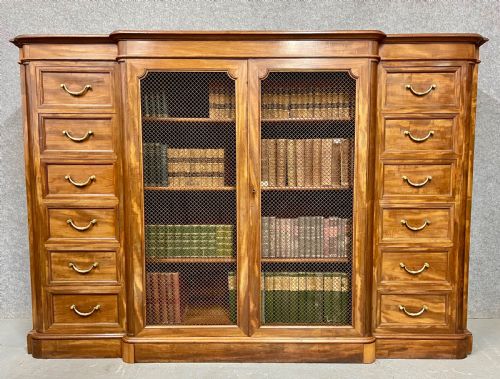
Decoration relied on precision joinery and subtle contrast, frequently employing boxwood inlay to frame doors and panels. Glazing bars arranged in geometric patterns secured glass panes, while brass hardware and ormolu mounts added functional and decorative highlights.
Listings feature walnut, burr walnut, boxwood inlay, and ormolu across Regency, Victorian, and Edwardian periods.
Distinctions in quality
The distinction between standard utility and superior craftsmanship rests in the selection of the timber veneer and the precision of the decorative inlay. Superior examples display carefully matched burr walnut figures across the facade and razor-sharp boxwood lines.
Structural integrity and hardware refinement further separate the tiers, visible in the weight of the timber, the clarity of the glass, and the execution of brass mounts or ormolu details. Well-conceived proportion and original glazing elevate certain pieces above heavier or more utilitarian counterparts.
The Regency Walnut Bookcase Glossary
- Burr walnut
- A figured wood grain obtained from walnut tree growths, prized for its swirling patterns. This material appears on the primary display surfaces of finer cabinets.
- Pier cabinet
- A low display cabinet designed to fit wall spaces between windows. These pieces often feature glazed doors and internal shelving.
- Boxwood inlay
- A decorative technique using light-coloured boxwood strips set into darker walnut. It creates crisp linear borders around panels and doors.
- Ormolu
- Gilt bronze mounts applied to furniture for decorative effect. These metal ornaments accent key structural points on select cabinets.
- Breakfront
- A cabinet design where the central section projects forward from the flanking wings. This architectural arrangement creates depth and shadow.
Regency Walnut Bookcase: Frequently Asked Questions
How do I date a walnut bookcase?
Dating relies on examining the construction methods, secondary timbers, and stylistic markers such as boxwood inlay or brass hardware.
Periods span from the Regency era through William IV and Victorian times up to the early twentieth-century revivals.
Are shelves usually adjustable?
Many library and display cabinets feature adjustable shelving to accommodate books of varying heights.
This adaptability was a practical feature built into finer pieces to suit evolving collections.
Where were these bookcases made?
The pieces listed originate primarily from English cabinet makers and workshops spanning the nineteenth and early twentieth centuries.
Craftsmen utilised domestic and imported hardwoods, applying regional design traditions appropriate to each period.