
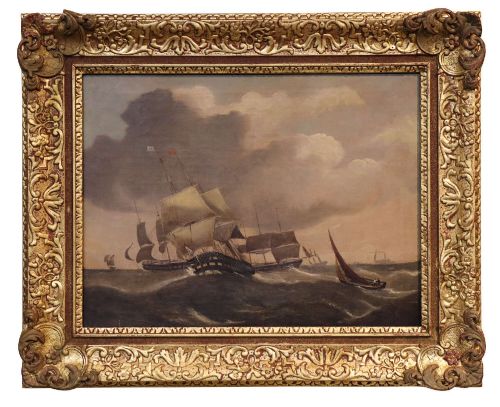
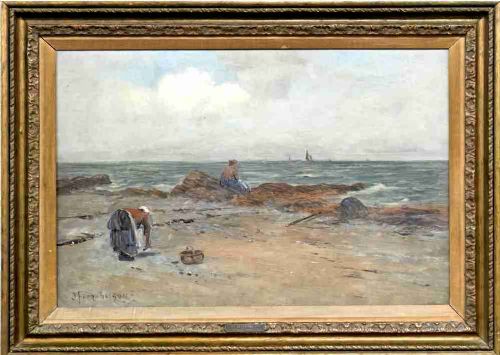
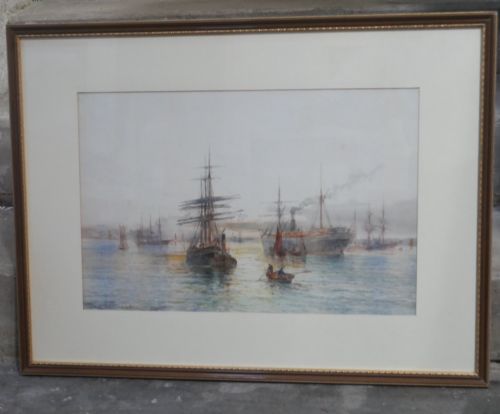
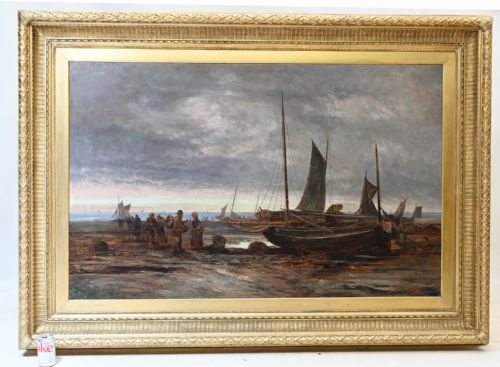


19th Century Seascape Picture
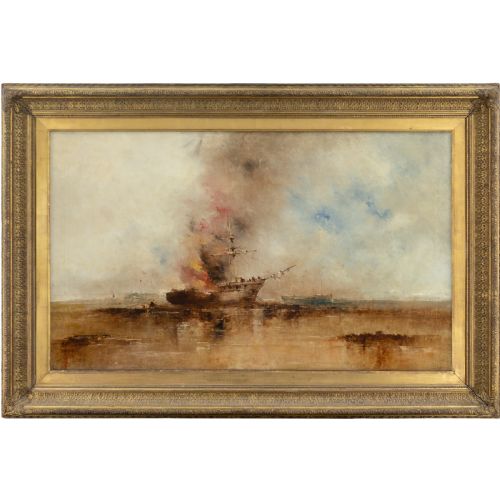
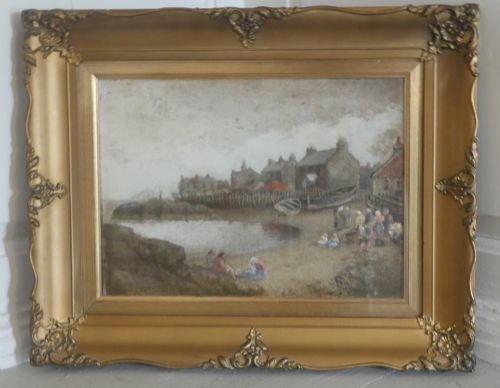
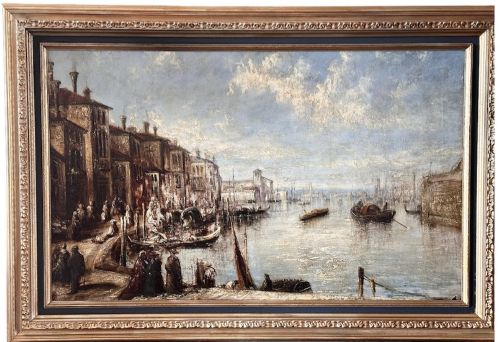
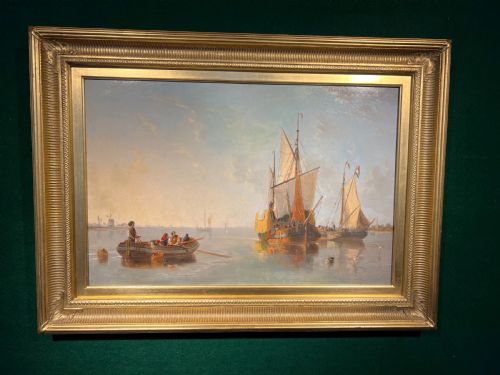
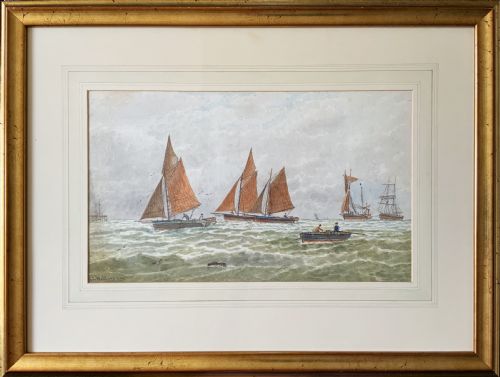
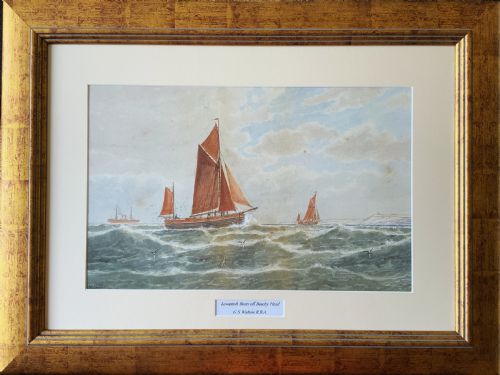
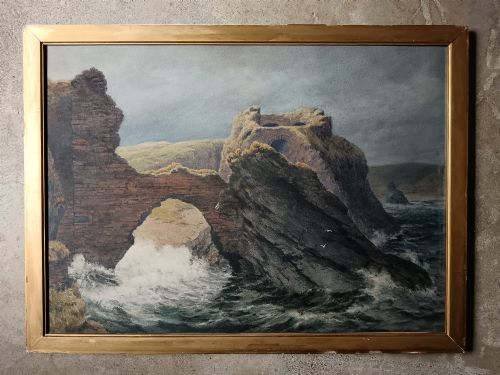
A 19th century seascape picture captures maritime life, coastal views and shipping across canvas and paper using oils and watercolour.
19th Century Seascape Picture
A 19th century seascape picture encompasses oil paintings on canvas and watercolour paintings on paper depicting coastal scenes, harbours and shipping. These works record maritime activity, naval vessels and coastal villages from various decades of the Victorian era and the wider nineteenth century.
The most common formats found in this selection include framed oil paintings and watercolours depicting British coastal views, Scottish shores and Venetian canals. Artists capture specific locations ranging from Dublin Bay and the River Thames to foreign ports such as Naples and Venice.
Subjects vary from dramatic depictions of ships in heavy seas and shipwrecks to calm harbour scenes with figures and fishing boats. Works span the period from eighteen hundred through to the early twentieth century, reflecting shifting artistic styles within maritime art.
How they were made
Painters utilised oil on canvas or applied watercolour to paper, often mounting works within wooden frames finished with giltwood and gesso ornamentation. Canvas supports provide the structure for heavier oil applications, while watercolours rely on paper mounted behind glass.
Artists built up compositions through brushwork and pigment layering, capturing the movement of water and atmospheric coastal light. Frames frequently incorporate moulded gesso details finished in gold leaf to complement the artwork.
Listings feature works from the Victorian period executed in oil on canvas and watercolour on paper, depicting coastal scenes and shipping.
What varies in quality
Quality rests upon the artist's ability to render light, water movement and maritime architecture convincingly within the composition. Works by recognised painters display greater depth in atmospheric effects and precise detail in rigging and coastal topography.
The sophistication of the original framing, particularly moulded giltwood and gesso surrounds, influences the overall presentation and historical integrity of the piece.
William McAlpine·Edward Mills·Francis Moltino·John Wilson Carmichael·Joseph Farquharson·George Stanfield Walters·John Moxon·William Frederick Settle·Charles William Wyllie·Gustave De Bréanski·Sir Thomas Newenham Dean·John McDougal·T.S. Wallis·James Webb·John Douglas Perrett·John Mitchell·Samuel Owen·Kate E Booth·Jane Vivian·Alfred Pollentine·Consalvo Carelli·William Raymond Dommersen·Alfred Henry Vickers·E Tucker·Thomas Bush Hardy
The 19th Century Seascape Picture Glossary
- Oil on canvas
- Pigment mixed with drying oil applied to a stretched woven fabric support. This medium allows for rich colour depth and textured brushwork.
- Watercolour
- Pigment suspended in a water-soluble vehicle applied to paper. It produces transparent washes of colour suited to coastal light and atmospheric effects.
- Giltwood
- Wood carved and coated with gold leaf or a gold-coloured finish. It provides an ornate border for traditional frames.
- Gesso
- A plaster-like mixture applied to wood or canvas as a base for paint or for moulding decorative frame details. It is often carved and gilded.
- Maritime art
- Painting or other visual media that depicts ships, the sea and coastal views. This genre encompasses both naval history and coastal landscapes.
19th Century Seascape Picture: Frequently Asked Questions
What subjects appear in these paintings?
These works depict coastal views, harbour scenes, shipping vessels and lighthouses. Artists record British and European shores, including Scottish castles, Venetian canals and the River Thames.
Subjects range from calm coastal waters with fishing boats to dramatic depictions of ships navigating heavy seas or stormy weather.
How do oils and watercolours differ?
Oil paintings utilise pigment mixed with oil on stretched canvas, offering rich textures and deep colour layering. Watercolours employ water-soluble pigments on paper, creating translucent effects suited to light and sky.
Oils are typically framed behind open mounts, whereas watercolours require glass protection to preserve the paper support.
How can I date a seascape?
Dating relies on artist lifespan records, inscribed dates on the reverse, and stylistic markers of the Victorian period. Costume details on figures and the type of shipping depicted also provide chronological clues.
Frame construction and materials such as gesso and giltwood offer additional indications of the period of manufacture.
Where were these artists working?
Painters travelled extensively around British coasts, recording ports in Yorkshire, Norfolk, Cornwall and Scotland. Many artists also journeyed to European destinations such as Venice and Naples to paint Mediterranean waters.
Workshops and studios were often based in major cities like London, while subjects were gathered through plein air sketching trips along the shore.