


19th Century Sampler
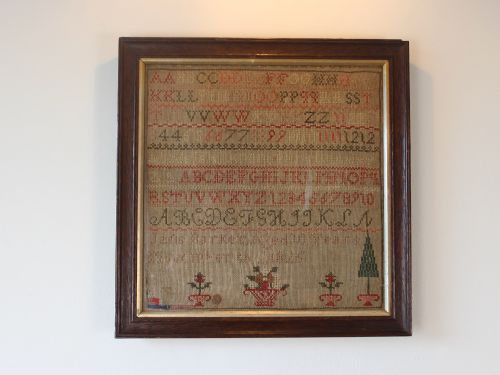
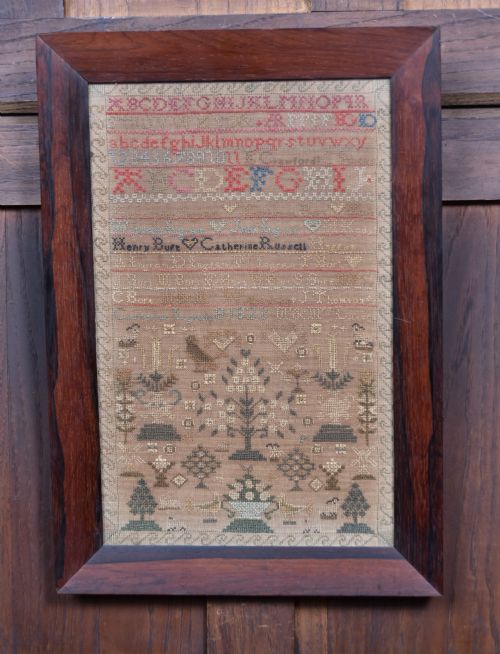
When evaluating a 19th century sampler, you are holding a schoolgirl's recorded proficiency in stitches, alphabets, and verses that preserves domestic history.
19th Century Sampler
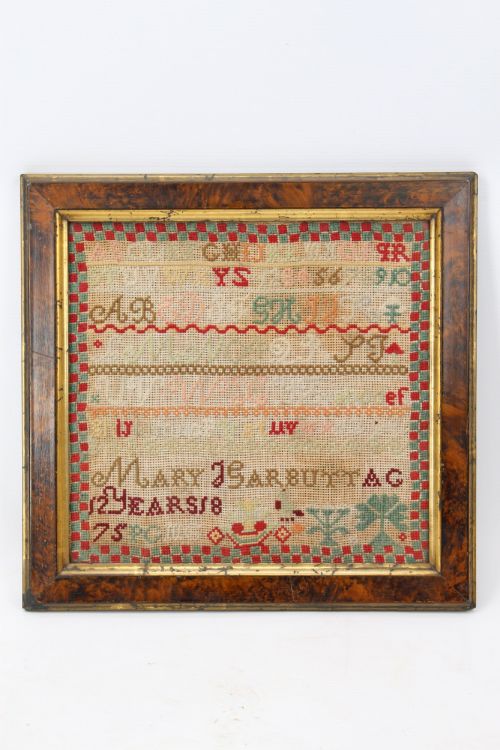
A 19th century sampler represents needlework exercises worked by girls and young women, often recording the maker's name, age, and date alongside alphabets, numerals, and moral verses.
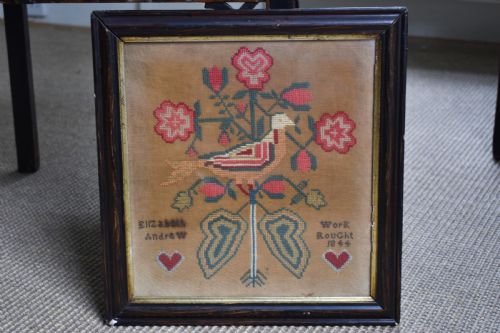
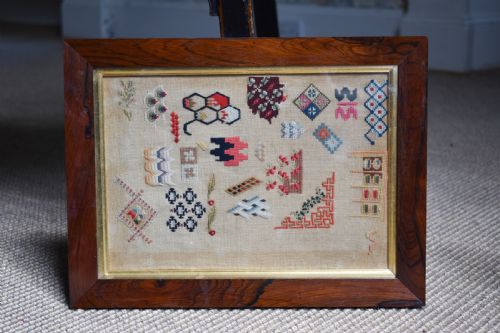
The pieces on this page span the Georgian, Regency, William IV, and Victorian periods, frequently taking the form of framed wall art executed on linen or wool.
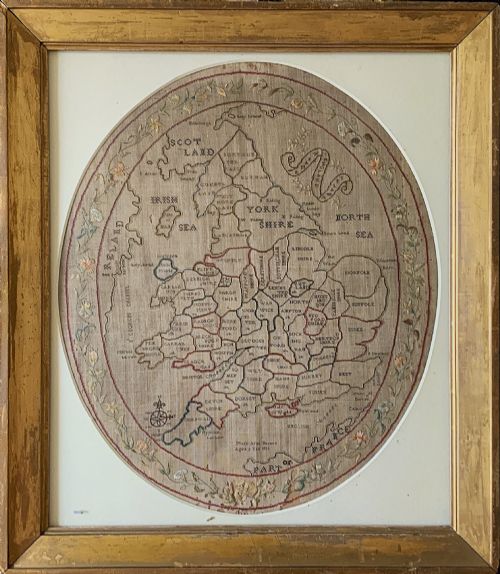
Beyond standard alphabet and text formats, the selection includes pictorial examples depicting maps, buildings, figures, and biblical scenes such as Adam and Eve.
How They Were Made
Makers stitched using silk thread, wool, and cotton yarn onto woven linen grounds, employing techniques like cross stitch, gros point, and petit point.
Many surviving examples retain their period wood frames, including rosewood mouldings, which protect the fragile textiles behind glass.
19th Century Sampler Retail Price Guide 2026
Typical asking prices for 19th century sampler among the pieces listed under this phrase on Sellingantiques today, from the lower quarter to the upper quarter. They describe what is for sale here now, not the wider market.
Maggie Muir left an explicit stitch error in her 1880 Scottish school work, proving that even Victorian children had off days with the needle.
What Varies in Quality
Quality rests upon the execution and variety of the needlework, where regular tension, diverse stitch types, and balanced pictorial compositions distinguish accomplished schoolgirl pieces from simpler exercises.
The inclusion of specific genealogical details, such as full names, young ages, exact dates, and uncommon verses or maps, elevates the historical interest of the textile.
The 19th Century Sampler Glossary
- Sampler
- A piece of needlework produced as a demonstration or test of skill in various stitches. These textiles often served as domestic decoration once framed.
- Alphabet sampler
- A needlework panel dominated by rows of letters and numerals. They demonstrate the maker's mastery of lettering before advancing to pictorial scenes.
- Gros point
- A counted-thread embroidery stitch worked on canvas or linen. It produces a bold texture frequently utilised in nineteenth century wool work pieces.
19th Century Sampler: Frequently Asked Questions
How do I date a sampler?
Many examples include stitched dates and the maker's age, which provides an immediate point of reference for the year of creation.
When dates are absent, stylistic clues such as the framing materials, fabric type, and lettering styles help narrow down the period of production.
Where were these textiles made?
They were stitched in homes and schools across Britain, with regional institutions sometimes recorded in the thread, such as specific Scottish or English academies.
Boarding schools and local parish foundations encouraged needlework as an essential component of a young girl's education.
How should I display them?
Needlework textiles require protection from direct sunlight to prevent the fading of silk threads and wool yarns.
Framing behind conservation glass shields the delicate linen and stitched surface from dust and ambient moisture in the room.
What do the different motifs mean?
Alphabets and numerals demonstrated basic literacy and numerical proficiency, while religious verses and moral maxims reinforced spiritual instruction.
Pictorial elements like houses, stags, and figures reflected the domestic environment and popular stories of the period.