

19th Century Provincial Table
A 19th century provincial table brings honest rural character and robust utility into a modern room.
19th Century Provincial Table
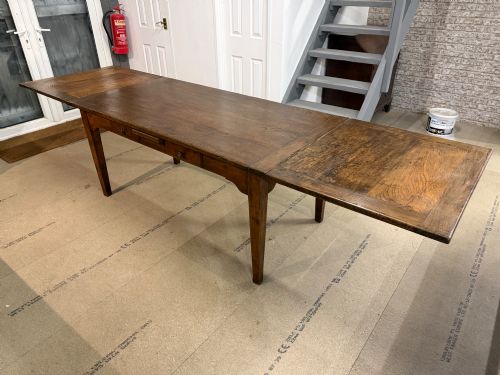
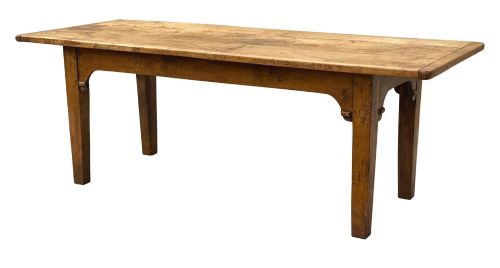
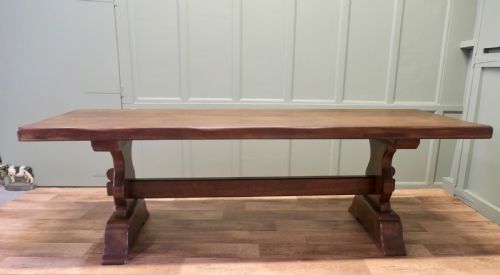
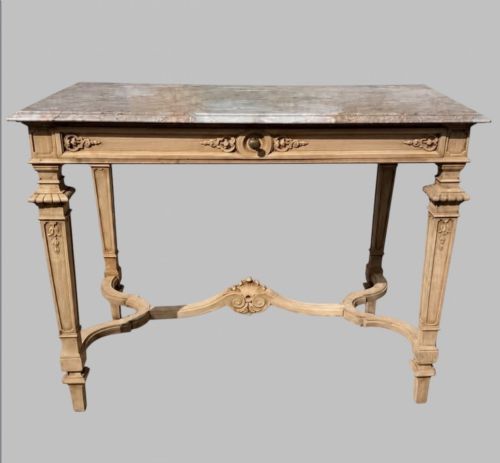
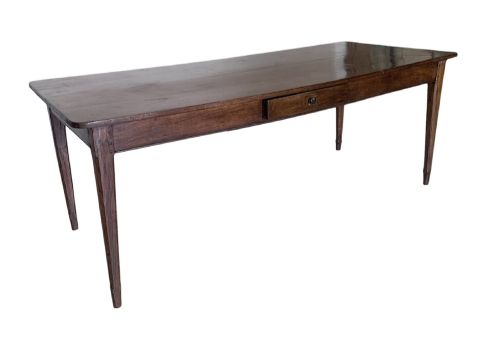
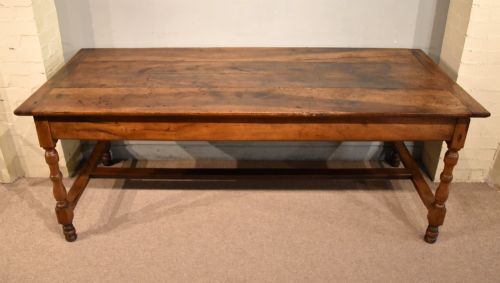
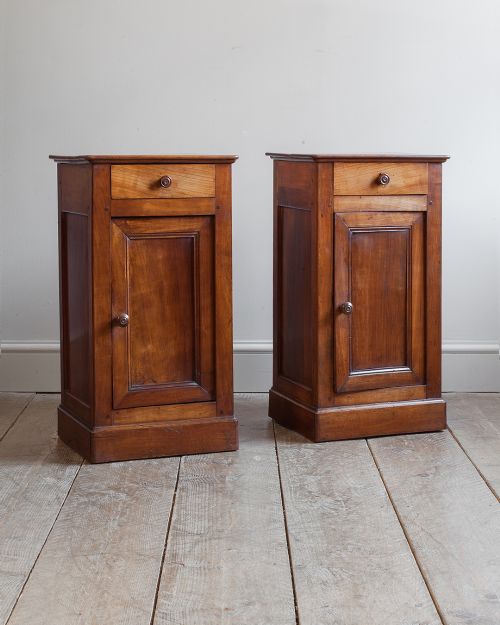
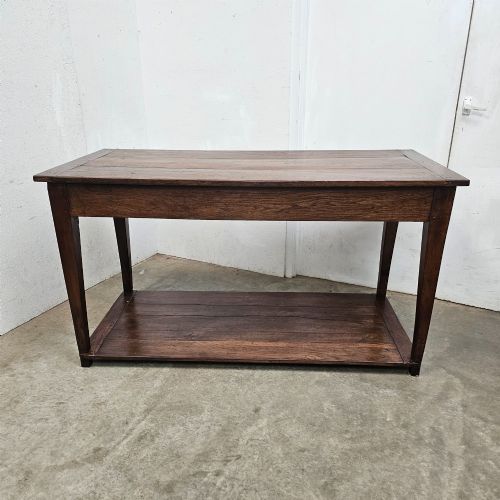
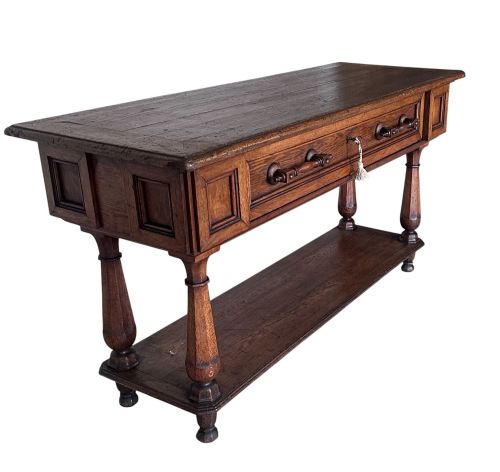
When you examine a 19th century provincial table, you find pieces built for daily use in rural homes rather than formal urban parlours. The most common forms on this page include large farmhouse dining tables, side tables, console tables, and occasional pieces equipped with drawers or drop leaves.
Makers in regional workshops built these items to suit local domestic needs, resulting in practical designs like refectory tables, dough bins, and chopping blocks. Dating spans the 19th century, with specific examples appearing from the 1860s through to the early 1900s, often reflecting vernacular rural styles.
Materials and construction methods
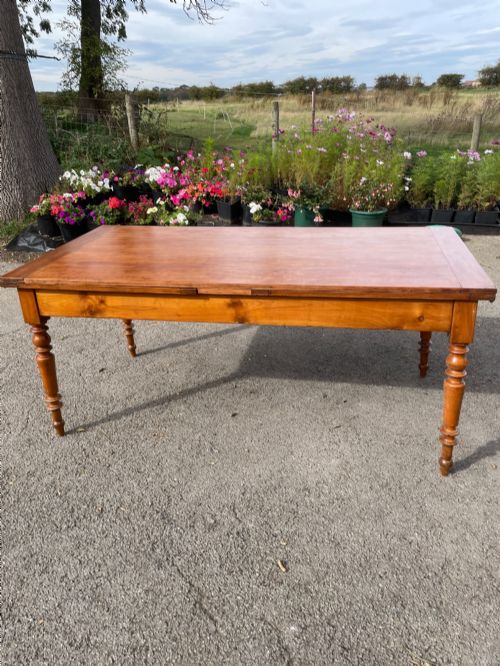
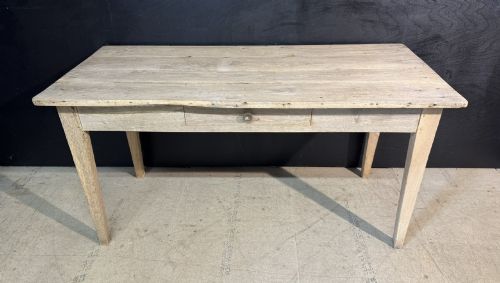
Carpenters constructed these tables using timbers readily available to regional workshops, predominantly oak, cherrywood, walnut, fruitwood, elm, and pine. Planks often show visible grain and two-board or multi-board construction on the top surfaces, joined simply to accommodate natural wood movement over time.
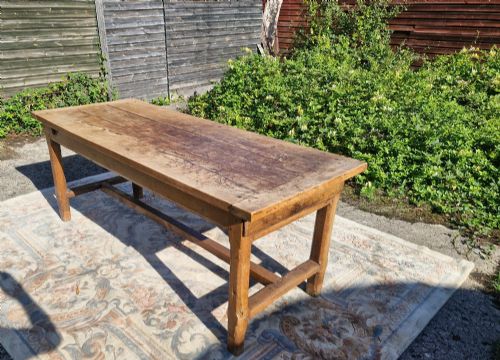
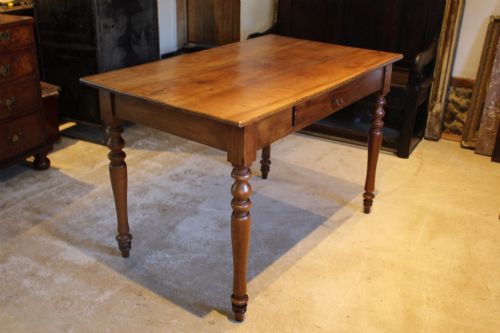
Structural integrity relies on sturdy turned legs, stretcher bases, and occasional brass fittings or marble inserts on specialised console and patisserie display tables. Drawers utilise hand-cut joints, and surfaces frequently display the honest marks of historic chopping, scrubbing, and daily wear.
Periods represented on this page span the 19th century, including specific decades such as the 1860s, 1880s, 1890s, and the Victorian era.
Assessing quality in regional furniture
Quality in a regional table rests on the selection of timber and the integrity of the original structure rather than decorative excess. Tables retaining their original unclipped legs, natural patination, and unaltered timber tops sit at the top of the range.
Lesser examples suffer from unsympathetic modern timber replacements, excessive sanding that strips historic character, or structural instability in the base frame. The best pieces combine honest utility with a deep, undisturbed surface sheen built up through generations of service.
The 19th Century Provincial Table Glossary
- Refectory table
- A long, narrow dining table originally designed for communal eating in monasteries or large country houses. These versions utilise sturdy timber stretchers for extra foot support.
- Vendange table
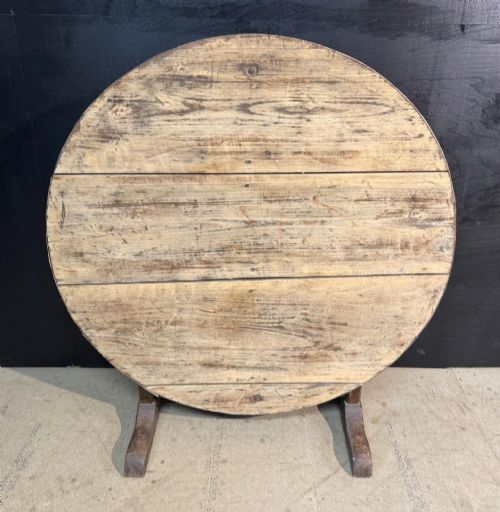
- A folding table traditionally utilised during the grape harvest in French vineyards. Their clever hinged designs allow them to fold flat for compact storage when the season ends.
- Dough bin
- A specialised regional furniture form featuring a deep enclosed wooden box with a lid, originally utilised for kneading and proving bread dough. Many double as side cupboards.
- Patina
- The deep, lustrous surface finish developed on timber over decades of handling, cleaning, and exposure to light. Collectors prize an undisturbed patina for its visual warmth.
- Vernacular rural style
- Design and construction characteristic of local builders working without reference to academic architectural pattern books. These pieces prioritize function and local material availability.
19th Century Provincial Table: Frequently Asked Questions
What rooms suit a provincial dining table?
These tables fit naturally into kitchens and dining rooms where people gather for everyday meals and conversation. Their generous proportions and robust timber construction handle heavy daily use with ease.
Because regional workshops built them in varied dimensions, you can find smaller fruitwood or cherry examples for compact spaces alongside long oak refectory tables for larger dining areas.
How do I care for an old timber surface?
Maintain the wood by dusting regularly with a dry cloth and avoiding harsh chemical polishes that can degrade the historic finish. Applying occasional natural beeswax helps nourish dry timber without sealing the pores.
Keep these pieces away from direct heat sources and strong sunlight to prevent the timber from warping or splitting over time.
Are these tables suitable for food preparation?
Many surviving examples, such as butchers' tables and chopping blocks, were originally constructed for heavy kitchen work. Their thick wooden tops tolerate practical domestic tasks when treated with care.
To preserve the historic wood, use modern boards for messy tasks and clean timber surfaces with a damp cloth rather than soaking them in water.
How can I tell pine from fruitwood?
Pine is a softwood with a pale yellow tone, lighter weight, and straight grain lines interspersed with knots. Fruitwood varieties like cherry and apple display denser, smoother grains with warmer reddish or golden hues.
Fruitwoods also feel heavier and develop a distinct tactile warmth and deep patination compared to the softer texture of pine.