
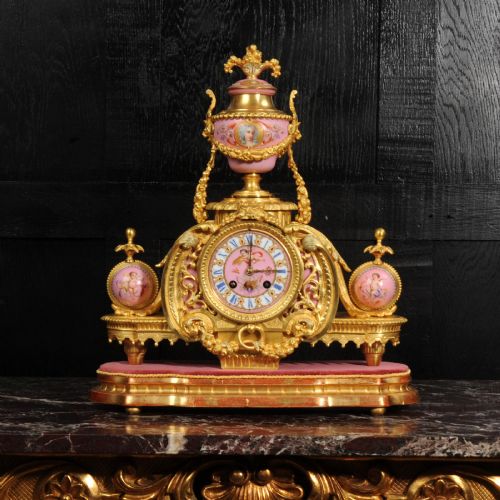


19th Century Porcelain Panel
A 19th century porcelain panel brings hand-painted colour and glazed depth to French mantel clocks, decorative plaques, and crystal regulators.
19th Century Porcelain Panel
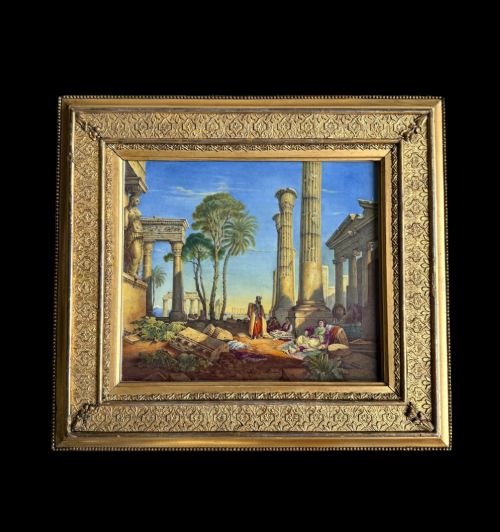
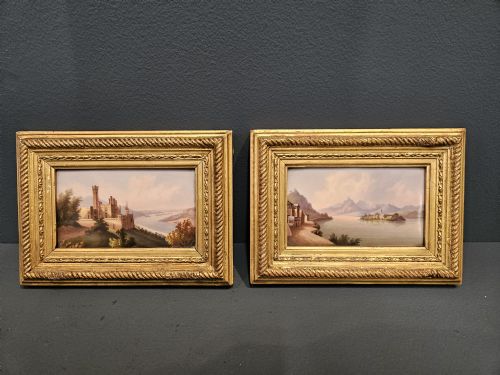
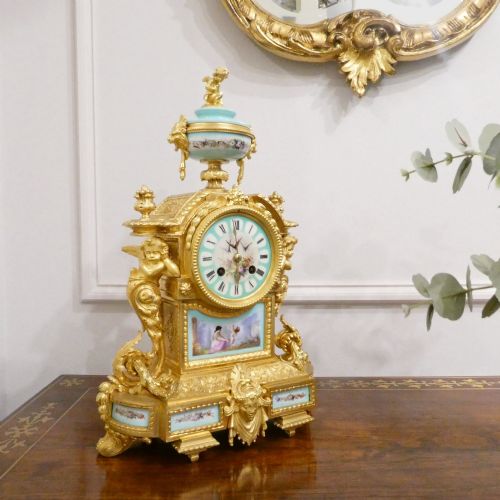
A 19th century porcelain panel typically appears as an inset decorative plaque within French mantel clocks, crystal regulators, and carriage clocks, or framed as independent wall art. These pieces span from the mid-Victorian decade of the 1850s through to the 1890s, capturing the revival styles popular across European workshops.
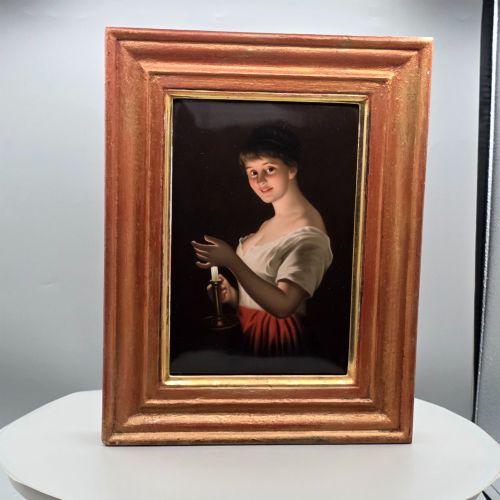
The most frequent incarnation on this page is the porcelain panel mounted into gilded bronze or ormolu clock cases, often painted with floral motifs, portraits, or pastoral scenes. Alongside these clock face surrounds and case plaques stand standalone portrait plaques, ceramic vases, and occasional items like Japanese Imari pieces or Chinese stands featuring inset porcelain sections.
Originating predominantly from French makers and major European factories such as Sèvres, KPM Berlin, and Rockingham in England, these items reflect the eclectic tastes of the Victorian era. Whether functioning as timepieces or decorative panels, they demonstrate the period's fascination with combining ceramic art and metalwork.
Materials and technique
The foundational material is hard or soft-paste porcelain, fired at high temperatures to provide a smooth, white ground suitable for detailed enamel painting. Artisans applied polychrome enamels and metallic oxides by hand before a secondary firing fused the colours permanently to the glaze.
Mounting the ceramic components required precision engineering in supportive metals. Gilt bronze, ormolu, and gilt brass formed intricate frames and clock housings that secured the fragile porcelain panels, frequently complemented by glass domes, crystal regulator housings, and velvet backings.
Listings feature porcelain and enamel panels framed in gilt bronze, ormolu, and crystal across the Victorian period.
Distinctions in quality
The integration between the porcelain panel and its surrounding metal mount dictates the overall craftsmanship. Superior examples feature cast and chased ormolu or gilt bronze frames tailored specifically to the ceramic piece, displaying harmonious proportions and secure housing without stress to the fired surface.
Achille Brocot·KPM Berlin·Rockingham·Sèvres
The 19th Century Porcelain Panel Glossary
- Ormolu
- Gilded bronze applied to ornamental furniture mounts, clock cases, and decorative hardware. The technique involves treating brass or bronze with an amalgam of mercury and gold.
- Crystal Regulator
- A type of tall mantel clock featuring bevelled glass panels on all sides to expose the movement inside. These models frequently incorporate porcelain dials or enamel panels.
- KPM Berlin
- The Royal Porcelain Factory in Berlin, known for producing high-quality painted porcelain plaques and decorative vessels during the nineteenth century.
- Sèvres
- The renowned French porcelain manufactory famous for producing soft-paste and hard-paste ceramic items, often imitated in nineteenth-century decorative clocks and panels.
19th Century Porcelain Panel: Frequently Asked Questions
How do I clean a porcelain panel?
Dust the surface gently with a soft, dry brush to prevent abrasive particles from scratching the glaze or the hand-painted enamel decoration.
Avoid using water, chemical solvents, or modern cleaning agents, as moisture can seep into hairline cracks or damage the surrounding gilt bronze and ormolu mounts.
Where were these porcelain panels displayed?
Most nineteenth-century porcelain panels were integrated directly into the design of French mantel clocks, carriage clocks, and crystal regulators intended for prominent display on parlour mantelpieces.
Others were framed independently as wall art, mounted in wooden stands, or set into decorative ceramic vases and furniture pieces to showcase fine painting.
Are clock panels hand painted?
Many nineteenth-century panels feature meticulous hand-painted enamel portraits, floral sprays, and pastoral scenes executed by skilled ceramic artists working for factories like Sèvres or KPM Berlin.
Some later or more commercial pieces incorporated transfer-printed outlines finished with touches of hand-applied gilt highlights to simulate the appearance of entirely freehand brushwork.
How do I identify a Sèvres style panel?
Sèvres style panels typically display rich cobalt blue or turquoise grounds, elaborate raised gilding, and finely rendered pastoral or portrait subjects within cartouche borders.
Many bear factory marks on the reverse, though pieces described as 'Sèvres style' often indicate nineteenth-century reproductions or decorative panels produced by other European workshops following the famous aesthetic.