




19th Century Perfume Flacon
A 19th century perfume flacon is a small, portable vessel for carrying scent, prized by collectors for its intricate glasswork and precious metal mounts.
19th Century Perfume Flacon
A 19th century perfume flacon is an intimate receptacle designed to hold volatile scents and liquid fragrances during a period of elaborate social rituals. These small vessels range from simple pocket companions to elaborate dressing table pieces intended for display.
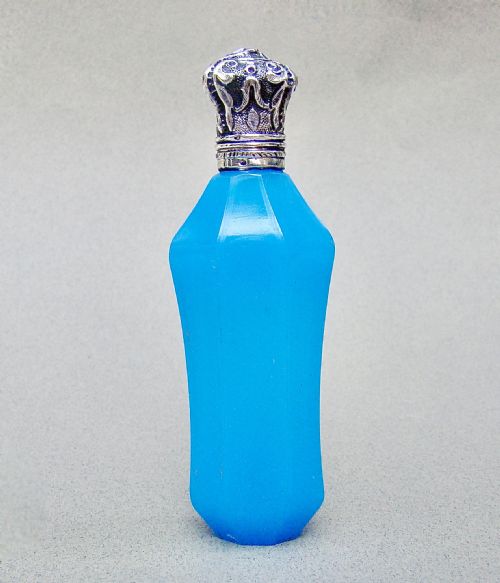
The pieces on this page are predominantly French and English creations from the Victorian era and earlier nineteenth century. Collectors frequently encounter colourful glass bodies enhanced by silver, ormolu, and porcelain elements.
Common forms include faceted glass bottles, overlay glass designs, and figural porcelain flacons. Many examples utilise hinged metal caps and internal glass stoppers to secure the perfume.
How they were made
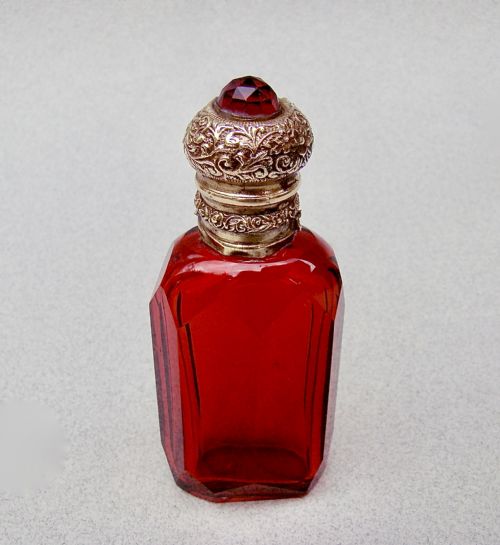
Glassmakers utilised techniques such as overlay, cutting, and enamelling to build richly coloured bodies in ruby, cranberry, blue, and opaline glass. Lead crystal provided a heavy, refractive base for intricate wheel engraving.
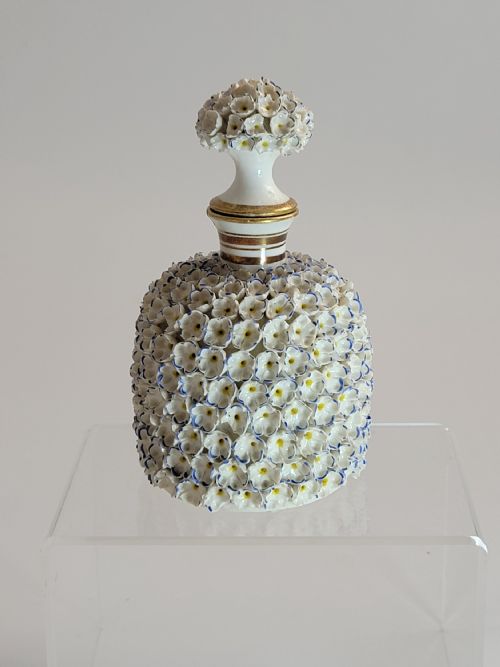
Metalworkers cast and chased silver, silver-gilt, and ormolu to create protective mounts, hinged collars, and decorative caps. Porcelain pieces often incorporated hand-painted details and applied encrustations.
Makers integrated glass bodies with metal collars through secure mounting techniques, ensuring airtight seals with ground glass stoppers hidden beneath decorative lids.
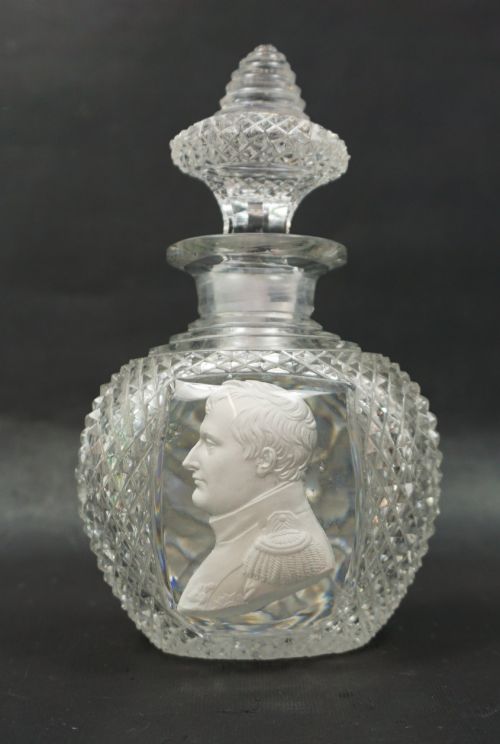
Napoleon gazes out from a tiny sulphide portrait sealed forever inside a nineteenth century glass bottle.
What varies in quality
The refinement of the glass body and the precision of its cutting distinguish finer examples from standard production. Sharp, deep facets and flawless coloured overlays reflect superior craftsmanship in the glasshouse.
The quality of the metal mountings dictates the overall prestige of the flacon, with heavy chased silver or rich ormolu elevating the piece. Well-balanced proportions between the glass body and metal hardware show superior design discipline.
Specialised artistic additions, such as portrait sulphides, detailed hand painting, or porcelain figures by known makers like Jacob Petit, separate exceptional pieces from ordinary scent bottles.
Jacob Petit·Minton·Royal Worcester
The 19th Century Perfume Flacon Glossary
- Flacon
- A small stoppered bottle used for perfume or scent. These vessels were essential accessories for personal grooming.
- Ormolu
- Gilded bronze or brass used for mounts and decorative trims. This material added metallic warmth to glass and porcelain bodies.
- Overlay glass
- Glass formed of two or more distinct colour layers where the outer layer is cut away. This technique reveals contrasting colours beneath.
- Sulphide
- A small ceramic cameo embedded within clear glass. These translucent white plaques often depict historical figures.
- Silver-gilt
- Silver that has been coated with a thin layer of gold. This treatment provides the appearance of solid gold with structural strength.
19th Century Perfume Flacon: Frequently Asked Questions
How were perfume flacons used?
Owners carried these small bottles in fitted handbags or kept them on dressing tables for daily use.
They held potent liquid scents to counter unpleasant odours or for personal refreshment in social settings.
What materials are common in these flacons?
Glass and crystal form the primary bodies, often enriched with silver, gold leaf, and porcelain.
Metal mounts in ormolu and silver provide structural caps and decorative collars around the openings.
How do I identify French pieces?
French flacons frequently showcase coloured opaline, ruby, or overlay glass combined with ornate ormolu mounts.
Specific stylistic indicators include Rococo Revival curves and detailed sulphide portraits set into the glass.
Do these bottles still retain their stoppers?
Many surviving examples retain their original inner glass stoppers beneath the outer metal caps.
Inspect the inner neck to confirm the presence of the stopper where applicable.