

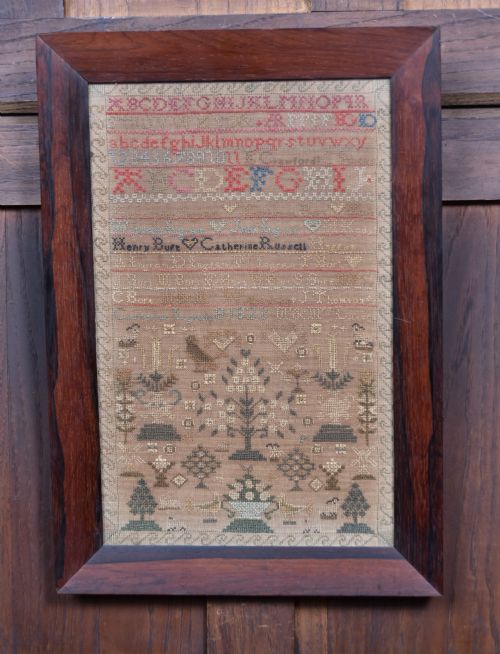


19th Century Needlework Panel
A 19th century needlework panel brings centuries of domestic handiwork, vibrant silk threads and structured sampler alphabets into modern interiors.
19th Century Needlework Panel
A 19th century needlework panel encompasses framed wall art, stitched alphabets, fire screen inserts and large Central Asian embroidered hangings executed across the Georgian, Victorian and Regency periods. Pieces range from intimate educational samplers worked by young girls to expansive Persian and Uzbek suzanis created with bold floral motifs.
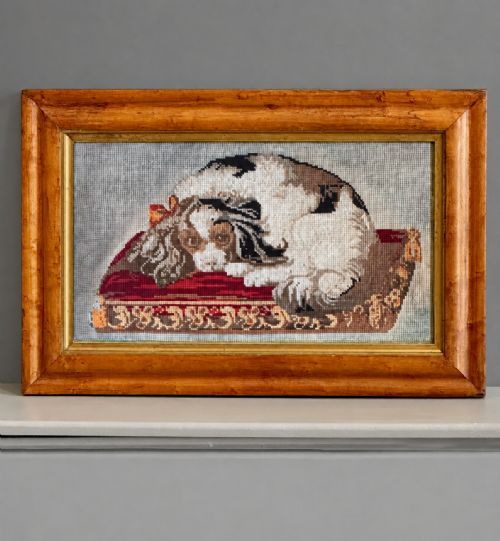
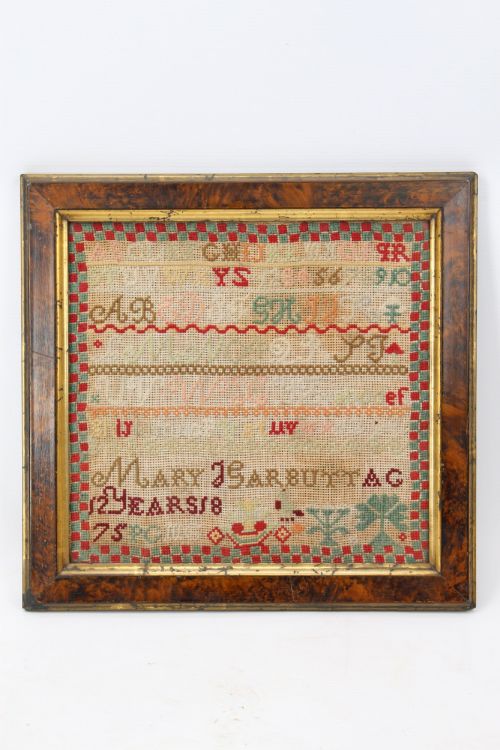
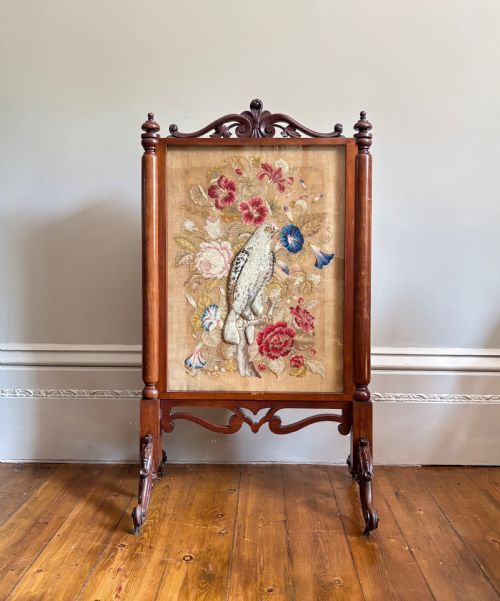
Buyers will most frequently encounter framed Victorian Berlin work studies, Scottish and English stitchwork samplers bearing makers' names and dates, and colourful silk-embroidered Central Asian textiles. Many retain their original burr maple, mahogany or faux tortoiseshell frames.
Origins stretch from regional British classrooms to French workshops, Swedish homesteads and traditional Uzbek centres like Bokhara and Tashkent. Surviving examples reflect both rigorous domestic discipline and rich international textile traditions.
How they were made
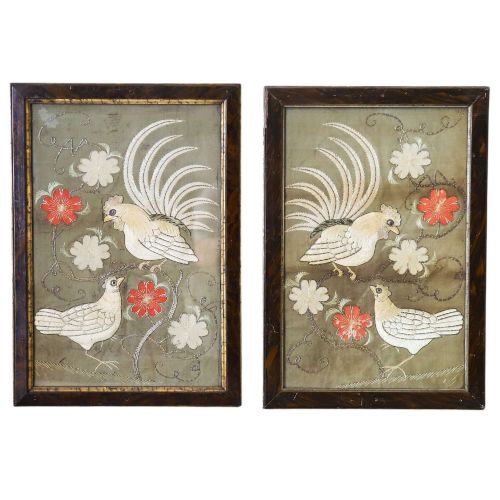
Makers utilised natural linen, cotton, wool and red felt as foundations, applying silk thread, wool yarn and occasional gold leaf to build rich surface textures. Embroidery techniques vary from precise cross-stitch and crewel work to intricate felt applique and hand-painted silk details.
Central Asian suzanis employ bold tambour or hook-embroidery stitches on joined fabric grounds to create dense botanical patterns. British samplers rely on counted thread techniques, while French and English pictorial panels combine needlework with painted elements.
Listings feature textiles spanning the Georgian, Victorian and Edwardian eras, utilising silk, wool, cotton and linen across British, French, Swedish and Central Asian origins.
What varies in quality
Quality rests on the precision of the needlework, the complexity of the design and the harmony of the remaining colour palette. Finer pieces demonstrate tight, even tension and sophisticated pictorial composition rather than mechanical uniformity.
The survival of original framing, such as burr maple or carved hardwood, elevates a piece, as does clear documentation of the maker's age, origin date and location.
The 19th Century Needlework Panel Glossary
- Berlin work
- A type of counted-thread embroidery popular in the nineteenth century using wool on canvas guided by printed grid patterns. It allowed makers to produce shaded pictorial scenes like animal portraits.
- Suzani
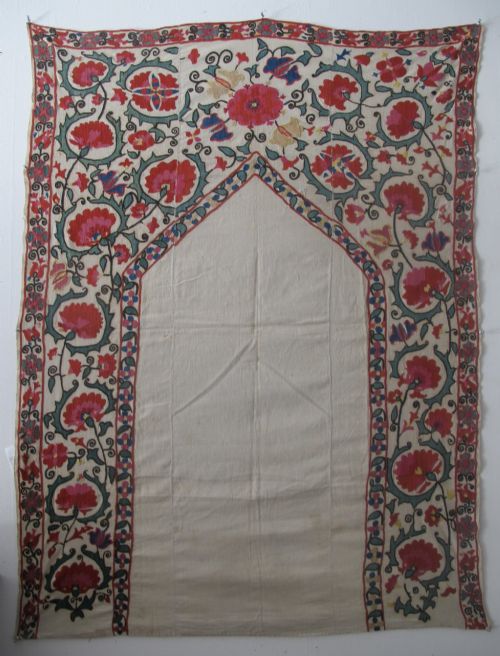
- A traditional embroidered tribal textile from Central Asia featuring large-scale floral and medallion motifs. These panels were often worked in sections on cotton or linen foundations before being joined.
- Sampler
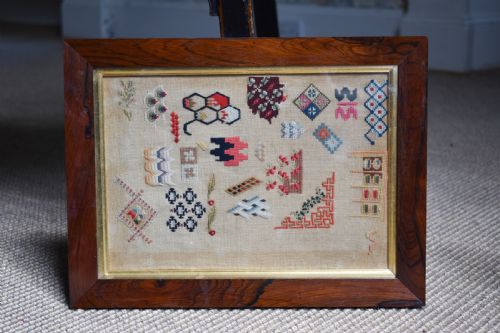
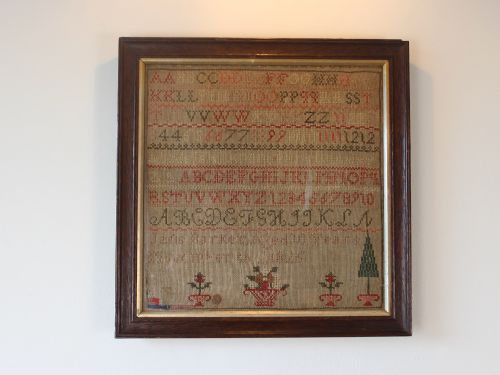
- A piece of needlework created to demonstrate proficiency in various stitches, alphabets and numerical sequences. They frequently record the maker's name, age and date of completion.
- Crewel work
- Embroidery executed with fine wool yarn on a heavy linen or cotton twill fabric. This technique produces deeply textured surface designs with historic roots.
- Palak
- A fully embroidered Tashkent suzani style dominated by large central star medallions and dense background coverage. The name derives from the Persian word for cloud.
19th Century Needlework Panel: Frequently Asked Questions
How do I hang a textile panel safely?
Most framed panels utilise standard picture-wire mounts fixed to sturdy wooden frames like mahogany or burr maple. Keep them away from direct sunlight to protect silk and wool threads from fading.
Unframed textile panels and suzanis require specialist mounting by a conservator using non-damaging sleeve or velcro systems. Ensure the weight of the fabric is evenly distributed across the support.
What is the difference between a sampler and a pictorial panel?
Samplers focus on alphabets, numbers, verse and rows of varied stitches intended to show a maker's skill. They are frequently dated and signed with the young maker's age.
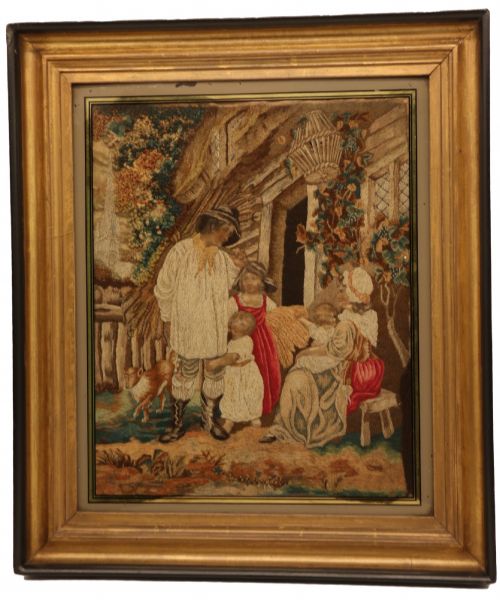
Pictorial panels depict specific scenes, such as animals, literary stories or botanical arrangements, rendered for decorative display. These pieces function primarily as interior art rather than educational exercises.
How can I tell a British sampler from a Central Asian suzani?
British samplers are typically small, framed, worked on linen or canvas with wool or silk, and feature English text, alphabets or domestic scenes. They reflect nineteenth-century schoolroom standards.
Central Asian suzanis are large, vibrant hangings featuring red grounds, star medallions and bold floral tambour embroidery. They originate from regions like Uzbekistan and serve as decorative wall or bed covers.
Why do some samplers record the maker's age?
Recording an age and date was a standard educational requirement for girls completing schoolroom needlework exercises. It demonstrated the maker's proficiency at a specific stage of youth.
These inscriptions provide valuable social history, helping modern researchers trace family lineages and regional stitching styles across the nineteenth century.