

Framed Textile Wall Hanging
When you search for a framed textile wall hanging, you are looking at centuries of cloth mounted, glazed and displayed to hold a room's attention.
Framed Textile Wall Hanging
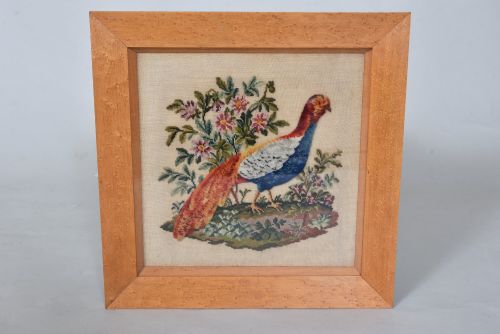
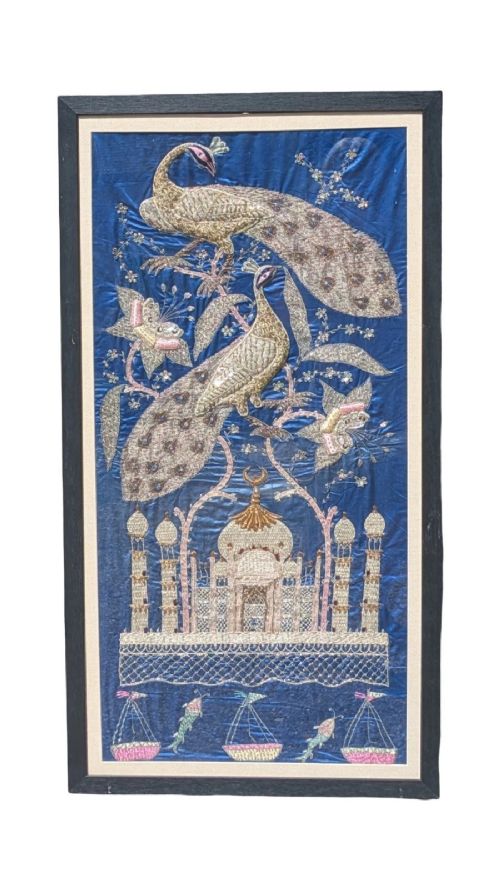
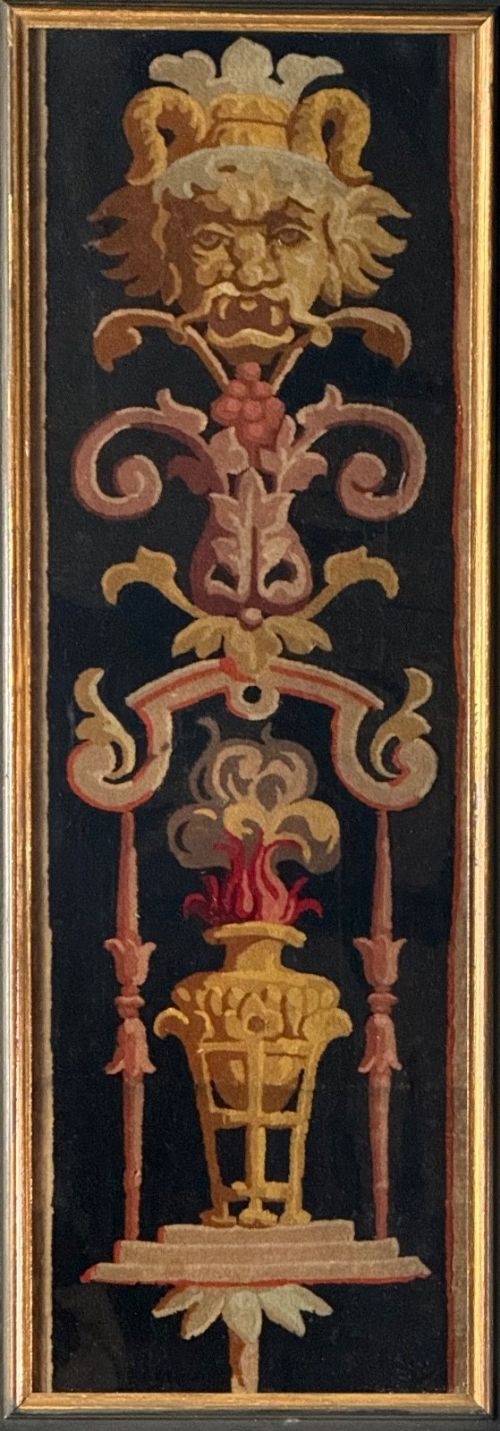
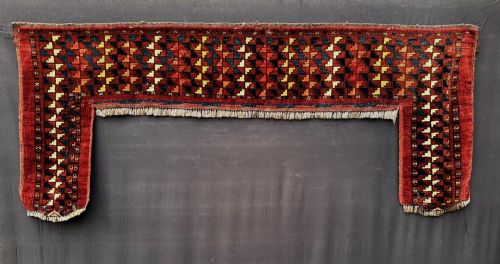
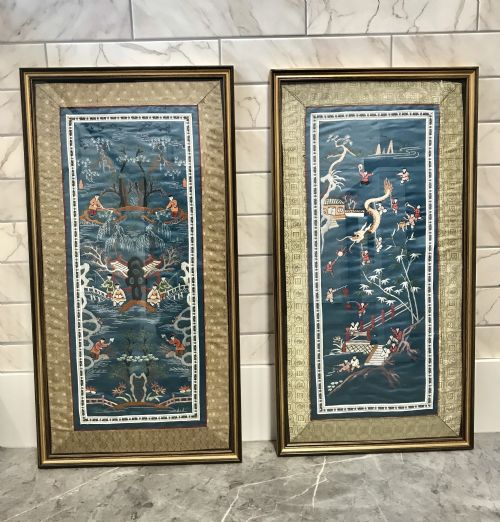
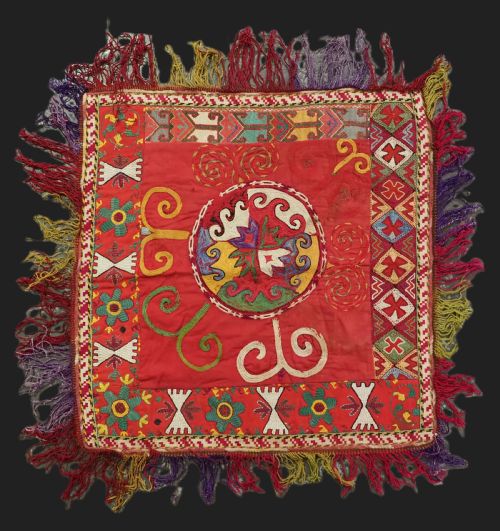
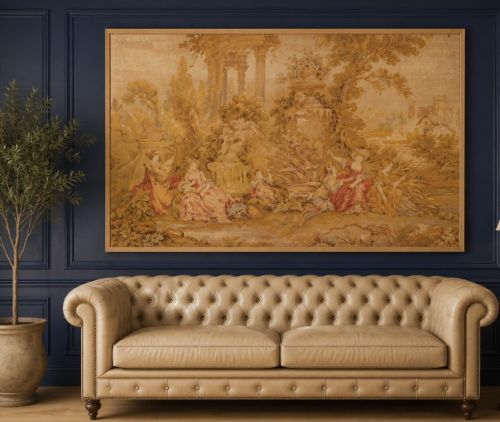
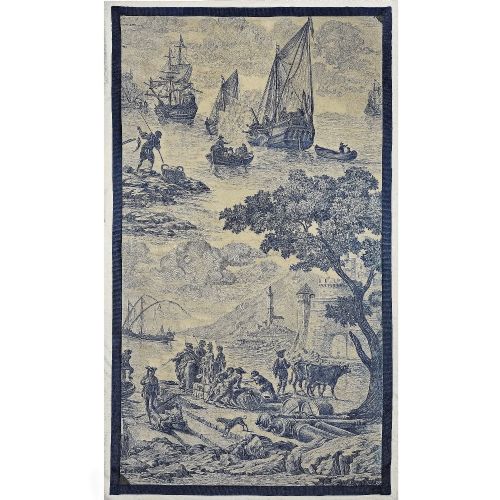
A framed textile wall hanging brings centuries of handwork into domestic spaces, ranging from medieval-style tapestries to embroidered silk panels and tribal dowry weavings. The selections span periods from the seventeenth century through the mid twentieth century, drawing on European, Central Asian and East Asian traditions.
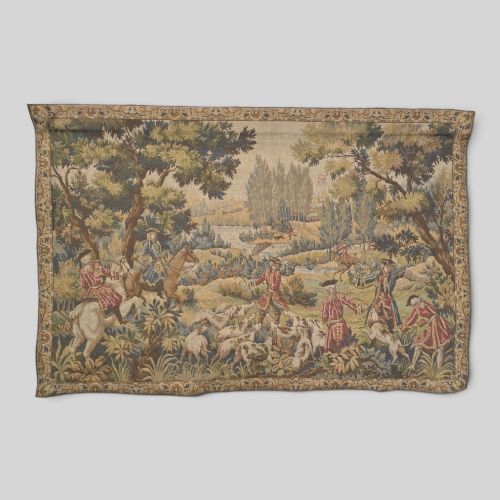
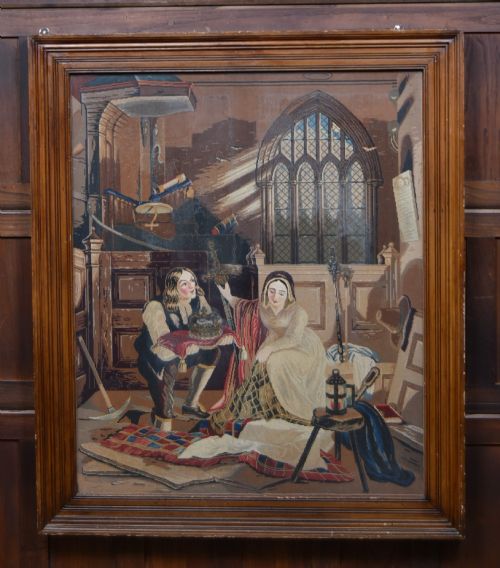
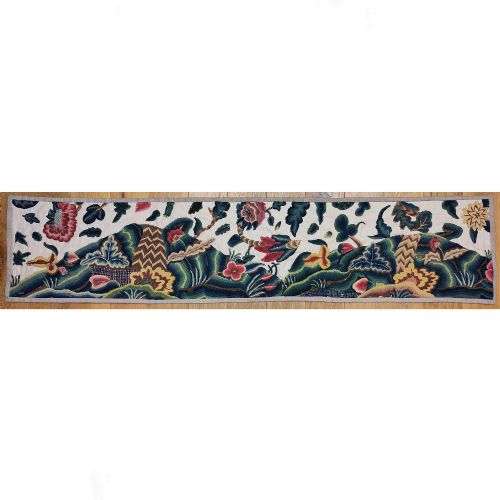
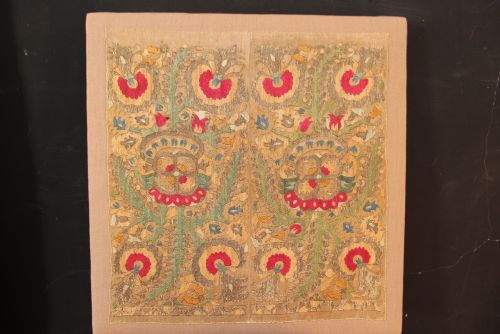
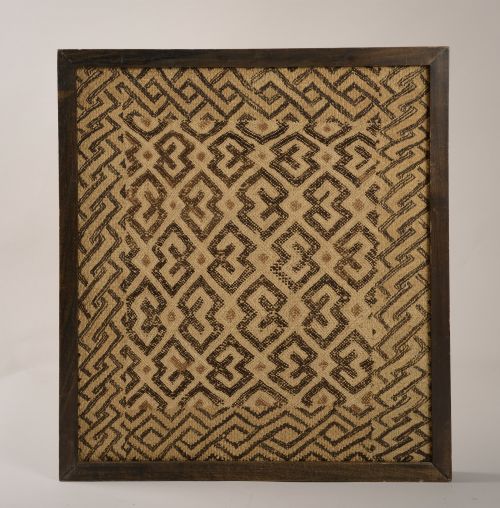
Most pieces seen here take the form of wall art, tapestries or mounted fragments, preserved behind glass or stretched across wooden panels. Buyers frequently encounter French woven tapestries alongside English crewelwork, Chinese silk embroideries and Turkmen tribal textiles.
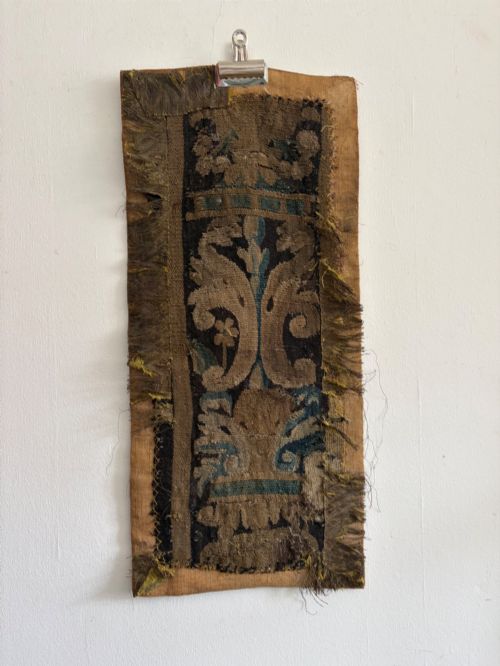
These works function as focal points in an interior, offering texture and colour that flat canvas cannot replicate. The diversity of origins means a buyer might select a verdure tapestry border fragment from the eighteenth century or a vibrant ikat coat panel mounted for display.
Materials and Techniques
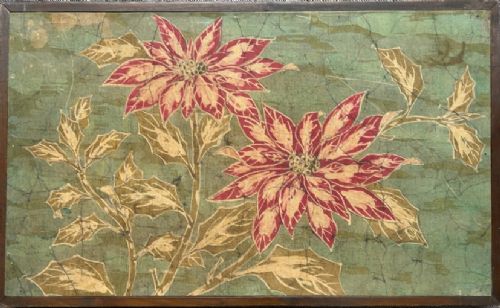
Makers utilised natural fibres including wool, silk, cotton and linen, often combining them with metallic thread to catch the light. These materials were worked through embroidery, tapestry weaving, crewelwork and batik techniques.
Stitching was executed by hand using specialised needles and frames, creating dense surfaces such as gros point needlework or plushwork. Fragments of historic tapestries and garments were routinely mounted to linen, canvas or wood to ensure structural stability.
Materials span wool, silk, cotton, linen, canvas and metallic thread across European and Asian traditions.
Distinctions in Quality
The standard of a framed textile wall hanging rests on the precision of the needlework and the integrity of the fibres. Density of stitch work and complexity of design separate ordinary decorative panels from exceptional historical examples.
Preservation plays a central role in valuation, particularly regarding how well original dyes and threads survive under glass. The skill involved in mounting older fragments to linen or wood determines whether the piece maintains its historical form without strain.
The Framed Textile Wall Hanging Glossary
- Crewelwork
- Embroidery executed with wool yarn on a heavy linen or cotton foundation. This technique dates back centuries in English textile traditions.
- Gros point
- A counted-thread embroidery technique using wool yarn on canvas to produce a durable, textured needlepoint surface. It often depicts pictorial scenes or figures.
- Verdure
- A style of tapestry featuring a lush landscape or foliage as the primary subject. These panels typically date to the seventeenth and eighteenth centuries.
- Suzani
- A type of embroidered tribal textile originating in Central Asia, traditionally made by brides as part of their dowry. They feature bold floral motifs on cotton or silk foundations.
- Ikat
- A dyeing technique where yarns are tie-dyed before being woven into fabric. This method creates distinctive, slightly blurred patterns along the edges of the design.
- Tapestry
- A form of textile art woven by hand on a loom, embedding the design directly into the weave rather than embroidering onto finished cloth.
Framed Textile Wall Hanging: Frequently Asked Questions
How do I hang a heavy textile safely?
Most heavier pieces arrive mounted on wooden boards or framed under glass with integrated hanging hardware designed to support the weight evenly.
Ensure your wall fixings match the specific weight of the wooden frame and consult a professional if the piece uses heavy tapestry fragments.
Should antique textiles be kept out of direct sunlight?
Natural fibres such as silk and wool are sensitive to ultraviolet light, which can fade historic dyes over time.
Position your wall hanging away from direct windows or utilise specialised glass that filters UV rays to protect the textile.
How are textile fragments mounted?
Older fragments like tapestry borders or coat panels are typically stitched carefully onto a supportive backing of linen or canvas.
This mounting technique distributes tension evenly across the historic material preventing the fabric from tearing under its own weight.