

Framed Needlework Art
Framed antique needlework art preserves centuries of textile craft under glass, offering a tangible link to domestic history through stitched silk, wool and linen.
Framed Needlework Art
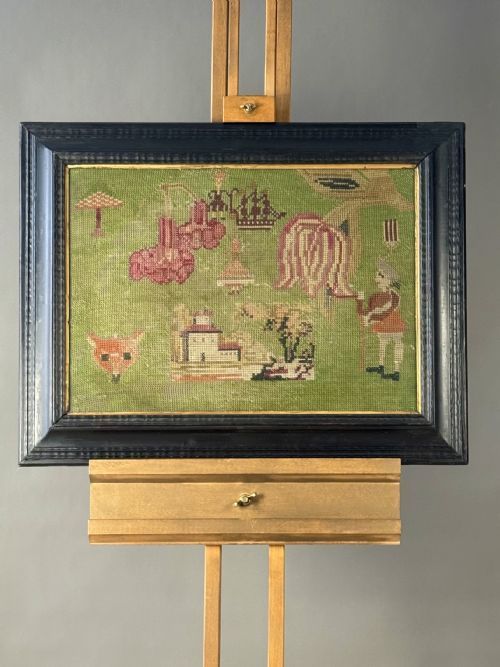
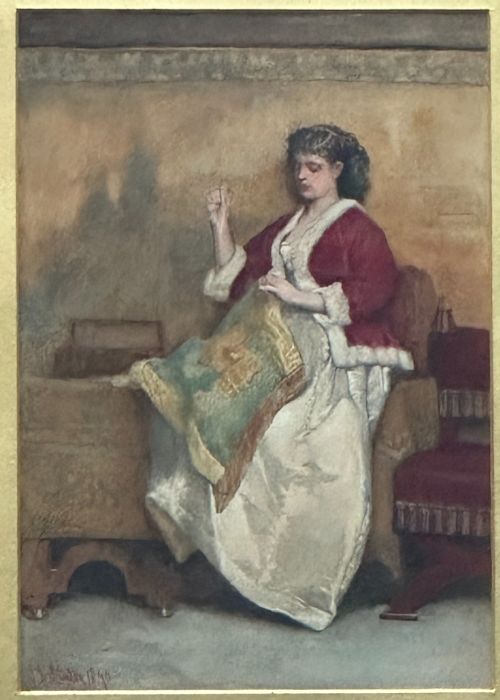
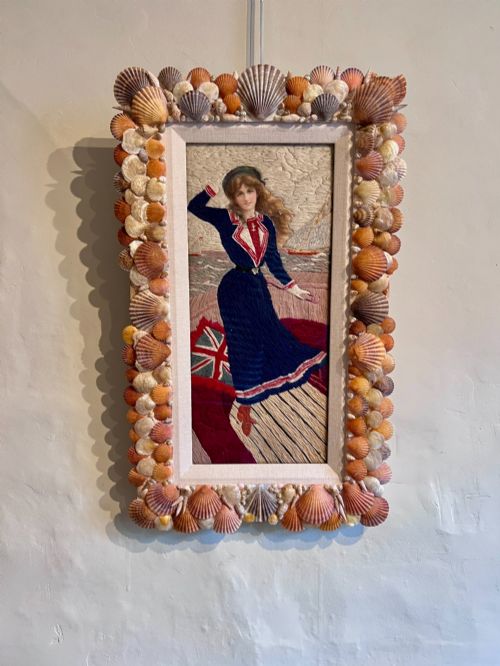
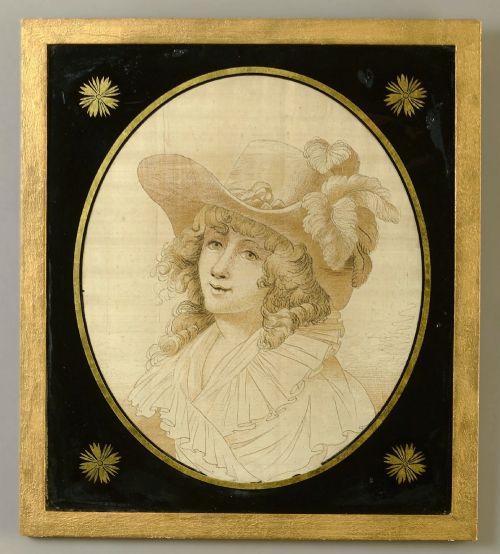
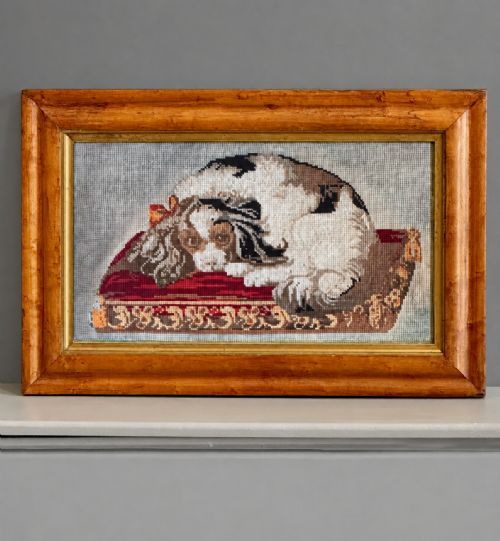
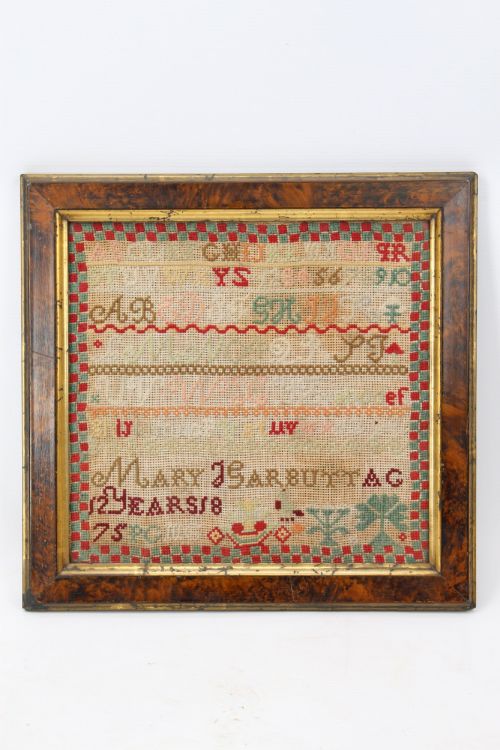
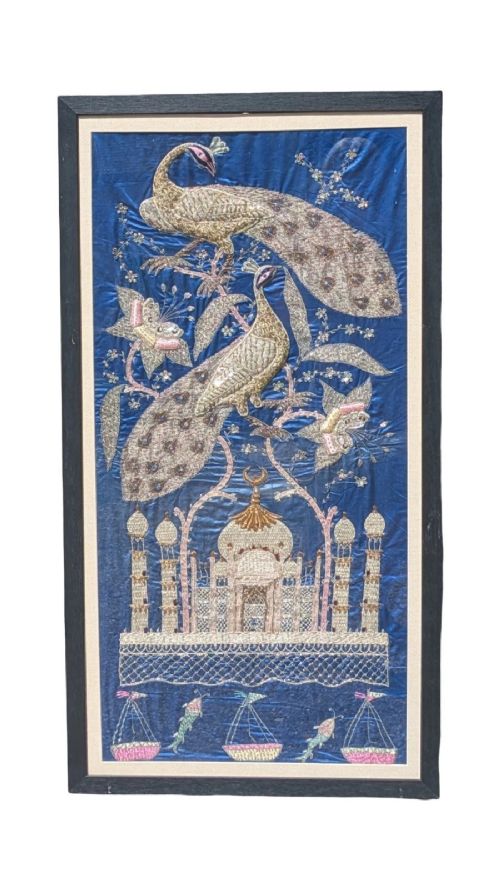
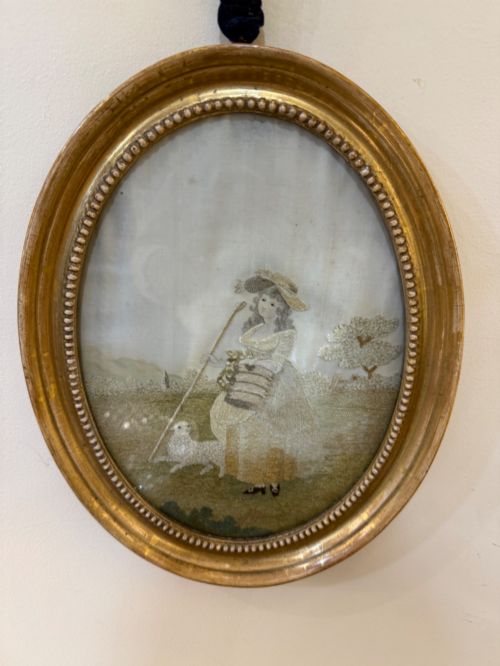
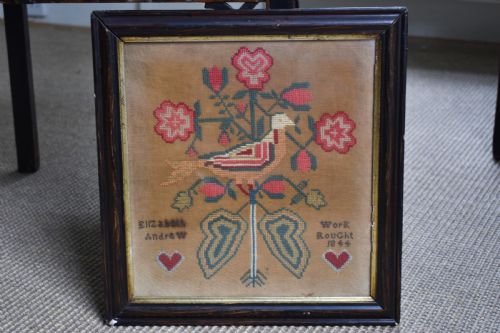
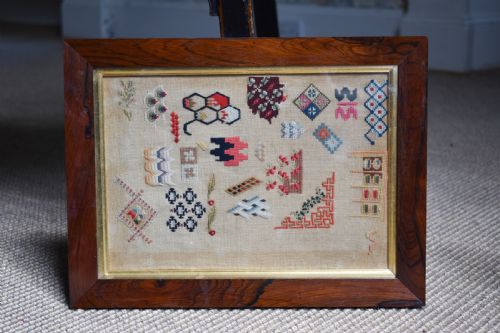
Framed antique needlework art encompasses historical stitched panels, samplers and woolwork pictures originating from the seventeenth century through to the Edwardian period. Buyers browsing this selection commonly encounter nineteenth-century Berlin work, Victorian samplers worked by young girls, and eighteenth-century pastoral silk pictures.
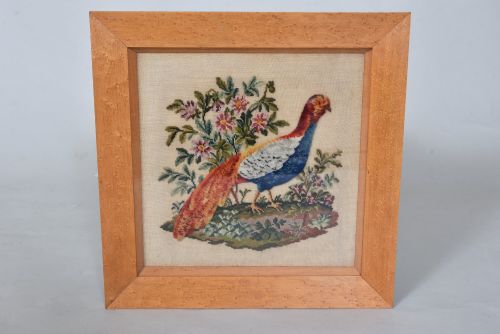
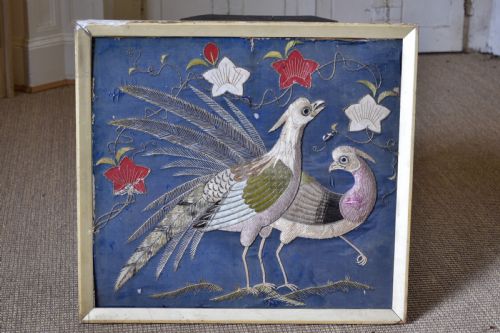
The objects take diverse forms, ranging from educational alphabet samplers and maps of England and Wales to elaborate stumpwork panels depicting historical figures and birds. Many retain their original frames, including burr maple and giltwood moulding, which complement the textile within.
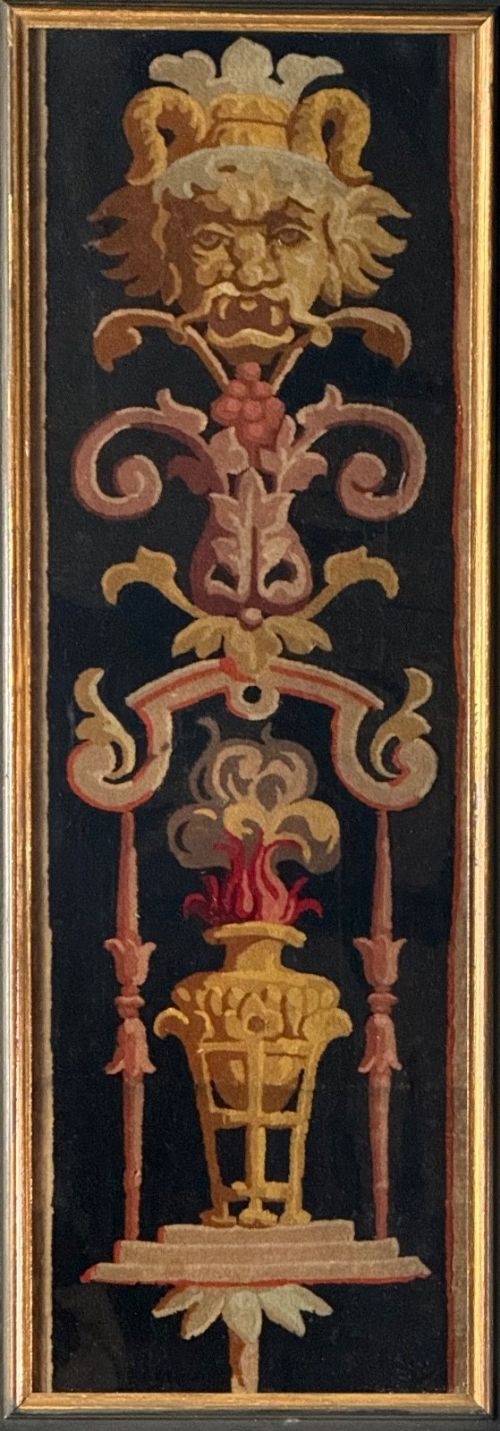
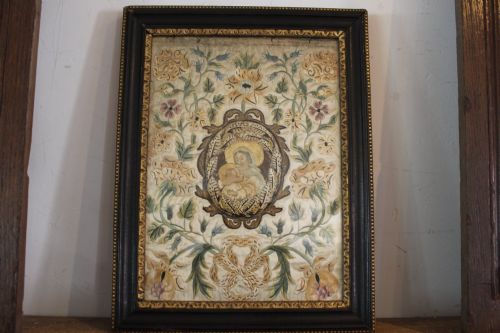
Origins span English, continental and Greek island workshops, reflecting local needle traditions and materials of their respective eras. Seventeenth-century examples often feature classical motifs and silk embroidery, whilst later Victorian iterations showcase plushwork and woolie pictures.
Materials and technique
Needlework pieces rely on a fabric ground such as linen, canvas or woven silk, worked with threads of silk, wool, metal and silk floss. Artisans employed varied stitches, from standard gros-point and petit-point to complex raised stumpwork and beadwork fragments.
Listings feature seventeenth-century silk embroidery panels alongside nineteenth-century Berlin work and Edwardian woolies.
What varies in quality
Quality rests upon the intricacy of the stitch execution, the condition of the delicate threads and the survival of the original frame. Finely worked silk floss and detailed metal thread embroidery distinguish superior panels from simpler wool work.
Provenance and documentation elevate a piece, particularly when a maker's name, age, date or specific location is recorded within the sampler text. The clarity of the pictorial design, whether depicting a classical scene or a horse racing track, defines the visual impact.
Sir James Dromgole Linton·Mary J Garbutt·Mary Banion·Mary Greening
The Framed Needlework Art Glossary
- Sampler
- A piece of needlework produced as a demonstration or test of skill in various stitches, often featuring alphabets, numbers and names.
- Berlin work
- A style of needlepoint popular in the nineteenth century, worked in coloured wools on canvas from charted patterns.
- Stumpwork
- A raised embroidery technique popular in the seventeenth century, using padded underpinnings to create three-dimensional figures and motifs.
- Plushwork
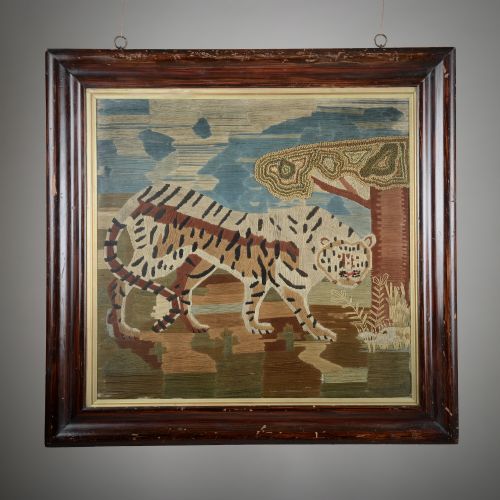
- A tactile textile technique utilising clipped pile to create a raised, velvety texture, seen in nineteenth-century animal depictions.
- Band sampler
- An early embroidery format featuring horizontal bands of diverse patterned stitches arranged in rows down a narrow linen ground.
Framed Needlework Art: Frequently Asked Questions
How do I date an antique sampler?
Many samplers include embroidered dates, children's ages and makers' names directly within the textile composition.
Style, framing materials and the type of canvas or linen ground provide additional clues for pieces lacking a direct stitched date.
Were these always framed?
Most textile art was glazed and framed to protect the fragile silk and wool threads from dust, light and handling.
Original frames such as burr maple or giltwood help preserve the piece and indicate the period of mounting.
How should I hang needlework art?
Display framed textiles away from direct sunlight to prevent the fading of delicate silk and wool threads.
Maintain stable room humidity to protect both the wooden frames and the organic textile fibres beneath the glass.
What is the difference between a sampler and a picture?
Samplers primarily record alphabets, numerals and pattern rows to demonstrate technical proficiency, often bearing a young maker's signature.
Needlework pictures focus entirely on pictorial scenes, such as pastoral farming, portraits or classical figures, designed purely for wall display.