


Framed Embroidered Panel
When you handle a framed embroidered panel, you hold centuries of needlework preserved behind glass.
Framed Embroidered Panel
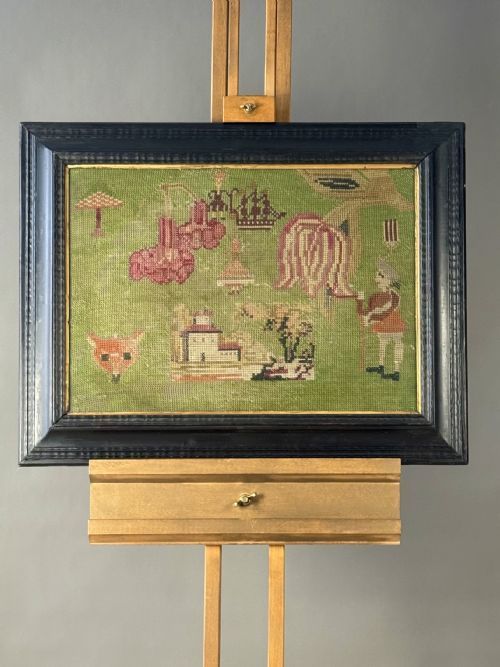
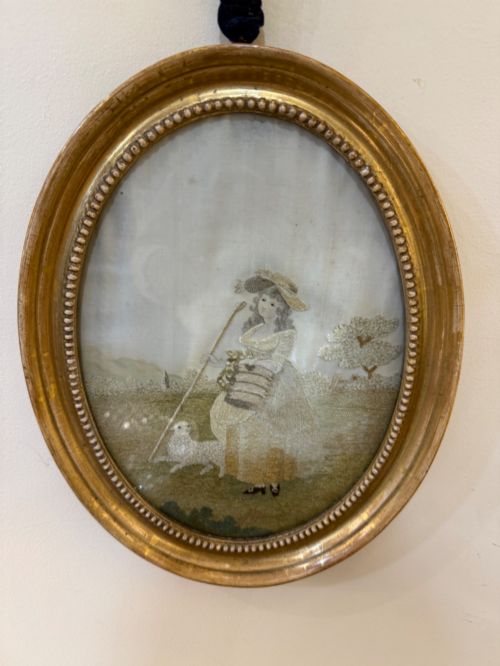
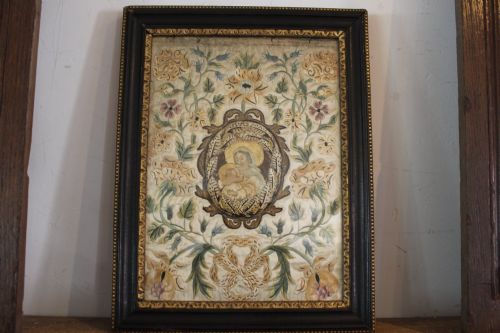
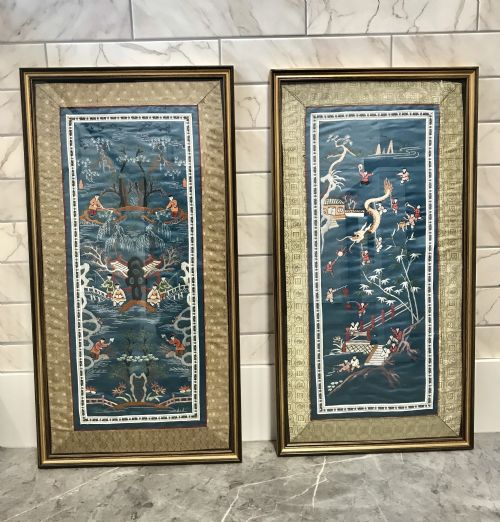
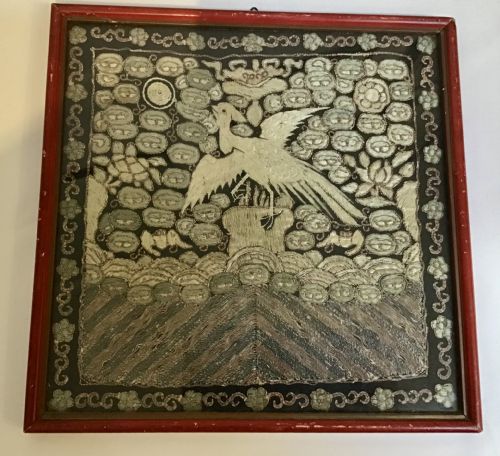
A framed embroidered panel represents textile art created across the seventeenth, eighteenth, and nineteenth centuries, mounted for wall display. You meet these pieces in various forms, including samplers, pictorial needlework, and embroidered fragments set behind protective glass in wooden frames.
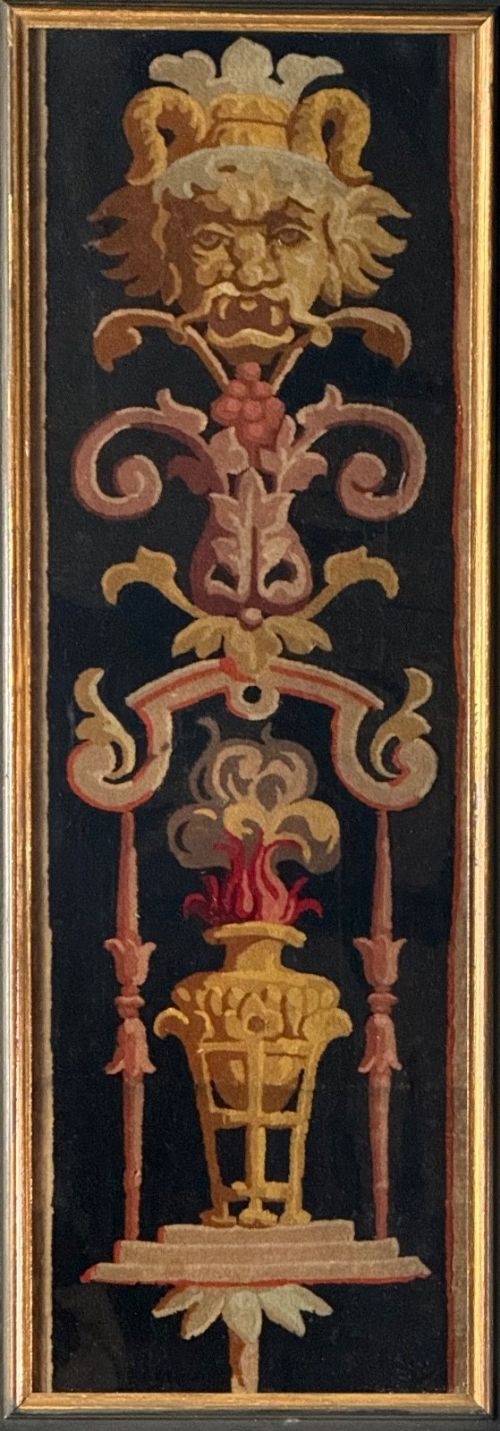
The selection ranges from early English crewelwork and Stuart stumpwork to Chinese silk panels and Ottoman fragments. Domestic samplers sit alongside classical grotesques, pastoral scenes, and regional folk pieces from Greece and Central Asia.
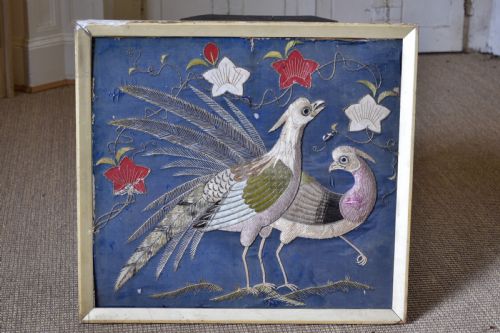
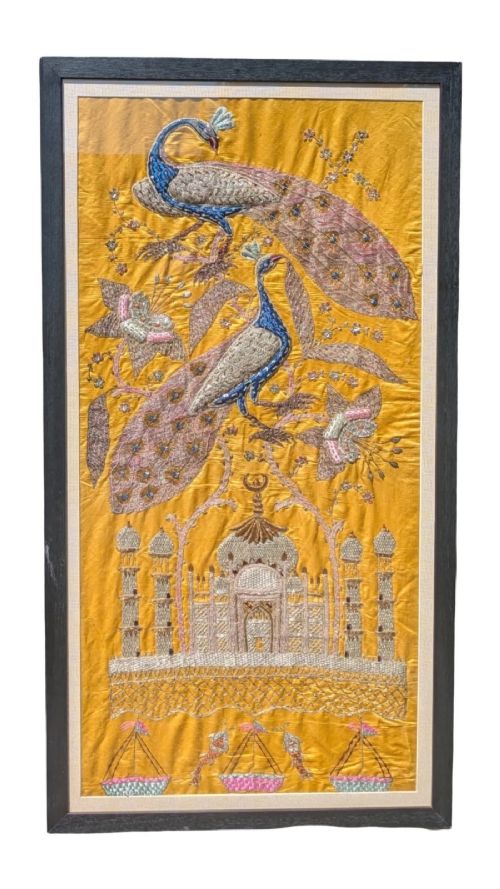
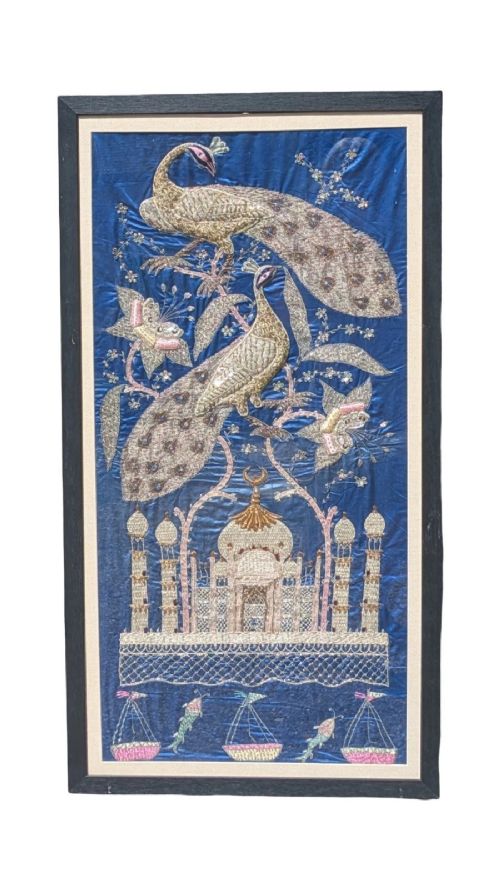
These works function primarily as wall art, capturing the meticulous needle skills of past makers. Whether you examine a geometric alphabet sampler or a detailed silk depiction of figures and animals, each object offers a tangible record of historical handwork.
Materials and Techniques
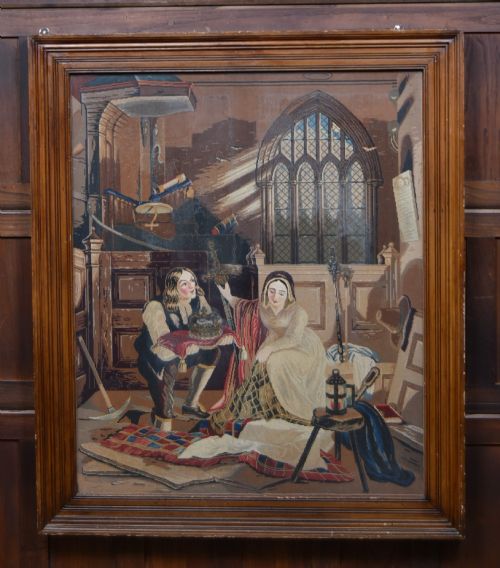
Makers utilised natural fibre grounds such as linen, cotton, wool, and canvas to support their stitching. Silk floss and metallic threads provided lustrous detail, while wool yarn added texture to pictorial wool work and gros-point tapestries.
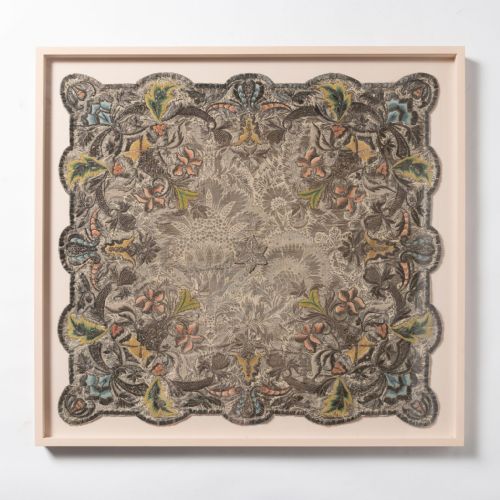
Needlework techniques varied from counted thread embroidery on samplers to freeform crewelwork and raised stumpwork relief. Hand-sewn panels frequently combined embroidery with hand-painted silk elements or incorporated beadwork fragments.
Mountees protected these fragile textiles within wooden frames, often placing them beneath glass to shield the delicate threads from dust and handling.
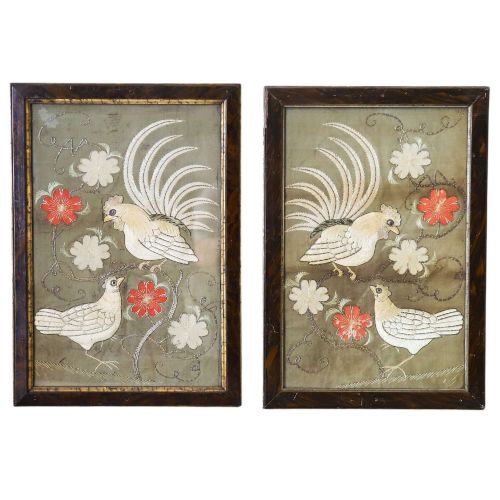
Look closely to find spirited embroidered cockerels eyeing you from beneath faux tortoiseshell glass.
Evaluating Quality
Quality rests in the precision of the stitching and the complexity of the design execution. Tightly worked needlepoint and intricate silk floss detail distinguish superior pictorial panels from simpler execution.
The survival condition of the textile fabric and the retention of original colour in the threads dictate the visual strength of the piece. Well-preserved ground materials and secure mounting without distortion elevate the standing of an embroidered panel.
The Framed Embroidered Panel Glossary
- Stumpwork
- A raised embroidery style popular in the seventeenth century, using padded understructures to create three-dimensional figures and motifs on textile panels.
- Crewelwork
- Traditional embroidery utilising wool yarn on a linen or cotton twill ground, frequently seen in English needlework from the seventeenth century onward.
- Sampler
- A piece of needlework produced by a maker to demonstrate proficiency in various stitches, alphabets, or decorative motifs.
- Gros-point
- A type of needlepoint stitch worked on coarse canvas with wool yarn, producing durable and textured pictorial tapestries.
Framed Embroidered Panel: Frequently Asked Questions
How should I care for a framed embroidered panel?
Keep textile panels out of direct sunlight to prevent the silk and wool threads from fading over time. Maintain stable room temperatures to protect both the historic fabric and the wooden frame.
Avoid hanging needlework in damp spaces like kitchens or bathrooms where moisture might damage the natural fibres. Leave the protective glass in place to shield the delicate stitching from dust and atmospheric pollution.
Are these panels mounted in period frames?
Many framed panels retain wooden or faux tortoiseshell frames appropriate to their era of creation or mounting. Some pieces feature later frames chosen to preserve fragile textiles safely.
Examine the joinery and backing of the frame to understand its relation to the textile within. Professional mounting inside glass enclosures helps secure loose fragments and damaged borders.
What is the difference between a sampler and a pictorial panel?
Samplers focus on alphabets, numbers, and repeating stitch patterns, often recording the name and age of the maker. They served as educational exercises or records of stitching repertoire.
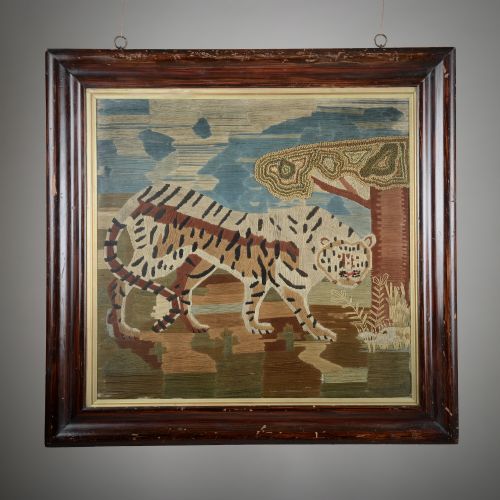
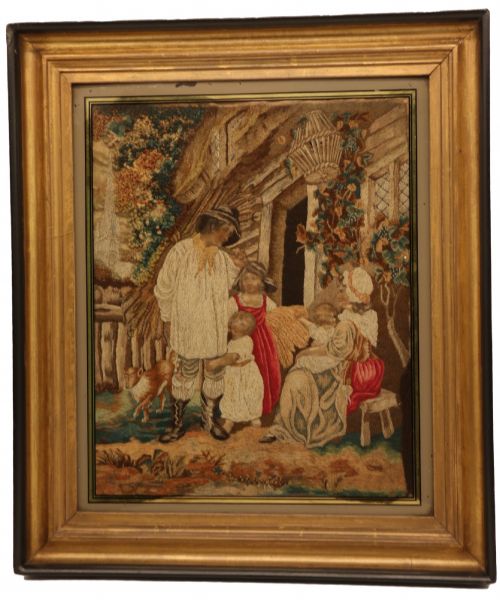
Pictorial panels depict specific scenes, such as pastoral farming, religious subjects, or animal figures like pheasants and tigers. These compositions prioritise decorative narrative over technical exercises.
How can I tell a seventeenth-century panel from a nineteenth-century piece?
Seventeenth-century works frequently employ stumpwork relief, metallic thread, and classical motifs like grotesques or royal figures. The materials and stitch structures reflect the specific domestic needlework trends of that era.
Nineteenth-century pieces often showcase revival styles, Berlin wool work, or detailed silk embroidery with painted elements. Examining the preparation of the canvas or linen ground helps clarify the period of production.