







Gothic Revival Needlepoint
Gothic revival needlepoint brings medieval ecclesiastical grandeur into nineteenth-century domestic interiors through rich woolwork and pointed architectural framing.
Gothic Revival Needlepoint
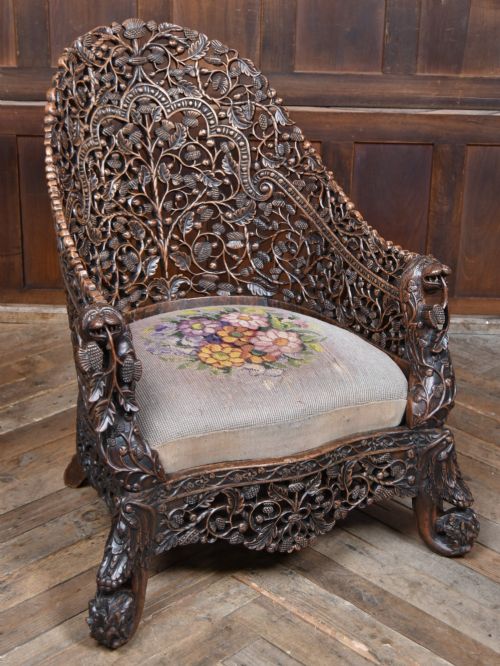
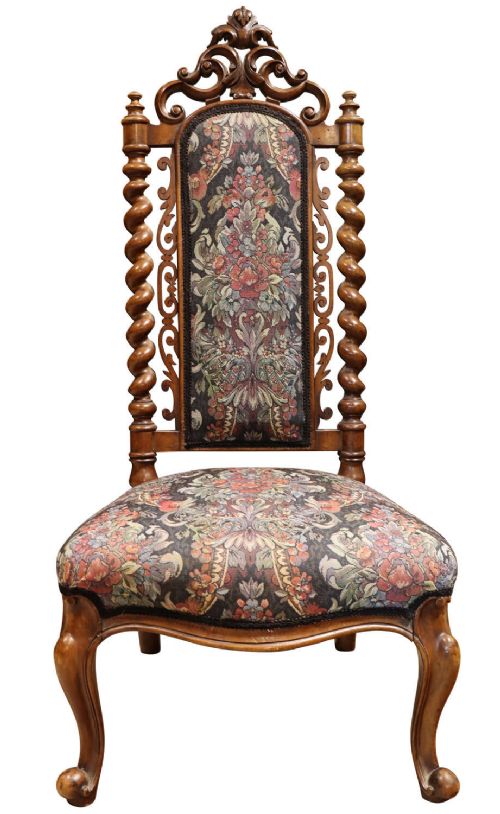
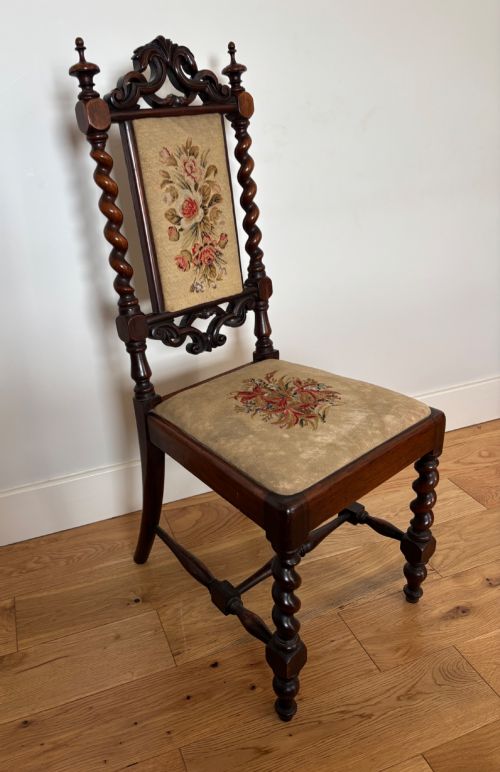
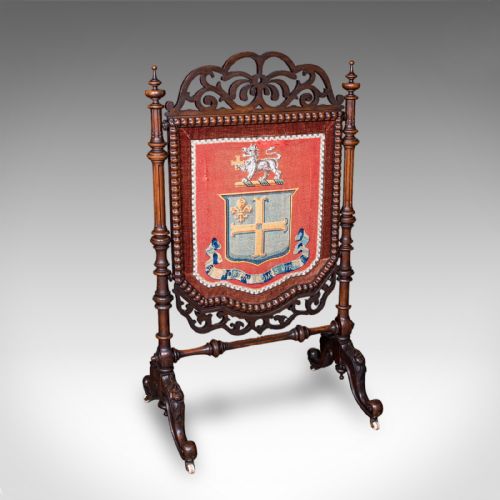
Gothic revival needlepoint combines nineteenth-century upholstery with medieval-inspired motifs, creating distinct decorative and functional furnishings for domestic spaces. These pieces encompass upholstered chairs, side chairs, armchairs, and decorative panels designed to evoke historical architecture and ecclesiastical grandeur. You will frequently encounter carved wooden frames paired with woolwork tapestry panels representing heraldic or classical themes.
The objects appearing in this selection span the nineteenth century, including Victorian interpretations and specific iterations from the Regency era up to nineteen hundred. Forms range from practical seating such as prie-dieu chairs and hall chairs to decorative fireplace screens and wall art. Woods like walnut, oak, and rosewood frequently form the structural support for the needlework and tapestry elements.
Makers and regional workshops reflected in the selection demonstrate diverse influences, from Scottish baronial styles to Arts and Crafts simplicity. A buyer investigating gothic revival needlepoint seeks the tangible connection between nineteenth-century craft and medieval aesthetic revivals. Each surviving item records the era's dedication to ornate textile work and heavy timber construction.
How They Were Made
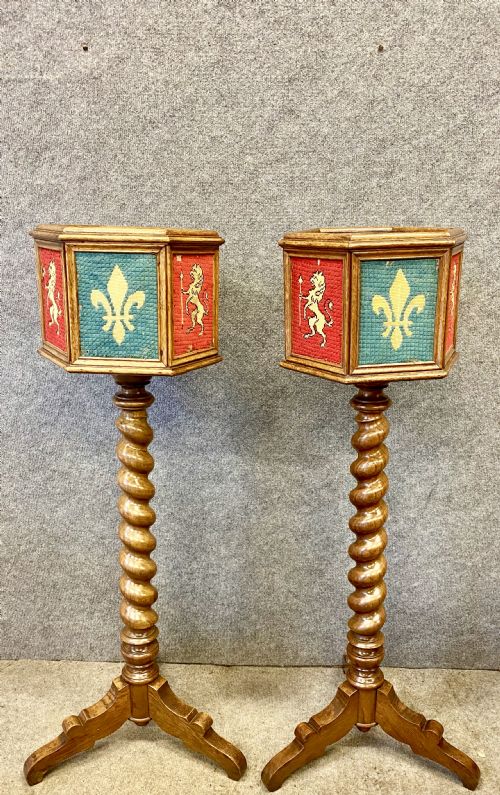
Craftsmen utilised dense hardwoods including walnut, oak, and rosewood to construct sturdy frames capable of supporting heavy textile upholstery. Woodworkers applied intricate carving techniques to shape structural elements into pointed arches, floral motifs, and baronial details. Brass accents occasionally supplemented the timber frameworks on specific screens and seating.
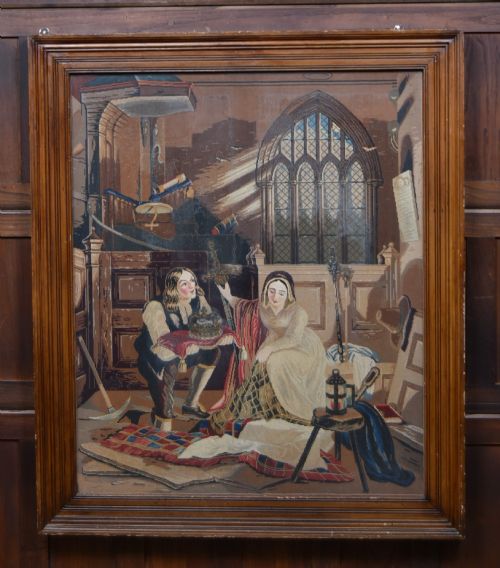
Needlepoint and tapestry work utilised wool threads to stitch detailed pictorial and armorial compositions onto supportive backing fabrics. Artisans carefully secured these embroidered panels directly onto chairs and fire screens, integrating textile arts with cabinetmaking. Ebonised finishes and velvet trims sometimes provided additional textural contrast to the primary woolwork.
Gothic Revival Needlepoint Retail Price Guide 2026
Typical asking prices for gothic revival needlepoint among the pieces listed under this phrase on Sellingantiques today, from the lower quarter to the upper quarter. They describe what is for sale here now, not the wider market.
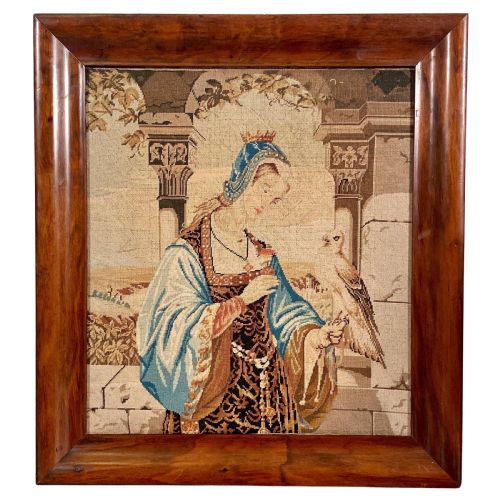
Hunting falconry scenes appear immortalised in nineteenth-century woolwork alongside solemn ecclesiastical prayer seats.
What Varies in Quality
The refinement of the woodwork dictates much of the distinction between individual examples, separating standard production from exceptional craftsmanship. Deep, crisp carving on walnut and oak frames indicates a higher standard of workshop execution than simple, shallow moulding. The choice of dense timber species provides structural longevity and tactile weight.
Needlepoint density and the complexity of the woolwork design establish the artistic merit of the textile panels. Intricate pictorial compositions, such as armorial crests or classical figures, demand greater technical skill from the needleworker than repetitive geometric patterns. Preservation of the original wool fibres and structural upholstery further distinguishes superior pieces.
Liberty & Co·R Whytock of Edinburgh
The Gothic Revival Needlepoint Glossary
- Needlepoint
- A form of counted thread embroidery where yarn is stitched through a stiff open-weave canvas. It provides durable surfaces for nineteenth-century upholstery and decorative wall screens.
- Prie-Dieu Chair
- A devotional prayer chair featuring an upright back designed to support kneeling or leaning during private worship. These pieces frequently incorporate nineteenth-century needlework panels.
- Tapestry
- A form of heavy textile art woven on a loom or embroidered by hand with wool and silk threads. Such panels depict historical scenes, heraldry, or classical portraits within Victorian interiors.
- Scottish Baronial
- An architectural and decorative style drawing upon medieval Scottish castle building traditions. It manifests in heavy carved timber furniture and baronial furnishings.
- Ecclesiastical
- Pertaining to the Christian church and its architecture, heavily influencing the pointed arches and devotional seating of the nineteenth century.
Gothic Revival Needlepoint: Frequently Asked Questions
What is a prie-dieu chair?
A prie-dieu chair is a specialised nineteenth-century devotional seat featuring an elevated backrest. It was designed for private prayer within Victorian domestic settings.
These chairs often incorporate needlepoint upholstery and ecclesiastical design motifs. Their compact forms reflect both religious devotion and aesthetic trends of the period.
How do I identify gothic revival furniture?
Gothic revival furniture is identified by architectural motifs such as pointed arches, quatrefoils, and heavy timber construction. Craftsmen utilised dark woods like oak and walnut to evoke medieval aesthetics.
Needlepoint panels and tapestry upholstery frequently accompany these carved wooden frames. The overall impression is one of substantial weight and historical emulation.
What woods were used in these pieces?
Nineteenth-century makers primarily utilised walnut, oak, and rosewood for structural frames. These dense timbers supported heavy needlework and carved decorative elements.
Ebonised finishes also appear on specific chairs to imitate more costly materials. The choice of timber directly affected the durability and visual heaviness of the item.
Where were fireplace screens placed?
Fireplace screens stood before hearths when fires were unlit to protect rooms from drafts and shield wallpaper from soot. They served as decorative focal points during warmer months.
Needlepoint and embroidered panels turned these functional items into displays of domestic artistry. Walnut and rosewood frames provided stable supports for the textile inserts.
What is the difference between tapestry and needlepoint?
Tapestry traditionally refers to woven pictorial textiles produced on a loom with interlocking threads. Needlepoint involves stitching yarn through an existing canvas backing by hand.
Both techniques produced the decorative panels seen on nineteenth-century chairs and screens. Victorian makers utilised both methods interchangeably to achieve rich surface textures.