


19th Century Minton Plate
A 19th century minton plate brings refined ceramic artistry to the table, offering collectors exquisite hand-painted details and historic kiln mastery from a celebrated English factory.
19th Century Minton Plate
These ceramics trace their origins through the decades of the nineteenth century, reflecting changing tastes from early nineteenth-century Regency styles to late-nineteenth-century pate-sur-pate techniques. Plates and dishes from this era demonstrate the remarkable versatility of the Minton factory, moving effortlessly between formal dining service and pure display. Finding well-preserved examples from this span allows a tangible connection to nineteenth-century British ceramic excellence.
Materials and production methods
Makers utilised fine porcelain, bone china, and earthenware as the primary bodies for these plates, often shaping them into specialised forms like the Newcastle shape or moulded basketweave designs. The application of lead glaze provided a smooth, protective coating over the ceramic body, ensuring durability while enhancing the underlying form. Skilled artisans then applied hand-painted pigments, enamel, and rich gilding to bring the surfaces to life.
Decoration often involved intricate hand-painting, gold leaf highlights, and specialised processes like pate-sur-pate, where layers of slip built up relief designs before firing. Enamel colours were carefully fused to the porcelain body through successive kiln firings, locking the vivid hues and metallic accents into place. The combination of precise moulding, lustrous gilding, and meticulous hand-painting defined the workshop standard of the period.
Listings feature porcelain, earthenware, and bone china across the Victorian, Regency, and Georgian periods, incorporating gilt, enamel, and lead glaze.
Assessing quality and craftsmanship
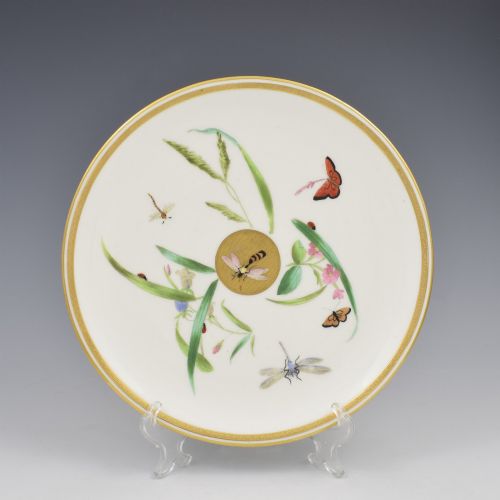
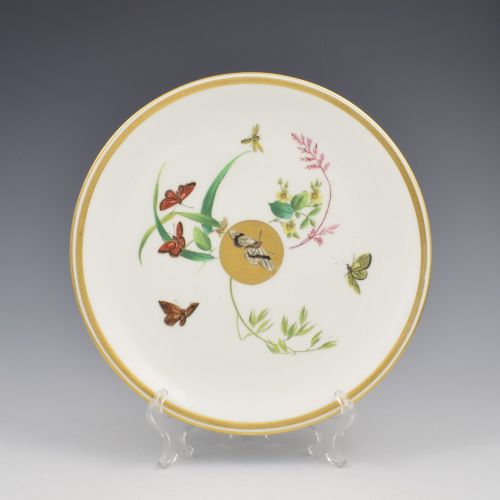
The degree of artistic skill in the hand-painted elements largely distinguishes standard production from finer cabinet pieces, particularly in intricate subjects like landscapes, armorial crests, or Japanese-style insect and butterfly motifs. The precision of the gilding and the crispness of moulded details, such as basketweave textures or raised jewel effects, indicate the care taken during production. Pieces featuring specialised techniques like pate-sur-pate demand a higher level of artisan proficiency.
Overall preservation of the enamel, gold leaf, and ceramic body heavily influences the standing of any given piece within its category. Items that retain their original vibrance without excessive rubbing to the gilt borders or surface scratches reflect superior original materials and careful handling. The presence of documented patterns or specific historical commissions also elevates the distinct character of individual ceramics.
Minton
The 19th Century Minton Plate Glossary
- Cabinet plate
- A decorative plate intended for display in a cabinet rather than for everyday dining use. These pieces usually feature more elaborate hand-painted decoration or armorial designs.
- Pate-sur-pate
- A ceramic decoration technique where successive layers of liquid clay are built up on a contrasting background to create a low relief cameo effect. This method requires immense skill and precision from the artist.
- Majolica
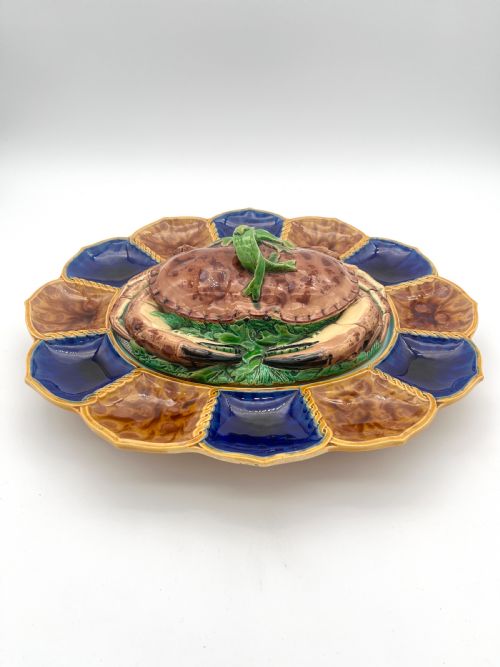
- A type of colourful lead-glazed earthenware pioneered in the nineteenth century, known for its vibrant moulded forms and rich coloured glazes. It frequently mimics natural subjects such as plants and animals.
- Bone china
- A type of soft-paste porcelain composed of bone ash, feldspathic material, and kaolin, offering high strength, chip resistance, and a brilliant translucent white body. It became a staple material for fine British tableware.
- Gilding
- The application of gold leaf or gold powder to the surface of ceramics for decorative accentuation, usually fired to create a permanent metallic sheen along rims and borders.
19th Century Minton Plate: Frequently Asked Questions
How were these plates used originally?
These items served multiple roles in nineteenth-century households, ranging from functional dessert service during formal dinners to decorative display in drawing rooms. Wealthy patrons utilised armorial and cabinet versions to signal social standing and refined taste.
Over time, many decorative plates transitioned entirely into display objects, housed in cabinets to protect their delicate hand-painted surfaces and rich gilding from the wear of daily dining.
What defines the Aesthetic Period style?
The Aesthetic Period introduced asymmetrical compositions, nature-inspired motifs, and distinct Japanese influences into British ceramic design. Plates from this movement often feature motifs like sunbursts, insects, and butterflies.
This stylistic shift moved away from rigid Victorian symmetry towards more naturalistic, harmonious arrangements that celebrated craftsmanship and global artistic inspiration.
How do I care for antique porcelain?
Display these ceramics away from direct sunlight to prevent any fading of the hand-painted enamels and delicate gilt highlights. If cleaning becomes necessary, wash them by hand in lukewarm water with mild soap.
Avoid using abrasive sponges, harsh detergents, or dishwashers, as these methods can quickly wear away the historic lead glaze and metallic decoration.
What is a Newcastle shape plate?
The Newcastle shape refers to a specific moulded form utilised by the factory, often featuring distinct structural contours or basketweave texturing along the rim. This shaping added tactile depth to the ceramic surface.
Such moulded variations provided a sophisticated textural backdrop that complemented the central hand-painted landscapes or floral sprays.
How are different periods identified?
Period identification relies on examining the stylistic cues, decorative techniques, and manufacturing materials present in each piece. Early Regency and Georgian examples often show distinct neoclassical or bright floral motifs, while Victorian items embrace a broader range of historicism and vibrant colour grounds.
Cross-referencing pattern numbers and moulded shapes further helps narrow down the production era to a specific decade within the nineteenth century.