




19th Century Magazine Stand
A 19th century magazine stand organises periodicals and sheet music with traditional compartmentalised timber frames.
19th Century Magazine Stand
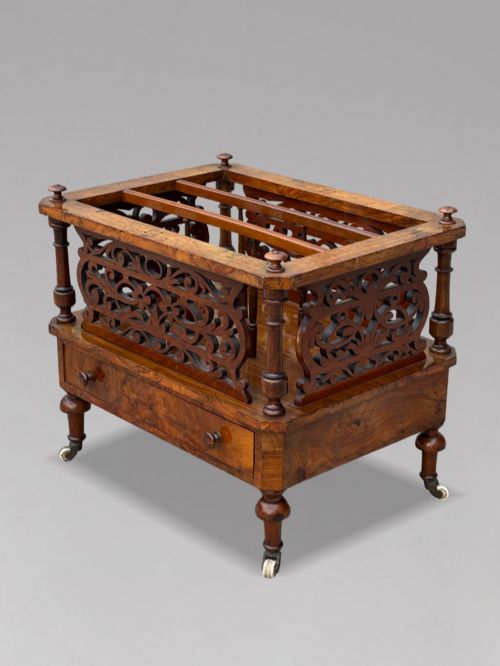
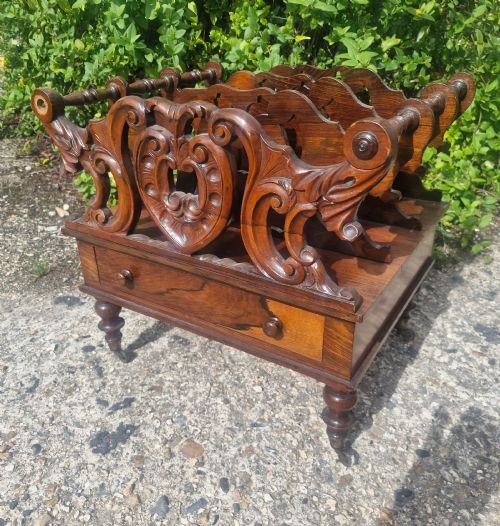
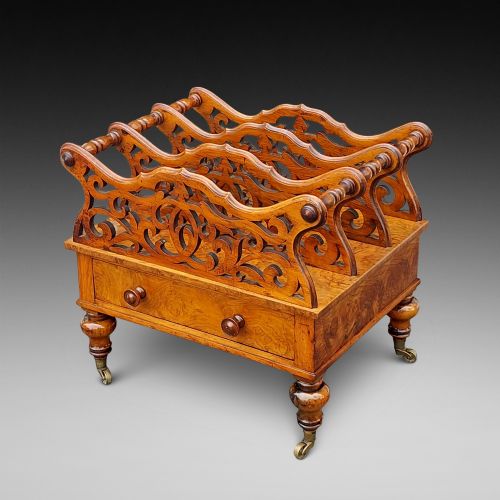
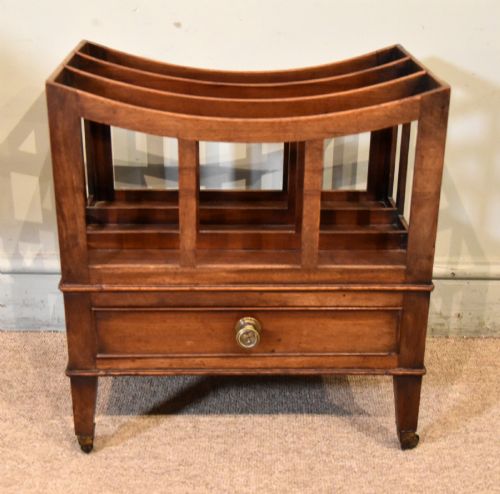
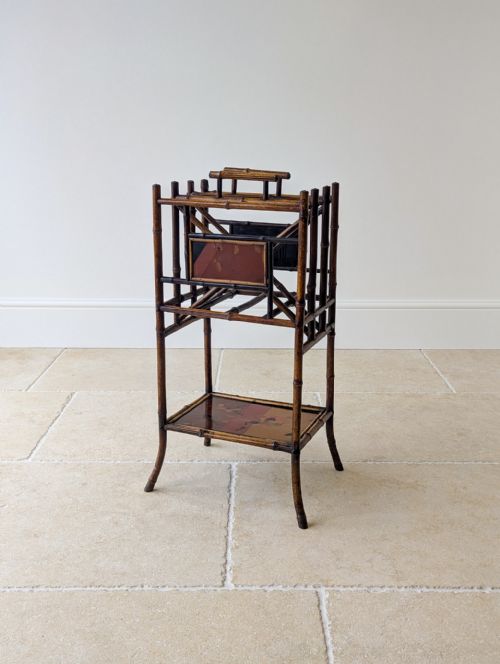
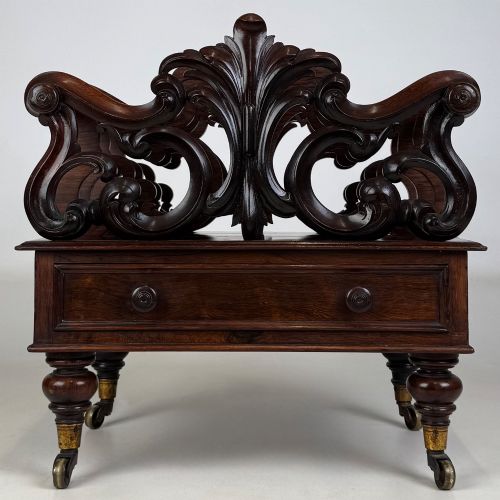
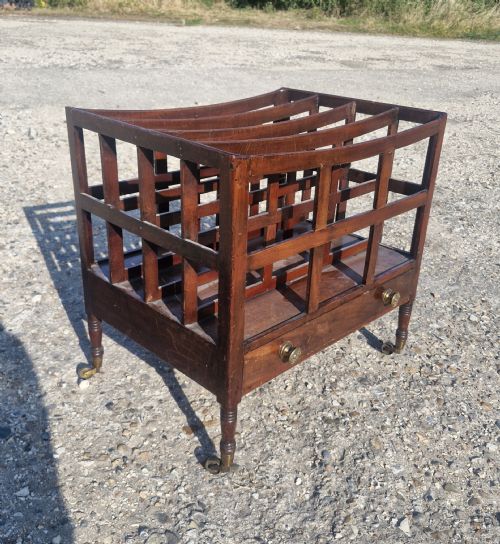
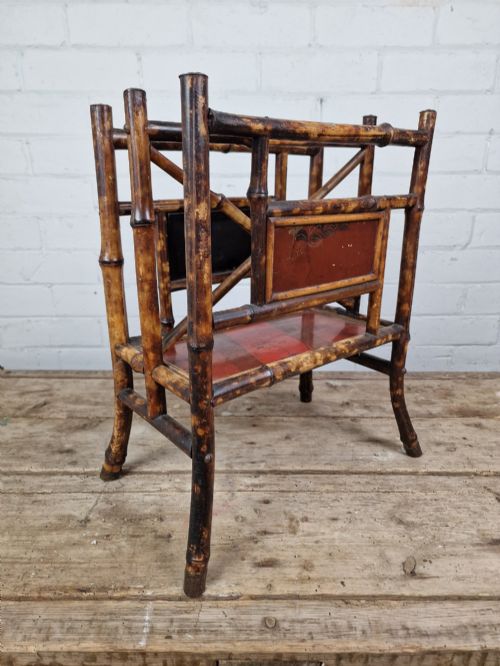
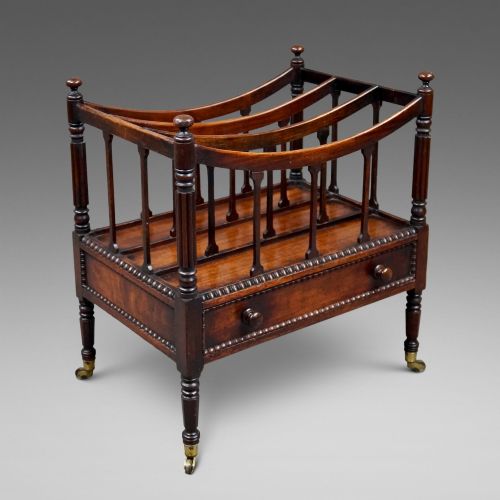
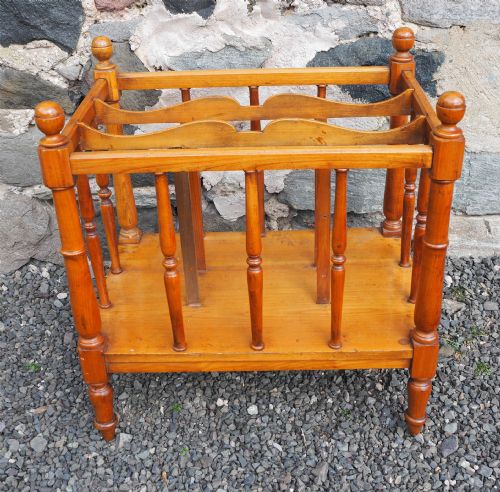
A 19th century magazine stand primarily takes the form of a Canterbury, designed with partitions to hold papers, folios and books upright. These pieces emerge across the Georgian, Regency, William IV and Victorian eras, shifting from formal mahogany frameworks to ornate burl veneers and exotic bamboo. Buyers encounter low compartment racks alongside combination pieces that double as side tables or music stands.
How they were made
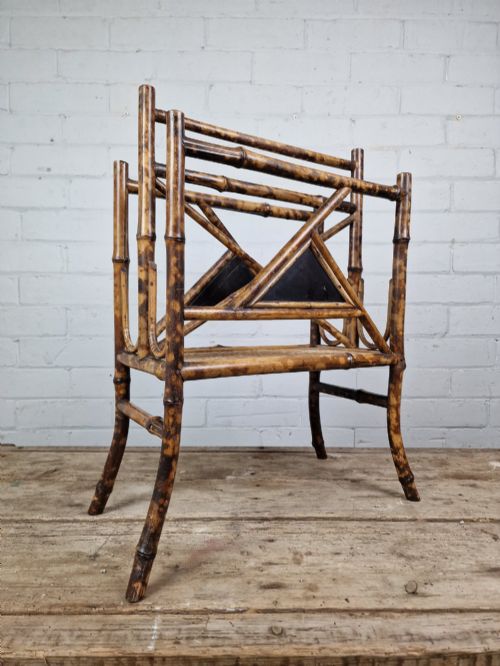
Cabinetmakers constructed these stands using dense timbers including mahogany, rosewood and walnut, often applying burr walnut or figured veneers to visible surfaces. Joinery involved precise dovetailing for drawers and turned or carved supports for the upright dividers. Brass details appear on castors, handles and inlay work, while alternative models utilise natural bamboo stems bound securely for structural rigidity.
Surface finishing relied on hand-applied polish that accentuated the grain patterns of the primary woods. In Asian-influenced and Aesthetic pieces, lacquer and hand-painted motifs decorated the bamboo frameworks, creating a distinct contrast to heavier European timber constructions.
Current listings feature diverse materials spanning mahogany, rosewood, walnut, burr walnut, brass, copper, ceramic, lacquer and bamboo.
What varies in quality
The standard of a piece rests upon the selection of timber veneers and the crispness of carved elements such as spindle turnings or pierced fretwork. Superior items exhibit book-matched figure in walnut or rosewood and retain original brass castors and fittings rather than modern replacements.
Construction depth separates standard production from exceptional workshop output, seen in the thickness of divider slats, the precision of drawer dovetails and the inclusion of secondary tiers or integrated tabletops. Finer iterations balance structural stability with delicate proportions, ensuring the dividers remain rigid under daily use.
The 19th Century Magazine Stand Glossary
- Canterbury
- A low stand with partitioned sections for holding sheet music, books and periodicals, frequently fitted with a small drawer below. This form originated in the late 18th century and evolved through the Victorian period.
- Folio
- A large-format volume or collection of unbound printed sheets, requiring wide compartments for proper storage.
- Aesthetic Movement
- A late 19th-century design style emphasising visual beauty over narrative content, often expressed through Japanese-inspired bamboo and lacquer furniture.
- Burr walnut
- Timber sliced from walnut tree growths, prized for its complex, swirling grain patterns used on high-end cabinet surfaces.
19th Century Magazine Stand: Frequently Asked Questions
What is a Canterbury stand?
A Canterbury is a traditional piece of furniture featuring vertical partitions designed to hold newspapers, magazines and sheet music off the floor.
They often include a low drawer at the base and small wheels for movement between rooms.
How were these stands used?
Owners placed them beside reading chairs or desks to keep current periodicals and music scores tidy and within arm's reach.
Some variations incorporated tabletops or tiers to serve dual functions as small side tables.
How do I identify a Victorian piece?
Victorian stands frequently employ burr walnut, rosewood or bamboo, often displaying heavier carved details or inlay work.
Later Victorian examples from the 1880s and 1890s lean towards Aesthetic Movement styles and exotic materials.
Are bamboo stands authentic?
Bamboo and lacquer magazine stands gained popularity during the late 19th century as part of the craze for Anglo-Japanese furnishings.
These pieces feature genuine split bamboo frameworks, sometimes accented with hand-painted decoration.