



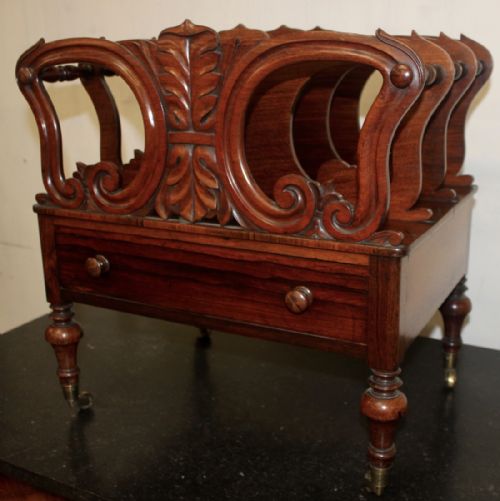


Period Rosewood Music Holder
These period rosewood music holders bring refined timber and partitioned elegance to your floor, keeping sheets and folios neatly gathered.
Period Rosewood Music Holder
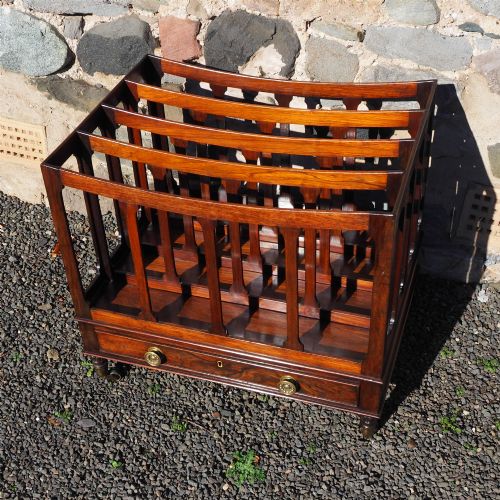
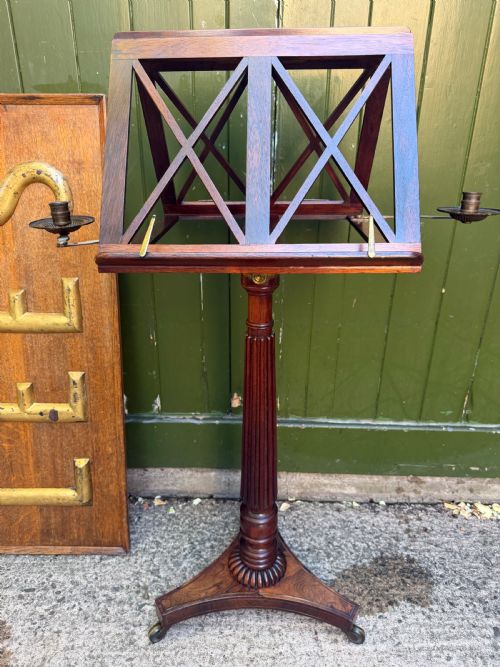
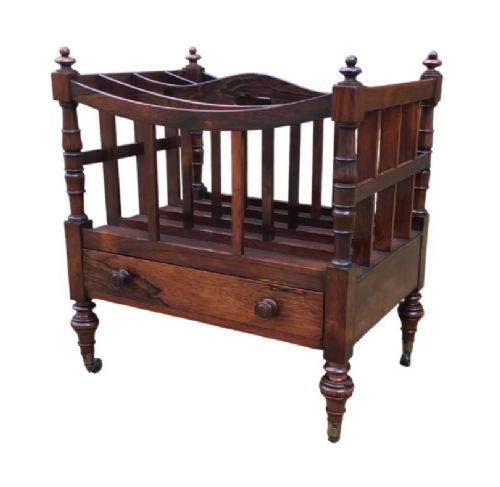
A period rosewood music holder, commonly known as a canterbury or magazine rack, serves to store sheet music and periodicals close to an instrument or fireplace. These pieces appear predominantly in Regency, George IV, William IV, and Victorian iterations, alongside French nineteenth-century examples.
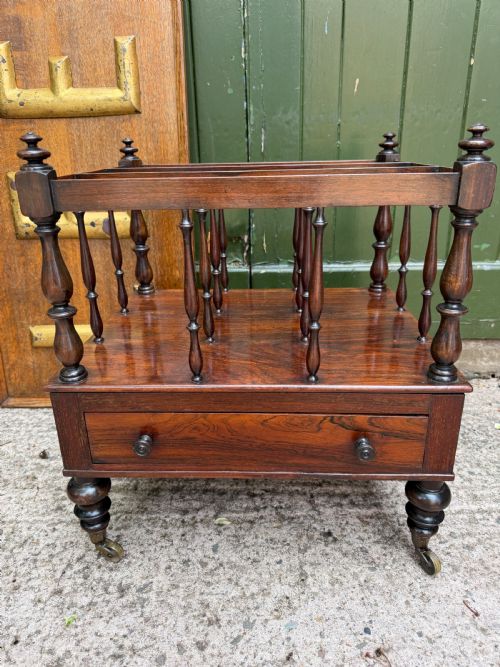
The prevailing form on this page is the canterbury, featuring partitioned vertical slats designed to hold folios upright. Alongside these stand dedicated magazine racks and broader double-size variants intended for substantial collections.
Originating largely from the nineteenth century, these pieces range from simple English stands to architectural boat-shaped designs and carved workshops. Every piece relies on the rich grain of rosewood to deliver a polished domestic accessory.
How They Were Made
Cabinetmakers constructed these pieces primarily from rosewood, frequently incorporating mahogany as a secondary timber for structural stability and interior framing. Timber selection focused on deep grain patterns and rich natural colour.
Makers integrated brass details such as castors, handles, and spindle supports to allow mobility and provide structural contrast to the dark timber. Carved elements appear on specific nineteenth-century examples, executed directly into the solid rosewood frames.
Period Rosewood Music Holder Retail Price Guide 2026
Typical asking prices for period rosewood music holder among the pieces listed under this phrase on Sellingantiques today, from the lower quarter to the upper quarter. They describe what is for sale here now, not the wider market.
Listings feature pieces spanning the Regency, George IV, William IV, and Victorian periods, alongside nineteenth-century French examples.
What Varies in Quality
Quality rests in the architectural ambition of the frame, moving from simple magazine racks to double-size canterburys with refined divisions and turned supports. The presence of documented workshop attribution elevates certain examples above standard nineteenth-century production.
Timber selection dictates the visual success of the piece, with dense, highly figured rosewood superior to plain or faded surfaces. Integrated brass mounts and careful joinery across the slatted dividers separate master cabinetwork from utilitarian alternatives.
Gillows
The Period Rosewood Music Holder Glossary
- Canterbury
- A low stand with partitioned uprights for holding sheet music, newspapers, or folios. This form often includes a drawer beneath the slatted section and small castors for floor mobility.
- Regency
- A style spanning the early nineteenth century characterised by classical restraint, architectural lines, and dark timbers. Pieces from this period frequently draw inspiration from ancient Roman and Greek designs.
- Boat-shaped
- A curved hull-like outline seen in the framework of specific nineteenth-century racks. This contour gives the piece a sweeping profile distinct from rectangular configurations.
- Rosewood
- A heavy, durable timber prized for its dark grain and reddish-brown hues. Cabinetmakers utilised this material extensively for high-status nineteenth-century domestic furniture.
Period Rosewood Music Holder: Frequently Asked Questions
How were canterburys used originally?
Households used these stands to keep loose sheets of music, folios, and periodicals tidy and accessible near instruments or drawing-room tables. The vertical partitions prevented paper from bending or sliding.
Many examples feature small wheels, allowing servants or family members to wheel the stand across the carpet as needed during musical evenings.
How do I identify a Regency music holder?
Regency music holders typically display classical proportions, clean architectural lines, and dark rosewood timber enhanced by brass castors or spindle supports. These pieces date from the early nineteenth century.
Subtle variations include boat-shaped frames or simple turned legs, reflecting the neoclassical tastes prevalent during the reigns of George III, George IV, and William IV.
Where should I place a music holder at home?
These pieces fit naturally beside a piano, a bookshelf, or an armchair where reading materials and folios accumulate. Their compact footprint allows them to sit neatly against a wall or beside low furniture.
They serve effectively today for holding contemporary magazines, art books, or vinyl records while adding nineteenth-century warmth to a room.